
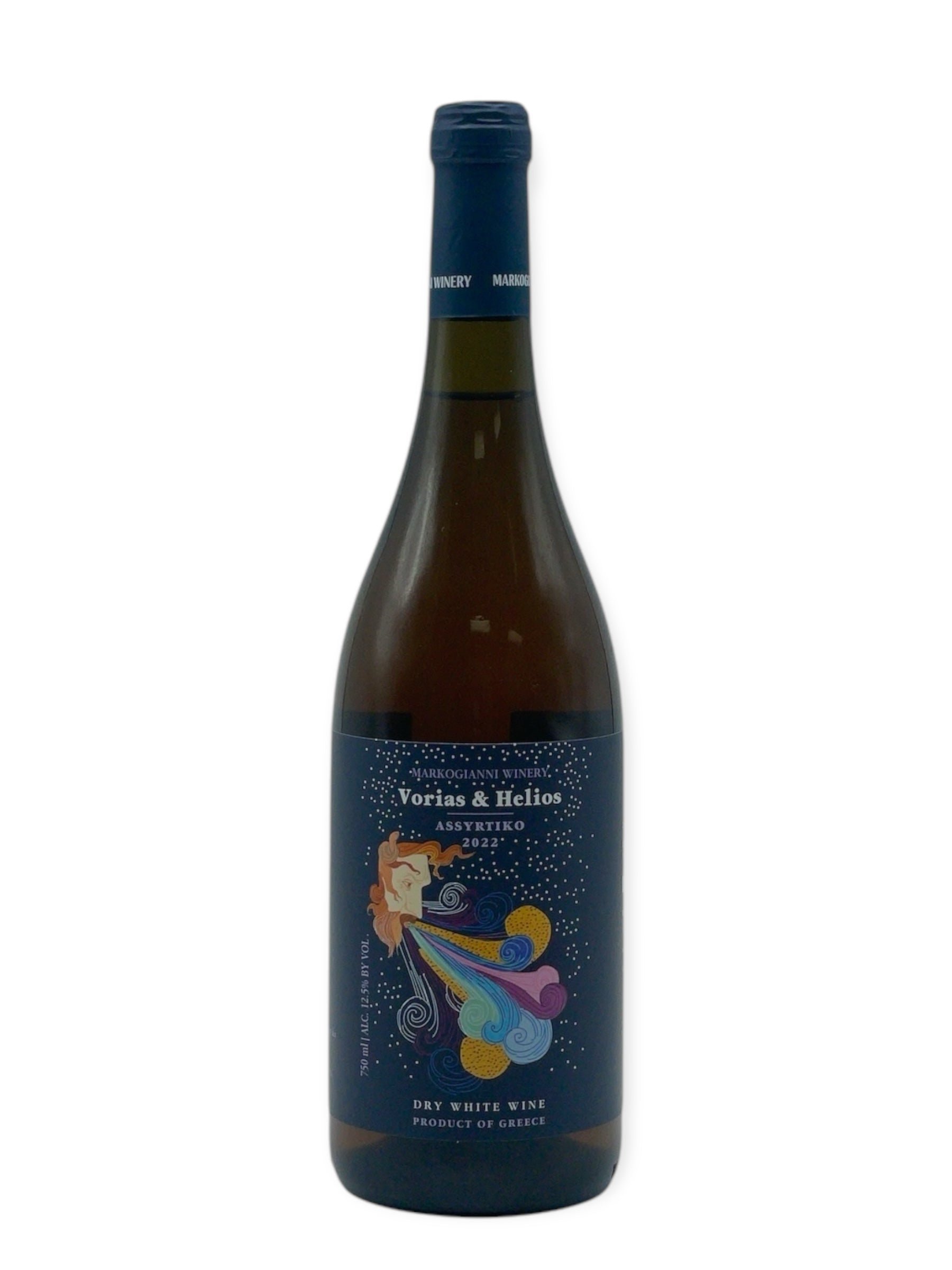
    Winery in Gastouni, Greece

    Markogianni Winery

    250pts

    Ilian Terroir Precision

    Markogianni Winery, Winery in Gastouni

    About Markogianni Winery

    Markogianni Winery operates in Gastouni, a town in the Ilia region of the western Peloponnese where wine production has long existed in the shadow of more publicised Greek appellations. The winery holds a Pearl 1 Star Prestige award (2025), placing it among a recognised tier of Greek producers working outside the conventional spotlight. For visitors exploring Peloponnesian wine beyond Nemea and Patras, Gastouni represents a less-charted point on the map.

    Wine at the Edge of the Ionian Plain

    The western Peloponnese does not carry the immediate name recognition of Nemea or Santorini, yet the Ilia region has produced wine for centuries under conditions that differ markedly from those better-known zones. Gastouni sits on the coastal plain of western Ilia, where the Ionian Sea moderates temperatures and the alluvial soils left by the Peneios river system create a character distinct from the volcanic rock of the Aegean islands or the limestone-heavy terroir of Nemea's high-altitude vineyards. It is this relatively unexamined stretch of Greek winemaking geography that gives Markogianni Winery its context and, arguably, its argument for attention.

    Greek wine criticism has spent the past two decades drawing international audiences toward the country's appellation anchors: Xinomavro in Naoussa and Amyntaio, Assyrtiko on Santorini, Agiorgitiko in Nemea. Producers operating outside those corridors either conform to the accepted narrative or work harder to build their own. Markogianni, operating in Gastouni and holding a Pearl 1 Star Prestige recognition from EP Club's 2025 ratings, sits in the second category. That award places it within a defined quality tier — credentialled, but without the promotional machinery that surrounds Greece's more tourist-accessible wine regions. For our full picture of what the Gastouni area offers across food and drink, see our full Gastouni restaurants guide.

    What the Land Provides

    The terroir argument for western Ilia is not widely made in English-language wine writing, which makes it worth spelling out. The Ilia plain receives more rainfall than most Greek wine-producing regions, a factor that shapes vine stress, yield management, and ultimately the weight and freshness profile of wines produced here. Where producers in the drier Peloponnesian interior work against concentrated heat and drought, Ilia growers contend with a wetter, more temperate growing season. The result, across producers who handle it carefully, tends toward wines with more natural acidity and a less extracted profile than the region's reputation — or lack of one , might suggest.

    This sets Ilia-based producers apart from some of their better-known Peloponnesian peers. Acra Winery in Nemea operates in a higher-altitude, drier zone where Agiorgitiko expresses itself with more structural grip. The climatic distance between Nemea and Gastouni is not merely geographic , it registers in the glass. Producers like Markogianni are, by the nature of their location, making wines from a different baseline.

    A Recognised Tier in a Quiet Region

    The Pearl 1 Star Prestige designation from EP Club (2025) is the clearest trust signal available here, and it should be read carefully. Within EP Club's rating framework, Prestige-tier recognition identifies producers demonstrating a consistent commitment to quality at an acknowledged level , not merely competent regional production, but work that warrants serious attention from wine travellers and collectors seeking producers outside the mainstream appellation track.

    Greece's wine scene has seen significant critical activity over the past decade, with international attention concentrating on a handful of appellations and producers. The wineries drawing consistent recognition outside those focal points tend to share certain characteristics: site-specific focus, relatively low output that allows careful vineyard and cellar management, and a positioning that speaks to informed buyers rather than mass-market distribution. Whether Markogianni fits all of those markers in equal measure cannot be confirmed from available data, but the 2025 Prestige award situates it in the company of producers who do.

    For comparison, producers across Greece recognised in similar tiers include Abraam's Vineyards in Komninades, Aoton Winery in Peania, and Anatolikos Vineyards in Xanthi , all working in regions that sit outside the primary appellation map but have attracted recognition for specific quality commitments. The pattern across these producers reinforces a broader point about Greek wine: credentialled work is happening in more places than the standard narrative covers.

    Placing Gastouni on the Western Peloponnese Wine Map

    The western Peloponnese has a wine history that predates modern appellation structures. Patras, an hour's drive north of Gastouni, hosts Achaia Clauss, one of the oldest operating wineries in Greece and a reference point for the region's long commercial wine tradition. The wines of the Patras appellation, particularly those made from Mavrodaphne and Muscat of Patras, established an export identity for western Peloponnesian wine in the nineteenth century that has since given way to a more diverse and quality-oriented production model.

    Gastouni does not belong to a formally designated appellation with the name recognition of Patras, which means producers there operate with less category infrastructure but also less category constraint. The absence of an appellation framework can work in a producer's favour when the goal is to express site character rather than conform to a registered varietal or production standard. Wineries operating in similarly unconstrained zones elsewhere in Greece, such as Avantis Estate in Chalkida and Aiolos Winery in Palaio Faliro, have used that flexibility to build distinct identities outside the appellation system.

    Planning a Visit

    Gastouni is accessible by road from Patras (approximately 60 kilometres south along the western Peloponnese coastal route) and from the Pyrgos transport hub, which connects to Olympia , making the area a workable stop on an itinerary that combines archaeological and wine travel. The region is underserved by dedicated wine tourism infrastructure compared to Nemea or Santorini, which means visits to producers here typically require advance contact and are less likely to involve walk-in tasting rooms with scheduled programming. Visitors with a serious interest in the producer should approach Markogianni directly through whatever contact details are available locally or through the EP Club platform; specific booking methods, hours, and pricing are not confirmed in available data and should be verified before travel.

    For context on how other serious Greek producers handle visits at this recognition level, see Artisans Vignerons de Naoussa in Stenimachos, Akrathos Newlands Winery in Panagia, and Alpha Estate in Amyntaio , all of which have developed visit formats suited to their production scale and visitor base. The model varies: some offer structured tastings by appointment only; others integrate winery visits with accommodation or restaurant programming. Artemis Karamolegos Winery in Santorini represents the high-tourism end of Greek winery visits, while Apostolakis Distillery in Volos and Artisans Vignerons de Naoussa reflect the more appointment-focused, lower-traffic model that a Gastouni producer is more likely to follow. For international comparison points outside the Greek context, Accendo Cellars in St. Helena and Aberlour in Aberlour illustrate how premium producers in well-trafficked regions build structured visitor experiences , a useful reference for understanding what the Gastouni visit format is not yet, and potentially where it could develop.

    Frequently Asked Questions

    What is the atmosphere like at Markogianni Winery?
    Gastouni is a small town in the agricultural plain of western Ilia, and wineries operating here tend toward working-producer environments rather than the polished visitor centres common in higher-tourism wine regions. The surrounding landscape is flat coastal farmland, quite different from the dramatic hillside settings associated with Greek wine tourism in Santorini or Nemea. The 2025 Pearl 1 Star Prestige award signals a producer operating at a recognised quality level, but the atmosphere is likely to reflect a serious production focus rather than a hospitality-forward setup.
    What wine should I focus on at Markogianni Winery?
    Specific varietal or wine details for Markogianni are not confirmed in available data. However, producers in the Ilia region of the western Peloponnese typically work with a mix of indigenous Greek varieties and international grapes suited to the area's wetter, more temperate growing conditions. The EP Club 2025 Prestige recognition is the clearest quality indicator available; any tasting visit would benefit from asking the producer directly which wines leading express the Gastouni site character.
    What makes Markogianni Winery worth visiting?
    The case for visiting rests primarily on the EP Club Pearl 1 Star Prestige award (2025), which identifies it as a producer of recognised quality in a region that receives limited coverage in mainstream wine tourism. Gastouni represents a different expression of Peloponnesian winemaking than the better-known Nemea or Patras appellations, and producers working here with formal recognition offer a less-travelled perspective on Greek wine. Visitors with an interest in off-the-beaten-path Greek producers will find this part of western Ilia a legitimate destination rather than a detour.
    What is the leading way to book a visit to Markogianni Winery?
    Specific booking contacts, website, and phone details are not confirmed in EP Club's current data for Markogianni. Given the winery's location in a low-tourism-infrastructure area of western Ilia and its Prestige-tier recognition, direct contact through local Gastouni sources or via the EP Club platform is the recommended approach. Confirming visit availability and format well in advance is advisable for any serious wine travel itinerary in this part of the Peloponnese.
    How does Markogianni Winery fit into the broader Greek wine scene for collectors and serious wine travellers?
    Markogianni's Pearl 1 Star Prestige recognition (EP Club, 2025) places it within a tier of Greek producers working outside the primary appellation spotlight but with a documented quality commitment. For collectors and wine travellers building itineraries around Greece's less-publicised producers, the western Ilia context adds geographic and climatic diversity to a portfolio that might otherwise concentrate on Naoussa, Nemea, or the Aegean islands. The Ilia plain's distinct growing conditions , more rainfall, lower altitude, and Ionian Sea influence , mean wines from this area occupy a different sensory register within the Greek spectrum.
    Keep this place

    Save or rate Markogianni Winery on Pearl

    Keep this venue in your Pearl passport, rate it after you visit, and track it alongside every other place you collect.