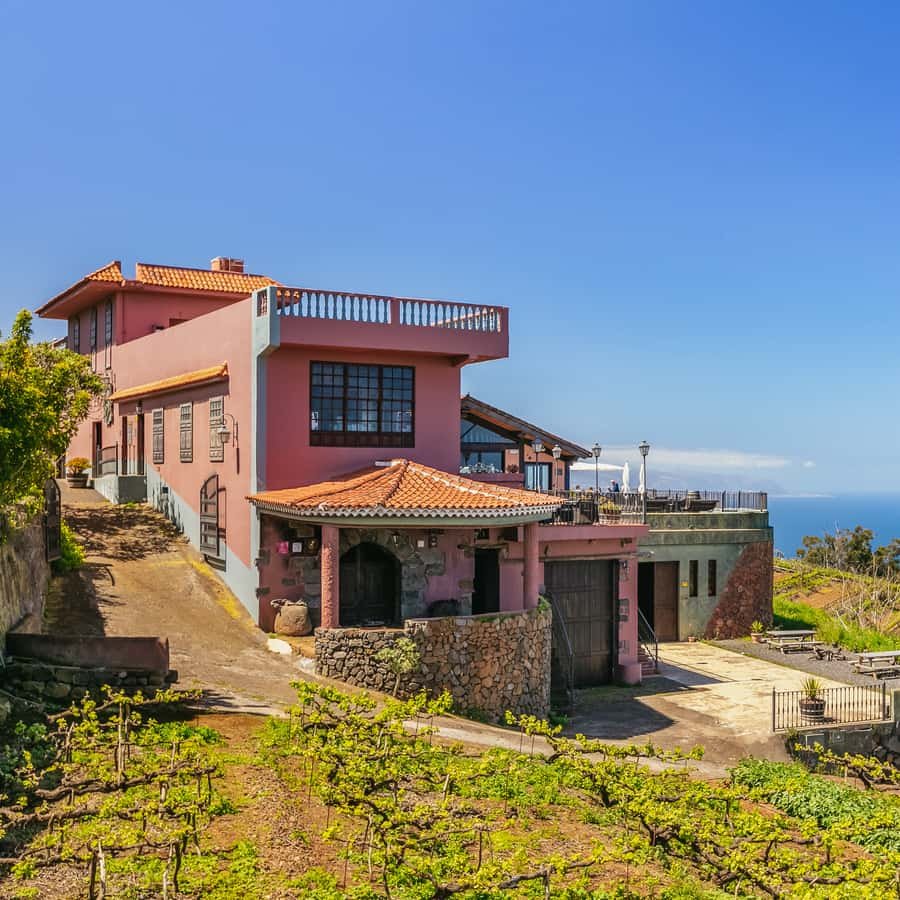
Winery in El Sauzal, Spain
Bodegas Monje
500ptsVolcanic Atlantic Viticulture

About Bodegas Monje
Bodegas Monje sits above the Atlantic-facing slopes of El Sauzal on Tenerife's north coast, where volcanic soil and trade-wind humidity define a wine character found nowhere on the Spanish mainland. Holder of a Pearl 2 Star Prestige rating in 2025, the bodega represents the serious tier of Canary Islands viticulture, offering visitors direct access to terroir-driven wines shaped by centuries of island tradition.
Volcanic Ground, Atlantic Air: The Terroir of El Sauzal
Stand at the northern edge of Tenerife and the forces shaping its wines are immediately legible. The Atlantic arrives as a near-constant presence, moderating temperatures that would otherwise spike under the Canarian sun. Below, the soil is predominantly volcanic basalt and lapilli, porous and mineral-rich, draining fast and forcing vine roots deep in search of moisture. This is not the planted, irrigated agriculture of a designed wine region; it is viticulture adapted over generations to a landscape that offers as much challenge as advantage. Bodegas Monje, situated in El Sauzal at an altitude that keeps harvest temperatures cooler than the island's southern flats, occupies precisely this intersection of geology and climate. The address — C. Cruz de Leandro, 36 — places it on the slopes of the Anaga massif's western approach, where terraced vineyards have been worked since at least the sixteenth century, long before the Canary Islands became a footnote in wine tourism itineraries.
What the Canary Islands Offer That the Mainland Cannot
Spain's canonical wine identity runs through Rioja, Ribera del Duero, and Priorat. The Canary Islands occupy a different register entirely, one that serious wine drinkers have been reassessing for the better part of two decades. The archipelago's combination of pre-phylloxera ungrafted vines, volcanic substrates, and Atlantic-moderated microclimates produces wines with a textural and aromatic profile that has no direct equivalent on the peninsula. The primary varieties , Listán Negro, Listán Blanco, Negramoll, Malvasía Volcánica , are largely unknown outside the islands except to collectors specifically tracking this zone. That obscurity is, paradoxically, part of the appeal: prices remain lower than equivalent-quality bottles from Rioja or Priorat, and the style sits closer to the mineral-driven, lower-alcohol profile that has driven interest in regions like the Canary Islands across northern European markets. For context on how Spain's more established wine estates approach their own terroir narratives, [Bodegas Protos in Peñafiel](https://www.enprimeurclub.com/wineries/bodegas-protos-penafiel-winery) and [Clos Mogador in Gratallops](https://www.enprimeurclub.com/wineries/clos-mogador-gratallops-winery) each represent the mainland's confidence in place-specific production , the Canary Islands are building an equivalent argument from a very different geological base.
Pearl 2 Star Prestige: What the 2025 Recognition Signals
Bodegas Monje received a Pearl 2 Star Prestige rating in 2025, placing it within the upper tier of recognised producers in the EP Club assessment framework. That designation is not a general quality badge; it reflects specific criteria around production approach, terroir expression, and the consistency of experience offered to visitors and buyers. In the context of Canary Islands wine, where the pool of producers operating at this level remains small, a 2 Star Prestige rating carries more signal than it would in a crowded continental appellation. The Canary Islands wine sector has been growing its international credibility steadily, but the number of estates with verifiable recognition at this tier is still limited enough that each entry into that bracket shifts the perception of the region's ceiling. Comparable Spanish producers operating at recognised prestige levels , [CVNE (Cune) in Haro](https://www.enprimeurclub.com/wineries/cvne-cune-haro-winery), [Marqués de Cáceres in Cenicero](https://www.enprimeurclub.com/wineries/marques-de-caceres-cenicero-winery), [Emilio Moro in Pesquera de Duero](https://www.enprimeurclub.com/wineries/emilio-moro-pesquera-de-duero-winery) , benchmark what sustained investment in quality and provenance looks like. Monje's recognition arrives in a different appellation context but sits within that same broader ambition.
The Experience of Arriving at the Bodega
The approach to El Sauzal from the TF-5 motorway shifts the visual register abruptly. The northern Tenerife coast is green in a way that surprises visitors expecting the island's sun-bleached south. The municipality sits roughly 200 metres above sea level, and on clear mornings the Atlantic horizon appears below rather than ahead. Bodegas Monje's position on Cruz de Leandro places visitors within the productive vineyard zone, not in an industrial outskirts or a commercial wine-tourism strip. The atmosphere at Canary Islands bodegas of this type reflects the agricultural seriousness of the north: visitors come to taste and understand, not to pass through a spectacle. That character distinguishes the northern coast's wine culture from the resort-focused south and aligns it more closely with the working winery visits familiar from Priorat or the Ribera del Duero. Visiting El Sauzal is worth combining with time in the broader Tacoronte-Acentejo denomination, which produces Tenerife's most recognised reds and includes several producers worth mapping alongside Monje on a dedicated wine itinerary. See [our full El Sauzal restaurants guide](https://www.enprimeurclub.com/cities/el-sauzal) for context on eating and drinking well in the area.
Canary Islands Wine in the Wider Spanish Context
Understanding where the Canary Islands sit in the hierarchy of Spanish wine requires stepping back from the dominant appellations. The grandes maisons of Rioja , represented by estates like [Codorníu in Sant Sadurní d'Anoia](https://www.enprimeurclub.com/wineries/codorniu-sant-sadurn-danoia-winery), [Bodegas Ysios in Laguardia](https://www.enprimeurclub.com/wineries/bodegas-ysios-laguardia-winery), or [Bodegas Vivanco in Valle de Mena](https://www.enprimeurclub.com/wineries/bodegas-vivanco-valle-de-mena-winery) , built their identities on Tempranillo and the oak-ageing traditions that defined twentieth-century Spanish prestige. The Canary Islands never fit that template. Their viticulture remained artisanal and largely self-contained until international interest in volcanic wines and obscure indigenous varieties created a new evaluative framework. Producers like Monje now compete in a peer set defined less by appellation history and more by the specificity of terroir expression , a conversation happening in parallel at estates like [Abadía Retuerta in Sardón de Duero](https://www.enprimeurclub.com/wineries/abadia-retuerta-sardon-de-duero-winery) and [Arzuaga Navarro in Quintanilla de Onésimo](https://www.enprimeurclub.com/wineries/arzuaga-navarro-quintanilla-de-onesimo-winery), though from entirely different soil and stylistic premises. Even further afield, the question of what geological specificity contributes to wine character connects Tenerife's basalt slopes to conversations happening at estates like [Aberlour in Aberlour](https://www.enprimeurclub.com/wineries/aberlour-aberlour-winery) or [Accendo Cellars in St. Helena](https://www.enprimeurclub.com/wineries/accendo-cellars), where place-specificity is the primary commercial and critical argument. The Canary Islands' strongest producers are making that same argument from a geological foundation more extreme than almost anywhere else in Europe.
Planning a Visit
El Sauzal is accessible from Santa Cruz de Tenerife via the TF-5, a drive of roughly 25 kilometres along the north coast. The town sits between the larger centres of La Laguna and Puerto de la Cruz, which makes it a workable stop on a northern Tenerife itinerary rather than a dedicated detour. For visitors flying into Tenerife Norte (TFN), the airport in Los Rodeos is the closer entry point; Tenerife Sur (TFS) is the island's main hub and involves a longer drive north. Given that specific booking methods, opening hours, and phone details for Bodegas Monje are not confirmed at the time of publication, contacting the bodega directly through official channels before visiting is advisable , the production-focused estates in this tier of Canary Islands wine generally operate by appointment or with defined visiting windows rather than walk-in access. Pairing a Monje visit with time at other producers in the Tacoronte-Acentejo and Ycoden-Daute-Isora denominations allows a fuller picture of the island's range. For comparison with how Jerez's sherry producers handle visitor programs at a different scale, [Lustau in Jerez de la Frontera](https://www.enprimeurclub.com/wineries/lustau-jerez-de-la-frontera-winery) and [Marqués de Griñón (Dominio de Valdepusa) in Malpica de Tajo](https://www.enprimeurclub.com/wineries/marques-de-grinon-dominio-de-valdepusa-malpica-de-tajo-winery) illustrate the range of visitor formats operating across Spanish wine tourism.
Frequently Asked Questions
- What should I expect atmosphere-wise at Bodegas Monje?
- El Sauzal's northern Tenerife setting shapes the experience from the moment you arrive: the landscape is green, refined, and working-agricultural rather than resort-facing. If you are visiting a 2 Star Prestige-rated estate in this tier of Canary Islands production, expect an environment oriented around the wine and the land rather than high-volume hospitality. The atmosphere will differ considerably from the tourist-oriented experiences of Tenerife's southern coast.
- What wines is Bodegas Monje known for?
- The bodega operates within Tenerife's northern wine zones, where indigenous varieties including Listán Negro, Listán Blanco, and Negramoll dominate production. These varieties, grown in volcanic soils with Atlantic influence, produce wines with mineral salinity and moderate alcohol that distinguish the Canary Islands from mainland Spanish appellations. The 2025 Pearl 2 Star Prestige recognition confirms production at a level recognised by EP Club's assessment framework, though specific current labels should be verified directly with the bodega.
- Why do people go to Bodegas Monje?
- The primary draw is access to one of the Canary Islands' formally recognised prestige producers in its actual production context , the El Sauzal terroir, the volcanic soils, the Atlantic-facing slopes that define the wine's character. Visitors with a specific interest in pre-phylloxera ungrafted vines, volcanic viticulture, or the indigenous Canarian varieties find this part of Tenerife more substantively rewarding than the island's southern wine options. The 2025 EP Club recognition adds a verifiable benchmark for those assessing quality before making the trip.
- Can I walk in to Bodegas Monje?
- Confirmed booking procedures are not available at the time of publication. Estates operating at the Pearl 2 Star Prestige level in smaller Canary Islands appellations typically manage visits by appointment. Arriving without prior contact carries the risk of finding no tasting available. Direct contact via official channels before travelling from Santa Cruz or the airport is the practical approach, particularly if the visit is a primary purpose of the trip rather than an opportunistic stop.
- How does Bodegas Monje's El Sauzal location affect the style of its wines compared to other Tenerife producers?
- El Sauzal sits within the broader Tacoronte-Acentejo denomination on Tenerife's north coast, an altitude-influenced zone where cooler temperatures during ripening retain more acidity than the island's lower-elevation or southern sites. The volcanic basalt and lapilli soils here contribute the mineral salinity that has attracted international attention to Canary Islands wines as a category. Producers in this zone, including Bodegas Monje with its 2025 Pearl 2 Star Prestige standing, are typically working with material conditions that favour structure and freshness over concentration, placing their wines in a different stylistic register than producers based further south or at lower altitudes on the island.
Related editorial
- Best Fine Dining Restaurants in ParisFrom three-Michelin-star icons to the next generation of Parisian chefs pushing boundaries, these are the restaurants that define fine dining in the world's culinary capital.
- Best Luxury Hotels in RomeFrom rooftop terraces overlooking ancient ruins to Michelin-starred hotel dining, these are the luxury hotels that make Rome unforgettable.
- Best Cocktail Bars in KyotoFrom sleek lounges to hidden speakeasies, Kyoto's cocktail scene blends Japanese precision with global influence in ways you won't find anywhere else.
Save or rate Bodegas Monje on Pearl
Keep this venue in your Pearl passport, rate it after you visit, and track it alongside every other place you collect.