
Winery in Clermont, United States
Jim Beam
750ptsHigh-Volume Heritage Production
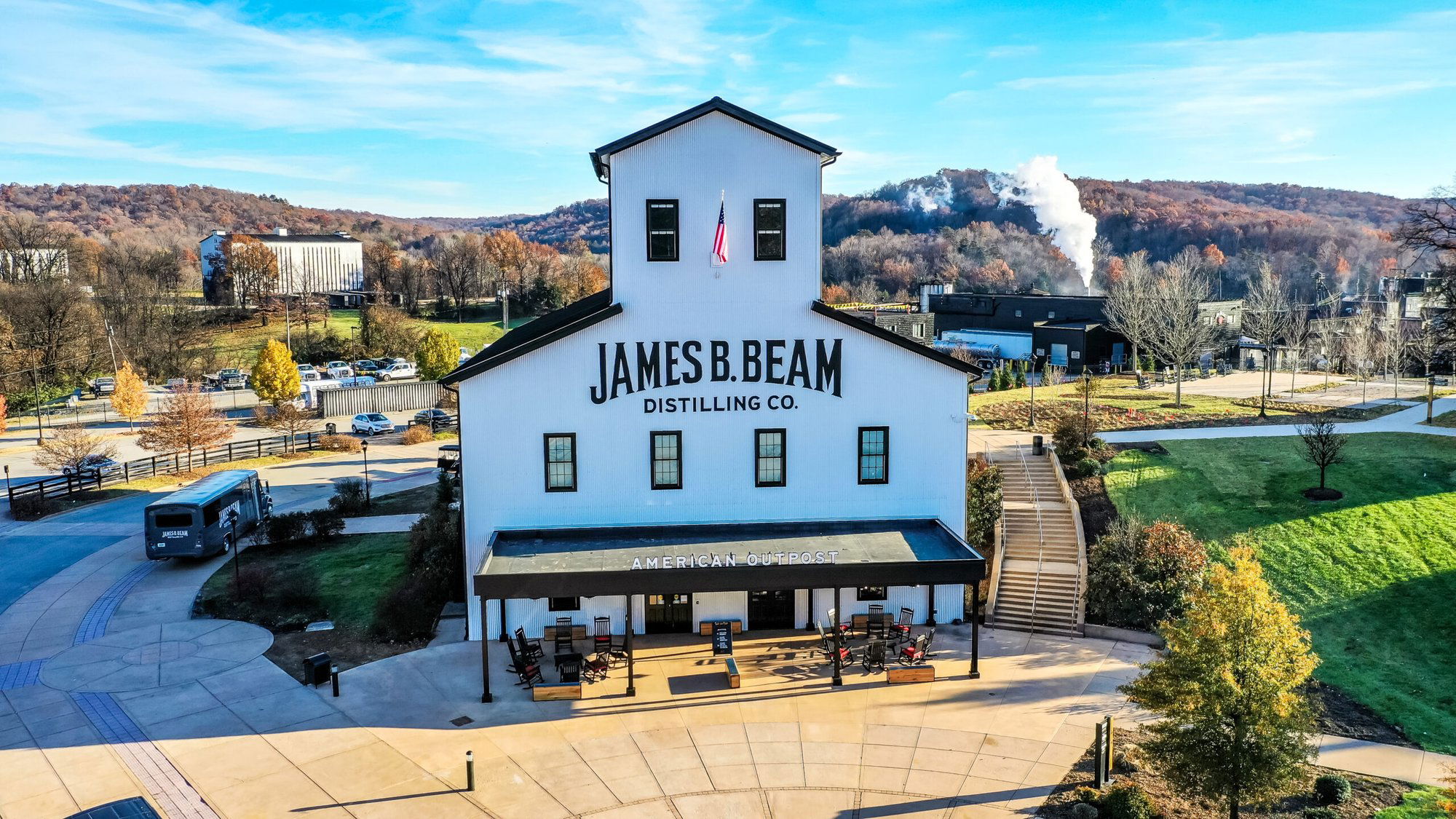
About Jim Beam
Jim Beam in Clermont, Kentucky sits at the center of American bourbon's most historically significant corridor, earning a Pearl 3 Star Prestige rating in 2025. The distillery occupies working farmland along the Kentucky Knobs, where the region's limestone-filtered water and temperature swings have shaped bourbon production for generations. For anyone tracing American whiskey from grain to glass, Clermont is the reference point.
Where Kentucky's Limestone Belt Becomes Bourbon
The drive into Clermont along Happy Hollow Road sets the scene before you arrive. The Kentucky Knobs rise to the south, the land flattens into rolling farmland, and the faint sweet char on the air signals that fermentation and maturation are happening at scale. This is Bullitt County, positioned within the broader Kentucky Bluegrass region where the geology, climate, and water chemistry that define American bourbon production are most concentrated. Jim Beam sits at 568 Happy Hollow Rd at the center of that convergence.
What the address represents is more than a production facility. Clermont, along with neighboring Nelson County, forms the nucleus of Kentucky's bourbon industry, a corridor where distilling has operated continuously (with the interruption of Prohibition) since the late eighteenth century. The region's distilleries do not share a stylistic uniformity so much as a shared environmental logic: deep limestone aquifers that strip iron from the water, warm humid summers that drive whiskey into the barrel's charred oak, and cold winters that pull it back out. That thermal cycling, repeated over years, is the primary mechanism by which raw new-make spirit becomes bourbon. Jim Beam, operating at the scale it does in Clermont, is one of the clearest demonstrations of that process in action.
Limestone Water and the Chemistry Behind the Spirit
The terroir argument for Kentucky bourbon is not a marketing invention. Limestone geology filters calcium and magnesium into the water while blocking iron, which would inhibit yeast fermentation. The Kentucky distilling corridor runs along the same geological formation that gives the region its character, and Clermont sits squarely within it. Water drawn from these aquifers carries a mineral profile that has been consistent across centuries of production, which is one reason the region's spirits have a recognizable character that producers in other states have struggled to replicate, even when sourcing similar grains.
The grain itself contributes a second layer of place. Bourbon's legal definition requires a mash bill of at least 51 percent corn, and the Corn Belt's proximity to Kentucky means that the raw material supply chain has been integrated with regional agriculture for most of the spirit's commercial history. Jim Beam's Clermont operation sits within that agricultural network, processing grain at a volume that makes it one of the most consequential bourbon producers in the world by output. The 2025 Pearl 3 Star Prestige recognition reflects that standing in the premium tier of spirits evaluation.
For context, the Pearl 3 Star Prestige designation places Jim Beam alongside producers whose recognition is grounded in verifiable quality signals rather than volume alone. Within Kentucky's bourbon hierarchy, that distinction matters: the state produces the vast majority of the world's bourbon supply, and within that output, there is a significant range between entry-level commodity production and aged, allocated expressions that command premium prices and critical attention. Jim Beam occupies a position that bridges both registers, producing accessible expressions at scale while maintaining aged and small-batch lines that compete in a different critical conversation. Comparable credential-holders in other American spirits and wine categories include producers like Accendo Cellars in St. Helena, Alpha Omega Winery in Rutherford, and Aubert Wines in Calistoga, each of which earned recognition by producing at a quality level that transcends their category's commodity baseline.
The Distillery Visit in Context
American distillery tourism has matured considerably over the past two decades, moving from industrial tours toward structured experiences that address production process, barrel warehouse access, and guided tasting in formats that bear comparison to winery visits in California or Oregon. Kentucky's distilleries have led that shift, and the Bourbon Trail infrastructure now draws visitors who approach the region with the same itinerary discipline that wine travelers bring to Napa or the Willamette Valley.
Within that context, the Jim Beam American Stillhouse in Clermont operates as one of the higher-traffic visitor destinations in the state, offering a range of tour formats from production-focused walkthroughs to more concentrated tastings. The practical implication for the serious visitor is to plan time of year carefully: the shoulder seasons, early spring and late autumn, typically offer less competition for tour slots and cooler conditions for walking the rickhouse grounds. Summer visits are feasible but the heat in Kentucky's barrel warehouses, which can reach extreme temperatures that actively accelerate maturation, makes the outdoor portions of the tour more demanding. Clermont is roughly 25 miles south of Louisville via I-65, placing it within a direct half-day drive from the city and accessible as part of a broader Bluegrass spirits itinerary.
For those building a multi-stop spirits or premium beverage itinerary, Clermont pairs naturally with other Kentucky distilling destinations in the county and in neighboring Bardstown, which markets itself as the bourbon capital of the world. Visitors who move between American whiskey and international spirits traditions might also draw comparative lines to Scottish single malt production: Aberlour in Aberlour, operating within the Speyside tradition, represents a useful counterpoint in how geography and water source shape a spirit's regional identity.
Where Jim Beam Sits in the American Whiskey Conversation
The American whiskey market has fragmented significantly since the bourbon revival of the early 2000s. At the leading of the allocation tier, small-batch and single-barrel releases from major distilleries now compete in a secondary market that tracks closer to Burgundy grand cru pricing than to traditional spirits retail. Jim Beam's premium lines participate in that tier, while the flagship white label remains one of the most widely distributed bourbons in the world by volume.
That dual positioning creates an interesting critical question: at what point does scale undermine the terroir argument? The honest answer is that limestone water, barrel warehouse microclimates, and grain sourcing operate at the regional level regardless of production volume. The differences between a small craft distillery in Clermont and Jim Beam's operation at the same address are primarily economic and stylistic, not geological. Both draw from the same aquifer and warehouse in the same thermal environment. The character imparted by Bullitt County's specific conditions is available to any producer operating within it. What Jim Beam's scale enables is consistency across enormous production runs and the capital investment to maintain aged inventory across multiple expression tiers. Producers like Adelaida Vineyards in Paso Robles, Adelsheim Vineyard in Newberg, and Alban Vineyards in Arroyo Grande each navigate a version of the same tension between regional expression and commercial scale in their respective wine categories. The comparison is instructive: regional identity and production volume are not mutually exclusive, but they require different critical frameworks.
Jim Beam's 2025 Pearl 3 Star Prestige recognition positions it within the upper tier of spirits destinations for visitors approaching the Clermont area with serious intent. The award functions as a trust signal that the experience meets a threshold of quality that distinguishes it from the broader category of distillery tourism. For those traveling the Kentucky Bourbon Trail or building a premium American spirits itinerary, Clermont deserves a full day rather than a drive-through stop. Our full Clermont restaurants guide covers the broader dining and hospitality picture for visitors planning an overnight or multi-day visit to the area.
Additional reference points for premium spirits and wine production across the American West include Alexander Valley Vineyards in Geyserville, Andrew Murray Vineyards in Los Olivos, Artesa Vineyards and Winery in Napa, Au Bon Climat in Santa Barbara, B.R. Cohn Winery in Glen Ellen, Babcock Winery and Vineyards in Lompoc, and Achaia Clauss in Patras, each representing distinct regional expressions that reward the same kind of place-focused critical attention that Kentucky's distilling corridor demands.
Planning Your Visit
Jim Beam is located at 568 Happy Hollow Rd, Clermont, KY 40110, approximately 25 miles south of Louisville. Given the volume of visitors the site receives, arriving on a weekday or during off-peak shoulder seasons will yield a more focused experience. Tour and tasting formats vary, and booking ahead through the official distillery channels is advisable for any premium or specialized experience tier. The surrounding Clermont and Bardstown area offers accommodation options that make an overnight stay viable for visitors combining multiple distillery visits within the same itinerary.
Frequently Asked Questions
What is the general vibe at Jim Beam?
Jim Beam in Clermont reads as an industrial-scale working distillery that has built a serious visitor infrastructure around its production site. The tone sits closer to an engaged educational experience than to a boutique craft destination. Bullitt County's agricultural setting and the functional scale of the rickhouse grounds give it a working authenticity that smaller, more curated stops on the Bourbon Trail do not offer. The Pearl 3 Star Prestige recognition (2025) indicates that the experience clears a quality bar that positions it alongside the upper tier of American spirits destinations rather than purely as a volume tourism operation.
What should I taste at Jim Beam?
The Kentucky distilling corridor, and Clermont specifically, is the reference geography for American bourbon. Any serious tasting at this site should address the spectrum from standard-age expressions to the aged and small-batch lines that place Jim Beam in the premium tier. The Pearl 3 Star Prestige award (2025) signals that the portfolio carries enough depth to reward comparative tasting across the range rather than a single-expression visit. The limestone water and Bullitt County barrel environment impart regional character that is leading understood across multiple expressions at different age statements.
What is Jim Beam known for?
Jim Beam is known as one of the highest-volume bourbon producers in the world operating from its Clermont, Kentucky base, while simultaneously maintaining aged and allocated expressions that compete in the premium tier of American whiskey. The 2025 Pearl 3 Star Prestige recognition reflects that dual standing. Clermont's position within the Kentucky limestone belt gives the operation a geological and environmental context that is as definitive to American spirits as specific appellations are to Old World wine regions. The distillery is a primary reference point for understanding bourbon's relationship to place.
Related editorial
- Best Fine Dining Restaurants in ParisFrom three-Michelin-star icons to the next generation of Parisian chefs pushing boundaries, these are the restaurants that define fine dining in the world's culinary capital.
- Best Luxury Hotels in RomeFrom rooftop terraces overlooking ancient ruins to Michelin-starred hotel dining, these are the luxury hotels that make Rome unforgettable.
- Best Cocktail Bars in KyotoFrom sleek lounges to hidden speakeasies, Kyoto's cocktail scene blends Japanese precision with global influence in ways you won't find anywhere else.
Save or rate Jim Beam on Pearl
Keep this venue in your Pearl passport, rate it after you visit, and track it alongside every other place you collect.