
Winery in Castro, Chile
Destilería Archipiélago
500ptsArchipelago Terroir Spirits
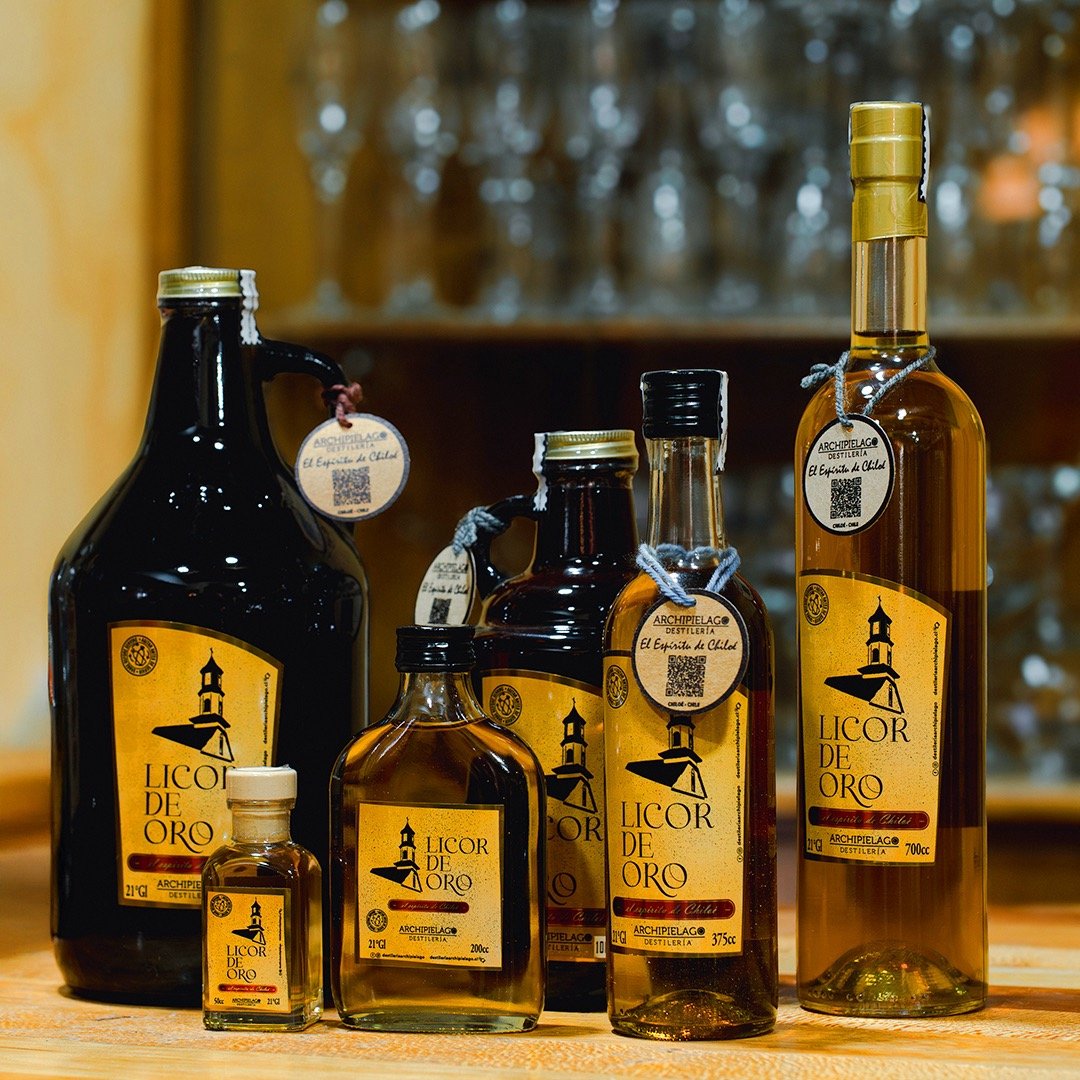
About Destilería Archipiélago
Destilería Archipiélago sits along Ruta 5 near Chonchi, on Chiloé Island, where the cold, rain-heavy Pacific climate defines what gets grown, fermented, and distilled. The operation earned a Pearl 2 Star Prestige rating in 2025, placing it among the small tier of Chilean spirits producers gaining serious regional recognition. For travellers already exploring the Castro area, it represents one of the island's more purposeful producer visits.
Chiloé's Climate and What It Does to a Distillery
Chiloé Island does not offer the conditions that made Chilean winemaking famous. There is no warm Central Valley sun stretching over Maipo or Colchagua, no dry continental heat coaxing Cabernet to phenolic ripeness. What Chiloé offers instead is relentless Atlantic-influenced moisture off the Pacific, dense native forest, and an agricultural identity built around cold-hardy plants, traditional fermentation, and preservation techniques that long predate any commercial spirits industry. Destilería Archipiélago, located along Ruta 5 near Chonchi, operates inside that set of conditions rather than against them. The address alone signals a different register of Chilean producer visit than you would find at, say, Viña Casa Silva in San Fernando or Viña De Martino in Isla de Maipo.
Chile's spirits sector has been widening its geography in recent years, with producers operating far outside the Central Valley's classic grape corridor. Pisco Alto del Carmen in Huasco anchors the northern Atacama end of that range, while Atacamasour in San Pedro de Atacama represents the high-altitude desert fringe. Destilería Archipiélago occupies the opposite extreme: a temperate, island-bound southern latitude where the logic of terroir expression is defined by cold, water, and the native botanical palette of the archipelago's forests and shoreline.
A Pearl 2 Star Prestige in 2025
In 2025, EP Club awarded Destilería Archipiélago a Pearl 2 Star Prestige rating. That placing matters because it positions the distillery within a small peer tier of Chilean producers recognised for quality that goes beyond regional novelty. For context, Pearl 2 Star Prestige is a level where the product itself carries weight, not just the story around it. The majority of Chilean spirits producers operating outside the pisco corridor have not reached that designation, which makes the Chiloé distillery's position within the category worth noting.
The Chilean spirits scene below the premium tier is crowded with producers whose regional narrative outpaces the liquid in the bottle. A prestige-level rating signals that the evaluation moved past the origin story and into what the distillery is actually producing. Among the wider Chilean field, which includes respected wine operations like Viña Seña in Panquehue, Viña Undurraga in Talagante, and Viña Ventisquero in Santiago, Destilería Archipiélago represents a distinctly different production model: a small island operation earning recognition on product merit in a country whose premium drinks identity is still predominantly wine-shaped.
What Terroir Means When There Are No Vines
The concept of terroir, as applied to spirits rather than wine, requires some adjustment. In the Central Valley, producers like Viña MontGras in Palmilla or Viña Falernia in Vicuña can point directly to soil composition, vine age, and microclimate as shapers of what ends up in the glass. In Chiloé, the equivalent conversation shifts toward local raw materials, water source, fermentation microflora, and the botanical environment surrounding production. The archipelago's peat-covered hillsides, dense coastal forests of native arrayán and coigüe, and the cold mineral-loaded water supply from Andean runoff and rainfall all function as inputs that no distillery operating in Santiago or Curicó could replicate.
This is not a new logic globally. Scottish distilleries have long made the case that peat character, local barley, and specific water sources shape spirit identity in ways that geography enforces rather than marketing invents. Aberlour in Speyside offers a useful comparative frame: an operation where valley topography, water, and centuries of accumulated production knowledge combine to produce something identifiably of its place. Destilería Archipiélago operates at an earlier stage of that narrative, but the underlying logic is the same. Chiloé's conditions are not interchangeable with any other Chilean geography, and a distillery that works with rather than against those conditions has a genuine argument for place-specific production.
The Broader Chilean Spirits Trajectory
Chile's identity in premium drinks has been expanding in directions that would have seemed unlikely two decades ago. Pisco, produced in the northern regions, has built international recognition slowly and unevenly. Wine operations like El Gobernador in Curicó, Viña Valdivieso in Lontué, and Viña Santa Rita in Buin have carried most of the country's premium export reputation. But a tier of craft and artisan spirits producers has been building outside both those categories, and Chiloé's geography, with its cultural specificity and distinct raw material palette, is a credible platform for that kind of production.
The island's food and agricultural traditions run deep. Chiloé is known for native potato varieties, traditional curanto preparation, and a food culture that reflects centuries of relative geographic isolation from the Chilean mainland. A distillery operating on the island is drawing from a raw material and cultural context that has no direct equivalent elsewhere in Chile, and that specificity translates into a production story that stands on its own without borrowing from Central Valley wine credentials.
Planning a Visit from Castro
Destilería Archipiélago sits along Ruta 5 near Chonchi, which places it roughly 25 kilometres south of Castro along Chiloé's main highway. For travellers based in Castro, the drive is direct and can be folded into a day that includes Chonchi's own historic centre, one of the island's better-preserved small towns. Phone and booking details are not publicly listed in EP Club's current database, so confirming visit arrangements in advance through local accommodation networks or tourism offices in Castro is the practical approach before making the trip. Hours of operation are similarly unconfirmed in the current record, making advance contact the sensible step. For a broader orientation to eating, drinking, and producer visits across the island, our full Castro restaurants guide covers the wider context.
Chiloé as a travel destination rewards patience and overland movement rather than tight itineraries. The island's palafitos, the wooden churches that form a UNESCO-listed group, and the distinct climate, which shifts between horizontal rain and sudden clarity, are all part of the experience that surrounds any producer visit. Destilería Archipiélago sits within that context rather than outside it.
What the Rating Signals for What to Taste
Without a confirmed public menu or product list, specific tasting recommendations cannot be made responsibly. What the Pearl 2 Star Prestige rating does indicate is that the production is operating at a level where the spirits themselves merit focused attention rather than casual sampling. Visitors who have made deliberate choices to seek out premium operations at venues like Accendo Cellars in St. Helena will recognise the logic: a prestige-tier producer in a non-mainstream geography typically has a small, defined range where craft concentration is visible across everything produced rather than diluted across a broad catalogue. At Destilería Archipiélago, the expectation should be depth over volume, and the terroir logic of Chiloé expressed through whatever the distillery is producing rather than imitated from better-known spirits categories elsewhere in Chile or internationally.
Frequently Asked Questions
What's the general vibe of Destilería Archipiélago?
This is a producer-focused visit rather than a hospitality-led experience. The location on Ruta 5 near Chonchi places it within the working agricultural and forestry range of southern Chiloé rather than in a tourism-facing town centre. The 2025 Pearl 2 Star Prestige rating confirms that the production is operating at a serious level, which sets the tone: visitors should expect a substantive producer conversation rather than a polished tasting-room performance. Pricing information is not currently available through EP Club's record, and the absence of a public phone or website suggests the operation is small-scale and benefits from pre-arranged contact.
What should I taste at Destilería Archipiélago?
Specific product details and tasting notes are not confirmed in EP Club's current database, so named recommendations cannot be made here without risk of inaccuracy. What the Pearl 2 Star Prestige recognition does signal is that the core production warrants the same attention you would bring to a prestige-tier wine visit. Given that the distillery operates in Chiloé with a regional botanical and raw material context that has no direct parallel elsewhere in Chile, the most productive approach is to ask directly about what distinguishes the island's inputs from mainland production. The answer to that question is where the real value of the visit sits.
Related editorial
- Best Fine Dining Restaurants in ParisFrom three-Michelin-star icons to the next generation of Parisian chefs pushing boundaries, these are the restaurants that define fine dining in the world's culinary capital.
- Best Luxury Hotels in RomeFrom rooftop terraces overlooking ancient ruins to Michelin-starred hotel dining, these are the luxury hotels that make Rome unforgettable.
- Best Cocktail Bars in KyotoFrom sleek lounges to hidden speakeasies, Kyoto's cocktail scene blends Japanese precision with global influence in ways you won't find anywhere else.
Save or rate Destilería Archipiélago on Pearl
Keep this venue in your Pearl passport, rate it after you visit, and track it alongside every other place you collect.