
Winery in Bridgewater, United States
Bluestone Vineyard
500ptsValley Floor Viticulture
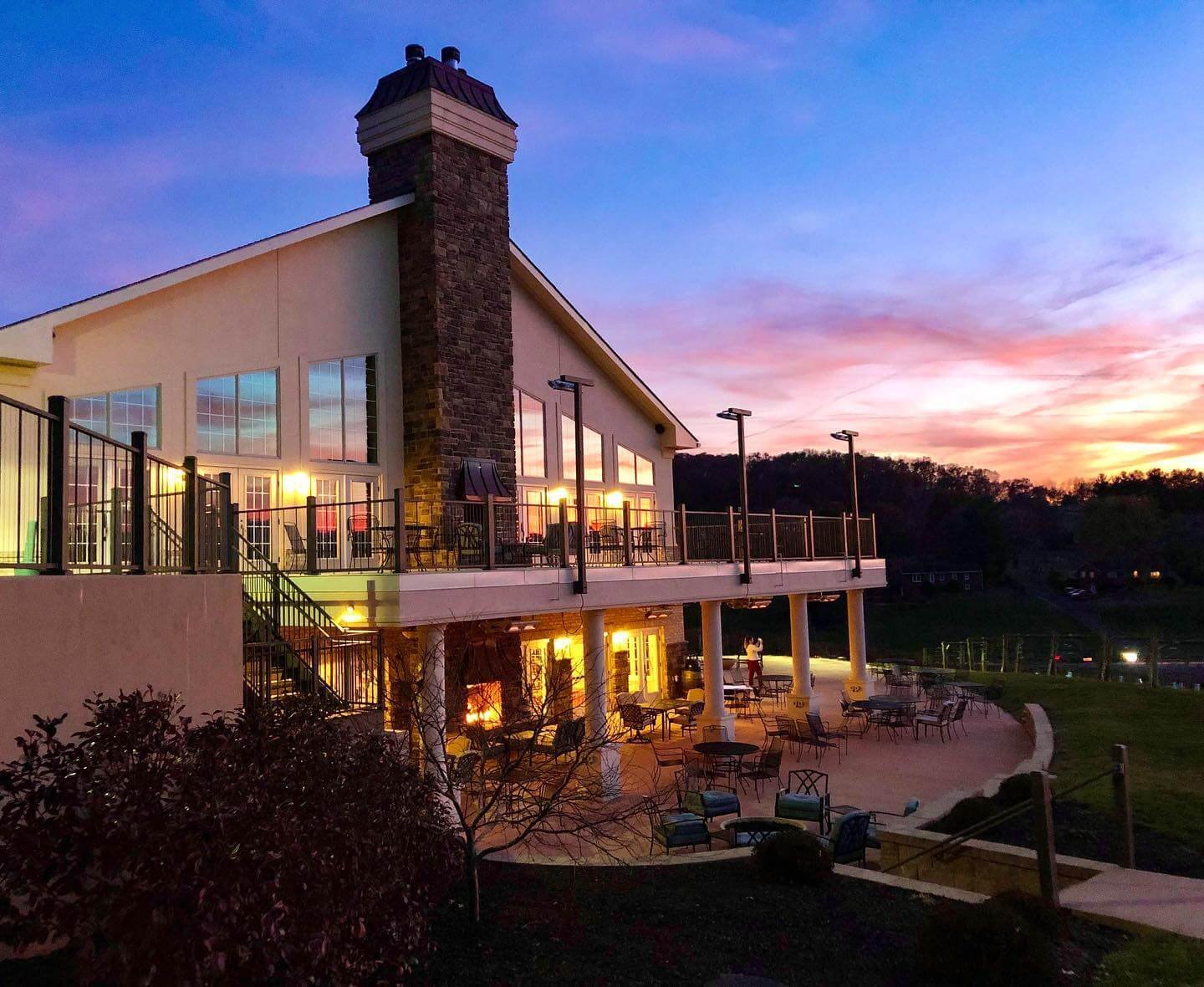
About Bluestone Vineyard
Bluestone Vineyard sits along Spring Creek Road in Virginia's Shenandoah Valley, earning a Pearl 2 Star Prestige designation in 2025 — a signal of serious standing within the state's increasingly competitive wine scene. The property represents the quieter, terroir-focused side of Virginia viticulture, where the region's clay-limestone soils and continental climate do the talking.
Shenandoah Valley Floor: What the Land Delivers
Virginia's wine regions have long existed in an awkward middle position: too far east for the Rocky Mountain rain shadow, too far north for reliable heat accumulation, and perpetually measured against better-known American appellations. The Shenandoah Valley, running southwest through the folds of the Blue Ridge and Allegheny mountains, is the part of the state where that calculus starts to shift. The valley floor sits at elevation, the diurnal temperature swings are pronounced, and the soils — a complex of limestone-influenced clay and shale — introduce mineral tension that flatland Virginia simply cannot replicate. Bluestone Vineyard, at 4828 Spring Creek Road in Bridgewater, is positioned squarely within this terroir argument.
The address itself is telling. Bridgewater sits in Rockingham County, in the northern reach of the valley, where the growing season is compressed by cooler nights and the vine has to work. That stress, in the right hands, translates to concentration and acidity rather than volume , the same logic that drives winemakers to high-altitude sites from Mendoza to the Alto Adige. Virginia is not those places, and it has its own specific set of challenges, including humidity, late-season rain pressure, and the ever-present threat of Pierce's disease in lower elevations. But the Shenandoah Valley, and Rockingham County specifically, sits at an altitude and latitude where those pressures ease enough to allow serious viticulture.
The 2025 Pearl 2 Star Prestige Designation
In 2025, Bluestone Vineyard received a Pearl 2 Star Prestige award , a recognition that places it within a defined tier of quality acknowledgment in the EP Club framework. Among Virginia's wineries, that kind of external credentialing matters more than it might in established appellations. The state's wine industry has spent decades building a credibility case, and each property that earns sustained recognition strengthens the broader argument for Virginia as a serious wine-producing region rather than a regional novelty.
The Pearl 2 Star Prestige designation signals a property that has cleared the bar for consistent quality and visitor experience , not simply a pleasant afternoon destination, but a winery with the substance to compete within a national peer conversation. For context, that places Bluestone in a different tier from the many tasting-room-first operations that populate Virginia's wine trail, and closer to the model represented by properties like Adelaida Vineyards in Paso Robles or Adelsheim Vineyard in Newberg , wineries where the production program, not just the hospitality offering, carries the weight of the visit.
Spring Creek Road and the Physical Approach
Arriving along Spring Creek Road, the landscape does the early work of framing expectations. The valley opens gradually, the Blue Ridge visible to the east, the Allegheny ridgeline closing the western horizon. Agricultural land dominates the floor here , this is not a wine-country monoculture in the way that parts of Napa or the Willamette Valley have become. Vineyards appear as patches within a working rural landscape, which keeps the scale honest and the experience grounded in something that feels less curated than many premium wine destinations.
That physical context matters for how you receive the wines. There is no manufactured drama here, no designed approach sequence calculated to prime a sense of occasion. The property exists within the agricultural fabric of Rockingham County, and the wines, whatever their style, carry the imprint of that unaffected setting. Visitors planning to make the drive from the Harrisonburg area , the nearest significant population center, roughly ten miles north , should treat the journey as part of the visit rather than a commute to be minimized.
Virginia Viticulture: The Terroir Case
The broader argument for Shenandoah Valley terroir is still being assembled by the region's producers, and Bluestone is part of that ongoing experiment. Virginia winemakers have spent considerable effort identifying which varieties perform leading under local conditions, and the consensus has moved toward French hybrids and cold-hardy Vinifera, with Viognier, Cabernet Franc, Petit Verdot, and Tannat emerging as the varieties that most consistently express the state's specific conditions rather than simply surviving them.
The clay-limestone soils of the valley floor are particularly suited to varieties that respond well to water retention and mineral availability , conditions that encourage the kind of mid-palate texture and phenolic development that distinguishes interesting wines from technically correct ones. Compare this to the granite-influenced soils of some California appellations, where drainage and heat combine to push wines toward power, or the volcanic basalt of certain Oregon sites that drives wines toward precision. Virginia's clay-limestone produces a different profile: not the transparency of cool-climate Pinot, not the weight of warm-climate Cabernet, but something with its own character that serious Virginia producers have increasingly learned to lean into rather than correct away.
Properties working within this framework , from the limestone-rich areas of the Northern Neck to the valley floor sites like those around Bridgewater , are the ones drawing the most credible critical attention as Virginia's wine identity sharpens. For comparison, the terroir-focused approach that drives properties like Alban Vineyards in Arroyo Grande or Andrew Murray Vineyards in Los Olivos in California's Rhône-focused wine community finds a different but parallel expression in the Shenandoah Valley's leading properties.
Where Bluestone Sits in the Virginia Scene
Virginia's wine scene has stratified over the past decade. At the top tier sit a handful of properties with national critical recognition and allocation models that operate more like Napa boutique wineries than rural tasting rooms. Below that, a larger middle tier has built real quality programs while remaining accessible , good wines, honest pricing, and visits that reward attention. Below that still, a long tail of lifestyle properties where the event calendar matters more than what's in the glass.
Bluestone's Pearl 2 Star Prestige recognition places it in the serious middle tier, at minimum, with signals that suggest it is pushing toward the upper bracket. That is the competitive set worth understanding when planning a visit: not a first-winery-of-the-afternoon stop, but a destination where the wine program is the primary reason to make the drive. The state's serious producers are scattered across multiple AVAs , Monticello, Shenandoah Valley, Northern Virginia , and visitors who want to build a coherent picture of what Virginia wine actually tastes like at its most expressive would do well to use Bridgewater as a geographic anchor for the valley's argument.
For those building a wider American wine itinerary, the contrast with California's established appellations is instructive. The confidence of a property like Accendo Cellars in St. Helena or the scale and infrastructure of Artesa Vineyards and Winery in Napa represents one end of the American wine spectrum. Bluestone and its Shenandoah Valley peers represent a younger, less formalized, but increasingly serious alternative , one where the story is still being written and the leading vintages may still be ahead. Parallels can also be drawn with producers redefining their regions internationally, from Achaia Clauss in Patras to Aberlour in Speyside , operations where place identity anchors the entire offer.
Planning Your Visit
Bridgewater is accessible from Interstate 81, with Harrisonburg serving as the practical base for anyone visiting multiple valley wineries in a single trip. Spring Creek Road itself runs through working agricultural land, so GPS navigation is the reliable method. Current hours, tasting formats, and reservation requirements are not published in available data, so contacting Bluestone directly before making the drive is the sensible approach, particularly given that smaller valley producers often operate on limited tasting-room schedules outside peak season. The Shenandoah Valley's wine season peaks in late summer through autumn harvest, when the vines are most visible and the harvest-period energy adds context to whatever is poured.
Visitors interested in the wider Virginia wine scene can reference our full Bridgewater restaurants and wine guide for broader regional context, including neighboring producers working within the same valley terroir. For those extending the itinerary, properties like Alpha Omega Winery in Rutherford, Alexander Valley Vineyards in Geyserville, Au Bon Climat in Santa Barbara, Aubert Wines in Calistoga, B.R. Cohn Winery in Glen Ellen, and Babcock Winery in Lompoc offer points of contrast across American wine's regional range.
Frequently Asked Questions
- What kind of setting is Bluestone Vineyard?
- Bluestone Vineyard sits on Spring Creek Road in Bridgewater, Virginia, within the Shenandoah Valley's agricultural corridor. It is a working vineyard property rather than a resort-style destination, set against the Blue Ridge and Allegheny mountain ridgelines. The property holds a Pearl 2 Star Prestige designation for 2025. Pricing and format details are not currently published in available data.
- What do visitors recommend trying at Bluestone Vineyard?
- Specific wine program details, including varieties and releases, are not available in current data. The Shenandoah Valley's clay-limestone soils generally favor Viognier, Cabernet Franc, and Petit Verdot among Virginia's serious producers. Bluestone's 2025 Pearl 2 Star Prestige recognition suggests a program worth engaging with on its own terms rather than as a background to the visit. Contacting the winery directly is the most reliable way to understand current offerings before visiting.
- What's the defining thing about Bluestone Vineyard?
- The defining characteristic is its position within the Shenandoah Valley terroir argument: a site at elevation, with limestone-influenced soils and a pronounced diurnal range, producing wines that carry the imprint of a specific and underappreciated growing environment. The 2025 Pearl 2 Star Prestige award places it among the credentialed tier of Virginia producers , not simply a scenic tasting room, but a property where the wine program warrants the visit. Located in Bridgewater, Virginia.
Related editorial
- Best Fine Dining Restaurants in ParisFrom three-Michelin-star icons to the next generation of Parisian chefs pushing boundaries, these are the restaurants that define fine dining in the world's culinary capital.
- Best Luxury Hotels in RomeFrom rooftop terraces overlooking ancient ruins to Michelin-starred hotel dining, these are the luxury hotels that make Rome unforgettable.
- Best Cocktail Bars in KyotoFrom sleek lounges to hidden speakeasies, Kyoto's cocktail scene blends Japanese precision with global influence in ways you won't find anywhere else.
Save or rate Bluestone Vineyard on Pearl
Keep this venue in your Pearl passport, rate it after you visit, and track it alongside every other place you collect.