
Winery in Bothwell, Australia
Nant Distillery (Bothwell)
500ptsHighland-Cold Malt Production
About Nant Distillery (Bothwell)
Nant Distillery sits on a historic property in Bothwell, Tasmania's Central Highlands, where the cold climate and slow-flowing waters of the Clyde River have shaped whisky production since the site's colonial-era mill days. Recognised with a Pearl 2 Star Prestige rating in 2025, it occupies a distinct position among Australian craft distilleries operating in landscapes that genuinely influence what ends up in the barrel.
Where the Clyde Valley Shapes the Spirit
Tasmania's Central Highlands operate on a different register to most Australian whisky country. The air at Bothwell carries a particular cold-front sharpness, the Clyde River moves slowly through farmland that has been cleared and worked since the early nineteenth century, and the elevation keeps temperatures low enough that maturation here follows a logic closer to the Scottish Highlands than to any mainland Australian distillery. This is the physical context that Nant Distillery, at 254 Nant Lane, inhabits — and it matters more to understanding what the operation produces than any marketing positioning could.
The relationship between place and spirit is not incidental at this latitude and altitude. In whisky production, temperature variance drives the rate at which spirit expands into and contracts out of oak. A cooler, more stable climate like Bothwell's produces slower extraction and a subtler integration of wood character. This sits at the opposite end of the spectrum from Queensland or warmer mainland sites, where rapid evaporation and heat accelerate barrel influence dramatically. Nant's address is, in this sense, a technical specification as much as a geographic one.
That positioning earned the distillery a Pearl 2 Star Prestige rating in 2025 — a recognition that places it within a peer set of Australian producers where craft discipline, provenance, and consistency weigh heavily in the assessment. The rating is not awarded on volume or heritage alone; it reflects a standard of production that observers of the Australian spirits category will recognise as sitting above the crowded mid-tier of domestic whisky operations.
The Colonial Frame That Becomes Part of the Flavour
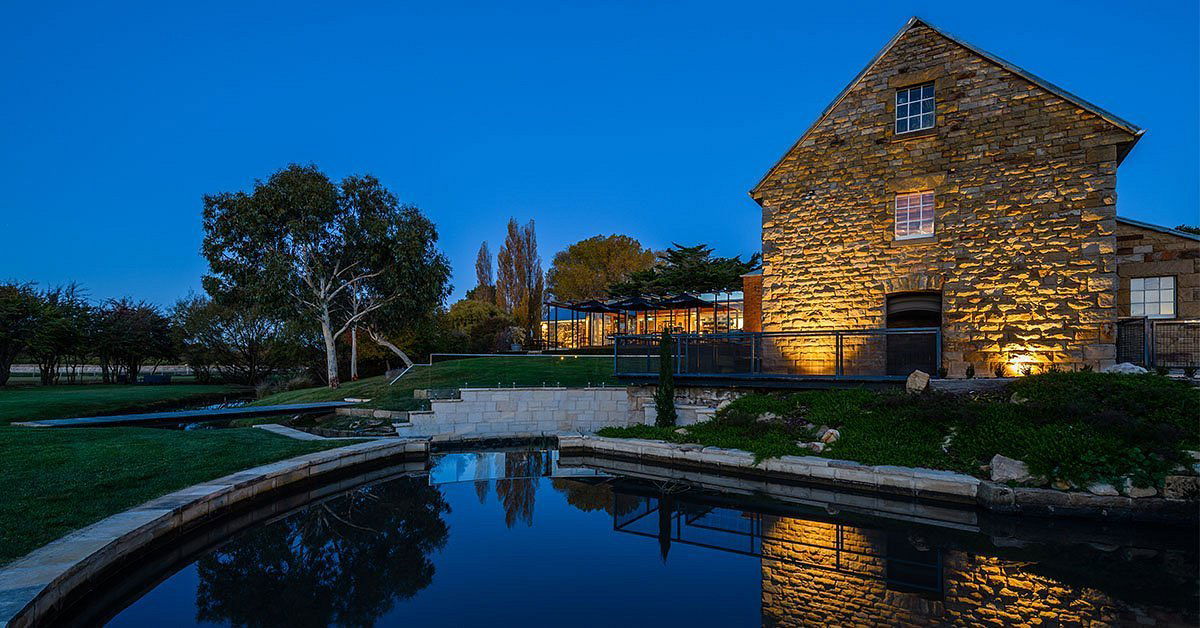
The Nant property carries the physical evidence of its history in stone. The old mill infrastructure, dating to the colonial period, frames the distillery setting in a way that no contemporary build could replicate. In whisky terms, this matters because the site's use of water , drawn from the same catchment that powered the original mill , connects production to the valley's hydrology in a direct, traceable way. Water chemistry is one of the less-discussed variables in spirit character, but in a site like this it is integral rather than incidental.
Tasmania has developed a coherent identity as Australia's premium whisky-producing region over the past two decades, and Bothwell occupies a specific niche within that story. While Hobart and the Huon Valley attract more visitor traffic, the Central Highlands corridor through Bothwell represents the colder, more isolated end of Tasmanian whisky geography. The town itself , one of the oldest inland settlements in Australia , has a quietness that the distillery reflects in its pace of operation. This is not a high-volume production environment built for throughput; it is a site where the conditions set the schedule.
For context on how this fits into broader Australian spirits geography, the approach here differs substantially from urban craft distilleries like Archie Rose Distilling Co in Sydney, where provenance is constructed through sourcing and technique rather than embedded in the physical site. It also differs from Queensland's Bundaberg Rum Distillery, where warm climate and sugarcane tradition define an entirely different production logic. Nant's value proposition is site-specific in a way that neither of those operations can claim on the same terms.
Reading the 2025 Pearl Rating in Context
Within EP Club's rating framework, a Pearl 2 Star Prestige designation in 2025 locates Nant in a tier where the comparison set is relatively narrow. Australian craft distilling has expanded rapidly since the early 2010s, and a significant proportion of that growth has been driven by producers who prioritise volume and accessibility over the slower rhythms of place-led production. The prestige category filters for something different: consistency of quality across releases, a demonstrable connection between site conditions and spirit character, and the kind of attention to process that produces recognisably distinctive output rather than generic category product.
The Tasmanian whisky category includes several producers operating at this level, and the regional identity they collectively project has begun to attract international attention from whisky buyers who previously looked only to Scotland or Japan for aged single malt at a serious price point. Nant sits within that rising tide but represents a specific subset of it , the Central Highlands terroir argument, made through geography and climate rather than through distillery marketing alone.
For reference, the range of approaches within Australian premium drinks production is broad. Winemakers like Bass Phillip in Gippsland or Henschke have spent decades making the case that Australian terroir can produce world-reference product in their respective categories. The Tasmanian whisky category is making a version of the same argument, and Nant is one of the producers carrying that case.
Planning a Visit to Bothwell
Bothwell sits roughly 75 kilometres north of Hobart on the Midland Highway, making it a day trip from the capital rather than a destination requiring overnight accommodation in town. The drive through the Derwent Valley and into the Central Highlands takes around an hour from Hobart CBD, and the road quality is reliable year-round. Visitors who combine the distillery with broader Central Highlands exploration , the lakes region, the golf course (Australia's oldest), and the colonial streetscape of Bothwell itself , get a more complete picture of the landscape that shapes what Nant produces.
Because specific hours, booking requirements, and current tour formats are not confirmed in our venue data, it is worth contacting the distillery directly before visiting, particularly outside summer months when operating hours at regional Tasmanian sites often contract. Seasonal timing is relevant here: the cold months give a visceral sense of why the climate matters to production, while summer visits offer easier access and longer daylight for the property's outdoor spaces. Our full Bothwell restaurants guide covers additional stops for those spending a full day in the region.
Those building a broader Australian distillery or winery itinerary around a Tasmanian visit might also consider how the island's spirit producers compare to mainland operations: All Saints Estate in Rutherglen, Angove Family Winemakers in Renmark, Cape Mentelle in Margaret River, Leading's Wines in Great Western, Bird in Hand in Adelaide Hills, Blue Pyrenees Estate in Pyrenees, Brokenwood in Hunter Valley, Brown Brothers in King Valley, and Casella Family in Griffith each represent distinct regional approaches to Australian drinks production. For international benchmarks with comparable terroir-driven philosophies, Aberlour in Aberlour and Accendo Cellars in St. Helena provide useful reference points across whisky and wine respectively.
Frequently Asked Questions
- Is Nant Distillery more formal or casual?
- The setting , a working historic property in one of Tasmania's quieter inland towns , leans toward the relaxed end of the spectrum. Bothwell itself is a small, unhurried community, and the distillery reflects that register. It holds a Pearl 2 Star Prestige rating for 2025, which signals production seriousness, but the visitor experience at this type of regional Tasmanian site is generally unpretentious rather than ceremonial. Dress accordingly for a rural property visit.
- What should I taste at Nant Distillery?
- Given that the site's core argument is terroir , the Clyde Valley climate, the water source, the slow maturation conditions of the Central Highlands , the focus should be on their aged single malt expressions, where the influence of place on barrel development is most legible. The 2025 Pearl 2 Star Prestige recognition points to consistent quality at the production level; specific current releases should be confirmed directly with the distillery, as the range can shift between batches.
- What's the main draw of Nant Distillery?
- The primary draw is the convergence of a genuinely distinctive physical site , colonial mill infrastructure, cold-climate valley, slow-running river , with a production operation that has earned formal prestige recognition. For visitors from Hobart, it is approximately an hour's drive north, and the distillery is one of the more coherent arguments that Tasmanian whisky's reputation is grounded in actual geography rather than regional branding alone.
- Do they take walk-ins at Nant Distillery?
- Current booking policy is not confirmed in our data. Regional Tasmanian distilleries at this production level sometimes operate by appointment, particularly outside peak season. Given the drive from Hobart, confirming visit arrangements before arriving is advisable. The distillery's website or direct contact is the most reliable route to current access information. The Pearl 2 Star Prestige rating for 2025 suggests an active, operating venue, but logistics should be verified independently before planning a trip.
Related editorial
- Best Fine Dining Restaurants in ParisFrom three-Michelin-star icons to the next generation of Parisian chefs pushing boundaries, these are the restaurants that define fine dining in the world's culinary capital.
- Best Luxury Hotels in RomeFrom rooftop terraces overlooking ancient ruins to Michelin-starred hotel dining, these are the luxury hotels that make Rome unforgettable.
- Best Cocktail Bars in KyotoFrom sleek lounges to hidden speakeasies, Kyoto's cocktail scene blends Japanese precision with global influence in ways you won't find anywhere else.
Save or rate Nant Distillery (Bothwell) on Pearl
Keep this venue in your Pearl passport, rate it after you visit, and track it alongside every other place you collect.