
Winery in Alness, United Kingdom
Dalmore Distillery
1,250ptsCromarty Firth Maturation
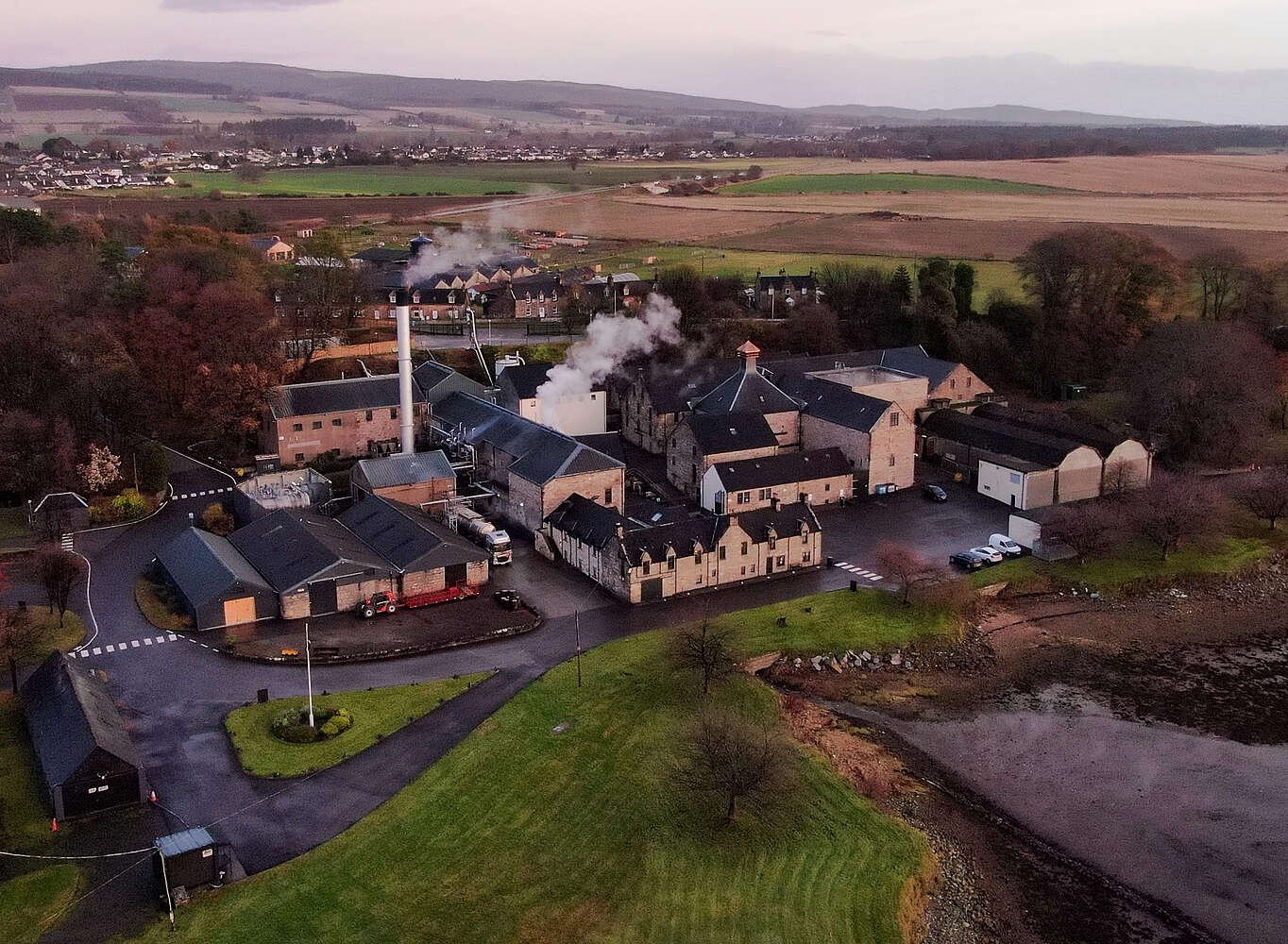
About Dalmore Distillery
Dalmore Distillery sits on the northern shore of the Cromarty Firth in Alness, Ross-shire, producing Highland single malt Scotch whisky in a setting shaped by tidal water, maritime air, and centuries of regional distilling tradition. The distillery holds a Pearl 4 Star Prestige rating (2025), placing it among Scotland's recognised premium whisky experiences. Visitors come for the combination of place, craft, and a whisky character defined by its coastal Highland geography.
Where the Cromarty Firth Does the Work
The drive north from Inverness on the A9, crossing the Cromarty Firth by bridge, deposits you into Ross-shire's low, wide landscape before the road turns inland. Dalmore Distillery sits just off that route at Alness, facing south across tidal water toward the Black Isle. The air carries salt and peat in equal measure. This is not incidental atmosphere — it is the production environment, the thing that separates Highland coastal whisky from the closed-valley character of a Speyside distillery or the assertive coastal smoke of an Islay operation.
Highland single malt has always occupied a broad middle ground in Scotch whisky's regional taxonomy. The category is large and internally varied enough that the label itself tells you little without the geography behind it. A distillery on the northern shore of the Cromarty Firth is drawing from the same climatic logic as neighbours like Balblair Distillery in Edderton and Clynelish Distillery in Brora — coastal exposure, moderate maritime temperatures, and the particular character of Highland water sources , while remaining distinct from the more sheltered, river-valley distilleries further south and east.
Terroir in the Glass: What the Land Contributes
The concept of terroir, borrowed from wine, has taken longer to gain traction in whisky. But the argument is coherent here. The water drawn from Highland sources, the coastal humidity that governs warehouse maturation, the temperature differential between Scottish summer and winter , all of these act on the spirit through years of cask contact in ways that a distillery elsewhere in Scotland would not replicate. The Cromarty Firth's tidal microclimate means warehouses at this latitude experience slower, more gradual oxidative exchange than those in drier inland regions. The result is a maturation curve that Highland distillers have worked with and around for generations.
Scotland's northern Highland corridor , from the Dornoch Firth up through the Cromarty and beyond , has produced a distinct cluster of distilleries that share this environmental logic without converging on a single house style. Dornoch Distillery operates from a converted fire station a few miles south. Balblair, across the Dornoch Firth, is among the oldest continuously operating distilleries in Scotland. What unites them is geography more than any shared production philosophy , they are all, in a meaningful sense, products of the same coastal Highland system.
Dalmore's Place in the Premium Highland Tier
Dalmore Distillery holds a Pearl 4 Star Prestige rating for 2025, a designation that places it at the recognised upper end of Scotch whisky visitor experiences in Scotland. That positioning has a practical meaning for visitors: the level of tour programming, tasting depth, and presentation that comes with a prestige-tier rating is substantially different from what a standard distillery visitor centre offers. Scotland's whisky tourism market has matured considerably over the past decade, and the gap between a commodity distillery tour and a prestige-rated experience is now measurable in both format and content.
Among comparable Highland operations, Dalmore sits in a peer group that includes Balblair to the north and, further afield, operations like Auchentoshan Distillery in Clydebank , though Auchentoshan operates as a Lowland triple-distilled whisky house, a different technical tradition entirely. The comparison illustrates something useful about how Scottish distillery tourism has fragmented: geographic region, production method, and visitor experience tier now form three separate axes along which any distillery positions itself. Dalmore occupies the Highland region, a traditional double-distillation framework, and the premium visitor tier.
Beyond Scotland, the category of premium distillery experiences has its own international reference points. Visitors who have toured prestige estates in Burgundy or Napa , operations like Accendo Cellars in St. Helena , will recognise a shared logic: the experience is structured to demonstrate the relationship between place, production, and the liquid in the glass, rather than simply moving visitors through a bottling line. That alignment of site visit and product education characterises the prestige tier across drink categories.
The Regional Context: Alness and the Northern Distillery Belt
Alness itself is a small Ross-shire town whose industrial and agricultural character has been shaped by the same Highland geography that defines the distillery. It is not a whisky tourism destination in the way that Dufftown or Aberlour on Speyside function as cluster hubs , visitors to the northern Highland corridor tend to move between individual destination distilleries rather than exploring a concentrated walking-distance scene. Aberlour on Speyside, by contrast, sits at the centre of a dense distillery corridor where multiple operations are within a short drive of each other and the town itself has oriented significantly toward whisky tourism.
The northern route, from Inverness through Alness toward Brora and Wick, suits a different kind of trip: longer, landscape-driven, with distillery visits as anchors rather than the continuous backdrop they form on Speyside. Dunphail Distillery and Glen Garioch Distillery in Oldmeldrum illustrate the spread , distilleries of varying scale and tradition scattered across a landscape where the drive between them is part of the experience. This is fundamentally different from the concentrated format of, say, Campbeltown's small-city distillery cluster, where Glen Scotia and its near-neighbours can be visited in sequence within a single afternoon.
For visitors planning a northern Highland itinerary, the sequencing matters. Arriving from the south, the distillery sits roughly an hour north of Inverness. Continuing north, the same route passes through terrain associated with Clynelish , one of the most geographically remote mainland distilleries in Scotland. The EP Club's full Alness restaurants guide covers the broader local picture for those spending more than a day in the area.
Islay operations like Ardnahoe in Port Askaig and Lowland producers like Bladnoch Distillery in Bladnoch , or Lowland-adjacent Irish and international comparisons such as Achaia Clauss in Patras or Deanston , represent different regional traditions. Against that spread, what Dalmore and its northern Highland neighbours share is the specific character of Scotland's northeastern coastal climate, a variable that shows up in the glass in ways no production adjustment can replicate.
Planning a Visit
Dalmore operates in a category where advance planning is advisable. Prestige-rated distillery experiences across Scotland typically require booking ahead, particularly during summer months when Highland tourism peaks between June and September. Visitors without confirmed reservations should check availability directly through the distillery's official channels before making the journey from Inverness. The distillery sits at Alness IV17 0UT on the Cromarty Firth's northern shore, accessible by road from the A9 , there is no rail stop in immediate walking distance, so a car or arranged transfer is the practical approach for most visitors. Timing a visit in spring or early autumn allows the coastal landscape to be read more clearly without the midsummer visitor volumes that concentrate along the A9 route north.
Frequently Asked Questions
Is Dalmore Distillery more low-key or high-energy?
Dalmore sits firmly at the considered, unhurried end of the visitor experience spectrum. The setting on the Cromarty Firth is quiet and industrial-agricultural in character rather than tourist-facing, and the Pearl 4 Star Prestige rating reflects a format built around depth of engagement with the whisky rather than high-volume throughput. If you are coming from a large city expecting a busy tasting-room scene, this is a different register entirely.
What should I taste at Dalmore Distillery?
The distillery's Highland coastal positioning and prestige-tier rating (Pearl 4 Star, 2025) suggest a tasting programme focused on demonstrating how maturation in this specific northern coastal environment expresses itself across different ages and cask types. Without confirmed current menu data, the practical guidance is to ask the host at the time of booking which expressions are most directly tied to the Cromarty Firth location , that conversation will anchor your tasting to the terroir argument that defines the site.
Why do people go to Dalmore Distillery?
The combination of place and prestige-tier recognition is the draw. Alness is not an incidental location , the Cromarty Firth site has been shaping how this whisky matures for generations, and the Pearl 4 Star Prestige rating (2025) signals that the visitor experience has been built to make that argument coherently. For Scotch whisky drinkers who treat distillery visits as an extension of their engagement with the liquid, Dalmore's northern Highland address provides a geographic and climatic reference point that a Speyside or Lowland visit would not.
Is Dalmore Distillery reservation-only?
Given the prestige-tier positioning and the distillery's location outside a major tourist hub, walk-in access cannot be assumed. Prestige-rated Highland distilleries in this category typically operate on a booked-tour model, particularly during peak months. Phone and website details are not available in our current data, so contacting the distillery directly through their official channels before travelling to Alness is the reliable approach, especially if you are coordinating with a broader Highland itinerary.
What makes Dalmore different from other northern Highland distilleries operating in the same coastal corridor?
Among distilleries sharing the northern Highland coastal system, Dalmore's Pearl 4 Star Prestige rating (2025) places it at a specific recognised tier within Scotland's whisky visitor experience market , a designation not uniformly held by all operations along the same coastal route. The distillery has also built a considerable international profile for aged and rare expressions positioned at the premium end of the single malt category, which shapes both the visitor experience format and the peer set against which collectors and enthusiasts compare it.
Related editorial
- Best Fine Dining Restaurants in ParisFrom three-Michelin-star icons to the next generation of Parisian chefs pushing boundaries, these are the restaurants that define fine dining in the world's culinary capital.
- Best Luxury Hotels in RomeFrom rooftop terraces overlooking ancient ruins to Michelin-starred hotel dining, these are the luxury hotels that make Rome unforgettable.
- Best Cocktail Bars in KyotoFrom sleek lounges to hidden speakeasies, Kyoto's cocktail scene blends Japanese precision with global influence in ways you won't find anywhere else.
Save or rate Dalmore Distillery on Pearl
Keep this venue in your Pearl passport, rate it after you visit, and track it alongside every other place you collect.