Winery in Adelaide Hills, Australia
Adelaide Hills Distillery (78°)
500ptsEthanol-Point Precision

About Adelaide Hills Distillery (78°)
Adelaide Hills Distillery (78°), operating from Hay Valley on Chambers Road, holds a Pearl 2 Star Prestige rating for 2025, placing it among the region's most decorated producers. The Adelaide Hills' cool-climate elevation shapes the character of everything made here, from the base spirit inputs to the finished distillate. For serious collectors of Australian craft spirits, this is a reference address.
Where Elevation Becomes Flavour
The Adelaide Hills runs between roughly 400 and 700 metres above sea level, and that altitude differential does measurable work on anything grown or made within it. The region sits close enough to the city — under an hour from central Adelaide — to feel accessible, yet its diurnal temperature range, cool fog mornings, and granite-influenced soils belong to a different climatic logic than the warmer valleys below. It is precisely this gap between proximity and difference that has made the Hills such a productive address for producers who want raw materials shaped by cold nights and long ripening windows rather than heat-driven extraction.
Adelaide Hills Distillery, trading under its 78° label from a property on Chambers Road in Hay Valley, sits squarely inside that terroir logic. Distilling in the Hills means the agricultural inputs , whether grain, botanicals, or fruit , are drawn from an environment where intensity builds slowly. That distinction matters when you are building a spirit program around place rather than industrial efficiency.
The Case for Cool-Climate Distilling
Australian craft distilling has matured considerably since the category's early boom years. The first wave was largely defined by novelty: new stills, first releases, and the excitement of a domestic industry finding its footing. What followed in the more considered tier of the market was a sharper question about whether Australian terroir could be expressed through distilled spirit in the way it has been through wine. The answer, where it has arrived, has come from producers in cooler zones where botanical complexity and raw-material quality provide the foundation.
The Hills is a natural fit for that argument. Bird in Hand and Gentle Folk have demonstrated, through their respective wine programs, that the region's climate delivers produce with structural precision and aromatic lift. Those same growing conditions supply the ingredient base that a distillery drawing on local agriculture would have access to , and they set a quality floor that is higher than most Australian growing regions can match for cool-climate character.
Compare this to Archie Rose Distilling Co in Sydney, which has built a credible program by sourcing carefully from across Australia. The Adelaide Hills proposition is more geographically concentrated: the argument is not just that the spirit is well made, but that where it is made actively shapes what ends up in the bottle.
A 2025 Pearl 2 Star Prestige Rating
EP Club's Pearl 2 Star Prestige award for 2025 places Adelaide Hills Distillery (78°) in a tier that requires consistent quality across output rather than a single standout release. Within the Adelaide Hills, the Pearl 2 Star rating positions the distillery alongside the region's more decorated wine producers, a peer set that includes Ashton Hills Vineyard and Murdoch Hill in terms of critical standing.
For context, the Pearl Prestige tier at EP Club is not applied to entry-level producers working at volume. It signals a program with genuine depth, where the evidence of craft is traceable across multiple expressions. That rating, earned in a year when the Australian craft spirits sector has become more competitive and more critically assessed, carries weight beyond promotional claims.
Nationally, the rating places 78° in a conversation with producers like All Saints Estate in Rutherglen and Angove Family Winemakers in Renmark, each of whom operates within a distinct regional identity. The difference with the Hills operation is climatic specificity: few Australian regions can claim the cold-air precision that Hay Valley and its surrounds deliver to raw materials.
Hay Valley and the Producers Around It
Hay Valley sits in the southern Adelaide Hills, a part of the region that has historically attracted smaller, more focused producers rather than large commercial operations. The address on Chambers Road places the distillery within a stretch of the Hills that includes working vineyards and orchards, not tourist infrastructure. That matters for understanding who this producer is speaking to: the visit to Hay Valley is deliberate rather than incidental.
Nepenthe, one of the more established wine producers in the broader Hills zone, has helped define the region's reputation for cool-climate white and aromatic varieties. The distillery operates in a different category but benefits from the same regional credibility that wine producers have built over decades. When serious drinkers think about the Adelaide Hills as a provenance marker, it carries associations with precision, restraint, and altitude-driven character , qualities that a distillery can borrow from when the raw materials and the geography align.
For visitors approaching from Adelaide, the drive into the southern Hills takes the road through landscape that shifts notably from the city's dry northern plains. The temperature drops, the vegetation changes, and by the time you reach addresses like Chambers Road, the environment itself makes the case for why cool-climate production here tastes different from what the Barossa or McLaren Vale would deliver.
Reading 78° Within the Broader Australian Craft Context
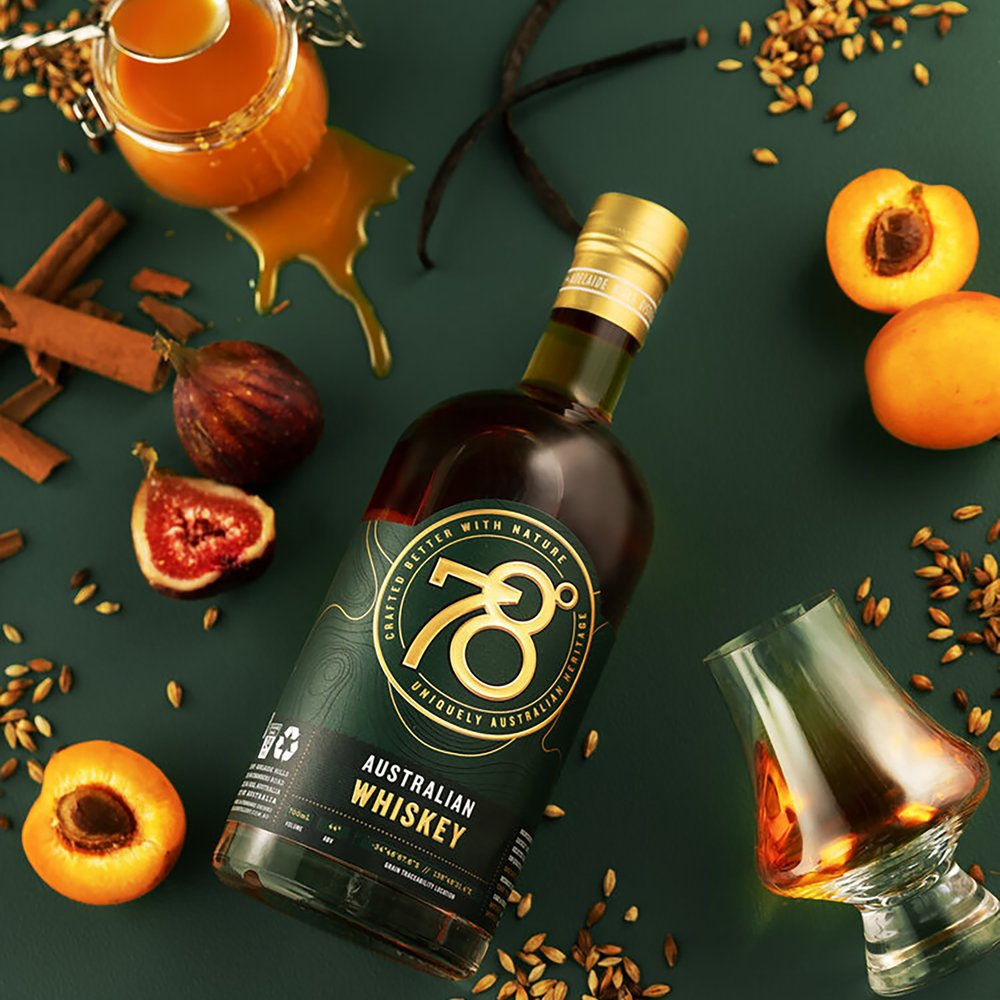
The number 78° in the distillery's trading name is a reference to the boiling point of ethanol in Celsius , a precise, technically grounded choice that signals the producer's orientation. This is not a branding exercise built on nostalgia or pastoral romanticism. The name points toward process, toward the specific thermal moment where spirit separates from water, and that emphasis on technical precision aligns with how the better Australian craft distilleries have differentiated themselves from volume producers.
Internationally, the comparison set for a cool-climate Australian distillery earning recognition in 2025 reaches toward producers in Scotland's highland margins or the northern Spanish coast, where climate and geography are treated as primary rather than incidental to the finished spirit. Closer to home, the parallel is with wine producers like Bass Phillip in Gippsland or Leading's Wines in Great Western, who have built reputations by insisting that where the raw materials grow is as important as how they are processed.
The craft distilling analogue to that argument is still being proven in Australia, but the evidence from the Hills is accumulating. Blue Pyrenees Estate in Pyrenees and Brokenwood in Hunter Valley illustrate how regional identity, built over time, adds a layer of meaning to what might otherwise be assessed purely on technical execution. 78° is at an earlier point in that arc, but the Pearl 2 Star Prestige rating suggests the foundation is in place.
For collectors interested in the trajectory of Australian spirits, Aberlour in Scotlandand Accendo Cellars in St. Helena offer useful reference points at opposite ends of the maturity spectrum: one a centuries-old address with deeply embedded terroir identity, the other a newer producer still establishing its regional grammar. 78° sits closer to Accendo in terms of where it is in that process, but the regional conditions in the Hills give it an unusually strong geographic argument to make.
Planning a Visit
The property at 68 Chambers Road, Hay Valley, SA 5252 is in the southern Adelaide Hills, roughly 45 to 50 minutes from central Adelaide by road. Given the rural address and the focused, small-producer nature of the operation, visiting during opening hours rather than arriving unannounced will produce a more rewarding experience. Specific opening times and booking arrangements are not published in our current data, so contacting the distillery directly before visiting is advisable. The Pearl 2 Star Prestige status suggests demand is genuine, and at this scale of producer, availability on any given day can be limited. For the wider context of what the Adelaide Hills offers across wine and food, see our full Adelaide Hills restaurants guide.
Frequently Asked Questions
What should I try at Adelaide Hills Distillery (78°)?
Given the Pearl 2 Star Prestige rating for 2025, the starting point is whatever the current core range represents , the award recognises consistent quality across output rather than a single expression. The Adelaide Hills' cool-climate agriculture means botanical and fruit inputs should carry the region's characteristic precision and aromatic definition. Ask specifically about expressions that draw on locally sourced ingredients, as that is where the terroir argument the distillery is making becomes most legible in the glass.
What is Adelaide Hills Distillery (78°) leading at?
Based on the Pearl 2 Star Prestige award for 2025, the distillery's strength appears to be in sustained quality at the premium tier of Australian craft spirits. Within the Adelaide Hills, it occupies a similar critical position to the region's more decorated wine producers. The geographic specificity of Hay Valley and the cool-climate raw materials available to a producer at this address are the most distinctive factors in its peer comparison.
Do they take walk-ins at Adelaide Hills Distillery (78°)?
Current contact details and opening policies are not available in our data, so the safest approach is to assume that, as with most small-batch producers in the Adelaide Hills at this quality tier, visits benefit from prior arrangement. The rural location on Chambers Road means there is no surrounding foot traffic to support casual drop-ins; arriving without contact is a risk at this kind of address. We recommend checking directly before travelling.
What is the leading use case for Adelaide Hills Distillery (78°)?
If you are tracking the development of Australian craft spirits with serious intent, a visit to a Pearl 2 Star Prestige producer in the Adelaide Hills gives you both a quality benchmark and a terroir argument that is harder to find in warmer producing zones. The 78° address is not suited to a casual tasting stop on a packed day itinerary; the southern Hills location and the producer's scale reward a focused visit with time to understand the regional context alongside the spirits themselves.
How does the 78° name connect to what the distillery produces?
The name references 78 degrees Celsius, the boiling point of ethanol, which signals a technically oriented approach to distillation rather than a brand built around heritage or pastoral imagery. This kind of naming is more common among Australian craft distillers who want to foreground process and precision as the primary quality marker. Given the Pearl 2 Star Prestige recognition for 2025 and the distillery's position in the cool-climate Adelaide Hills, the name suggests a producer whose identity is grounded in craft rigour at least as much as in geography.
Related editorial
- Best Fine Dining Restaurants in ParisFrom three-Michelin-star icons to the next generation of Parisian chefs pushing boundaries, these are the restaurants that define fine dining in the world's culinary capital.
- Best Luxury Hotels in RomeFrom rooftop terraces overlooking ancient ruins to Michelin-starred hotel dining, these are the luxury hotels that make Rome unforgettable.
- Best Cocktail Bars in KyotoFrom sleek lounges to hidden speakeasies, Kyoto's cocktail scene blends Japanese precision with global influence in ways you won't find anywhere else.
Save or rate Adelaide Hills Distillery (78°) on Pearl
Keep this venue in your Pearl passport, rate it after you visit, and track it alongside every other place you collect.