
Winery in بحمدون, Lebanon
Château Cana
280ptsMountain-Altitude Terroir

About Château Cana
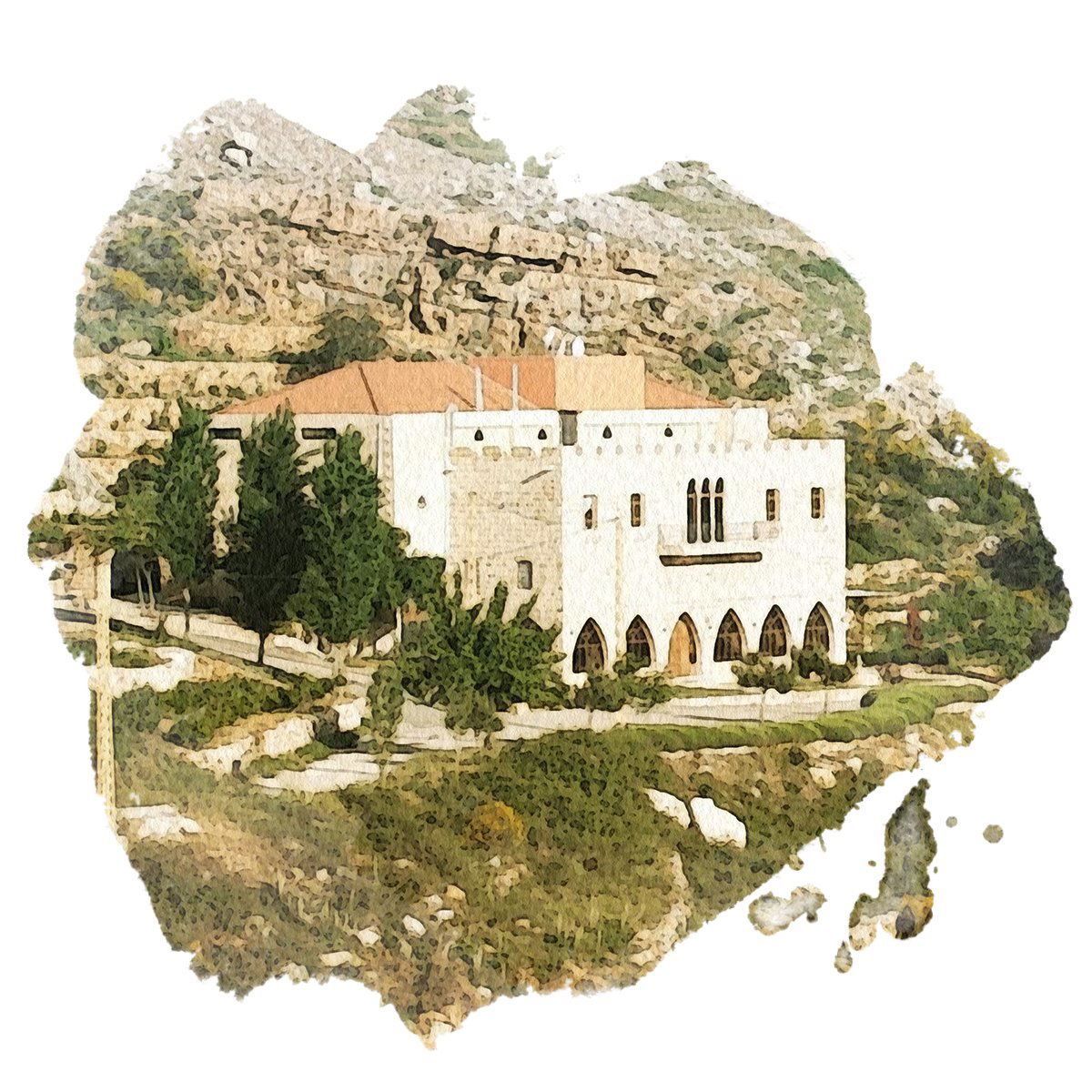
Château Cana sits in Bhamdoun, high in Lebanon's Lamartine Valley, where the terrain that once captured a nineteenth-century French poet's attention now shapes a wine estate carrying a Pearl 1 Star Prestige (2025). The elevation and pine-forested hillsides define both the character of the site and the register of the wines produced here, placing Château Cana within the smaller tier of Lebanese estates defined by altitude and terroir rather than volume.
Altitude, Pine, and the Lamartine Valley
The Lamartine Valley takes its name from Alphonse de Lamartine, the nineteenth-century French Romantic poet who recorded his travels through the Lebanese highlands in the 1830s and left behind enough written rapture about the pine-covered hillsides to give this stretch of the Mount Lebanon range a lasting literary identity. That detail matters beyond the anecdote: it establishes how long these slopes have been legible to an outside eye as something worth attention. Bhamdoun sits within that geography, refined above the coastal plain, cooled by mountain air, and framed by forest cover that moderates both temperature and moisture. Château Cana occupies this position, and the setting is not incidental to the wine.
Lebanese mountain viticulture operates on different terms from the Bekaa Valley floor, where estates like Château Héritage in Bekaa Valley work with different elevations and heat accumulation patterns. At Bhamdoun's altitude, the diurnal range between daytime warmth and cool nights tends to preserve acidity and slow phenolic development, which translates into wines with a different structural profile than what lower-elevation Lebanese production typically delivers. Understanding that distinction is the starting point for understanding what Château Cana is trying to express.
What the Land Communicates
Terroir in Lebanon is a conversation that the country's wine industry has been having seriously for several decades. The major reference points have largely been Bekaa-centric: the valley's combination of limestone soils, high altitude relative to the coast, and intense sunlight has underwritten the reputations of houses like Château Kefraya in Kafraya. But the Mount Lebanon range presents a different argument. Here, the terroir proposition shifts toward cooler-climate expression, with sites that can push the growing season longer and produce grapes at lower sugar concentrations.
For Château Cana, the physical environment of Bhamdoun is the primary editorial fact. The pine forests that Lamartine described are not merely scenic; they influence humidity and canopy microclimate in ways that affect what ripens here and how. The soils of the Mount Lebanon foothills carry limestone and clay fractions that interact with the region's winter precipitation and summer drought cycle differently from sites further inland. These are the conditions that a terroir-led estate reads and responds to, and the Pearl 1 Star Prestige recognition awarded to Château Cana in 2025 suggests that response has reached a level of coherence worth formal acknowledgment.
Lebanon's broader wine community has been pushing quality signals into international view with increasing consistency. Alongside Château Cana, estates such as Karam Wines in Southern Lebanon are expanding the map of where serious Lebanese wine comes from, moving the conversation beyond the Bekaa's historical dominance. Château Cana's mountain position adds another coordinate to that expanding picture.
The Setting as Experience
Arriving in Bhamdoun from Beirut means climbing through a series of elevation changes that compress the distance between Mediterranean coast and mountain interior into less than an hour of road travel. The air shifts noticeably. The light changes quality. The pine cover that Lamartine catalogued still frames the approach, and by the time the estate comes into view, the sensory register is already different from the city below. This is a valley that communicates its altitude before you have tasted anything.
Winery visits in Lebanon's mountain zone tend to reward the journey in a way that Bekaa floor estates, accessible from a different direction, do not quite replicate. The Mount Lebanon sites offer an integration of landscape and wine logic that makes the visit itself informative: you can see why the vines behave as they do, because the environment is immediate and readable. At Château Cana, that relationship between place and product is the experience. The estate's Pearl 1 Star Prestige (2025) positions it within the tier of Lebanese producers where quality credentials have moved beyond local recognition and into international evaluation frameworks.
For context on how other prestige-tier producers across the world translate site-specific conditions into recognizable house styles, estates like Adelaida Vineyards in Paso Robles or Adelsheim Vineyard in Newberg demonstrate how altitude, limestone, and temperature variation become legible in the bottle across different wine regions. The underlying principle at Château Cana follows a similar logic, applied to Lebanon's mountain conditions.
Placing Château Cana in the Lebanese Wine Conversation
Lebanon's wine industry is structurally unusual. It operates in a country where political and economic instability have repeatedly tested its continuity, yet a committed core of estates has maintained quality programs through conditions that would have shuttered production elsewhere. The resilience of that core is part of what gives Lebanese wine its particular character in international discussions: these are not wines produced in comfortable institutional environments, but in a context where every vintage carries a story beyond the agricultural.
Within that context, Château Cana's Bhamdoun address places it in a sub-category of Lebanese producers defined by elevation and mountain terroir rather than Bekaa Valley provenance. That distinction matters for tasters approaching Lebanese wine with any depth of engagement. The structural differences between mountain-grown and valley-floor Lebanese wine are measurable in acidity levels, alcohol concentration, and the pace of tannin development, and they represent a genuine diversity of expression within a national wine identity that is still being mapped by both producers and critics.
The Pearl 1 Star Prestige awarded in 2025 provides the key verifiable credential for Château Cana at this stage of its recognition. In the absence of deeper publicly available production data, that award anchors the estate within a peer set of Lebanese producers operating at a level where international evaluation has confirmed quality. For a broader survey of estates achieving similar recognition across different wine regions, the range runs from Albert Boxler in Niedermorschwihr through to Aldo Conterno in Monforte d'Alba, each demonstrating how regional identity and formal recognition interact at the prestige tier.
Planning a Visit
Bhamdoun is accessible from Beirut via the main mountain highway, with the drive typically running under an hour depending on traffic through the city's outskirts. The village sits at an elevation that makes it a cooler alternative to the capital during summer months, and the surrounding area has historically been a retreat destination for Beirutis. Visiting Château Cana therefore fits naturally into a broader itinerary that combines estate visits with the particular atmosphere of Lebanon's mountain villages. For dining and broader planning across the city and region, the full بحمدون restaurants guide provides additional context.
Specific booking arrangements, opening hours, and tasting formats are not confirmed in publicly available data at this stage. Direct contact with the estate before travel is advisable. Given the 2025 prestige recognition, demand for visits may have increased, which makes advance planning more relevant than it would be for lesser-known producers in the region.
For those building a broader Lebanese wine itinerary, pairing a Bhamdoun visit with estates in different zones, from the Bekaa floor through to southern Lebanon sites like Karam Wines, builds a more complete picture of what the country's viticulture is producing across its varied geographies. The contrast between Château Cana's mountain conditions and the Bekaa's continental climate is itself a form of wine education that the country's small but serious wine circuit can deliver within a single extended trip.
Frequently Asked Questions
- What kind of setting is Château Cana?
- Château Cana is a wine estate in Bhamdoun, situated in the Lamartine Valley within the Mount Lebanon mountain range. The valley takes its name from the nineteenth-century French poet Alphonse de Lamartine, who wrote about its pine-forested hillsides during his travels through Lebanon in the 1830s. The estate sits at mountain elevation above the coastal plain, in a cooler, pine-covered zone distinct from Lebanon's more widely known Bekaa Valley wine corridor. It holds a Pearl 1 Star Prestige (2025), placing it within the recognized tier of quality Lebanese producers.
- What wines is Château Cana known for?
- Specific wine range details are not confirmed in current public records. What is established is that Château Cana operates in a mountain terroir zone where altitude, diurnal temperature variation, and limestone-clay soils create conditions that differ structurally from Bekaa Valley production. The Pearl 1 Star Prestige (2025) award signals that the estate has reached a level of quality recognition beyond the local market. For confirmed production details and tasting notes, direct contact with the estate is the appropriate step, as publicly available data on specific bottlings remains limited.
Recognized By

Related editorial
- Best Fine Dining Restaurants in ParisFrom three-Michelin-star icons to the next generation of Parisian chefs pushing boundaries, these are the restaurants that define fine dining in the world's culinary capital.
- Best Luxury Hotels in RomeFrom rooftop terraces overlooking ancient ruins to Michelin-starred hotel dining, these are the luxury hotels that make Rome unforgettable.
- Best Cocktail Bars in KyotoFrom sleek lounges to hidden speakeasies, Kyoto's cocktail scene blends Japanese precision with global influence in ways you won't find anywhere else.
Save or rate Château Cana on Pearl
Keep this venue in your Pearl passport, rate it after you visit, and track it alongside every other place you collect.