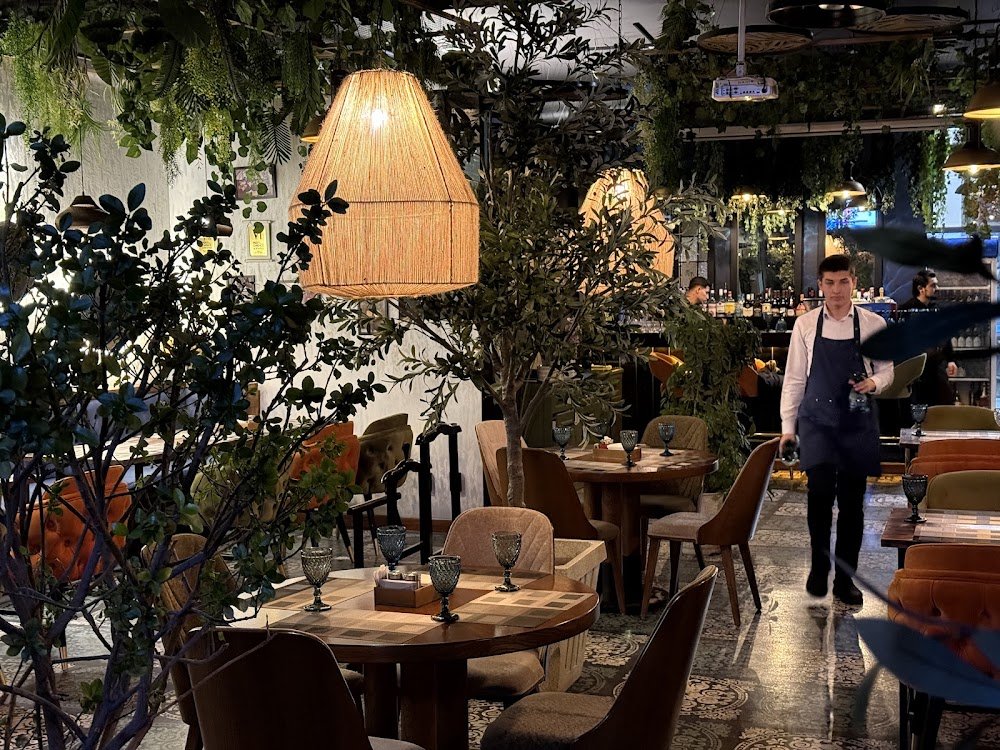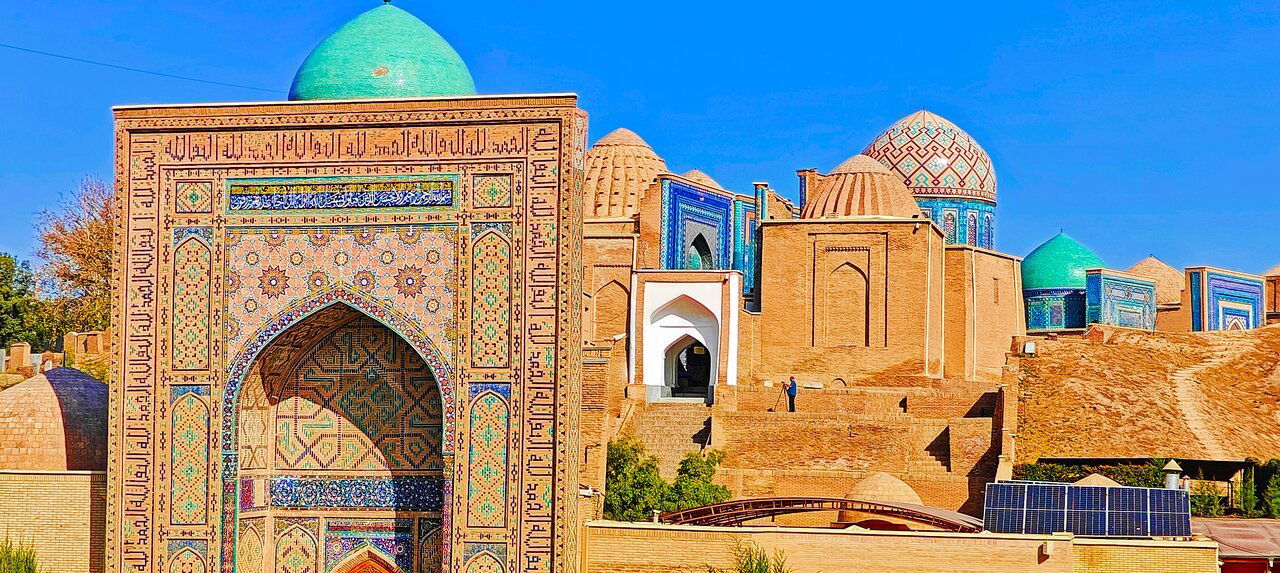
Restaurant in Xiva, Uzbekistan
Mirza Bashi
100ptsKhorezmi Table Tradition

About Mirza Bashi
Where the Old City Feeds Itself Pakhlavon Makhmoud Street runs through the heart of Khiva's Ichan-Kala, the walled inner city that UNESCO designated a World Heritage Site in 1990. Walking it, you pass madrasas, minarets, and the kind of...
Where the Old City Feeds Itself
Pakhlavon Makhmoud Street runs through the heart of Khiva's Ichan-Kala, the walled inner city that UNESCO designated a World Heritage Site in 1990. Walking it, you pass madrasas, minarets, and the kind of low-slung merchant architecture that has shaped the Silk Road's visual grammar for centuries. Mirza Bashi sits on this street, which means it operates inside one of Central Asia's most intact medieval urban fabrics. That physical context is not incidental to the food. In Khiva, the walled city is both the attraction and the supply chain: the local market patterns, the proximity to Khorezm's agricultural basin, and the foot traffic of traders and visitors have historically defined what gets cooked and how.
Khorezm on the Plate: What the Region Grows
Uzbek cuisine is often discussed as a single tradition, but regional variation runs deep. Khorezm, the province surrounding Khiva, sits in the Amu Darya delta and has historically produced rice, cotton, and a range of seasonal vegetables shaped by an arid continental climate with reliable irrigation. The Khorezmi variant of plov, the rice dish that anchors Central Asian hospitality, is distinct from its Tashkent or Samarkand counterparts: typically cooked with yellow carrots rather than orange, and with a proportion and seasoning profile that reflects local agricultural output rather than a standardized national recipe.
This matters when reading any Khiva restaurant. Ingredient sourcing in a city like this is not a marketing choice. It is a geographic reality. The markets that supply places like Mirza Bashi on Pakhlavon Makhmoud Street draw from the same Khorezm basin that has fed this corner of Central Asia since antiquity. Lamb raised on semi-arid pasture, flatbreads baked in tandoor ovens using local grain, dried fruits sourced from small orchards near the Amu Darya: these are not curated farm-to-table gestures but the actual mechanics of how food moves through this part of Uzbekistan. For visitors arriving from larger, more internationally supplied cities, this regional specificity is precisely what makes eating in Khiva different from eating in Tashkent or Samarkand, however good those cities' restaurants may be. Compare the approach of Afrosiyob Restaurant in Samarqand or Old Bukhara in Buxoro and you start to see how sharply regional identity marks itself through food across Uzbekistan's heritage cities.
The Structure of a Khorezmi Meal
A full meal in the Khorezmi tradition moves through a logic that reflects the region's hospitality codes as much as its pantry. It typically opens with bread and non-alcoholic or fermented drinks, moves through cold and warm appetizers, and arrives at a central rice or meat dish before finishing with seasonal fruit and tea. This sequence is not arbitrary. It reflects both the agricultural calendar, which determines what is fresh at any given point in the year, and the social rhythm of Uzbek communal eating, in which the table is set gradually and the main dish arrives as a kind of declaration.
For visitors accustomed to shorter, more segmented menus, this pacing can feel slow in the leading sense. The food is arriving; it simply takes time. At a venue positioned on the primary cultural artery of Khiva's old city, that rhythm is likely part of the offer, whether or not it is explicitly framed as such. The street itself draws visitors navigating the Ichan-Kala's dense cluster of monuments, and restaurants along it benefit from both the walk-in traffic of tourists and the deeper custom of locals who eat here because this is where they have always eaten.
Khiva's Dining Scene in Context
Khiva's restaurant scene operates in a different register from Uzbekistan's larger cities. Tashkent now has venues that draw comparison with broader regional standards, places like Jumanji in Tashkent and Khiva Cafe in Toshkent, which signal the capital's more diversified and internationally influenced offer. Khiva, by contrast, has a smaller visitor economy and a more compressed restaurant sector, which means the leading places to eat are typically those embedded in the old city's daily life rather than operating as standalone dining destinations. The competition is local rather than regional, and quality is measured against what Khorezm actually produces rather than against imported standards.
Nearby Terrassa represents Khiva's more terrace-oriented, view-led dining offer, serving visitors who want the visual spectacle of the old city alongside their meal. Mirza Bashi on Pakhlavon Makhmoud operates within the old city fabric itself, which creates a different dynamic: less framed, more embedded. Elsewhere in the region, places like Ayvan Restaurant in Bukhara and Shayxana Nayman in Kegeyli show how heritage-city dining across western Uzbekistan shares a set of common supply-chain and setting logics, even when individual menus differ. The spectrum from Khiva to the broader world of ambitious restaurant dining is wide: at the other end sit venues like Le Bernardin in New York City, Alinea in Chicago, or Alain Ducasse at Louis XV in Monte Carlo, venues that operate with entirely different supply logic and format discipline. That comparison is not an implicit criticism of Khiva; it simply maps the range.
Planning Your Visit
Khiva's old city is compact and navigable on foot, which means reaching Pakhlavon Makhmoud Street requires no transport once you are through the Ichan-Kala's gates. The city sees its highest visitor volume between April and June and again in September and October, when the Central Asian climate is most cooperative. Outside those windows, the old city is quieter and the restaurant sector reflects that. No advance booking information is available for Mirza Bashi through EP Club's records, and the venue currently has no published website or phone number in our database. The most reliable approach in Khiva is to walk the street early in your visit, note which venues are open and operational, and return at the meal time that suits your itinerary. Lunch tends to be the primary meal in Uzbek old-city restaurants; evening service hours vary.
For visitors building a fuller picture of Uzbekistan's heritage-city dining circuit, our full Xiva restaurants guide maps the old city's offer across categories and settings. Further afield, Yi Palace in Konigil and 8½ Otto e Mezzo Bombana in Hong Kong represent different points on the global restaurant spectrum that help calibrate what Khiva's scene is doing relative to the wider world. Closer to home, Alléno Paris au Pavillon Ledoyen, Amber in Hong Kong, Lazy Bear in San Francisco, and Emeril's in New Orleans each anchor different traditions in the global dining conversation, and understanding Khiva's food means understanding it as a distinct tradition rather than a lesser version of those international benchmarks.
Frequently Asked Questions
- What's the leading thing to order at Mirza Bashi?
- The most direct guidance for any Khiva restaurant is to order what is central to the Khorezmi tradition: plov, the regional rice dish, and whatever meat or appetizer preparation reflects the season's agricultural output. In Khorezm, plov is characteristically made with yellow carrots and seasoned to local convention rather than the Tashkent or Fergana versions. Specific menu details for Mirza Bashi are not available in EP Club's current database, so ordering by asking the kitchen what arrived at the market that day is a reasonable approach.
- How hard is it to get a table at Mirza Bashi?
- Khiva draws significant visitor traffic during its April-June and September-October peak seasons, and restaurants on primary streets inside the Ichan-Kala can fill at lunch. No reservation system or booking method is documented in EP Club's records for this venue. Arriving before the peak lunch hour, typically before noon, or asking your accommodation to make a local inquiry is the most reliable strategy given the absence of a published phone number or website.
- What's Mirza Bashi leading at?
- Based on its position on Pakhlavon Makhmoud Street inside Khiva's UNESCO-listed walled city, Mirza Bashi operates within a dense heritage setting that shapes both its supply chain and its dining rhythm. The Khorezmi culinary tradition, grounded in the Amu Darya delta's agricultural output, is the frame within which this restaurant's cooking should be read. That regional specificity is the strongest argument for eating here rather than at a less geographically anchored venue.
- Can Mirza Bashi adjust for dietary needs?
- No dietary accommodation information is available for Mirza Bashi in EP Club's records, and the venue has no published website or phone contact at the time of writing. In Uzbekistan's heritage-city restaurants, where the kitchen is typically organized around a small number of traditional preparations, accommodating significant dietary restrictions may require direct communication on arrival. Vegetable-based dishes and bread are generally available alongside meat-centred preparations across the Uzbek culinary tradition, but confirming specifics in advance is advisable for those with strict requirements.
- Is a meal at Mirza Bashi worth the investment?
- Price data for Mirza Bashi is not in EP Club's database, but Khiva's old-city restaurants generally operate at a cost level well below Uzbekistan's capital-city venues, let alone international comparators. The value calculation here is less about price-to-quality ratio in a fine-dining sense and more about eating a regionally specific meal in one of Central Asia's most intact medieval urban environments. For visitors to Khiva, that combination is the actual offer.
- What is the historical significance of Pakhlavon Makhmoud Street for understanding restaurants like Mirza Bashi?
- Pakhlavon Makhmoud Street is named after a 14th-century Khivan poet, wrestler, and folk hero whose mausoleum stands along the same axis inside the Ichan-Kala. The street has functioned as a primary commercial artery within the walled city for centuries, which means the trade and market infrastructure surrounding it has a long history. Restaurants occupying this street inherit that commercial geography, with proximity to Khiva's traditional market patterns and the steady foot traffic of a street that connects major monuments within the UNESCO site.
Related editorial
- How travel will be redefined by 2040By 2040, Travel Will Stop Being a Place You Go and Become a State You Inhabit Thesis: The defining shift in travel by 2040 will not be faster planes or smarter hotels — it will be the collapse of the
- How travel will be redefined by 2040By 2040, Travel Won't Be an Industry — It Will Be Infrastructure My thesis is simple and, I suspect, unfashionable: by 2040 travel will stop behaving like a discretionary consumer category and start
- How travel will be redefined by 2040By 2040, Travel Won't Be a Trip — It Will Be a Stack My thesis is simple and, I think, uncomfortable: by 2040, "travel" will no longer describe a discrete journey from point A to point B.
Save or rate Mirza Bashi on Pearl
Keep this venue in your Pearl passport, rate it after you visit, and track it alongside every other place you collect.