
Restaurant in St Cloud, United States
The Catfish Place
100ptsInland Freshwater Southern
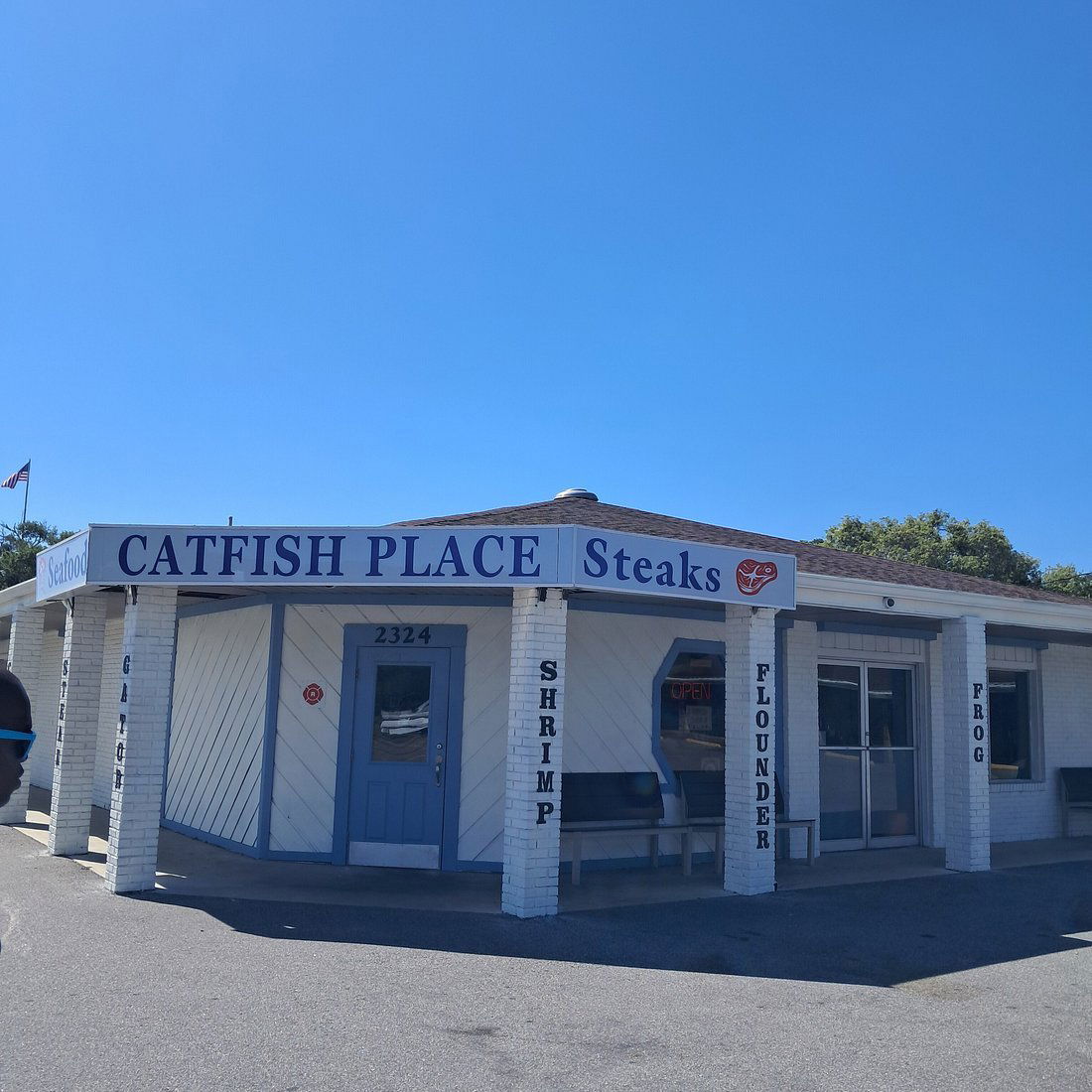
About The Catfish Place
The Catfish Place at 2324 13th St in St Cloud, Florida puts freshwater catfish at the center of the plate in a region where Central Florida's lake country has long supplied the raw material for this kind of cooking. It sits inside a local dining culture shaped more by roadside tradition than by fine-dining convention, and that context is the point.
Where Central Florida's Lake Country Ends Up on the Plate
Central Florida's interior has a different culinary rhythm than its coastal neighbors. Away from the theme-park corridor and the beach-town seafood shacks oriented toward saltwater catches, the lake-dense counties around Osceola and Orange have historically produced a freshwater fishing culture that predates Florida's tourism economy by generations. Catfish, bream, and bass pulled from local lakes and rivers formed the backbone of inland Florida cooking long before the interstate brought outside influences. The Catfish Place, at 2324 13th St in St Cloud, FL, sits inside that tradition rather than apart from it.
St Cloud itself occupies a position in the Orlando metro that most visitors and many newer residents overlook. It borders the northern edge of Lake Tohopekaliga, one of the largest lakes in the Kissimmee chain, a system that remains one of Florida's most productive freshwater fisheries. That geography is not incidental to a restaurant built around catfish. The sourcing logic for this category of cooking is inseparable from the physical environment it comes from, and in St Cloud, that environment is immediately present.
The Freshwater Sourcing Argument
The conversation around ingredient sourcing in American restaurants has been dominated for the past two decades by farm-to-table frameworks built around produce and pasture-raised protein. Freshwater fish, particularly catfish, sits in a different and often less-discussed sourcing tradition. Across the American South and into Florida's interior, catfish has historically come from two sources: wild-caught from rivers and lakes, and pond-raised in aquaculture operations concentrated in the Mississippi Delta region of Alabama, Mississippi, and Arkansas. Both supply chains are real, both have their defenders, and the distinction matters to anyone eating seriously in this category.
Wild-caught freshwater catfish from Florida waterways carries a flavor profile shaped by water temperature, seasonal diet, and the specific ecosystem of the lake or river in question. Aquaculture catfish, particularly from well-managed Delta operations, offers more consistency and a cleaner, milder taste that has made it the commercial standard across most of the South. At a restaurant named after the species and operating in a county surrounded by active freshwater fisheries, the question of which supply chain is in play is worth raising. Venues that can point to local or regional sourcing sit in a different position than those drawing from commodity distribution, and in a dining category where the protein is the point, that distinction shapes what arrives on the plate.
Comparable operations in the broader American sourcing conversation, from Blue Hill at Stone Barns in Tarrytown to Single Thread Farm in Healdsburg, have built significant reputations around the transparency of their sourcing relationships. Those examples sit in a different price tier entirely, but the underlying argument, that proximity and traceability change what food tastes like and what it means, applies across price points. A catfish house in lake country Florida is making a sourcing argument by its location alone, whether or not it makes that argument explicitly.
The Setting and What It Signals
Florida's inland dining culture operates by conventions that differ substantially from what you encounter in coastal resort towns or the Orlando dining corridor. Portions tend toward generosity over refinement. The physical environment of a well-regarded catfish operation typically runs to practical rather than decorative: counter service or casual table service, booths over banquettes, sweet tea as a default rather than a curated beverage program. That format is not an absence of care. It is a different set of priorities, one that places the protein and the preparation method at the center rather than the room design or the service ritual.
For diners oriented toward the kind of experience offered by Alinea in Chicago or Atomix in New York City, the register is entirely different. That difference is the point. Catfish houses in the inland South and Central Florida tradition are not trying to occupy the same space as tasting-menu restaurants. They are doing something separate: preserving a cooking format rooted in local geography, regional technique, and a protein that the coastal fine-dining world has largely ignored.
St Cloud's dining scene reflects the town's position as a working community at the edge of the Orlando metro. Alongside The Catfish Place, the local restaurant mix includes spots like Cinco de Mayo Mexican Restaurant LLC and Crabby's On The Lakefront, the latter of which shares the lake-adjacent geographic logic that shapes this part of Osceola County. For a fuller picture of what the town offers, the full St Cloud restaurants guide covers the range.
Catfish in the American Restaurant Conversation
Catfish has been historically underrepresented in the editorial coverage given to American regional cooking, particularly compared to the attention paid to Gulf shrimp, Atlantic oysters, or Pacific salmon. The reasons are partly cultural and partly commercial: freshwater fish lacks the coastal glamour that drives food media, and catfish carries associations with economically modest cooking that the prestige restaurant world has been slow to rehabilitate. That is changing in some quarters. Chefs at restaurants like Emeril's in New Orleans and sourcing-focused operations such as Providence in Los Angeles have pushed freshwater and underutilized species into more considered framing. But the rehabilitation is partial and uneven, and the catfish house as a format has remained largely outside that conversation.
That outside position is arguably an advantage for the format's authenticity. The cooking traditions that produce a properly fried catfish fillet, cornmeal-crusted, cooked at the right oil temperature to stay moist inside while developing a crust with structural integrity, are not recent inventions responding to trend cycles. They are techniques refined across decades of regional practice. The same is true of the hushpuppies, coleslaw, and sides that typically accompany the protein in this format. These are not supporting acts assembled for visual composition. They are components of a complete meal logic that has internal coherence.
Diners who approach The Catfish Place from a framework built on tasting menus at The French Laundry in Napa, the narrative-driven service at Lazy Bear in San Francisco, or the hyper-local sourcing programs at operations like Bacchanalia in Atlanta or Brutø in Denver will need to recalibrate their expectations. The value proposition here is different: it is about format fidelity and regional specificity, not about culinary novelty or technical showmanship. That is a legitimate and defensible position for a restaurant to occupy.
Planning Your Visit
The Catfish Place is located at 2324 13th St in St Cloud, Florida, within easy reach of the greater Orlando area and approximately 30 minutes south of downtown Orlando depending on traffic conditions on US-192. St Cloud is accessible by car; there is no practical public transit connection from the Orlando metro core. No current booking data, hours, or pricing information is available in our database for this venue, so confirming hours directly before visiting is advisable. The format of a catfish house in this tradition generally does not require advance reservations, but conditions can vary seasonally, particularly in a community that sees traffic fluctuations tied to the broader Central Florida tourism cycle. For context on comparable sourcing-driven American restaurants operating at different price points and scales, coverage of Causa in Washington, D.C., Addison in San Diego, and The Inn at Little Washington in Washington offers useful reference points for understanding how American restaurants at various tiers approach the relationship between place, sourcing, and the plate.
Frequently Asked Questions
- Can I bring kids to The Catfish Place?
- In St Cloud's casual dining culture, restaurants in this price tier and format are typically family-oriented without specific age restrictions. A catfish house operating in the inland Florida tradition generally runs as an accessible, informal setting where children are a standard part of the dining room demographic. Confirming current seating arrangements directly with the venue is recommended, as specific details are not available in our current data.
- What kind of setting is The Catfish Place?
- St Cloud sits in a lake-country context well outside the Orlando resort corridor, and restaurants here reflect that working-town character rather than the polished casual dining formats built for tourist traffic. Without current awards data or formal style classification in our records, the setting at The Catfish Place follows the conventions of inland Florida catfish houses: practical, direct, and organized around the food rather than the room. The address on 13th St places it in the commercial fabric of the town rather than a lakefront or destination-specific location.
- What's the must-try dish at The Catfish Place?
- In the catfish house format, the fried catfish is the reference point against which everything else is measured. No specific menu data is available in our current records for this venue, and generating dish-level detail without a verified source would be misleading. What can be said with confidence is that restaurants named after and built around a single protein make that protein the standard by which the kitchen should be judged: the preparation, the oil temperature, the crust-to-flesh ratio, and the quality of the sourced fish are where the cooking argument is made or lost.
- Is The Catfish Place connected to the local freshwater fishing tradition around Lake Tohopekaliga?
- St Cloud sits directly on the northern shore of Lake Tohopekaliga, part of the Kissimmee chain that constitutes one of Florida's most active freshwater fisheries. A restaurant named for and built around catfish in this location carries a geographic logic tied to that ecosystem. Specific sourcing details for this venue are not confirmed in our current database, but the broader Central Florida region has a documented history of freshwater fish cookery rooted in the same lake system that borders the town.
Related editorial
- Best Fine Dining Restaurants in ParisFrom three-Michelin-star icons to the next generation of Parisian chefs pushing boundaries, these are the restaurants that define fine dining in the world's culinary capital.
- Best Luxury Hotels in RomeFrom rooftop terraces overlooking ancient ruins to Michelin-starred hotel dining, these are the luxury hotels that make Rome unforgettable.
- Best Cocktail Bars in KyotoFrom sleek lounges to hidden speakeasies, Kyoto's cocktail scene blends Japanese precision with global influence in ways you won't find anywhere else.
Save or rate The Catfish Place on Pearl
Keep this venue in your Pearl passport, rate it after you visit, and track it alongside every other place you collect.