Koloa Fish Market
Koloa Town, Koloa
Restaurant in Koloa, United States
 Book with Pearl
The Read
Counter-Service Shore Tradition
Price
$10–20per person
Why go
Koloa Fish Market is worth using as a casual daytime counter stop in Koloa, especially for solo diners, couples, or families keeping a beach-day schedule loose. Do not pick it for a dressed-up meal or long sit-down service; choose it when speed and simplicity matter more than ambience.
About Koloa Fish Market
On a second pass through Koloa, the useful question is which casual stop fits the hours you actually have, not which place sounds best in the abstract. Koloa Fish Market is best evaluated as a casual daytime option in Koloa, with hours from 10 AM to 3 PM on Monday, Tuesday, Wednesday, Friday, and Saturday, and closures on Thursday and Sunday. Those details matter because they define the window in which the place can realistically work. Its value is clearest when that limited daytime schedule fits your plan, and much less clear when your day is already organized around evening dining, a late arrival, or a tightly timed itinerary.
First-timers should keep expectations simple. Koloa Fish Market is in Koloa, the dress code is casual, and the posted hours are daytime-only on its open days. The safest recommendation is based on timing and practicality rather than specific dishes or amenities. Confirm finer points directly before you go.
Use it as a casual daytime stop
The main planning detail is the schedule. Koloa Fish Market is open 10 AM to 3 PM on Monday, Tuesday, Wednesday, Friday, and Saturday, and closed on Thursday and Sunday. That makes it a poor fit for dinner plans, late arrivals, or anyone who wants an evening meal. It is a better fit when your group wants something casual during the day and can work within the posted hours. The narrower window also means it is worth thinking about where it sits in the rhythm of your day: before the afternoon gets away from you, while you are already in or near Koloa, and only if the open days line up with your visit.
For a first visit, keep the plan flexible. Dress casually, confirm current details before going if timing matters, and treat the stop as one Koloa option among several rather than a guaranteed match for every dining need. If your plans depend on seating, service style, price, or a particular kind of menu, verify those details separately.
The most useful basics are its Koloa location, casual dress code, and limited daytime hours. Those basics are enough to position it as a practical daytime possibility, but not enough to make broader promises about what the experience will include. For another option, compare it with Koloa Thai Bistro. For broader planning, use our full Koloa restaurants guide.
Planning details
- Location
- 3390 Poipu Rd, Koloa, HI 96756
- Website
- koloafishmarket.com
- Phone
- +1-808-742-6199
The take
The Take
The Vibe
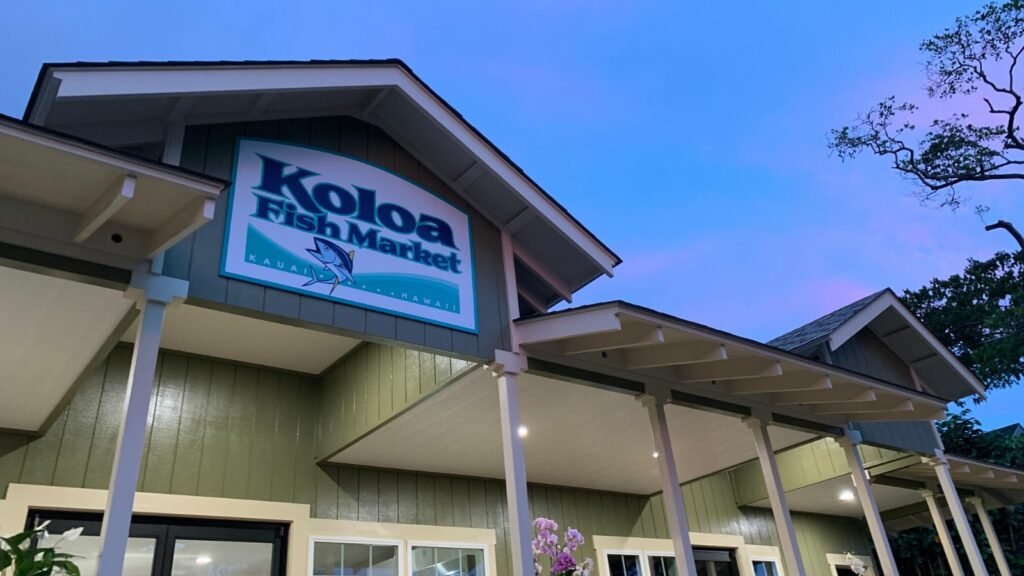
Koloa Fish Market reads like a local institution rather than a tourist dining room. It sits along Poipu Road in Old Koloa Town and represents the island’s working-shore food culture: unfussy, ingredient-forward and rooted in daily catch. Service and presentation favor directness — plate lunches, poke bowls and grilled fish sold by weight — so the mood is informal and unpretentious. Regulars and people who know what they want drive the clientele, which keeps the place feeling communal and lived-in rather than staged for visitors. The overall vibe is quietly charming and relaxed, anchored in a sense of place and practical rhythms.
Best For
This is a straightforward choice for visitors seeking an authentic Hawaiian fish-market experience — especially for lunch or a no-frills, fresh-seafood meal. The market’s plate-lunch and poke formats suit solo diners, families and anyone wanting a quick, satisfying local meal without the formalities of resort dining. It works well for people who prioritize fresh Pacific catch and simple preparation over elaborate plating. Travelers passing through Poipu Road will find it particularly convenient for an informal bite that leans heavily on local tradition and ingredient quality.
Ordering Tips
Expect plate lunches, poke bowls and grilled fish sold by weight; those are the formats the market emphasizes. Prioritize the signature seafood options — spicy ahi poke and smoked marlin — or choose a classic plate like Kalua Pork or Lau Lau if you want a broader island-style meal. Fried Calamari is a good shareable if you’re with others. Because the place operates in the fish-market tradition, keep selections simple and focus on freshness and seasoning rather than complex preparations; ask about the day’s catch if you want the freshest grilled options.
Venue details
Ambiance
Casual, no-frills fish-market atmosphere focused on takeaway rather than sit-down dining.
Tags
Vibe
Best For
Experience
Sourcing
At the Table
- Service Style
- Counter Service
- Meal Pacing
- Quick Bite
- Kitchen
- Traditional
- Menu Format
- A la carte
- Dietary
- Pescatarian friendly
Signature Dishes
- Poke bowls
- Korean ahi poke
- Spicy ahi poke
- Lau lau
- Plate lunches
Know before you go
Know Before You Go
- Getting there
- 3390 Poipu Rd, Koloa, HI 96756
Planning details
Location
Also consider
Also Consider
- The Fresh Shave, Notable alternative
- Koloa Thai Bistro, Notable alternative
- Mura Izakaya, Notable alternative
- Living Foods, Notable alternative
- Scotty Browns Poipu, Notable alternative
Restaurant context
How it compares in Koloa
Choose Koloa Fish Market when the priority is a quick, casual daytime meal with minimal planning. The Fresh Shave is a better add-on stop than a meal replacement, especially if the group wants something light and sweet rather than lunch. For a seated meal with more structure, Koloa Thai Bistro is the more useful pick.
Mura Izakaya should be the cross-shop for a more social, evening-leaning meal, while Living Foods makes more sense for visitors who want a broader casual menu and a cleaner café-style setting. Scotty Browns Poipu is the stronger choice if the group wants a fuller restaurant experience around Poipu rather than a counter stop.
For value, Koloa Fish Market wins when convenience and speed are the main requirements. For ambience, service, and a meal that can anchor the day, cross-shop Koloa Thai Bistro, Mura Izakaya, Living Foods, or Scotty Browns Poipu instead.
Explore Koloa
Around this place
Discover more on Pearl
Unlock the full Koloa Fish Market guide in Pearl, including awards, comparisons, FAQs, planning details, and nearby places.
Compare Koloa Fish Market
| Venue | Location | Awards |
|---|---|---|
| Koloa Fish Market | Koloa | No published awards |
| The Fresh Shave | Koloa | No published awards |
| Koloa Thai Bistro | Koloa | No published awards |
| Mura Izakaya | Koloa | No published awards |
| Living Foods | Koloa | No published awards |
| Scotty Browns Poipu | Koloa | No published awards |
How Koloa Fish Market Koloa compares with similar nearby venues.
FAQ
Frequently Asked Questions
Is Koloa Fish Market good for solo dining?
It can be a practical solo option if the daytime hours fit your schedule. Koloa Fish Market is open Monday, Tuesday, Wednesday, Friday, and Saturday from 10 AM to 3 PM, and it is closed Thursday and Sunday. For a different choice, Koloa Thai Bistro is another option to compare.
Is Koloa Fish Market good for a special occasion?
The basics point to a casual Koloa stop with limited daytime hours, so it is better to treat it as a casual option rather than a celebration-focused pick. If you are comparing alternatives, Mura Izakaya or Scotty Browns Poipu are additional venues to research separately.
What should I wear to Koloa Fish Market?
Keep it casual. The dress code for Koloa Fish Market is casual, and its posted hours are 10 AM to 3 PM on Monday, Tuesday, Wednesday, Friday, and Saturday.
Does Koloa Fish Market handle dietary restrictions?
If you need a strict allergy or dietary setup, check directly with the venue before going. Living Foods is another option to compare if you are considering alternatives.
Is lunch or dinner better at Koloa Fish Market?
Koloa Fish Market is a daytime-only option, with hours from 10 AM to 3 PM on Monday, Tuesday, Wednesday, Friday, and Saturday. Dinner is not supported by the posted schedule. If you want to compare other venues, Mura Izakaya or Scotty Browns Poipu are additional options to research separately.