
Restaurant in Gamlitz, Austria
Jaglhof
100ptsStyrian Estate Hospitality
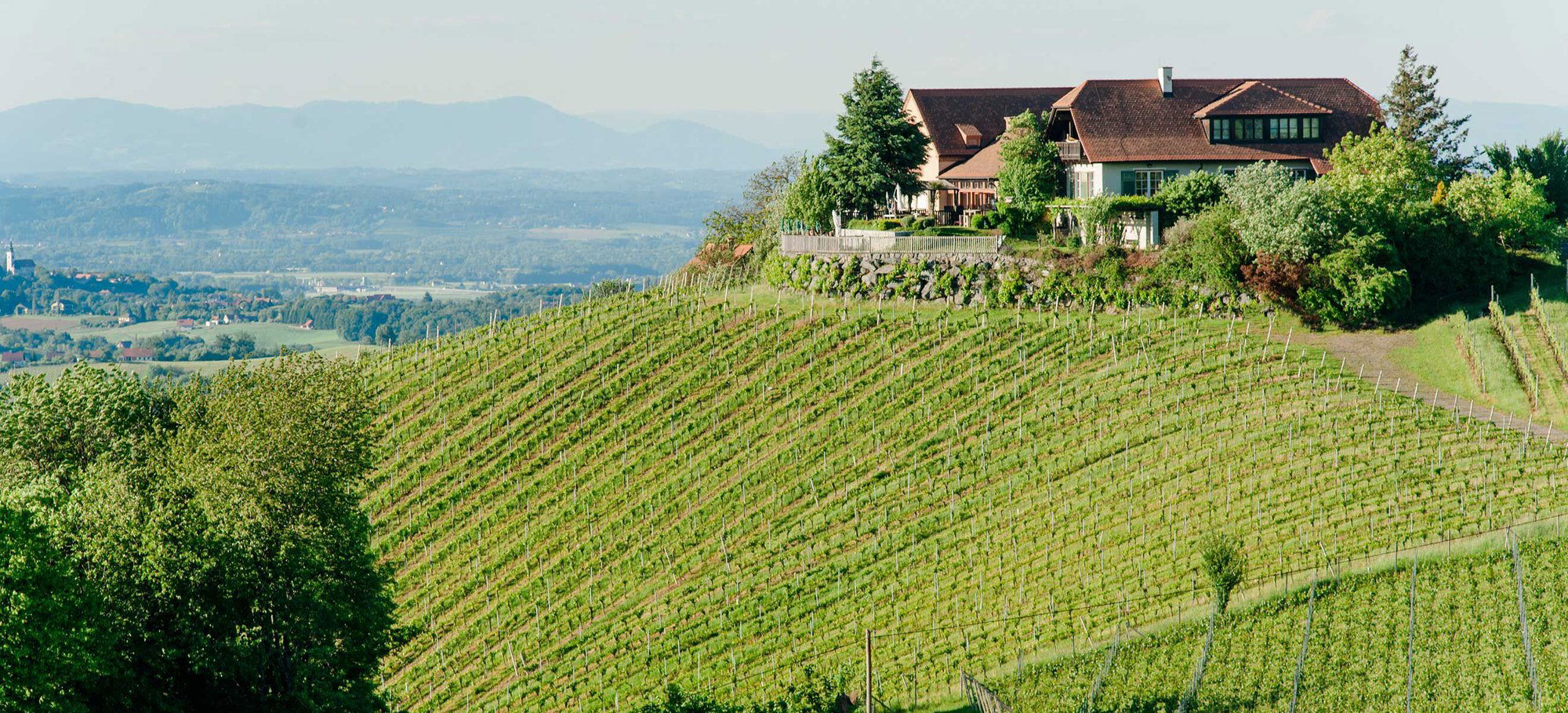
About Jaglhof
Jaglhof sits in the Sernau hills above Gamlitz, in one of Austria's most productive wine-growing pockets of southern Styria. The address places it deep inside a region where viticulture and the table have been inseparable for generations, and where sourcing from the immediate land is less a philosophy than a structural given. For travellers coming south from Graz, it represents a grounded entry point into the Gamlitz dining scene.
Southern Styria and the Logic of the Land
Few wine regions in central Europe compress so much agricultural intensity into so small an area as the hills between Gamlitz and Leutschach. The slopes here, carved by glacial action into a corrugated grid of south-facing ridges, produce Sauvignon Blanc and Welschriesling that travel to wine lists across Vienna and beyond. What that density of viticulture also produces, less discussed but just as consequential, is a food culture built around proximity. Restaurants in this part of Styria do not source locally as a marketing position; they do so because the orchards, kitchen gardens, and farmyards are, in many cases, a short walk from the kitchen door.
Jaglhof, at Sernau 25 on the Sernau ridge above Gamlitz, sits inside that agricultural logic. The address alone tells you something: Sernau is one of the named vineyard sites that serious Styrian wine collectors track by vintage, a place where land use has been deliberate and place-specific for centuries. A restaurant operating from within that geography inherits a set of supply relationships and seasonal rhythms that shape the menu before a single decision is made in the kitchen.
What the Sernau Address Signals
In Gamlitz, the spread of dining options runs from estate-attached wine taverns to destination restaurants drawing visitors from Graz, Vienna, and across the German-speaking world. Sattlerhof operates at the creative, higher-investment end of that range, with a kitchen programme that treats Styrian ingredients as fine-dining material. Lilli & Jojo anchors the farm-to-table tier at a more accessible price point. Emmy im Schloss Gamlitz and Weinrefugium Brolli each carve out distinct positions within the local scene. Jaglhof's position within this set is not fully documented in available records, but the Sernau location places it within the part of Gamlitz that draws visitors specifically for its vineyard character rather than its proximity to the town centre.
That matters for understanding what to expect. Restaurants on named vineyard sites in southern Styria tend to orient their wine programmes around their immediate neighbours and the estate wines produced within walking distance. The glass poured alongside a plate here is likely to come from a producer whose vines you can see from the terrace, which is a different relationship between food and wine than anything available in a city restaurant, however accomplished. For reference, consider what separates a table at Steirereck im Stadtpark in Vienna from a meal taken in the landscape that supplies it. Both have value; they are simply different arguments.
Ingredient Sourcing as Regional Architecture
The broader Styrian kitchen draws from a larder that is specific enough to function almost as a regional denomination. Pumpkin seed oil from the Styrian lowlands, freshwater fish from mountain-fed rivers, game from the forested slopes above the wine zone, and the full range of orchard and garden produce that the mild microclimate of southern Styria supports across a long growing season. These ingredients appear across the dining rooms of the region not because chefs have agreed on a menu, but because the supply chains all point in the same direction.
What distinguishes the better tables in this part of Austria is not the list of ingredients, which is largely shared, but the discipline with which sourcing is handled at the detail level: which producer, which variety, which moment in the season. Austria's most technically accomplished restaurants, among them Obauer in Werfen and Landhaus Bacher in Mautern an der Donau, have built their reputations in part on the specificity of those supply decisions. In a region like southern Styria, where the raw materials are abundant and the growing conditions reliable, the differentiation between dining rooms increasingly comes down to exactly that kind of sourcing precision.
Venues like Döllerer in Golling an der Salzach and Ikarus in Salzburg demonstrate how Austrian regional cooking can scale in ambition without detaching from its geographic roots. Further afield, mountain restaurants such as Gourmetrestaurant Tannenhof in Sankt Anton am Arlberg and Griggeler Stuba in Lech show the same structural logic applied to alpine supply chains rather than vineyard ones. The ingredient sourcing angle, in other words, is not a Gamlitz invention; it runs through Austrian serious dining as a consistent thread.
Planning a Visit to the Sernau Area
Gamlitz is approximately 45 kilometres south of Graz, reachable by car via the A9 motorway and the B69 regional road into the wine country. The journey from Graz takes roughly 45 to 55 minutes depending on the route through the hills. Public transport connections into the Sernau ridge area specifically are limited, and most visitors arriving without a car rely on taxis from Leibnitz, the nearest larger town with a train station on the Graz-Spielfeld-Strass line.
The southern Styrian wine roads are most active from late spring through harvest, with October marking the peak of the grape-picking season and a corresponding concentration of visitors. Accommodation in the immediate area ranges from estate-attached rooms to small guesthouses; Gamlitz itself has a modest number of beds, and visitors planning multiple days in the region often base themselves there or in Ehrenhausen a few kilometres north.
Booking practices across Gamlitz's dining scene vary. The more established destination restaurants in the area book weeks to months ahead during the summer and harvest period. For current hours, availability, and reservation details at Jaglhof specifically, direct contact with the venue is the only reliable method, as this information is not publicly documented in available sources. Our full Gamlitz restaurants guide covers the broader scene with current practical information.
For those building a wider Austrian itinerary that connects southern Styria to other serious dining destinations, Kräuterreich by Vitus Winkler in Sankt Veit im Pongau, Schwarzer Adler in Hall in Tirol, Restaurant 141 by Joachim Jaud in Mieming, and Ois in Neufelden each represent distinct regional expressions of Austrian cooking that reward the detour. Internationally, Le Bernardin in New York City and Atomix in New York City offer useful contrasts in how tightly focused ingredient sourcing and regional identity can anchor a kitchen programme at the highest level of technical ambition.
Frequently Asked Questions
- Would Jaglhof be comfortable with kids?
- Southern Styrian wine-country restaurants at this address tend to skew toward adult visitors here specifically for the wine and regional food culture, and Gamlitz as a whole is a quieter, rural destination rather than a family-activity hub. Without confirmed pricing or format data for Jaglhof, it is difficult to assess suitability, but the Sernau location and vineyard-area context suggest this is primarily a table for adults.
- What's the vibe at Jaglhof?
- If the setting follows the pattern of other vineyard-ridge addresses in Gamlitz, expect something quieter and more grounded than a city restaurant: rural surroundings, a pace tied to the agricultural calendar, and a wine-forward atmosphere that reflects the Sernau site itself. That framing holds most reliably during the growing season; outside peak months, the area is significantly quieter and some venues operate reduced schedules.
- What do people recommend at Jaglhof?
- Order from whatever is seasonally current. In southern Styria, the kitchen's relationship to its suppliers means that dishes in the middle of a growing season reflect what is arriving from nearby farms and vineyards at that specific moment. No specific dishes or signatures are documented in available records for Jaglhof, so the most reliable guidance is to follow the kitchen's current direction rather than a fixed menu item.
- Is Jaglhof a good base for exploring the southern Styrian wine roads?
- The Sernau 25 address places Jaglhof directly on one of the named vineyard sites that define the Gamlitz wine zone, making it a geographically useful reference point for anyone working through the southern Styrian Sauvignon Blanc and Welschriesling producers. The wine roads between Gamlitz, Leutschach, and Ehrenhausen are compact enough to cover meaningfully in a day or two by car, with several estate cellars and tasting rooms within a short drive of the Sernau ridge.
Related editorial
- Best Fine Dining Restaurants in ParisFrom three-Michelin-star icons to the next generation of Parisian chefs pushing boundaries, these are the restaurants that define fine dining in the world's culinary capital.
- Best Luxury Hotels in RomeFrom rooftop terraces overlooking ancient ruins to Michelin-starred hotel dining, these are the luxury hotels that make Rome unforgettable.
- Best Cocktail Bars in KyotoFrom sleek lounges to hidden speakeasies, Kyoto's cocktail scene blends Japanese precision with global influence in ways you won't find anywhere else.
Save or rate Jaglhof on Pearl
Keep this venue in your Pearl passport, rate it after you visit, and track it alongside every other place you collect.