
Restaurant in Suzhou, China
Hui Lao Tang
100ptsClassical Su Cuisine Precision

About Hui Lao Tang
Hui Lao Tang carries a 2025 Michelin Plate in Kunshan, Suzhou's satellite district, where the kitchen works squarely within the Jiangsu canon: precise seasoning, restrained sweetness, and technique that favours clarity over spectacle. At the ¥¥¥ tier, it sits in the same price bracket as several Michelin-recognised Suzhou tables, making it a serious option for anyone tracking the region's classical cooking.
Kunshan's Position in the Suzhou Dining Picture
Suzhou's Michelin-recognised tables tend to cluster in the city's historic core, so a Plate-awarded address in Kunshan, the western satellite district on Zhengyang Road, marks a specific kind of dining geography. Kunshan has long operated as an economic and residential overflow zone for both Suzhou and Shanghai, but its food culture has kept a more local cadence: neighbourhood banquet halls, market-facing family restaurants, and occasional addresses that cook to a higher technical standard without pitching to hotel or tourism traffic. Hui Lao Tang occupies that last category, recognised by the 2025 Michelin Guide with a Plate distinction that places it in the tier of kitchens cooking at a sound, consistent level without yet carrying a star.
For context on where that sits in the Suzhou pecking order: Dingshan·Jiangyan (Xiangcheng) and Pingjiangsong hold one Michelin Star apiece in the city, with Pingjiangsong operating at the ¥¥¥¥ price tier. Hui Lao Tang prices at ¥¥¥, the same bracket as Dingshan·Jiangyan, which means the spend is comparable but the recognition level is one grade below. That gap matters less if the specific appeal is Kunshan proximity or a less formally staged dining room; it matters more if a star credential is part of the point.
The Space as a Signal of Intent
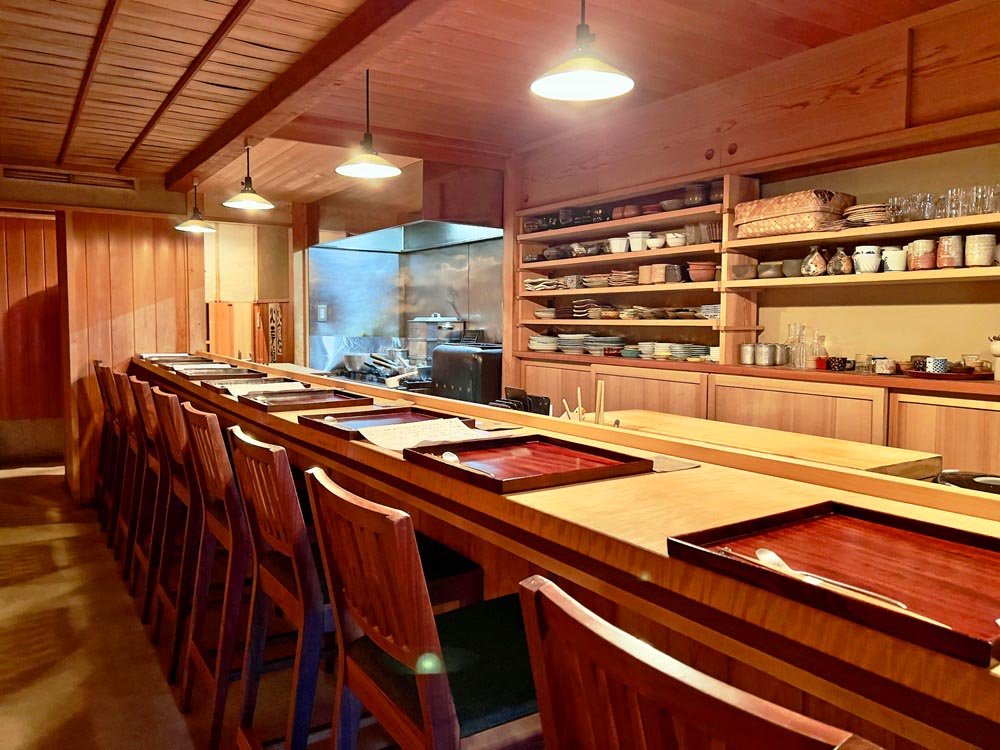
Jiangsu's classical dining rooms have historically communicated seriousness through restraint rather than spectacle: dark timber, low-lit private rooms, ceramic and lacquerware that carry visual weight without ornamentation for its own sake. Whether Hui Lao Tang adheres strictly to that school or inflects it toward a more contemporary arrangement is not documented in available records, but the Kunshan address and the ¥¥¥ positioning suggest a space that reads as considered and substantial rather than casual. In this cuisine tradition, the physical container tends to mirror the kitchen's approach: structured, deliberate, unhurried.
That relationship between room and plate is worth noting in the context of Jiangsu cooking broadly. The cuisine's emphasis on controlled sweetness, precise salt balance, and texture gradients in braised proteins demands an environment where those subtleties register — which is why the leading Susu tables typically avoid the acoustic and visual noise that might overwhelm the food's quieter signals. This is a cuisine where the difference between a correct and an overcorrected red-braised pork is legible only if you are paying attention, and the dining room's design typically nudges the diner toward that attention.
What the Michelin Plate Means in Practice
The Michelin Plate designation, introduced to the guide as a category distinct from Bib Gourmand and Stars, identifies kitchens using quality ingredients and cooking them with care. It is not a lesser star; it is a different signal entirely, pointing toward technical soundness and ingredient discipline rather than the compositional ambition or creative signature that tends to drive star progression. For a Jiangsu kitchen operating in the Suzhou-Kunshan corridor, a Plate in 2025 suggests the cooking holds up against the guide's regional standards without necessarily pushing toward the kind of menu innovation that reviewers would need to see for a first star.
That framing matters for how you approach a booking. Tables like Bai Sheng Ren Jia (Wuzhong), which operates at ¥¥ in the Jiangsu category, and Ban Ting Jia Yan (Suzhou Industrial Park) represent different price-to-recognition ratios in the same cuisine category. Hui Lao Tang's ¥¥¥ pricing with Plate recognition places it as a spend-with-confidence choice for the Kunshan area, not a speculative one.
Jiangsu Cuisine: The Tradition the Kitchen Works Within
Su cuisine, one of the eight canonical Chinese culinary traditions, originated in the Suzhou-Yangzhou-Nanjing corridor and has always prioritised technique over assertiveness. The cooking relies on freshwater fish and shellfish from Lake Tai and the surrounding waterways, seasonal vegetables timed to specific agricultural windows, and braising methods that can run for hours to coax a particular texture from pork belly, duck, or tofu. The flavour profile is defined by a sweet-savoury balance that is less pronounced than Shanghainese cooking but more present than the neutrality of Cantonese technique.
Spring is arguably the most compelling season to engage with a Jiangsu kitchen. River shrimp, bamboo shoots, and the first broad beans arrive in a compressed window between late March and May, and the cuisine's classical preparations for these ingredients require little elaboration: clean technique, correct timing, and sourcing that traces to the right growing areas. Autumn brings hairy crab season, centred on Yangcheng Lake in the Kunshan-Suzhou area, which makes this corridor specifically relevant to anyone planning a September-to-November visit around that tradition.
For a broader view of how classical Chinese regional cuisine operates at its technical ceiling elsewhere in the country, the Michelin-starred work at Guang Ying Ju · Lao Zheng Xing in Nanjing shows the Jiangsu tradition in a more heritage-anchored register, while Ru Yuan in Hangzhou represents how the neighbouring Zhejiang school interprets similar ingredient sets. The contrast across those three kitchens traces the fault lines of the entire Yangtze Delta cuisine tradition.
Planning a Visit
Hui Lao Tang is located on Zhengyang Road in Kunshan, the district that sits between central Suzhou and the Shanghai border. The address postcode (215335) places it in the Kunshan urban area, accessible from Shanghai Hongqiao by high-speed rail in under 20 minutes — a detail that makes the table realistic as a Shanghai-day-trip option for anyone travelling between the two cities. From central Suzhou, Kunshan is approximately 30 minutes by regional rail. Booking method and hours are not documented in current records; given the Michelin Plate recognition and the ¥¥¥ price tier, advance reservation is the sensible approach, particularly during hairy crab season in autumn and the spring vegetable window in April and May.
Phone and website information are not available in current records. Approach booking through the venue directly if reachable, or via a hotel concierge if travelling with accommodation support in the Suzhou or Kunshan area. For the broader dining picture across the city, our full Suzhou restaurants guide maps the range from neighbourhood-level options to star-holding addresses. The city's hotel landscape, bar scene, and cultural experiences are covered separately, as is the Suzhou wine and drinks picture.
For comparison with how Jiangsu and broader Chinese classical cooking performs at higher recognition tiers across the region, the starred work at Xin Rong Ji in Beijing, 102 House in Shanghai, Chef Tam's Seasons in Macau, and Imperial Treasure Fine Chinese Cuisine in Guangzhou all offer useful calibration points. Further afield, the technical rigour of long-form tasting menus at Le Bernardin in New York City and the produce-first philosophy at Xin Rong Ji in Chengdu illustrate how ingredient-led cooking performs across different culinary traditions. For something more grounded within the Suzhou pastoral register, Ge Jia Wu Farmer's House represents the agricultural-sourcing end of the local spectrum.
What Regulars Order
Hui Lao Tang's specific menu is not documented in available records, so dish-level recommendations cannot be verified at this time. Within the Jiangsu cuisine tradition at the ¥¥¥ tier, the standard for what constitutes a kitchen's anchor dishes typically runs through slow-braised meats, freshwater fish preparations, and seasonal vegetable courses that demonstrate sourcing discipline. In Kunshan specifically, the hairy crab preparations available in autumn are the regional calling card, and any Jiangsu kitchen at this price and recognition level would be expected to handle them with precision. Spring visitors following the bamboo shoot and river shrimp calendar are equally well-placed to read the menu as a seasonal document rather than a static one. Specific ordering intelligence, once verified, will be updated in this record.
Recognized By

Similar venues by awards
Related editorial
- Best Fine Dining Restaurants in ParisFrom three-Michelin-star icons to the next generation of Parisian chefs pushing boundaries, these are the restaurants that define fine dining in the world's culinary capital.
- Best Luxury Hotels in RomeFrom rooftop terraces overlooking ancient ruins to Michelin-starred hotel dining, these are the luxury hotels that make Rome unforgettable.
- Best Cocktail Bars in KyotoFrom sleek lounges to hidden speakeasies, Kyoto's cocktail scene blends Japanese precision with global influence in ways you won't find anywhere else.
Save or rate Hui Lao Tang on Pearl
Keep this venue in your Pearl passport, rate it after you visit, and track it alongside every other place you collect.