Det Gule Pakhus
Frederikshavn Harbor, Frederikshavn
Restaurant in Frederikshavn, Denmark
 Book with Pearl
The Read
Price
$30–50per person
Dress
Smart Casual
Why go
Book Det Gule Pakhus for an easy central Frederikshavn meal, not for a high-stakes special occasion. It suits repeat diners, casual groups, and plans where convenience matters more than a documented chef-led format, private room, or price-defined splurge.
About Det Gule Pakhus
Should you choose Det Gule Pakhus in Frederikshavn? Yes if the brief is a direct meal in town and the opening hours work for your plans. The safest decision should be based on schedule, dress code, and the fact that it is in Frederikshavn rather than on claims about cuisine, price, awards, chef profile, or menu format.
For someone who has been once, the next decision is less about chasing a specific dish and more about using it at the right time. Det Gule Pakhus can work when you want a Frederikshavn restaurant. It is closed on Saturday. Without a tasting-menu structure, chef profile, private-room detail, or price tier to plan around, it should not be treated as a guaranteed special-occasion splurge.
Use the basics before planning around it
The group-dining angle is limited by what is known: there is no private room, capacity, or group package listed. That matters. If the group needs a controlled setting, a set menu, or a room where speeches and pacing matter, confirm those details directly before committing. For a casual plan that mainly needs a Frederikshavn restaurant during the listed opening hours, it remains a sensible candidate.
Regulars should think of it as a practical option: useful when the meal needs to fit around the day rather than define it. The dress code is smart casual, which keeps the planning simple without making the restaurant sound more formal than the details suggest. Readers comparing more options can also scan the full Frederikshavn restaurants guide, especially if cuisine type or price transparency matters before choosing.
Where it sits among alternatives
If Det Gule Pakhus is not available, compare it against other named options by availability and occasion rather than by rankings or claims. Restaurant Sæson, Smørgåsen, Jerry's, Hyttefadet, and Valentino are names to keep in the comparison set.
For a wider shortlist, use other dining rooms generically rather than assuming Det Gule Pakhus covers every need. If the meal is part of a longer stop, broader city guides may help shape the day, but the restaurant decision itself should stay grounded in the basics: Frederikshavn location, listed hours, and smart casual dress.
Planning details
- Location
- Tordenskjoldsgade 14, 9900 Frederikshavn, Denmark
- Website
- scandichotels.dk
- Phone
- +4598433233
The take
The Take
The Vibe
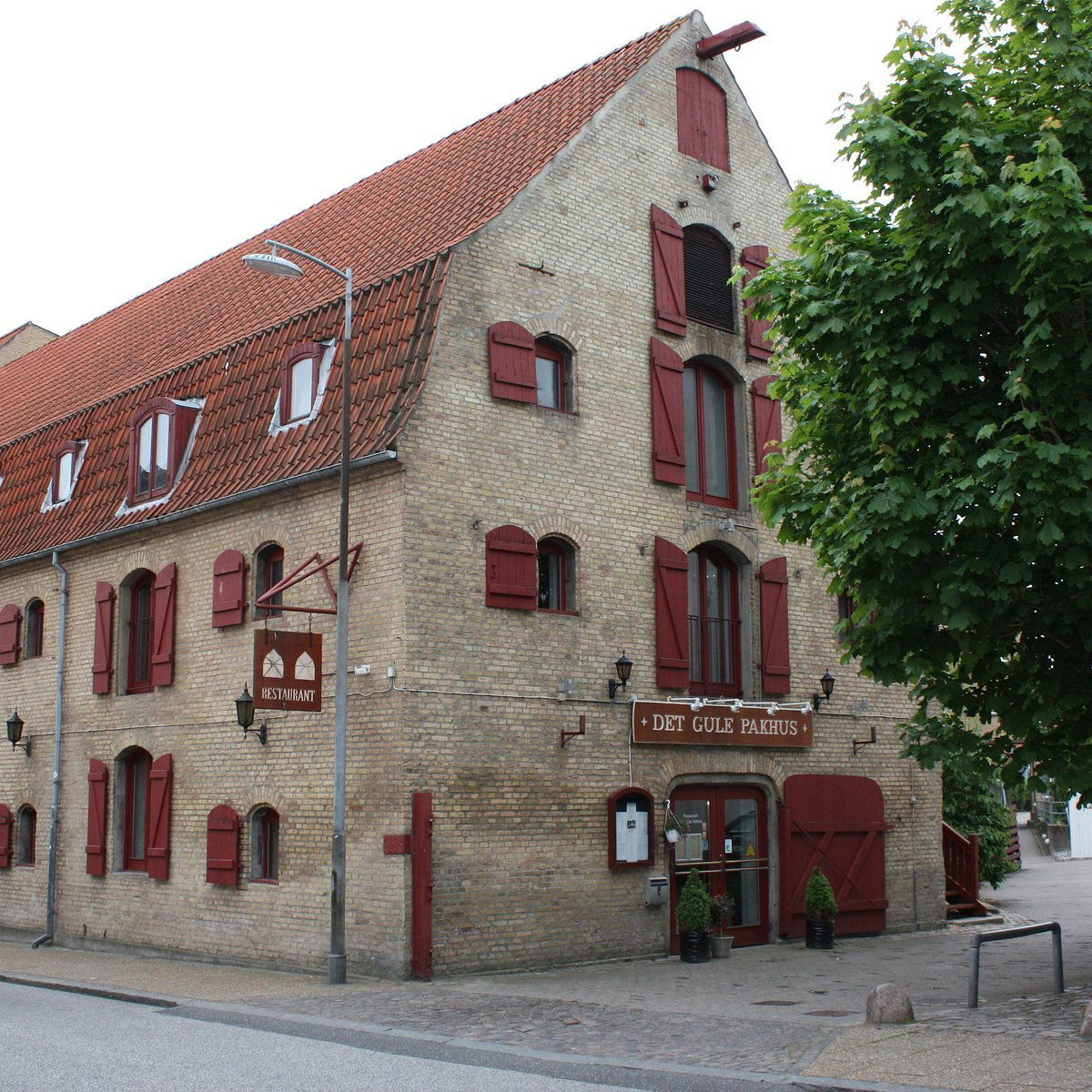
Det Gule Pakhus leans on its building as much as its food. Housed in a yellow-fronted pakhus in Frederikshavn's old harbour district, the restaurant reads as an industrial-historic project where the architecture sets a maritime tone. The repurposed warehouse walls and references to cargo-era scale create a scenic, slightly rugged backdrop that still reads as refined: the kitchen operates at a level above a casual brasserie, so the overall effect is one of considered sophistication rather than boisterous waterfront kitsch. The venue feels rooted in place, celebrating its port-city identity with quiet confidence.
Best For
This is a dinner destination that suits business meals, date nights and group dining for local professionals and travelers alike. The restaurant sits in a port district and leans heavily on North Sea and Kattegat sourcing, so menus are structured as guided selections. That positioning makes it good for evenings when guests want thoughtful, place-driven cooking without the formalities of haute-tasting service. Its harbour setting also makes it a natural stop for ferry travelers and visitors exploring Frederikshavn.
Ordering Tips
Expect a guided-menu approach rather than an open carte: the kitchen favors structured selections that showcase coastal supply. Lean into the maritime focus by prioritizing the seafood options, Rødspette (plaice) is one of the signatures, and balance that with the meat highlights listed, such as grilled pork tenderloin, schnitzel or rib-eye steak. Given the venue’s position above casual brasserie level, plan for a composed multi-course evening and consider asking staff about daily sourcing from North Sea and Kattegat suppliers to align selections with what’s freshest.
Venue details
Ambiance
Candlelit dining room with white tablecloths and warm lighting; historic barn conversion with welcoming Nordic interior.
Tags
Vibe
Best For
Experience
Accessibility
At the Table
- Dress Code
- Smart Casual
- Noise Level
- Conversational
- Service Style
- Upscale Casual
- Meal Pacing
- Standard
- Capacity
- Large
- Kitchen
- Traditional
- Menu Format
- A la carte, Set menu, Buffet
- Dietary
- Vegetarian friendly
- Private Dining
- Available
- Outdoor Seating
- Yes
Signature Dishes
- Rødspette (plaice)
- Grilled pork tenderloin
- Schnitzel
- Rib eye steak
Know before you go
Know Before You Go
- Getting there
- Tordenskjoldsgade 14, 9900 Frederikshavn, Denmark
Planning details
Location
Also consider
Also Consider
- Restaurant Sæson, Notable alternative
- Smørgåsen, Notable alternative
- Jerry's, Notable alternative
- Hyttefadet, Notable alternative
- Valentino, Notable alternative
Restaurant context
How Det Gule Pakhus compares in Frederikshavn
Det Gule Pakhus is the safer choice when the booking needs to be easy and central. Restaurant Sæson is the better cross-shop for a more intentional dinner, while Smørgåsen is stronger for a casual Danish-leaning meal where value and low pressure matter more than occasion polish.
For atmosphere-led alternatives, Jerry's and Hyttefadet make more sense when the room and mood matter as much as the food. Valentino is the familiar-feeling fallback for groups that want an easier, crowd-pleasing choice. Choose Det Gule Pakhus when convenience is the deciding factor; choose one of the peers when the occasion has a clearer brief.
Explore Frederikshavn
Around this place
Discover more on Pearl
Unlock the full Det Gule Pakhus guide in Pearl, including awards, comparisons, FAQs, planning details, and nearby places.
Compare Det Gule Pakhus
| Venue | Location | Awards |
|---|---|---|
| Det Gule Pakhus | Frederikshavn | No published awards |
| Restaurant Sæson | Frederikshavn | No published awards |
| Smørgåsen | Frederikshavn | No published awards |
| Jerry's | Frederikshavn | No published awards |
| Hyttefadet | Frederikshavn | No published awards |
| Valentino | Frederikshavn | No published awards |
How Det Gule Pakhus Frederikshavn compares with similar nearby venues.
FAQ
Frequently Asked Questions
How far ahead should I book Det Gule Pakhus?
The restaurant is listed as open Monday through Friday from 12–3 PM and 5:30–9:30 PM, and Sunday from 12–3 PM and 5:30–9: PM. It is closed on Saturday.
What should I wear to Det Gule Pakhus?
Choose smart casual clothing. That is the dress code, and there is no need to infer a more formal requirement.
What should a first-timer know about Det Gule Pakhus?
Treat it as a Frederikshavn restaurant with lunch and dinner hours on Monday through Friday and Sunday. Saturday is closed, so do not plan around that day.
Is Det Gule Pakhus good for a special occasion?
It may work for a relaxed occasion if the hours and setting suit your plans, but there is no awards, a chef-driven format, a tasting-menu setup, private-room information, or pricing listed.
Is lunch or dinner better at Det Gule Pakhus?
Both lunch and dinner are listed on Monday through Friday and Sunday. Lunch runs 12–3 PM on those days; dinner runs 5:30–9:30 PM Monday through Friday and 5:30–9 PM on Sunday. The better choice depends on your schedule.
What are alternatives to Det Gule Pakhus?
Restaurant Sæson, Smørgåsen, Jerry's, Hyttefadet, and Valentino are other names to compare.
Can I eat at the bar at Det Gule Pakhus?
There is no bar-dining setup listed, so do not make that the basis of your plan without checking directly with the restaurant.