
Restaurant in Chicago, United States
Momotaro
190ptsGroup-friendly Japanese with serious whisky depth.

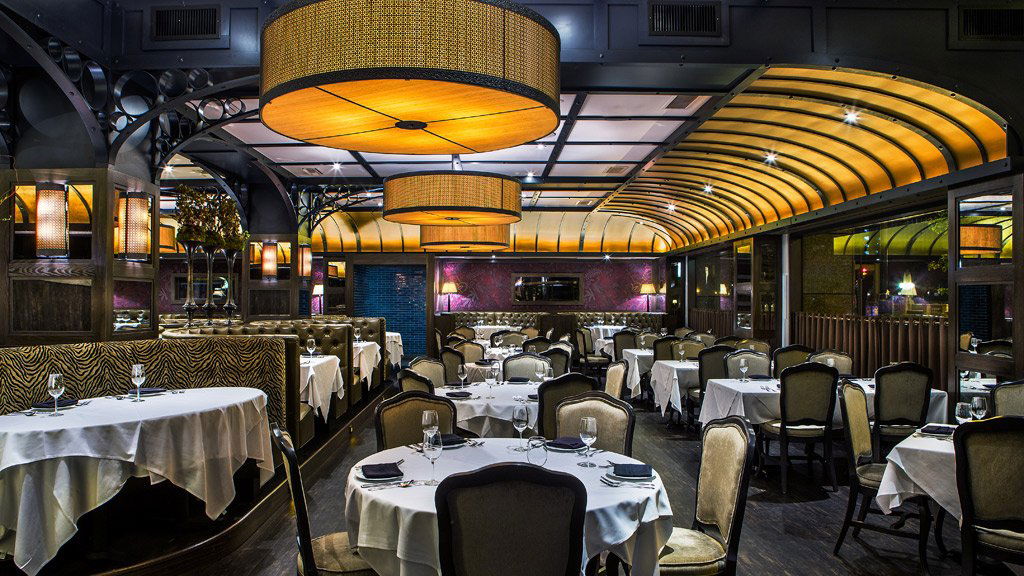
About Momotaro
Momotaro is one of Chicago's most versatile Japanese restaurants: a Michelin Plate-recognised West Loop anchor that spans robata, sushi, and imported Japanese whiskies under one roof at $$$. Book 2–3 weeks ahead for weekends, order the ebi uni maguro nigiri early (only ten per evening), and consider the downstairs Izakaya for a lower-key alternative.
Come Back Better: What Your Second Visit to Momotaro Should Look Like
If your first trip to Momotaro left you eating well but slightly overwhelmed by the room, the menu range, and the whisky board, good news: the second visit is where this West Loop restaurant clicks into focus. You know what to order now. You know how loud it gets. The question is whether the return trip justifies the $$$ price point and the effort of securing a table in one of Chicago's most consistently packed dining rooms. The short answer is yes, provided you come with a plan.
Momotaro earned a Michelin Plate in 2024, which positions it firmly in the tier of restaurants worth going out of your way for without yet demanding the full-tasting-menu commitment of a Michelin-starred evening. At $$$, it sits below the $$$$ bracket occupied by Chicago's most celebrated tables, and that gap in price does not translate to a gap in ambition. Executive Chef Gene Kato runs multiple kitchens within the same building, producing a menu that spans robata-yaki, sushi, and composed Japanese dishes under one roof. That scope is exactly what makes your second visit more productive than your first: you know which kitchen to lean into.
What to Focus on This Time
If you spent your first visit sampling broadly, the return trip is the moment to commit. The jidori kimo, chicken oysters grilled from the robata, has long been one of the kitchen's most talked-about preparations. They're worth ordering again. But the dish that rewards the informed repeat visitor is the ebi uni maguro nigiri: only ten portions are available per evening, which means you need to flag it early in the meal rather than treating it as an afterthought. The una-kyu maki is the lower-stakes version of the same logic, a cleaner, more focused order that holds up well across the menu's broader range. The beef tsukune sliders in bao from the robata-yaki remain a reliable second act.
The whisky selection, displayed on a retro departure board, is worth a more deliberate look on a return visit. The imported Japanese whisky range is one of the more considered bar programs you'll find in the West Loop, and it pairs better with the robata dishes than most of the cocktail list. Take the time to ask about current pours rather than defaulting to whatever's easiest to order.
Why the West Loop Needs This Room
Momotaro is a Boka Restaurant Group property, and it carries that group's signature investment in physical space. The dining room is designed to an ambitious spec, the upstairs private dining room styled like a mid-century corporate boardroom, a detail that makes it one of the more interesting private event options in a neighbourhood that leans toward open-plan industrial. For the West Loop specifically, this matters: the area has accumulated serious restaurant density over the past decade, and a restaurant that can credibly serve a date, a business dinner, and a large group from the same building without feeling like it's hedging is doing something operationally useful.
For the neighbourhood's regulars, Momotaro functions as an anchor in the way that only a few Chicago restaurants manage: it's formal enough to justify the occasion but not so precious that you can't drop in for counter seating and a few dishes at the bar. That's not a small thing in a city where the gap between casual and destination dining is often wider than it needs to be. If you're building a night around the West Loop and want to stay in the area rather than heading downtown, Momotaro is the strongest Japanese option on this side of the river. For a different register of Japanese dining nearby, Kumiko goes deeper on cocktail-forward Japanese influence, while Gaijin focuses on Japanese-Mexican crossover. Neither covers the same ground as Momotaro's robata-and-sushi breadth.
If omakase is your preferred format for Japanese dining, Omakase Takeya and Itoko are worth comparing, but both operate on a more intimate counter model that removes the group-dining flexibility Momotaro offers. For a more casual extension of the Momotaro experience, The Izakaya at Momotaro downstairs is worth a separate visit in its own right. It's a different room with a different pace.
Booking and Timing
Momotaro is consistently packed, which means booking difficulty is moderate but real. Plan at least two to three weeks ahead for weekend reservations. The private dining room upstairs is a separate booking path and worth exploring if you have a group of six or more. Counter and bar seats offer some flexibility for walk-ins or last-minute plans, but do not rely on this during peak hours. If you're targeting the ebi uni maguro nigiri, note the ten-per-evening limit and arrive early in the service rather than mid-meal.
Know Before You Go
- Address: 820 W Lake St, Chicago, IL 60607
- Price range: $$$ (mid-to-upper range, below the $$$$ tier of Chicago's tasting-menu venues)
- Awards: Michelin Plate 2024
- Google rating: 4.6 from 2,927 reviews
- Booking: Reserve 2–3 weeks ahead for weekends; counter and bar seats offer walk-in potential
- Key dishes: Jidori kimo, ebi uni maguro nigiri (10 per evening — order early), una-kyu maki, beef tsukune sliders in bao
- Whisky: Imported Japanese whisky selection displayed on a retro departure board
- Private dining: Upstairs room styled as a mid-century boardroom; book separately for groups
- Also consider: The Izakaya at Momotaro downstairs for a lower-key alternative
How It Compares
Against Chicago's wider Japanese dining options, Momotaro occupies a useful middle position: more ambitious than a neighbourhood izakaya, less specialised than a pure omakase counter. If you're deciding between Momotaro and one of Chicago's $$$$ destination restaurants, the calculus is direct. Smyth and Alinea operate at a higher price point with a more singular vision; they're better choices if you want a full progressive tasting experience. Moody Tongue is the stronger pick if wine or beer pairing is central to your evening. Momotaro wins on breadth, group-size flexibility, and the ability to accommodate different appetites at the same table — a practical advantage that the tasting-menu format at most $$$$ venues cannot match.
Compared to Kasama or Next Restaurant, Momotaro is easier to book on shorter notice and offers more flexibility in how you structure the meal. It does not attempt the conceptual ambition of Next's rotating format or Kasama's Filipino-rooted tasting menu. What it offers instead is a well-executed, high-variety Japanese dining experience at a price point that leaves room for whisky and dessert without restructuring your budget. For most groups, that trade-off is the right one. For context on how Japanese dining at this level compares to Tokyo's own high-end restaurants, Myojaku and Azabu Kadowaki in Tokyo represent the benchmark the kitchen is working toward.
Pearl's Take
Book Momotaro if you want a Japanese restaurant that can handle a group with different appetites, serves one of Chicago's better imported whisky selections, and delivers Michelin-recognised quality without demanding a $$$$ commitment. Come with a specific dish list, order the ebi uni maguro nigiri early, and use the return visit to go deeper on the robata menu rather than covering the same ground as your first trip. For more on where to eat, stay, and drink around Chicago, see our full Chicago restaurants guide, our full Chicago hotels guide, our full Chicago bars guide, our full Chicago wineries guide, and our full Chicago experiences guide.
Compare Momotaro
| Venue | Cuisine | Awards | Booking Difficulty | Value |
|---|---|---|---|---|
| Momotaro | Japanese | Boka Restaurant Group’s stunning West Loop canteen embraces a fantastical view of Japanese dining. An impressive selection of imported whiskies is listed on a retro-style departure board; while a private dining room upstairs is styled to resemble a mid-century corporate boardroom. Consistently packed, this impeccably designed space boasts numerous kitchens churning out a range of dishes, all conceived by the talented Executive Chef Gene Kato.Jidori kimo, those prized chicken oysters—here grilled to perfection—has long been a signature, while the beef tsukune sliders in a bao from the robata-yaki are equally impressive. Don't miss the delicious nigiri or maki, including una-kyu or the ebi uni maguro, of which there are only ten per evening, so plan ahead.; Michelin Plate (2024) | Moderate | — |
| Smyth | Progressive American, Contemporary | Michelin 3 Star, World's 50 Best | Unknown | — |
| Alinea | Progressive American, Creative | Michelin 3 Star, World's 50 Best | Unknown | — |
| Kasama | Filipino | Michelin 1 Star | Unknown | — |
| Next Restaurant | American Cuisine | Michelin 1 Star | Unknown | — |
| Moody Tongue | Contemporary | Michelin 1 Star | Unknown | — |
Side-by-side comparison to help you decide where to book.
Frequently Asked Questions
Is Momotaro good for solo dining?
Solo diners can work here, but the format favors groups. The menu spans robata, nigiri, and larger shared plates, so dining alone means leaving a lot of the menu unexplored. If you're solo and focused on Japanese food specifically, Momotaro's bar seating gives you access to the full menu and the imported whisky list, which is a draw in its own right. For a more solo-optimized Japanese experience in Chicago, a counter-format omakase spot would suit you better.
Is Momotaro worth the price?
At $$$, Momotaro earns its keep if you're eating with a group that can hit multiple menu sections: robata, nigiri, and the kitchen's broader Japanese-American plates. Signature dishes like the jidori kimo and the ebi uni maguro nigiri (only ten portions per evening) represent real kitchen effort, not just price-point theater. The Michelin Plate recognition in 2024 confirms the food clears a quality threshold. If you're coming as a couple ordering narrowly, you may feel the bill outpaces the portion count.
What should I wear to Momotaro?
The room is designed with serious intention — a mid-century boardroom private dining space upstairs, an ambitious main floor — which sets an expectation. Neat, put-together clothing fits the environment; this is not a casual ramen stop. Nothing in the venue data specifies a dress code, but the $$$-priced, Michelin Plate-recognized setting means arriving dressed down will feel out of step with the room.
How far ahead should I book Momotaro?
Book at least two to three weeks out for weekend reservations; the room is consistently packed. Weeknight tables are more available but still shouldn't be left to last-minute. If you're eyeing the private dining room upstairs, factor in additional lead time. The ebi uni maguro nigiri is limited to ten portions per evening, so arriving early in service gives you the best shot at ordering it.
Is the tasting menu worth it at Momotaro?
Momotaro does not operate on a traditional tasting menu format — the menu is designed for sharing across multiple kitchen and grill sections rather than a set chef's progression. That structure rewards groups who order broadly. If a fixed tasting menu is what you're after, Momotaro is not the right match; look instead at Chicago's dedicated omakase or chef's counter restaurants.
Does Momotaro handle dietary restrictions?
The database does not include specific dietary accommodation details for Momotaro. Given the menu spans robata-grilled proteins, raw fish, and kitchen-cooked dishes across multiple formats, pescatarians and fish-focused diners have plenty of options. Anyone avoiding shellfish or raw fish should be prepared for a narrower selection, particularly around the nigiri section. Call or message ahead to confirm specific accommodations before booking.
Can I eat at the bar at Momotaro?
Bar seating is available at Momotaro, making it a practical option for solo diners or walk-in attempts, though the room is consistently packed so availability is not guaranteed. The imported whisky selection, displayed on a retro-style departure board, is a genuine reason to station yourself at the bar even if you're not eating a full meal. For a full dinner, booking a table remains the safer approach.
Recognized By

More restaurants in Chicago
- AlineaAlinea is Chicago's three-Michelin-star tasting menu at $210–$265 per person — a theatrical, multi-sensory Progressive American experience running three to four hours. It holds a Forbes Five-Star and AAA 5 Diamond, and booking is near impossible without planning months ahead. Worth it for food explorers who commit to the format; not the right call if you want a conventional fine dining dinner.
- SmythSmyth holds three Michelin stars, a top-five North America ranking from Opinionated About Dining, and one of Chicago's most serious natural wine programmes. Dinner only, Tuesday through Saturday, with near-impossible availability and $$$$ tasting menu pricing. Book six to eight weeks out minimum — this is the stronger call over Alinea for food-first diners.
Similar venues by awards
Related editorial
- Best Fine Dining Restaurants in ParisFrom three-Michelin-star icons to the next generation of Parisian chefs pushing boundaries, these are the restaurants that define fine dining in the world's culinary capital.
- Best Luxury Hotels in RomeFrom rooftop terraces overlooking ancient ruins to Michelin-starred hotel dining, these are the luxury hotels that make Rome unforgettable.
- Best Cocktail Bars in KyotoFrom sleek lounges to hidden speakeasies, Kyoto's cocktail scene blends Japanese precision with global influence in ways you won't find anywhere else.
Save or rate Momotaro on Pearl
Keep this venue in your Pearl passport, rate it after you visit, and track it alongside every other place you collect.