
Restaurant in Cardiff, United Kingdom
Casanova
100ptsUnhurried Italian Sequencing
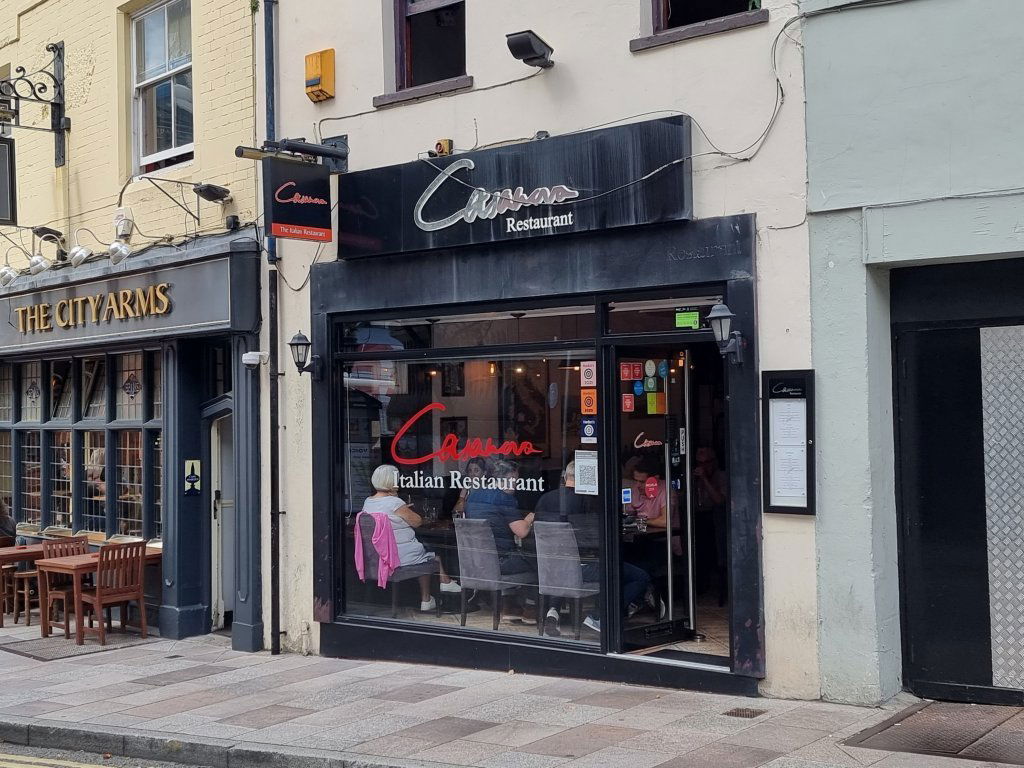
About Casanova
On Quay Street in central Cardiff, Casanova occupies a position that reflects the city's broader relationship with Italian dining: familiar in name, specific in practice. The restaurant draws a local following prepared to settle into a meal at an unhurried pace, placing it a tier above the casual trattorias that fill the surrounding streets. For Cardiff diners who take the table seriously, it remains a consistent reference point.
Quay Street and the Ritual of the Italian Meal
There is a particular kind of Italian restaurant that resists the trend toward fast turnovers and abbreviated menus. It does not rush the antipasto. It brings the bread before you have decided anything. The room operates on the assumption that you arrived to stay, not to check a box. On Quay Street in central Cardiff, Casanova belongs to that tradition, and the address tells you something before you open the door: this is a street that has housed Cardiff's more committed dining options for decades, sitting at the edge of the city's old civic core, close enough to the Millennium Stadium's orbit to attract visitors but rooted enough to hold a local clientele that returns by choice rather than proximity.
Cardiff's Italian dining scene is smaller than it appears at first glance. Strip out the pizza-and-pasta chains that cluster around the Hayes and St Mary Street, and the restaurants that treat the Italian canon with genuine seriousness number only a handful. Casanova sits within that smaller group, in a tier that the city's dining conversation returns to when it is comparing like with like. Its closest frame of reference is not the volume-driven casual operators but rather the handful of independent rooms in Cardiff that approach service and pacing as part of the offer, not as afterthoughts.
The Pacing of the Meal
Italian restaurant culture, at its most coherent, structures the meal as a sequence rather than a collection of courses. The antipasto is not a starter in the British sense; it is the opening of a negotiation between the kitchen and the table. The primo arrives with its own logic, separate from the secondo that follows. Cardiff diners who have spent time eating in Rome, Bologna, or the Veneto will recognise the rhythm that serious Italian rooms try to replicate outside Italy, and will notice immediately when a restaurant is merely gesturing at that rhythm rather than sustaining it.
The dining ritual at this level of Italian cooking depends on a room that can hold pace without pressure. Tables need enough space and enough time between courses that conversation is possible. The wine list needs to function as a companion to the food rather than an upsell exercise. These are not luxuries; they are structural requirements of the format. Restaurants like Bacareto and Cafe Citta have each staked out adjacent ground in Cardiff's Italian and European independent dining conversation, and the comparison is instructive: the city has accumulated a small but coherent cluster of rooms where the European meal format is taken seriously.
Where Casanova Sits in Cardiff's Dining Tier
Cardiff's restaurant scene has become more stratified over the past decade. At the leading end, Gorse operates at the ££££ tier with a Modern British format and a level of culinary ambition that places it in conversation with rooms like CORE by Clare Smyth in London, L'Enclume in Cartmel, or Moor Hall in Aughton in terms of national positioning. Further down the register, Cora and Asador 44 represent the city's engagement with specialist European formats: Spanish fire cooking and contemporary British respectively.
Casanova occupies a different position in this structure. It does not compete with the ambition-forward rooms at the upper tier, nor does it operate in the casual register. Independent Italian restaurants of this type, in British cities outside London, tend to hold their position through consistency and through the loyalty of a local clientele that values known quantity over experimentation. That loyalty is harder to earn than a first review, and it tends to be more durable. The dining rooms that have built it in Cardiff are the ones worth noting when building a picture of the city's restaurant character.
For broader context on what British fine dining looks like at its most committed outside London, the reference points include Gidleigh Park in Chagford, Hand and Flowers in Marlow, Midsummer House in Cambridge, and hide and fox in Saltwood. In Wales itself, Ynyshir Hall in Machynlleth operates at a register that has drawn international attention. Casanova's frame is more local and more specifically Italian, but the broader context of serious independent dining outside London is relevant to understanding why it retains a place in Cardiff's conversation.
The Etiquette of the Room
Independent Italian restaurants at this level have their own social contract with the table. The assumption, implicit in the format, is that the diner has arrived with time and appetite in proportion. Ordering is expected to follow sequence: you do not arrive and order everything at once, and you do not eat in a hurry. The wine choice matters and will be treated as though it matters. These conventions are not enforced through rigidity but through the design of the room and the pace of service, both of which signal expectation before a word is spoken.
In cities like Cardiff, where the density of restaurants has increased substantially over the past fifteen years but where the independent Italian room remains a specific and relatively uncommon format, this kind of social contract is worth understanding before you book. It shapes the experience in ways that distinguish a meal at Casanova from a dinner at a larger, faster-moving room. Internationally, the Italian dining ritual has been carried most successfully into formal contexts by rooms like Le Bernardin in New York City and into chef-driven experiential formats by places like Lazy Bear in San Francisco, both of which demonstrate how ritual and pacing can be the core of a dining proposition, not merely its decoration.
Planning a Visit
Casanova is located at 13 Quay Street, Cardiff CF10 1EA, within easy walking distance of Cardiff Central station and the city's main retail and civic areas. Quay Street's position between the castle grounds and the waterfront development makes it direct to reach from most central Cardiff hotels. For booking specifics, contact details, and current hours, checking directly with the restaurant is advisable, as operational details for independent rooms of this type can change seasonally. For a broader map of where Casanova sits within Cardiff's dining options, our full Cardiff restaurants guide covers the city's key independent rooms across price tiers and formats, from the Opheem in Birmingham-adjacent ambition of the region's leading tables down to the neighbourhood independents that define Cardiff's dining character day to day. The Waterside Inn in Bray serves as a useful benchmark for understanding what sustained independent excellence looks like at the leading of the British restaurant spectrum; Casanova operates at a different scale, but the principle of a room built on consistency and local loyalty rather than hype applies across both contexts.
Frequently Asked Questions
- Is Casanova a family-friendly restaurant?
- In Cardiff's mid-range independent dining tier, where Casanova operates, family-friendliness depends largely on expectations around pacing and noise level rather than explicit policy. Italian restaurants of this type tend to welcome families, given the format's cultural associations with communal eating, but the slower, more deliberate rhythm of the meal suits older children and adults better than very young diners. If you are planning a family dinner in Cardiff at a similar price point, it is worth calling ahead to confirm the room's current approach.
- How would you describe the vibe at Casanova?
- Cardiff's independent Italian rooms in this tier tend toward the relaxed and unfussy rather than the theatrical. The assumption at Casanova, consistent with the Italian dining tradition it draws from, is that the table is yours for the evening. It is not a loud room built around energy and turnover; it is a quieter, more deliberate one built around the meal as an extended social occasion. That positions it differently from the livelier end of Cardiff's dining scene, closer in atmosphere to a neighbourhood trattoria that happens to take its cooking seriously than to a destination restaurant performing for its audience.
- What's the must-try dish at Casanova?
- Specific dish recommendations for Casanova are not something we can confirm without verified current menu data. What the Italian restaurant format at this level typically rewards is engagement with the full sequence of the meal rather than fixation on a single course. In practice, that means ordering across antipasto, primo, and secondo rather than defaulting to a single plate. If you have dietary requirements or want to know the kitchen's current strengths, calling ahead is the most reliable approach.
- Is Casanova reservation-only?
- In Cardiff's independent dining scene, rooms operating at this level of the market typically accept and encourage reservations, particularly for weekend evenings when demand from both local and visitor diners is higher. Whether Casanova operates a strict reservation-only policy or accommodates walk-ins at quieter times is leading confirmed directly, as booking policies at independent restaurants can vary by season and service. Given Quay Street's position near the city centre, the room is likely to be busier on match days and during major events at the nearby stadium.
- What makes Casanova worth seeking out?
- The case for Casanova rests less on a single credential and more on the relative scarcity of what it offers. Independent Italian rooms that take the full structure of the Italian meal seriously, outside of London, are not common in British cities of Cardiff's size. The restaurant sits in a tier of Cardiff dining that prioritises the table as an occasion rather than a transaction, and it has maintained a local following that is the most reliable signal available for a room that does not trade on awards or media attention. For visitors to Cardiff who want Italian dining with genuine character rather than chain-restaurant familiarity, that combination of format, location, and established local credibility makes it a considered choice.
- How does Casanova compare to other Italian restaurants in Cardiff?
- The independent Italian dining tier in Cardiff is relatively compact. Casanova on Quay Street sits alongside a small group of rooms that treat the Italian canon as a genuine culinary tradition rather than a branding exercise. Compared to the pizza-and-pasta volume operators that dominate the city's main shopping streets, the distinction is one of pacing, sourcing approach, and the structure of the meal. Within that specific tier, it holds a position built on consistency and repeat local custom, which in the absence of formal award recognition is a meaningful signal about the kitchen's reliability across seasons and menu cycles.
Related editorial
- Best Fine Dining Restaurants in ParisFrom three-Michelin-star icons to the next generation of Parisian chefs pushing boundaries, these are the restaurants that define fine dining in the world's culinary capital.
- Best Luxury Hotels in RomeFrom rooftop terraces overlooking ancient ruins to Michelin-starred hotel dining, these are the luxury hotels that make Rome unforgettable.
- Best Cocktail Bars in KyotoFrom sleek lounges to hidden speakeasies, Kyoto's cocktail scene blends Japanese precision with global influence in ways you won't find anywhere else.
Save or rate Casanova on Pearl
Keep this venue in your Pearl passport, rate it after you visit, and track it alongside every other place you collect.