
Restaurant in Ávila, Spain
Caleña
100ptsRooted Castilian Modernism

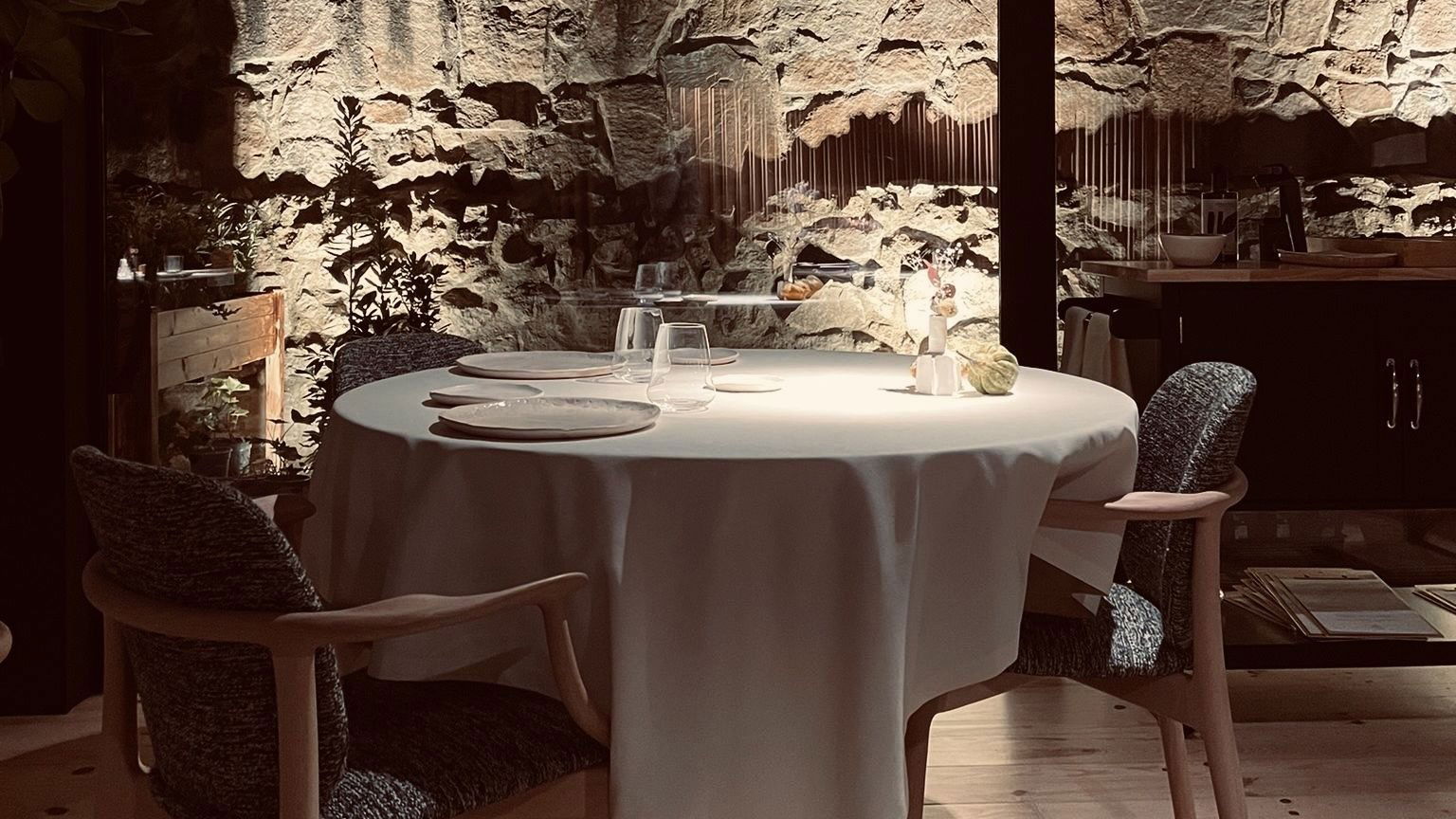
About Caleña
Set within La Casa del Presidente hotel — once the private residence of Adolfo Suárez, Spain's first democratically elected prime minister — Caleña takes its name from the stone of Ávila's medieval walls and frames Castilian culinary tradition through a modern tasting menu. Chef Diego Sanz works with locally sourced ingredients and classical escabeche, stew, and grill techniques, finishing many dishes tableside in a glass-fronted garden annexe alongside the city walls.
Stone, History, and the Roots of Castilian Cooking
Approaching Caleña, the medieval walls of Ávila are not backdrop — they are the immediate context. The restaurant occupies a glass-fronted annexe in the garden of La Casa del Presidente, a hotel whose own history carries considerable weight: the building was once the private residence of Adolfo Suárez, the man who guided Spain through the transition from dictatorship to parliamentary democracy and served as the country's first elected prime minister in the modern era. The name Caleña refers to the type of stone used to construct those ancient walls, and the pairing of that geological reference with the hotel's democratic history sets the tone for a restaurant that treats its setting as an argument, not decoration.
The dining room itself sits in a rustic, glass-fronted structure within the hotel garden, with independent street access. The positioning alongside the city walls means the physical fabric of Ávila is present throughout the meal — a constant reminder that this is a city built on stone, Catholicism, and the agricultural produce of the Castilian meseta. For visitors arriving from Ávila's broader restaurant scene, which ranges from traditional tabernas to newer addresses, Caleña occupies the more considered, format-driven end of the spectrum.
Castilian Cuisine and What It Actually Means
Castilian cooking is one of the most misunderstood regional traditions in Spain. Outside the country, it is often reduced to roast lamb and suckling pig, which is accurate as far as it goes but tells you almost nothing about the range of techniques and ingredients that define the broader canon. Escabeche , the acid-cured preservation method with Moorish roots , runs through Castilian cooking as a structural principle, not a garnish. Market garden produce from the meseta, river fish from the Duero basin, and cured meats from pigs raised on dehesa pasture are the recurring materials. The cooking methods are direct: fire, acid, time, and restraint in flavouring.
What younger Spanish chefs working within regional traditions have been doing for the past decade , and what is visible at Caleña , is reframe these methods through a fine-dining format without abandoning their logic. This approach differs from the purely creative direction taken by Spain's most internationally recognised restaurants, where regional identity is often a starting point for abstraction. At DiverXO in Madrid or El Celler de Can Roca in Girona, the reference to origin is frequently conceptual. At a place like Caleña, the reference to origin is more literal: the ingredients are from specific nearby producers, and the techniques are recognisably descended from the tradition being cited.
This positioning is neither superior nor inferior to the more experimental model , it is a different argument about what fine dining should do with regional cuisine, and it is a more demanding one in some respects. When there is no radical transformation to justify the format, the quality of sourcing and the precision of technique carry more weight.
The Tasting Menu and How It Operates
Chef Diego Sanz runs a tasting menu format that moves through the categories of Castilian cooking as a kind of structured argument. The sequence covers market garden ingredients, escabeche preparations, stews built on long cooking, and grilled dishes , the progression mirrors the actual architecture of traditional Castilian meals while operating under fine-dining discipline. The sourcing is local and specific: leeks from Sahagún appear on the menu alongside cured sardine and a garum vinaigrette, placing a distinctly Castilian vegetable alongside a fermented fish sauce whose use in Spain dates back to Roman occupation of the Iberian peninsula.
The tableside finishing element is worth noting as a structural choice. Many dishes receive their final preparation at a stand brought to the table, which serves a dual purpose: it extends the sense of theatre that tasting menus often require, and it keeps the guest connected to the process rather than receiving food as a finished product. In the context of a menu that is explicitly framed around technique and storytelling, this is a consistent decision rather than a decorative gesture.
For context within Spain's current fine-dining spectrum, Caleña sits at a remove from the three-Michelin-star tier occupied by addresses like Arzak in San Sebastián, Azurmendi in Larrabetzu, or Martin Berasategui in Lasarte-Oria. It belongs instead to the second tier of Spanish fine dining: restaurants led by young chefs with clear technical grounding and a defined regional argument, operating in secondary cities where the competitive pressure is lower but the audience is also smaller. Barro, Ávila's other creative address, and El Almacén, which leans more traditional, give some sense of where Caleña sits locally , between the two in its ambition, framing classical roots through a modern lens.
Planning a Visit
Caleña sits at C. los Telares, 1 in central Ávila, with its own independent entrance from the street separate from the hotel reception. Ávila is accessible from Madrid in under ninety minutes by high-speed train, which makes this a viable day trip from the capital for those who want to combine the city walls, the cathedral, and a serious meal in a single visit. The tasting menu format means the meal runs longer than a standard dinner booking , allow two to two and a half hours. Booking in advance is the reliable approach for a format restaurant with this kind of specificity; the size of the garden annexe limits covers, and the tasting menu requires preparation lead time. Ávila's dining culture skews late by northern European standards, with dinner service typically beginning at 9pm. For the hotel side of the property and the wider city context, our full Ávila hotels guide covers the options. Those planning a broader trip can also consult our Ávila bars guide, our Ávila wineries guide, and our Ávila experiences guide.
Frequently Asked Questions
What do regulars order at Caleña?
Caleña operates a tasting menu rather than a la carte, so ordering in the conventional sense is not the format here. The menu moves through Castilian reference points , escabeche preparations, market garden courses, stews, and grilled dishes , with Chef Diego Sanz's sourcing choices driving the sequence. The leeks from Sahagún with cured sardine and garum vinaigrette is a dish that illustrates the menu's character well: a familiar Castilian vegetable treated with techniques that have deep historical roots in the region's cooking. Spain's broader fine-dining scene, from Aponiente in El Puerto de Santa María to Cocina Hermanos Torres in Barcelona, shares the tasting menu format but pursues very different regional arguments. At Caleña, the argument is Castilian and grounded.
Do they take walk-ins at Caleña?
The tasting menu format makes walk-ins structurally difficult regardless of availability. Kitchens running narrative, multi-course sequences prepare mise en place for a fixed number of covers, which means arriving unannounced creates logistical problems even when a table is physically free. Ávila draws significant tourist volume during summer and the autumn shoulder season, when the city walls and historic centre attract visitors from Madrid and abroad. During these periods, competition for tables at the city's better restaurants increases. Booking ahead , by phone or through the hotel , is the practical approach. For those already exploring Ávila's dining options on arrival, our full Ávila restaurants guide covers the range of formats and price points across the city, including venues with more flexible booking arrangements. Those interested in comparison points further afield might look at Mugaritz in Errenteria or Quique Dacosta in Dénia as examples of how Spanish fine dining handles tasting menu logistics at the upper end, and Atomix in New York City or Le Bernardin in New York City for the international tasting menu context.
Recognized By

Similar venues by awards
Related editorial
- Best Fine Dining Restaurants in ParisFrom three-Michelin-star icons to the next generation of Parisian chefs pushing boundaries, these are the restaurants that define fine dining in the world's culinary capital.
- Best Luxury Hotels in RomeFrom rooftop terraces overlooking ancient ruins to Michelin-starred hotel dining, these are the luxury hotels that make Rome unforgettable.
- Best Cocktail Bars in KyotoFrom sleek lounges to hidden speakeasies, Kyoto's cocktail scene blends Japanese precision with global influence in ways you won't find anywhere else.
Save or rate Caleña on Pearl
Keep this venue in your Pearl passport, rate it after you visit, and track it alongside every other place you collect.