Porcino
Alpine · Badia
Restaurant in Badia, Italy
 Book with Pearl
The Read
Altitude-Rooted Tasting Menus
Price
$150–200per person
Dress
Smart Casual
Why go
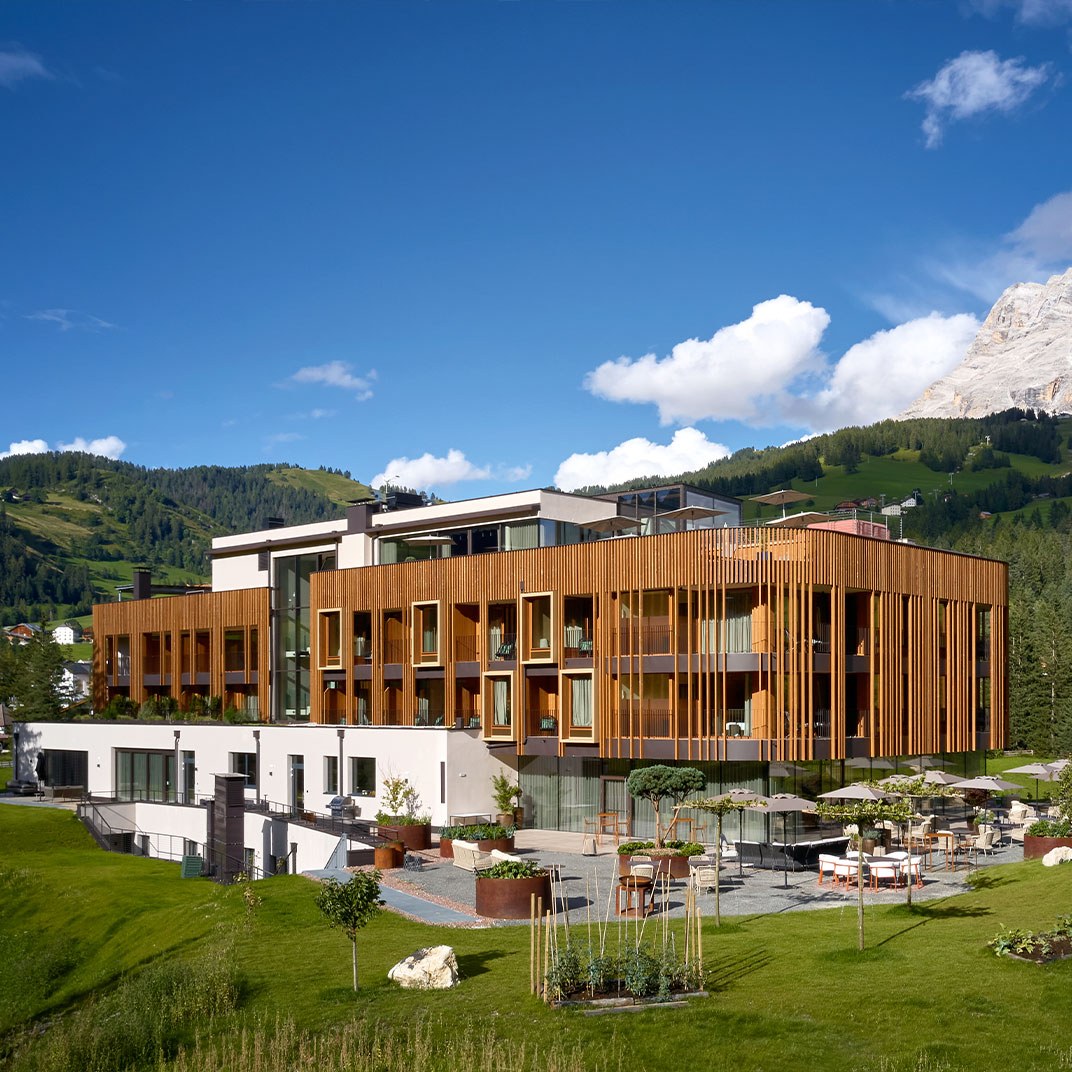
A one-Michelin-star kitchen inside Badia's modern Badia Hill hotel, Porcino runs two tasting menus — one seasonal, one creativity-led — at the €€€ tier. The glass-walled dining room frames Dolomite views, the pairings program is considered and lively, and booking is straightforward. At this price point, it is the strongest fine-dining option in the immediate Badia area.
About Porcino
Porcino, Badia: Worth Booking for Alpine Fine Dining in the Dolomites
If you are looking for a serious tasting-menu restaurant in the Badia valley that earns its price tag without demanding the full ceremony of a two- or three-Michelin-star room, Porcino is the right call. Set inside the modern Badia Hill hotel, it holds a Michelin Plate for 2024 and 2025 — a signal that the kitchen is cooking at a level well above the average Alpine hotel restaurant, even if it has not yet crossed into starred territory. For a returning guest deciding whether to come back or try something else this season, the honest answer is: come back, and this time commit to the creativity-led menu over the seasonality menu if you want to see what the kitchen can really do.
The Room and the Atmosphere
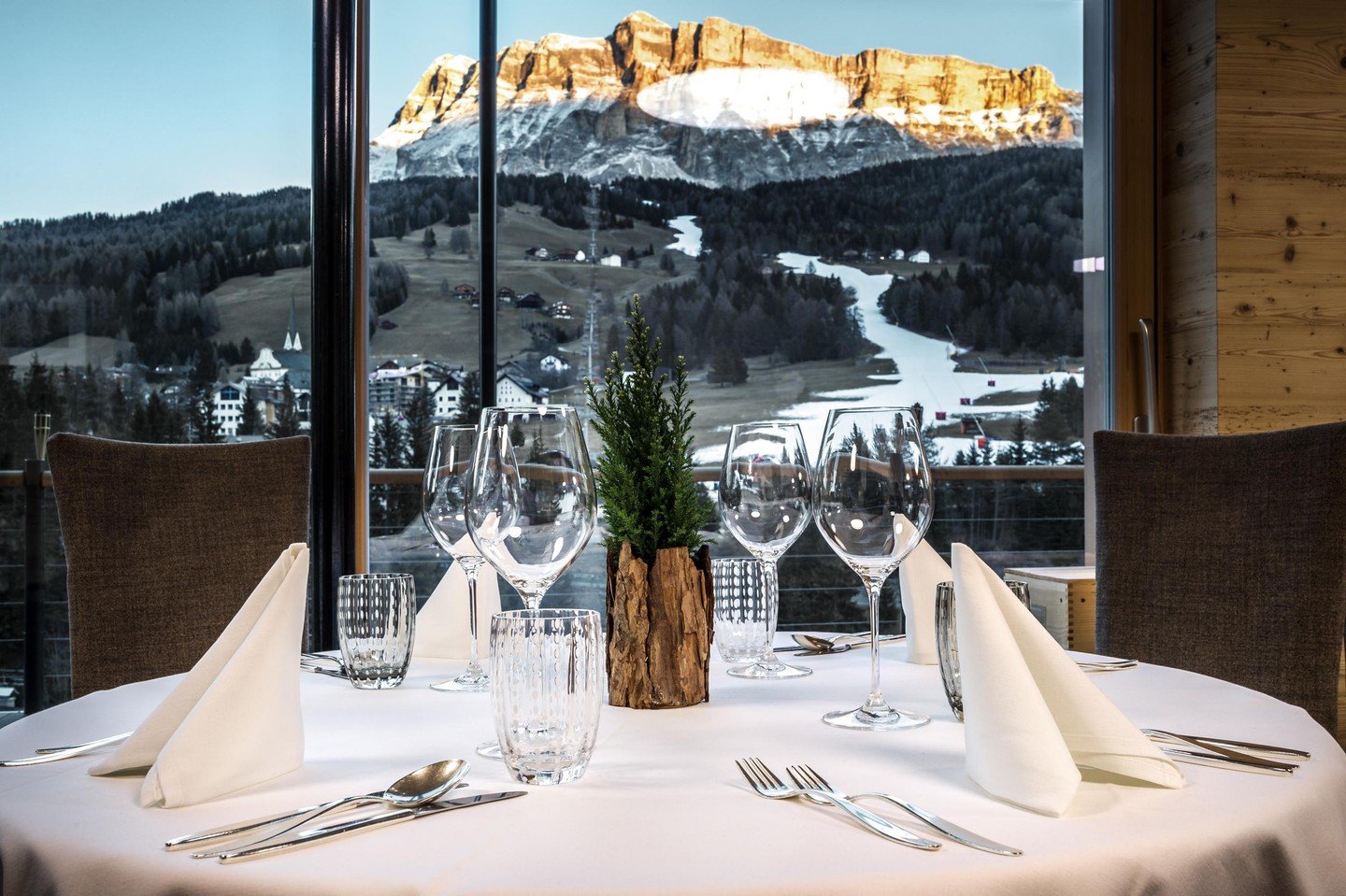
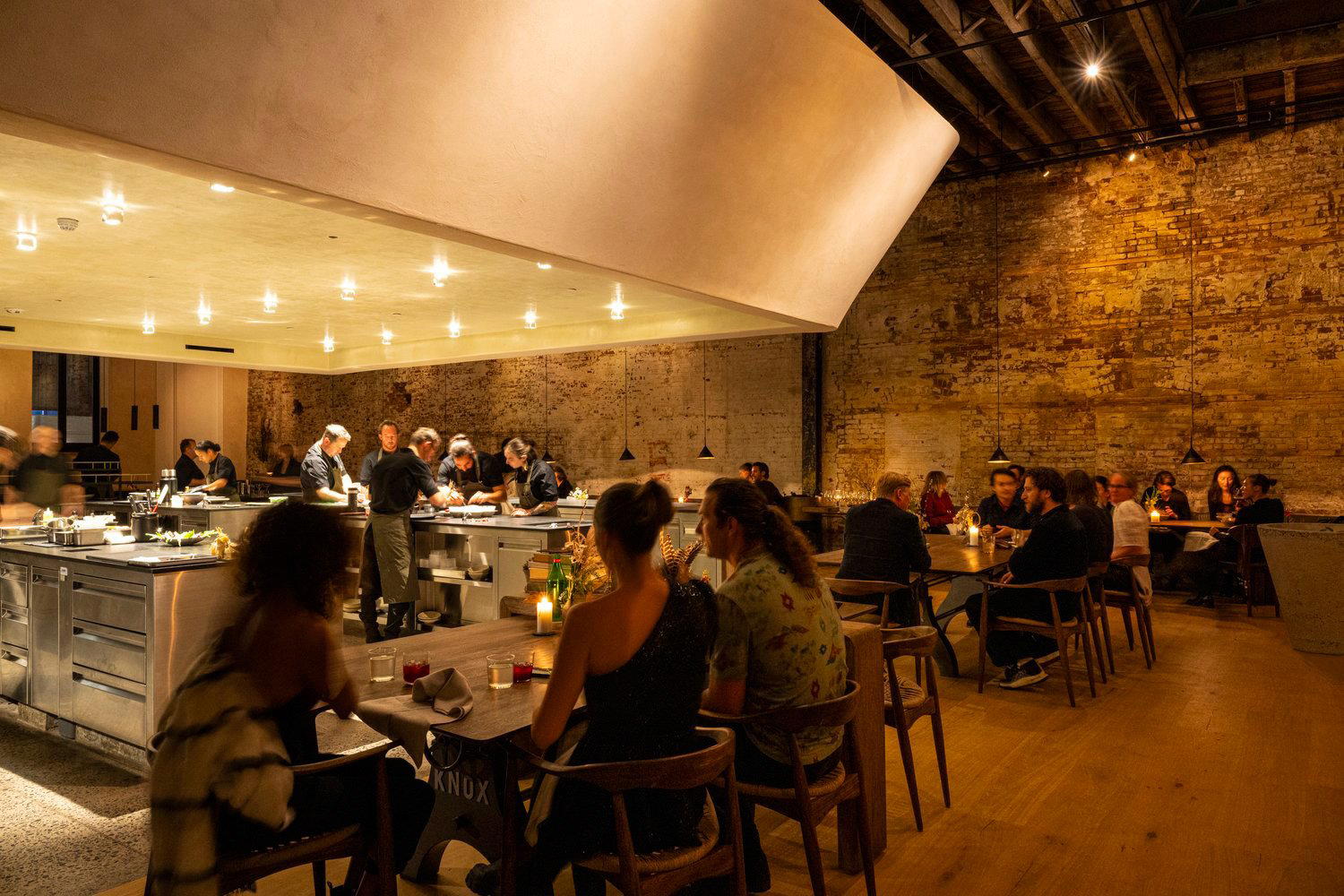
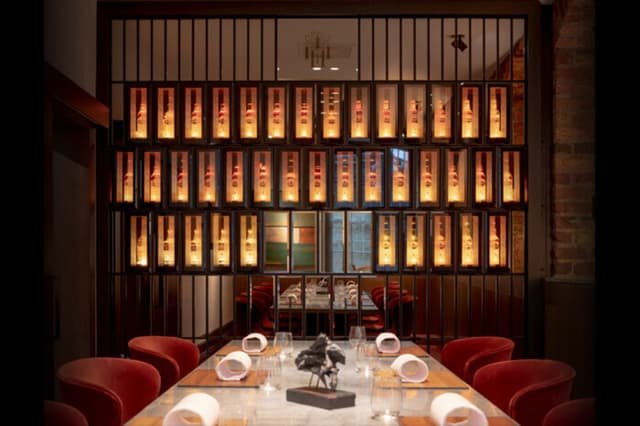
The setting shapes the experience before a dish arrives. Glass walls wrap the dining room, framing the Dolomite peaks in a way that functions less as decoration and more as the dominant presence at the table. The energy is calm and unhurried — this is not a room that gets loud or tries to perform. The contemporary interior keeps pace with the views without competing with them, and the overall mood sits closer to focused Alpine retreat than to celebratory occasion dining. For guests coming off a day of hiking or skiing in the Val Badia, the atmosphere reads as a natural continuation of the setting rather than a formal departure from it. If you need a lively, high-energy room, this is not it; if you want to eat well and feel genuinely settled, the atmosphere here is an asset.
The Food: Two Menus, One Clear Recommendation
Patron Marco Verginer runs two tasting menus: one built around seasonality, the other driven by personal creativity. Both draw on the mountain territory, expect Dolomite references throughout, but the creativity menu pushes further, incorporating ingredients like Wagyu beef produced in Alto Adige alongside a Mediterranean register that gives the cooking range beyond what a purely Alpine format would allow. Vegetables feature heavily, often sourced from the hotel's own garden, and they are treated as lead ingredients rather than supporting detail. The dishes are technically elaborate, and the kitchen appears to use that elaboration purposefully rather than decoratively.
If you have eaten here before and defaulted to the seasonality menu, the creativity menu is the logical next step. It is where the kitchen's ambition is clearest and where the Mediterranean and international touches make the cooking feel genuinely distinct from what you would find at comparable Alpine addresses. For first-timers, either menu works, but the creativity menu gives you more to engage with and a clearer sense of what sets Porcino apart from hotel restaurants at the same price tier.
The Drinks Program
The pairings at Porcino are described as flavorful and lively, not a perfunctory add-on but a considered part of the overall experience. In the context of an Alpine hotel restaurant, that matters: wine and pairing programs at this altitude and price point can be formulaic, leaning on South Tyrolean whites and little else. The pairing here covers more ground, and for guests choosing between taking the pairing or building their own selection from the list, the pairing is the more instructive choice on a first or second visit. It also reflects the kitchen's range, if the food moves between mountain, Mediterranean, and international references, the drinks program follows that arc rather than anchoring you in one regional register. If cocktails or aperitivo are part of your evening, the hotel setting means you have options before sitting down, though the pairing at table is where the drinks program earns its place in the overall recommendation.
Practical Details
Porcino sits at the €€€ price tier, meaningfully less expensive than the €€€€ restaurants that dominate northern Italy's fine-dining conversation, and reasonable for a Michelin-recognised kitchen running two tasting menus with included pairings as an option. Badia is a small Alpine village in South Tyrol; the restaurant's hotel base means it serves a mix of hotel guests and local diners, and booking difficulty is rated easy. There is no evidence of the weeks-out wait times common at starred venues in the region. Visiting in ski season (December through March) or in the summer hiking months (July and August) aligns the experience with the surrounding landscape at its most active, but the enclosed glass room means the setting works in any season. For timing within a trip, an evening booking makes the most of the mountain views in late-season long light; in winter, the Dolomite backdrop after dark has its own quality.
Dress expectations at a contemporary Alpine hotel restaurant at this price point typically sit at smart casual, no jacket requirement, but the room's design and price tier mean you will feel underdressed in hiking gear. For dining alone, the setting and format (tasting menu, unhurried pace) are well-suited to solo guests; there is nothing about the room or service structure that makes a solo booking awkward. For a special occasion, the combination of glass-walled views, elaborate dishes, and considered pairings makes a strong case, just manage expectations around noise and energy levels, since this is a quiet, composed room rather than a celebratory one.
For more options in the area, see our full Badia restaurants guide, our full Badia hotels guide, our full Badia bars guide, our full Badia wineries guide, and our full Badia experiences guide. For Alpine fine dining elsewhere in the region, Gourmetrestaurant Tannenhof in Sankt Anton am Arlberg and Die Geniesserstube im Alpenhof in Tux are worth comparing. For broader Italian fine dining context, Osteria Francescana in Modena, Piazza Duomo in Alba, Quattro Passi in Marina del Cantone, Reale in Castel di Sangro, Uliassi in Senigallia, and Casa Perbellini 12 Apostoli in Verona represent the wider tier above.
Quick reference: €€€ tasting menus, Michelin Plate 2024–2025, easy to book, Badia Hill hotel, smart casual dress, suits solo diners and couples, glass-walled mountain views, lively pairings program.
Ratings
- 4.8 / 5 (57 reviews)
- Awards: Michelin Plate 2025, Michelin Plate 2024
Planning details
- Location
- Str. Damez, 2A, 39036 Badia BZ, Italy
- Website
- badiahill.com/de/food-drinks/ristorante-porcino
- Phone
- +39 0471 180 8060
The take
The Take
The Vibe
Porcino frames its food with the landscape: glass walls keep the Dolomite ridgelines in constant view, so the mountains become part of the room’s composition as much as the tableware. The contemporary interior forgoes folkloric Alpine trappings in favor of a precise, considered design language that feels calm and unhurried. Service and pacing reflect that sensibility—meals are deliberate rather than rushed—so the overall mood lands as serene and intimate, with the panorama outside amplifying the sense that you’re dining in a specific place rather than in a generic hotel restaurant.
Best For
Porcino suits diners who want a purposely staged tasting experience rooted in place. The kitchen runs parallel tasting menus—one anchored to strict seasonality and local mountain ingredients, the other allowing more creative latitude—so the restaurant is particularly well matched to evening tasting-menu dinners and deliberate multi-course meals. Its Michelin Plate standing and the hotel setting make it a fitting stop for visitors staying in Val Badia and for guests seeking a thoughtful, territory-driven dinner rather than casual, drop-in dining.
Ordering Tips
The kitchen offers two distinct tasting-menu trajectories: a seasonally focused menu grounded in Val Badia’s mountain ingredients and a more inventive menu that can include items like Alto Adige Wagyu. When booking, opt for the tasting-menu format to experience the restaurant’s argument about territory and altitude; menus are the explicit framework of Porcino’s cuisine. Note the kitchen’s emphasis on seasonality and booking ahead—tasting-menu kitchens in this region commonly require reservations and deliberate pacing to realize the meal as intended.
Venue details
Ambiance
Elegant and cozy contemporary setting with glass walls offering splendid mountain views, warm professional service, and an open show kitchen.
Tags
Vibe
Best For
Experience
Sourcing
View
Accessibility
At the Table
- Dress Code
- Smart Casual
- Noise Level
- Quiet
- Service Style
- Formal
- Meal Pacing
- Leisurely
- Capacity
- Small
- Kitchen
- Modern
- Menu Format
- Tasting menu
- Wine Program
- Exceptional
- Drinks Focus
- Wine
- Dietary
- Vegetarian friendly
- Private Dining
- Available
- Outdoor Seating
- Yes
Signature Dishes
- venison
- wagyu
- buffalo ricotta tortelli
Know before you go
Know Before You Go
- Getting there
- Str. Damez, 2A, 39036 Badia BZ, Italy
Planning details
Location
Str. Damez, 2A, 39036 Badia BZ, Italy · Directions
Recognition and awards

Also consider
Also Consider
- Atelier Moessmer Norbert Niederkofler, Italian, Creative, €€€€
- Dal Pescatore, Italian, Italian Contemporary, €€€€
- Enoteca Pinchiorri, Italian - French, Italian Contemporary, €€€€
- Enrico Bartolini, Creative, €€€€
- Le Calandre, Progressive Italian, Creative, €€€€
Restaurant context
How Porcino Compares
Porcino sits at €€€ with a Michelin Plate; every named peer in its competitive set operates at €€€€ with Michelin stars. That price gap is the most important practical distinction. Atelier Moessmer Norbert Niederkofler in Brunico is the direct regional benchmark, a three-Michelin-star Alpine address in South Tyrol running a philosophy-driven tasting menu at significantly higher cost and with considerably harder booking. If your priority is the absolute ceiling of Alpine fine dining in the region and budget is secondary, Niederkofler is the answer. If you want a serious kitchen with genuine Michelin recognition at a lower commitment, Porcino is the more practical choice.
Le Calandre in Rubano and Dal Pescatore in Runate both operate in the Italian fine-dining tradition at €€€€ and three-star level, but neither is an Alpine restaurant, they represent a different register entirely. Enoteca Pinchiorri in Florence and Enrico Bartolini in Milan are urban, urban-coded fine dining at the top tier, and are meaningfully harder to book and more expensive. Comparing Porcino to any of these is more about understanding the national tier structure than about direct competition: Porcino occupies a distinct and accessible position that those venues do not.
For a like-for-like Alpine comparison outside South Tyrol, Gourmetrestaurant Tannenhof in Sankt Anton am Arlberg is the closest peer in style and setting. The decision between Porcino and Tannenhof comes down to geography rather than quality tier. Within Badia itself, Porcino has no direct competitor at its level, which simplifies the local booking decision considerably: if you want a serious tasting menu with mountain views in the Val Badia, this is the address.
Explore Badia
Around this place
Discover more on Pearl
Unlock the full Porcino guide in Pearl, including awards, comparisons, FAQs, planning details, and nearby places.
Compare Porcino
| Venue | Price | Booking Difficulty | Awards |
|---|---|---|---|
| Porcino | €€€ | Easy | 2026 Falstaff Restaurant Guide2026 Michelin 1 Star2025 Michelin Plate2024 Michelin Plate |
| Atelier Moessmer Norbert Niederkofler | €€€€ | Unknown | 2026 OAD Top Restaurants in Europe Ranked · #92026 Falstaff Restaurant Guide2026 Les Grandes Tables du Monde Members2026 Michelin 3 Stars2026 La Liste Top Restaurants2025 World's 50 Best Restaurants · #202025 OAD Top Restaurants in Europe Ranked · #362025 The Best Chef Three Knives2025 Michelin 3 Stars |
| Dal Pescatore | €€€€ | Unknown | 2026 OAD Classical in Europe Ranked · #172026 Relais Chateaux Restaurants2026 Les Grandes Tables du Monde Members2026 La Liste Top Restaurants2026 Michelin 3 Stars2026 Falstaff Restaurant Guide2025 OAD Classical in Europe Ranked · #162025 Michelin 3 Stars2025 Relais Chateaux Award |
| Enoteca Pinchiorri | €€€€ | Unknown | 2026 OAD Classical in Europe Ranked · #73Star Wine Lists 20262026 Wine Spectator Grand Award2026 Les Grandes Tables du Monde Members2026 La Liste Top Restaurants2026 Michelin 3 Stars2025 OAD Classical in Europe Ranked · #942025 Wine Spectator Grand Award2025 La Liste Top Restaurants |
| Enrico Bartolini | €€€€ | Unknown | 2026 OAD Top Restaurants in Europe Ranked · #762026 Michelin 3 Stars2026 Les Grandes Tables du Monde Members2026 La Liste Top Restaurants2026 Falstaff Restaurant Guide2025 OAD Top Restaurants in Europe Ranked · #722025 Michelin 3 Stars2025 Michelin 1 Star2025 La Liste Top Restaurants |
| Le Calandre | €€€€ | Unknown | 2026 OAD Top Restaurants in Europe Ranked · #38Star Wine Lists 20262026 Relais Chateaux Restaurants2026 Les Grandes Tables du Monde Members2026 Michelin 3 Stars2026 La Liste Top Restaurants2025 OAD Top Restaurants in Europe Ranked · #292025 World's 50 Best Restaurants · #31We're Smart World Top Restaurants 2025 |
.png?width=1200&quality=80)











Comparing your options in Badia for this tier.
FAQ
Frequently Asked Questions
What should I wear to Porcino?
Porcino sits inside the modern Badia Hill hotel and serves elaborately constructed tasting menus in a contemporary glass-walled dining room — dress accordingly. Smart-to-neat attire fits the setting: think clean, polished casual rather than hiking gear. The Dolomites context means many guests arrive from mountain activity, but the €€€ price tier and the considered atmosphere call for a step up from resort wear.
Is Porcino good for solo dining?
A tasting-menu format generally works well for solo diners — you're at the kitchen's pace from the start, so a single seat at a table for one doesn't disrupt the experience. The contemporary room with its glass-wall views also makes solo dining feel engaging rather than awkward. No counter seating is documented in the available data, but the format is inherently solo-friendly.
Is Porcino worth the price?
At €€€, yes — particularly relative to the €€€€ restaurants that dominate northern Italy's serious fine-dining scene. Porcino holds a Michelin Plate for 2024 and 2025, signals a level of kitchen discipline that supports the price. Two distinct tasting menus, active vegetable sourcing including a home garden, and Wagyu produced in Alto Adige give the price tag something to stand on. If you want a full Michelin-star experience, look elsewhere; if you want serious cooking at a more accessible tier, Porcino makes a strong case.
Is the tasting menu worth it at Porcino?
The creativity menu is the stronger pick for first-timers: patron Marco Verginer uses it to push beyond strict regional boundaries, incorporating Wagyu beef from Alto Adige alongside Mediterranean and international references. The seasonality menu is the safer, more Alpine-rooted option. Both carry thoughtful drink pairings described as flavorful and lively rather than formulaic. If you're committed to one visit, go with the creativity menu.
What should a first-timer know about Porcino?
Porcino is a tasting-menu-only restaurant inside the Badia Hill hotel at Str. Damez, 2A in Badia — plan around that format, not a la carte flexibility. The kitchen draws on its own garden for vegetables and sources Wagyu locally in Alto Adige, so the cooking has regional grounding even when it reaches outward. The Michelin Plate (2024, 2025) tells you the kitchen is consistent and technically sound without being at starred-restaurant ceremony levels.
Is Porcino good for a special occasion?
Yes — the combination of a glass-walled room framing Dolomite peaks, two structured tasting menus, and considered drink pairings gives a special occasion clear shape and setting. At €€€ it is meaningfully more accessible than Italy's top-tier celebratory restaurants, which makes it a realistic choice rather than an aspirational one. For milestone dinners where the view matters as much as the plate, few settings in the Badia valley compete.
What are alternatives to Porcino in Badia?
Within the broader South Tyrol and northern Italy fine-dining circuit, Atelier Moessmer Norbert Niederkofler is the obvious regional step up — two Michelin stars, a strict mountain-ingredient philosophy, and a considerably higher price point. If you want to stay in the €€€ bracket and explore the category, Porcino is among the more considered options in the Badia valley specifically. For a full-ceremony starred experience in northern Italy, Enrico Bartolini or Le Calandre are the benchmarks, but neither is local.