
Hotel in Yomitan, Japan
Glamday Style Hotel \u0026 Resort Okinawa Yomitan
150ptsCoastal Okinawan Retreat

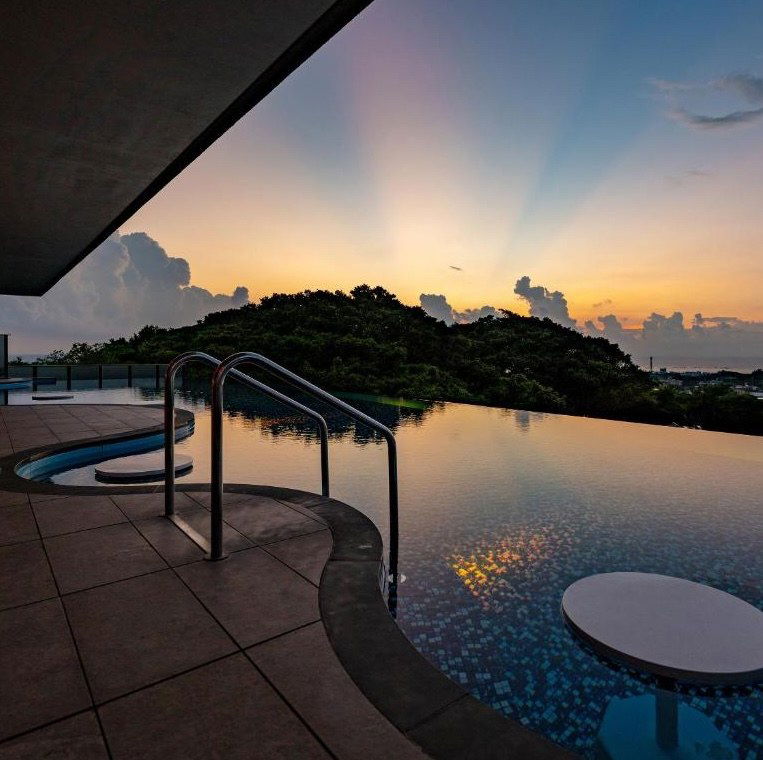
About Glamday Style Hotel \u0026 Resort Okinawa Yomitan
A Michelin Selected resort on Okinawa's Yomitan coast, Glamday Style Hotel & Resort sits within a village known for its traditional ryukyu crafts and quieter stretch of shoreline. The property positions itself against the resort corridor to the south, offering a smaller-scale alternative with direct coastal access. Yomitan's relative distance from Naha makes it a considered choice rather than a convenience stop.
Where Yomitan's Coastline Sets the Terms
Okinawa's resort geography divides into two distinct registers. The southern corridor, running through Naha and up toward Chatan, is dense, commercial, and internationally familiar. The central-west stretch around Yomitan operates differently: lower density, longer sightlines to the East China Sea, and a village character rooted in traditional bingata dyeing and Ryukyuan ceramics rather than duty-free retail. Glamday Style Hotel & Resort Okinawa Yomitan sits within this quieter coastal register, at 571-1 Aza Senaha in Yomitanson, Nakagami-gun. The address places it on a shoreline section where the visual relationship with the sea is direct and uncluttered, a spatial quality that defines how the property reads from arrival onward.
Within this part of Okinawa's accommodation map, the Michelin Selected distinction the property carries in the 2025 guide is a meaningful signal. Michelin's hotel selection for Japan applies a threshold around physical environment, service consistency, and contextual coherence with place. Selection does not operate as a volume award; it identifies properties where the overall stay experience meets a considered editorial standard. For Yomitan specifically, that recognition places Glamday Style in a peer set that also includes Hoshinoya Okinawa, one of the more design-led coastal stays in the prefecture, and the Halekulani Okinawa further north in Onna. The comparison matters: within that peer set, Glamday Style occupies a less internationally prominent position, which affects both pricing dynamics and booking accessibility.
The Physical Logic of the Property
Japan's Michelin-selected resort properties tend to share a design logic: the physical environment does most of the editorial work, and the architecture either amplifies or filters the surrounding landscape depending on its approach. In Okinawa, that landscape is specific: coral-based limestone, subtropical vegetation, and a coastal palette that runs from turquoise in shallow water to deep ultramarine at depth. Properties that understand this tend to position rooms and communal spaces to maximise sea orientation rather than turning inward toward amenity clusters.
The broader category trend in Japanese resort design has moved toward what might be called contextual restraint: materials drawn from local craft traditions, structural forms that echo vernacular Ryukyuan architecture without literal pastiche, and an avoidance of the generic international resort vocabulary of glass curtain walls and lobby atrium grandeur. This approach characterises the design language at several of Okinawa's stronger properties, and the Michelin selection for Glamday Style suggests the property aligns with that direction rather than defaulting to a generic resort formula.
For reference across Japan's premium resort tier, the design-led approach found in properties like Amanemu in Mie, Gora Kadan in Hakone, or Zaborin in Kutchan demonstrates how strongly a property's spatial identity can anchor the guest experience independently of F&B programming or service volume. Benesse House in Naoshima takes this further by integrating contemporary art into the architectural structure itself. Glamday Style operates at a different scale and price register than those properties, but the design framework the leading Michelin-selected Japanese resorts share is the relevant competitive context.
Yomitan's Position in the Okinawan Stay Decision
Choosing Yomitan over Onna or Naha involves a set of practical trade-offs that are worth stating plainly. Yomitan sits roughly 30 kilometres north of Naha Airport, accessible via the Okinawa Expressway. The driving time from the airport runs to around 40 minutes depending on traffic, which is comparable to reaching the northern Onna resort strip. The village itself offers craft workshops, historical sites including the Zakimi Castle ruins (a UNESCO World Heritage component of the Ryukyu Kingdom Gusuku Sites), and a local market character that distinguishes it from the more resort-homogeneous areas further north.
That local character is not incidental to the property's appeal. Japanese resort guests, particularly those arriving via domestic routes from Osaka and Tokyo, increasingly weight neighbourhood specificity over amenity maximalism. The shift is visible across Michelin's Japanese hotel selections, where smaller, place-specific properties in towns like Kinosaki, Yufu, and Niigata receive recognition alongside the major urban luxury addresses. Nishimuraya Honkan in Kinosaki-cho, Kamenoi Besso in Yufu, and Satoyama-Jujo in Niigata all demonstrate that regional specificity is now a credential in itself across Japan's premium accommodation tier.
For Okinawa's outer island comparison, Jusandi in Ishigaki and The Hiramatsu Hotels & Resorts Ginoza further north in Ginoza illustrate how the prefecture's premium tier distributes across geography and format. Glamday Style's Yomitan position splits the difference between those outer-island escapes and the main-island resort mainstream. See the full Yomitan restaurants and stays guide for broader context on the area's emerging hospitality scene.
Planning a Stay
Okinawa's primary season runs from late April through September, with the rainy season (tsuyu) typically occupying May and early June. The post-rainy-season window from late June through August represents peak demand across the prefecture's coastal properties. Visitors who prefer lower occupancy and more temperate conditions tend to arrive in October and November, when sea temperatures remain swimmable and the subtropical vegetation holds its colour. Winter months see reduced activity and some facilities at coastal resorts operating on reduced schedules, though the mild climate means Okinawa never experiences the shuttered-resort phenomenon common in colder Japanese regions.
Booking Michelin-selected properties in Japan during peak season generally requires lead times of six to eight weeks, with popular summer dates filling sooner. The 2025 Michelin selection will likely increase search visibility for the property among both domestic and international visitors, which may compress availability windows relative to previous years. Visitors arriving from international gateways will transit through Naha Airport (OKA), which receives direct flights from major Asian hubs and connects domestically to Tokyo and Osaka.
For comparative context across Japan's broader premium hotel tier, properties at the leading of the Michelin-selected and starred range include Bvlgari Hotel Tokyo, HOTEL THE MITSUI KYOTO, and Asaba in Izu, each operating in a different price and format tier from Glamday Style but useful as reference points for understanding how Michelin's hotel program distributes across Japan's accommodation categories. Internationally, the program's scope extends to properties like Badrutt's Palace Hotel in St. Moritz and Hôtel de Paris Monte-Carlo, which occupy a different market tier but help calibrate what Michelin selection signals at its various levels. Other Japan properties worth comparing across format types include Fufu Nikko, Fufu Kawaguchiko, Fufu Kyu-Karuizawa Restful Forest, Nasu Mukunone, Atami Izusan Karaku, Sekitei in Hatsukaichi-shi, and GOTO RETREAT by Onko Chishin, each demonstrating a different resolution of the design-versus-place question that Okinawa's coastal properties must also answer.
Frequently Asked Questions
Is Glamday Style Hotel & Resort Okinawa Yomitan more formal or casual?
Japan's Michelin-selected coastal resort category in Okinawa generally leans toward relaxed rather than formal, particularly in properties positioned away from the main Naha business corridor. The village setting in Yomitan and the Michelin selection (rather than a starred or key distinction) suggest a property calibrated for comfort and environmental quality rather than ceremony. Specific dress codes and service protocols are not confirmed in available data, but the coastal resort format and regional context point toward a casual-to-smart-casual register rather than the formal expectations you would find at a major city luxury hotel like Bvlgari Hotel Tokyo.
What is the most popular room type at Glamday Style Hotel & Resort Okinawa Yomitan?
Specific room category data is not available in current records. Across Michelin-selected Okinawan coastal properties as a category, ocean-facing rooms or suites with direct sea views tend to attract the highest demand and the longest advance booking lead times. Given the property's coastal position at Aza Senaha and its Michelin Selected recognition in 2025, rooms with sea orientation are the logical priority booking for guests arriving during the April-to-September peak season. Confirming specific room configurations and availability is leading done directly with the property ahead of travel.
Recognized By

Similar venues by awards
Related editorial
- How travel will be redefined by 2040By 2040, Travel Won't Be an Industry — It Will Be Infrastructure My thesis is simple and, I suspect, unfashionable: by 2040 travel will stop behaving like a discretionary consumer category and start
- How travel will be redefined by 2040By 2040, Travel Won't Be a Trip — It Will Be a Stack My thesis is simple and, I think, uncomfortable: by 2040, "travel" will no longer describe a discrete journey from point A to point B.
- How travel will be redefined by 2040The Death of Tourism as We Know It: Why 2040 Will Demand a Completely Different Kind of Traveler Let me be direct: the version of travel most of us grew up dreaming about — cheap flights, crowded lan
Save or rate Glamday Style Hotel \u0026 Resort Okinawa Yomitan on Pearl
Keep this venue in your Pearl passport, rate it after you visit, and track it alongside every other place you collect.