
Longting Vineyard Hotel
Liujiagou Town, Penglai District, Yantai
Hotel in Yantai, China
 Book with Pearl
The Read
Provençal-Coast Slow Living
Price
$1–100per night
Why go
Longting Vineyard Hotel is worth considering for a quieter Penglai stay tied to Yantai wine country, especially for celebrations or hosted trips where setting matters. It is less suited to travelers who need a large urban luxury hotel with deep business infrastructure, loyalty clarity, and widely documented dining or spa details.
About Longting Vineyard Hotel
Should you book Longting Vineyard Hotel in Yantai? Consider it if you want a Yantai hotel and the details are enough for your trip. The clearest confirmed signal is its Small Luxury Hotels of the World membership in 2025, with a smart casual dress code noted for the property.
Because the available data is limited, this is not a page to infer specific dining, spa, room, location, or service details. For guests comparing it with hotels in Qingdao, Tianjin, or Beijing, the decision should be practical: choose Longting Vineyard Hotel for a Yantai stay where its confirmed profile appeals, and choose another property if you need broader, better-documented hotel information before booking.
Better for a Yantai stay than a specification-led comparison
Longting Vineyard Hotel makes the most sense when the confirmed profile fits the trip: Yantai, smart casual, and Small Luxury Hotels of the World membership in 2025. Without details on restaurants, spa facilities, rooms, or meeting services, it is better to treat the hotel as a carefully considered option rather than assume a particular resort format or full-service setup.
Business travelers should be selective. If the trip requires specific meeting facilities, dining options, loyalty-program benefits, or transport logistics, those details should be confirmed directly before booking. For travelers who want a Yantai hotel with a recognized affiliation, Longting Vineyard Hotel has a clearer case.
The confirmed recognition is the reason to take it seriously
The clearest credibility marker is membership in Small Luxury Hotels of the World for 2025. That does not confirm a particular room size, restaurant format, spa menu, or service style, but it does give travelers one point of reference when assessing the hotel. That makes it worth considering for guests who want the hospitality choice to feel deliberate.
The right booking mindset is simple: verify the details that matter to your stay before committing. The confirmed information supports interest in the hotel, but it does not confirm specific facilities, meal periods, room categories, or on-property experiences.
Who should choose it, and who should not
Choose Longting Vineyard Hotel if you want a Yantai hotel with Small Luxury Hotels of the World membership in 2025 and a smart casual tone. Skip it if the priority is an urban business base outside Yantai or a property with widely documented dining, spa, and bar details.
Planning details
- Location
- No. 1 Longting Road, Liujiagou Town, Penglai District, Yantai, Shandong, China
The take
The Take
The Vibe
Longting Vineyard Hotel presents a restrained Provençal vocabulary set against China’s wine coast. The low-slung terracotta rooflines and arched facades favor outward sightlines to the vines and the Yellow Sea, creating an intimate, unassuming presence rather than the vertical drama of city luxury. The property reads as a wine-country refuge: calmly paced, quietly designed, and deliberately rooted in its agricultural setting. Guests experience a gentle, charming serenity where architecture frames the landscape — the focus is the vines and the coast rather than ostentation.
Best For
This hotel suits travellers looking for a thoughtful wine-country escape — particularly couples and honeymooners drawn to a romantic, coastal vineyard setting. It fits weekend getaways where the journey through rows of vines and the seaside backdrop are part of the appeal. The property’s restrained Provençal references and intimate scale make it appropriate for those who prefer relaxed, scenic stays over bustling resort-style amenities. Visitors who value scenery, calm design, and proximity to working vineyards will find Longting especially rewarding.
Stay Tips
Plan arrivals to allow for the scenic approach: arriving in daylight makes the procession past the vineyards and the glimpse of the Yellow Sea more memorable. Expect a deliberately restrained design language—Provençal forms and modest scale—so prioritize rooms or locations that face the vines and coast if views matter to you. Allow time to linger outdoors; the property’s orientation and landscape are primary draws and worth building into your stay.
Venue details
Ambiance
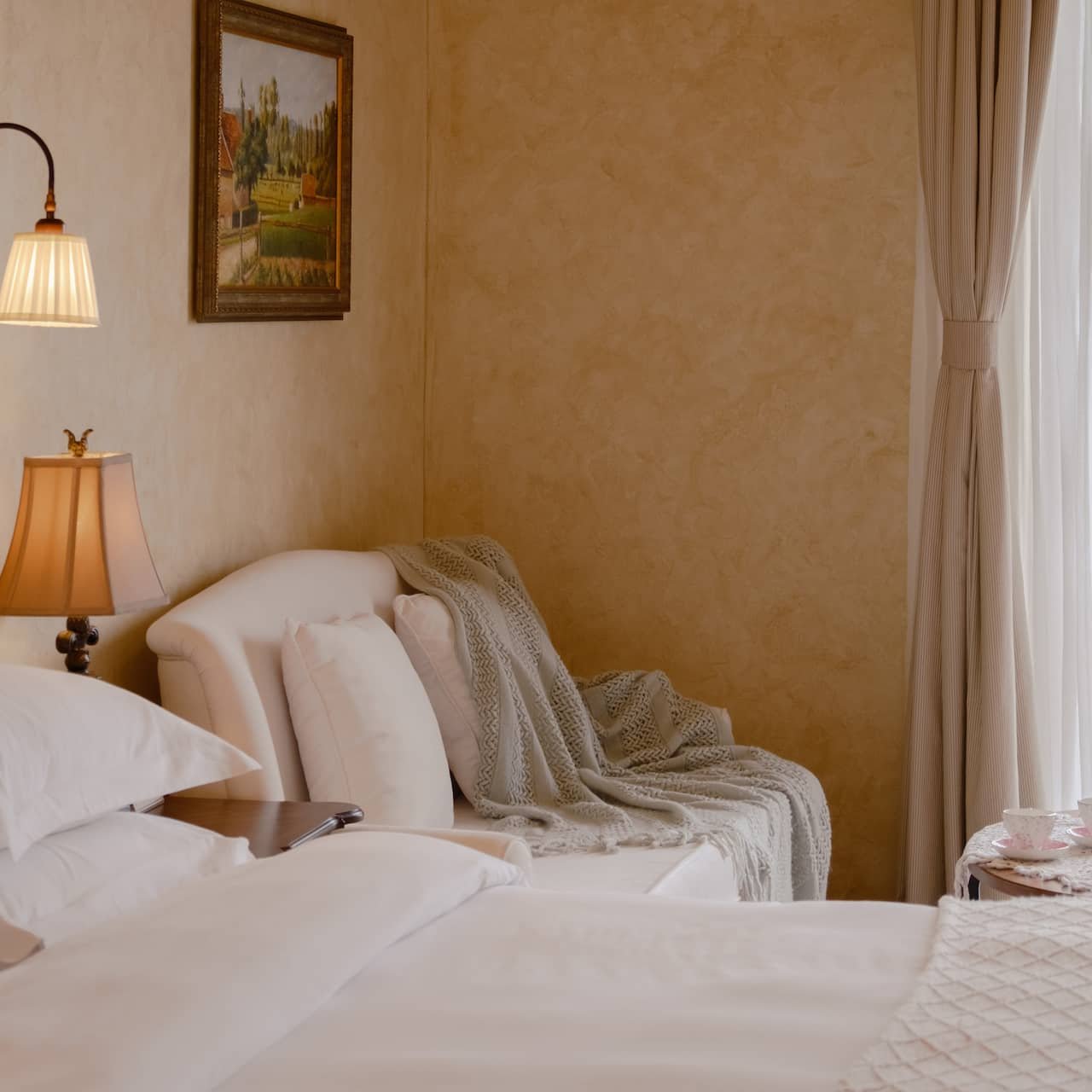
Provençal French farmhouse style with warm lighting, romantic floor-to-ceiling windows framing vineyard and sea views, and cozy classical interiors.
Tags
Vibe
Best For
Experience
Amenities
View
About the Stay
- Rooms
- 24
- Check-in
- 14:00
- Check-out
- 12:00
- Property Type
- Boutique hotel
- Property Style
- Provençal Style Vineyard Sanctuary
- Design Style
- Southern French Farmhouse with Classical Ironwork and Arches
- Pool
- Yes
- Spa
- Yes
- Families
- Welcome
Know before you go
Know Before You Go
- Getting there
- No. 1 Longting Road, Liujiagou Town, Penglai District, Yantai, Shandong, China
Planning details
Location
No. 1 Longting Road, Liujiagou Town, Penglai District, Yantai, Shandong, China · Directions
Recognition and awards

Also consider
Where to Look If This Does Not Fit
If Yantai is not required, cross-shop Shangri-La Hotel Qingdao for a bigger coastal-city hotel profile or The St. Regis Qingdao for a more formal luxury-hotel feel in Qingdao.
For a business-heavy itinerary, Conrad Tianjin is the more practical peer from this set. For a Beijing stay, compare The Ritz-Carlton, Beijing with Sofitel Beijing Central based on whether the trip needs a luxury-brand experience or a more central city-hotel base.
Hotel context
How It Compares
Longting Vineyard Hotel is the more setting-led choice if the trip is centered on Yantai or Penglai wine country. Shangri-La Hotel Qingdao and The St. Regis Qingdao make more sense for travelers who want a larger coastal-city hotel with a more predictable urban luxury rhythm, but they are out-of-metro alternatives rather than direct Yantai substitutes.
Conrad Tianjin, The Ritz-Carlton, Beijing, and Sofitel Beijing Central are better comparisons for travelers prioritizing city access, brand familiarity, and business-hotel infrastructure. Longting is easier to justify when ambiance matters more than metropolitan convenience.
For value, the decision depends less on price tier and more on trip purpose because no public price signal is supplied here. Choose Longting for a low-friction Yantai-area occasion stay; choose the Qingdao, Tianjin, or Beijing peers if the hotel needs to support a dense work schedule, frequent transport, or a more formal urban hospitality setup.
Explore Yantai
Around this place
Discover more on Pearl
Unlock the full Longting Vineyard Hotel guide in Pearl, including awards, comparisons, FAQs, planning details, and nearby places.
Compare Longting Vineyard Hotel
| Venue | Location | Awards |
|---|---|---|
| Longting Vineyard Hotel | Yantai | Small Luxury Hotels Member 2025 |
| Shangri-La Hotel Qingdao | Qingdao | No published awards |
| The St. Regis Qingdao | Qingdao | No published awards |
| Conrad Tianjin | Tianjin | 2026 Forbes Recommended2025 Forbes Recommended |
| The Ritz-Carlton, Beijing | Beijing | 2026 Forbes 4-Star2026 La Liste Top Hotels2025 Forbes 4-Star |
| Sofitel Beijing Central | Beijing | No published awards |


How Longting Vineyard Hotel Yantai: SLH Member Hotel compares with similar nearby venues.
FAQ
Frequently Asked Questions
Is Longting Vineyard Hotel good for business travel?
It can be considered for business travel in Yantai if the hotel style suits your schedule, but the data does not confirm meeting facilities, transport details, or business services. If you need a different hotel format, compare the style with properties such as Shangri-La Hotel Qingdao or Sofitel Beijing Central.
How does Longting Vineyard Hotel compare to other hotels?
Longting Vineyard Hotel is a Yantai option with 2025 Small Luxury Hotels of the World membership. Compared with hotels such as The Ritz-Carlton, Beijing or Conrad Tianjin, it should be assessed on whether you specifically want a Yantai stay rather than a different city base.
How is the pool and spa at Longting Vineyard Hotel?
The supplied venue data does not detail pool or spa facilities, so do not choose it for a spa-specific trip unless those facilities are confirmed directly before booking. The St. Regis Qingdao can be considered separately if you are comparing hotel options outside Yantai.
What is check-in like at Longting Vineyard Hotel?
The data does not list exact check-in times or arrival procedures. Confirm timing, luggage arrangements, and any special arrival needs directly with Longting Vineyard Hotel before booking, especially if your schedule in Yantai is tight.
Do loyalty programs work at Longting Vineyard Hotel?
Do not count on a major global loyalty match unless the hotel confirms it directly. The only membership signal in the data is Small Luxury Hotels of the World for 2025, which is useful as a quality marker but does not tell you the full rules of earning or redeeming points. If loyalty benefits matter most, hotels in Qingdao, Beijing, or Tianjin may be useful comparisons.
When is the best time to book Longting Vineyard Hotel?
The data does not specify booking difficulty, seasonal demand, or minimum-stay patterns. If your Yantai trip is tied to fixed dates or a special occasion, confirm availability and key hotel details directly before committing. For flexible city-travel dates, Beijing and Qingdao hotels may offer a different kind of planning flexibility.