
Hotel in Warminster, United Kingdom
Bishopstrow Hotel & Spa
400ptsGeorgian Manor Retreat

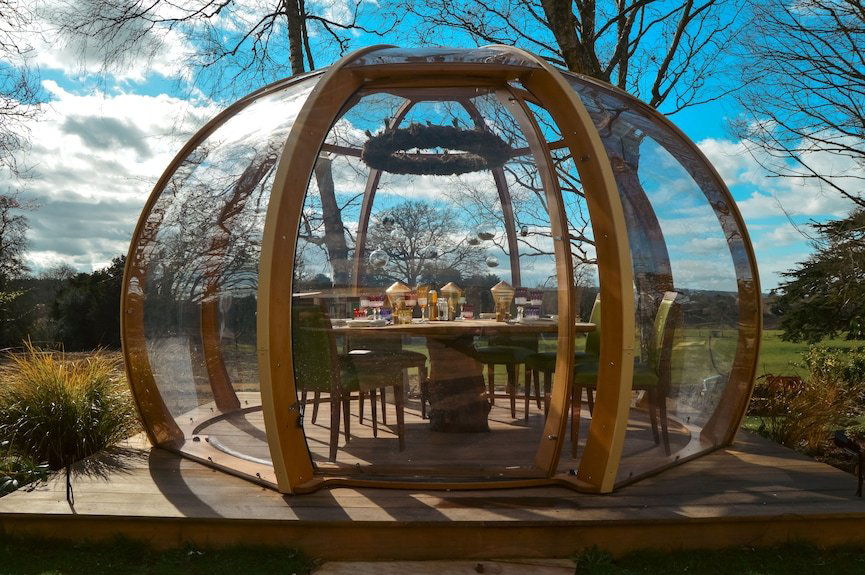
About Bishopstrow Hotel & Spa
A 19th-century manor house on the southern edge of Wiltshire's chalk downs, Bishopstrow Hotel & Spa occupies honey-coloured Georgian stonework set against the River Wylye. The property combines country-house dining and spa facilities with proximity to Longleat and Stonehenge, placing it in the tier of rural English retreats that trade on landscape access and architectural character rather than urban convenience.
Stone, Grounds, and the Grammar of a Wiltshire Manor
There is a particular architectural grammar to the Georgian and Regency manor houses of rural England, and Bishopstrow Hotel & Spa in Warminster speaks it fluently. The property occupies a 19th-century manor built in honey-coloured Bath stone, the kind of material that absorbs afternoon light and returns it slowly, warming rather than glinting. Arriving along Boreham Road, the building presents itself without drama: a country house doing what country houses were designed to do, which is project permanence and ease in equal measure. That restraint is, in itself, a design statement.
The southwest of England has developed a coherent tier of country house hotels that trade on precisely this combination: period architecture preserved rather than converted, grounds that provide genuine seclusion, and interiors that layer contemporary comfort over original structure. Bishopstrow sits within that tradition, in the Wylye Valley on the edge of Salisbury Plain, a part of Wiltshire that puts Stonehenge and Longleat within a short drive. That geographic position matters for understanding the property's appeal: this is not a destination that requires you to construct an itinerary from scratch. The surrounding countryside does much of the work.
The Interior Logic of a Country House Conversion
What distinguishes the better British country house hotels from their more anonymous competitors is a legible relationship between original architecture and current use. The bones of a 19th-century manor carry certain obligations: ceiling heights, proportions, fenestration patterns, the flow between reception rooms and service spaces. At Bishopstrow, the honeyed-stone fabric of the building sets the tonal register for the interior, and the guest experience is shaped around that continuity. Creature comforts are present in the way that the country house category now requires them to be, which means the gap between heritage atmosphere and contemporary convenience has been closed rather than left as a romantic inconvenience.
This approach to country house conversion has become a recognisable format across the south and west of England. Properties like The Newt in Somerset and Babington House have each defined a version of this model: period house at the centre, grounds as experience, food and spa as reasons to stay rather than leave. Bishopstrow follows that structural logic, and its inclusion of spa facilities positions it within the wellness-integrated tier of the country house segment, where the expectation is that the property functions as a full destination rather than a base for elsewhere.
Landscape as Architecture
The grounds at Bishopstrow are not incidental to the design proposition; they are part of it. In the country house format, what surrounds a building contributes as much to the spatial experience as what happens inside it. The serenity of the Wylye Valley countryside, with the plain opening out beyond the valley floor, provides the kind of visual decompression that urban hotels spend considerable resources trying to simulate. Here, it is simply the view out of the window.
Wiltshire's position in the southwest corridor of England means that guests arriving from London are roughly two hours by road, placing Bishopstrow within range for long-weekend stays without requiring a full travel commitment. The A303 corridor that runs past Stonehenge and Longleat makes this a logical stop for those combining cultural visits with rural hospitality, and the hotel draws from both the London weekend-escape market and the broader Wiltshire and Bath cultural tourism circuit. For a comparison point on how similar rural properties position themselves against city alternatives, Lime Wood in Lyndhurst operates on a comparable model in the New Forest, calibrating its offer against the London luxury weekend rather than the local market.
The Spa and Dining Tier
Country house hotels at Bishopstrow's level now operate on the assumption that a spa is not a supplementary amenity but a structural component of the offer. The shift has happened gradually across the category over the past two decades: properties without credible spa facilities occupy a different competitive bracket from those that have invested in them, regardless of how strong the rooms or food might be. Bishopstrow's positioning within the spa-integrated tier signals where it sits in that hierarchy.
Dining inside this format follows a similar logic. Country house restaurants serve a dual audience: residents for whom eating in is the default, and day visitors or locals for whom the dining room is a destination in its own right. The leading examples of the format manage both audiences without compromising either. The architecture of the dining space in a converted manor house typically carries inherited character, high ceilings, sash windows looking onto grounds, proportions built for another century's social rituals, and the better operators use that character as a design asset rather than trying to neutralise it with contemporary fit-out.
For readers comparing country house properties across the UK, the editorial picture is usefully varied. In Scotland, properties like Gleneagles operate at a different scale and price point entirely, while smaller houses such as Dun Aluinn in Aberfeldy and Monachyle Mhor Hotel offer a more intimate version of the format in Highland settings. In the English southwest, Bishopstrow occupies middle ground between those two scales.
Planning a Stay
Bishopstrow Hotel & Spa is located at Boreham Road, Warminster, Wiltshire, BA12 9HH. Access from London is primarily via the A303, a route that doubles as a heritage corridor through Stonehenge country before dropping into the Wylye Valley. The nearest rail connections arrive at Warminster station, which sits on the London Waterloo to Exeter line and provides a car-free option for those not wanting to drive through the plain. The surrounding area, including Longleat and the Stonehenge complex, makes the hotel well-suited to stays of two nights or more, allowing time for both the property itself and the wider landscape. For further context on the Warminster dining and hospitality offer, see our full Warminster restaurants guide.
Those building a longer southwest England itinerary might also consider how Bishopstrow connects to properties across the region and beyond. Avon Gorge by Hotel du Vin in Bristol and Lifeboat Inn in St Ives represent different takes on the English hospitality offer at comparable or overlapping price points, while Hell Bay Hotel on Bryher offers the western extreme of the same southwest corridor for those willing to extend their journey further.
Frequently Asked Questions
- Is Bishopstrow Hotel & Spa more formal or casual?
- The country house format in rural Wiltshire tends toward relaxed formality rather than strict dress codes. Warminster sits outside the metropolitan circuits where jacket requirements still apply, and spa-integrated country houses in this tier generally foster an informal-but-considered atmosphere, smarter casual at dinner, comfortable during daytime and spa hours. The architectural setting provides an air of occasion that the operational tone typically does not enforce.
- Which room offers the leading experience at Bishopstrow Hotel & Spa?
- Without verified room-category data in the record, a specific recommendation would be speculative. In the country house format generally, rooms within the original manor fabric, those with original proportions, period windows, and direct ground views, tend to carry more character than annexe or garden-wing additions. It is worth asking at booking which room classifications sit within the original house structure.
- What makes Bishopstrow Hotel & Spa worth visiting?
- The combination of 19th-century manor architecture, Wylye Valley grounds, spa facilities, and proximity to Stonehenge and Longleat makes Bishopstrow a coherent proposition for a southwest England long weekend. The property covers dining, wellness, and landscape in a single address, which removes the logistical friction that comes with assembling those elements separately. For travellers comparing southwest England options, it sits in a competitive tier with other spa-integrated country houses and differentiates primarily on location and architectural character.
Recognized By

Related editorial
- Best Fine Dining Restaurants in ParisFrom three-Michelin-star icons to the next generation of Parisian chefs pushing boundaries, these are the restaurants that define fine dining in the world's culinary capital.
- Best Luxury Hotels in RomeFrom rooftop terraces overlooking ancient ruins to Michelin-starred hotel dining, these are the luxury hotels that make Rome unforgettable.
- Best Cocktail Bars in KyotoFrom sleek lounges to hidden speakeasies, Kyoto's cocktail scene blends Japanese precision with global influence in ways you won't find anywhere else.
Save or rate Bishopstrow Hotel & Spa on Pearl
Keep this venue in your Pearl passport, rate it after you visit, and track it alongside every other place you collect.