
Hotel in Vienna, Austria
Altstadt Vienna
925ptsAristocratic Townhouse Reimagined


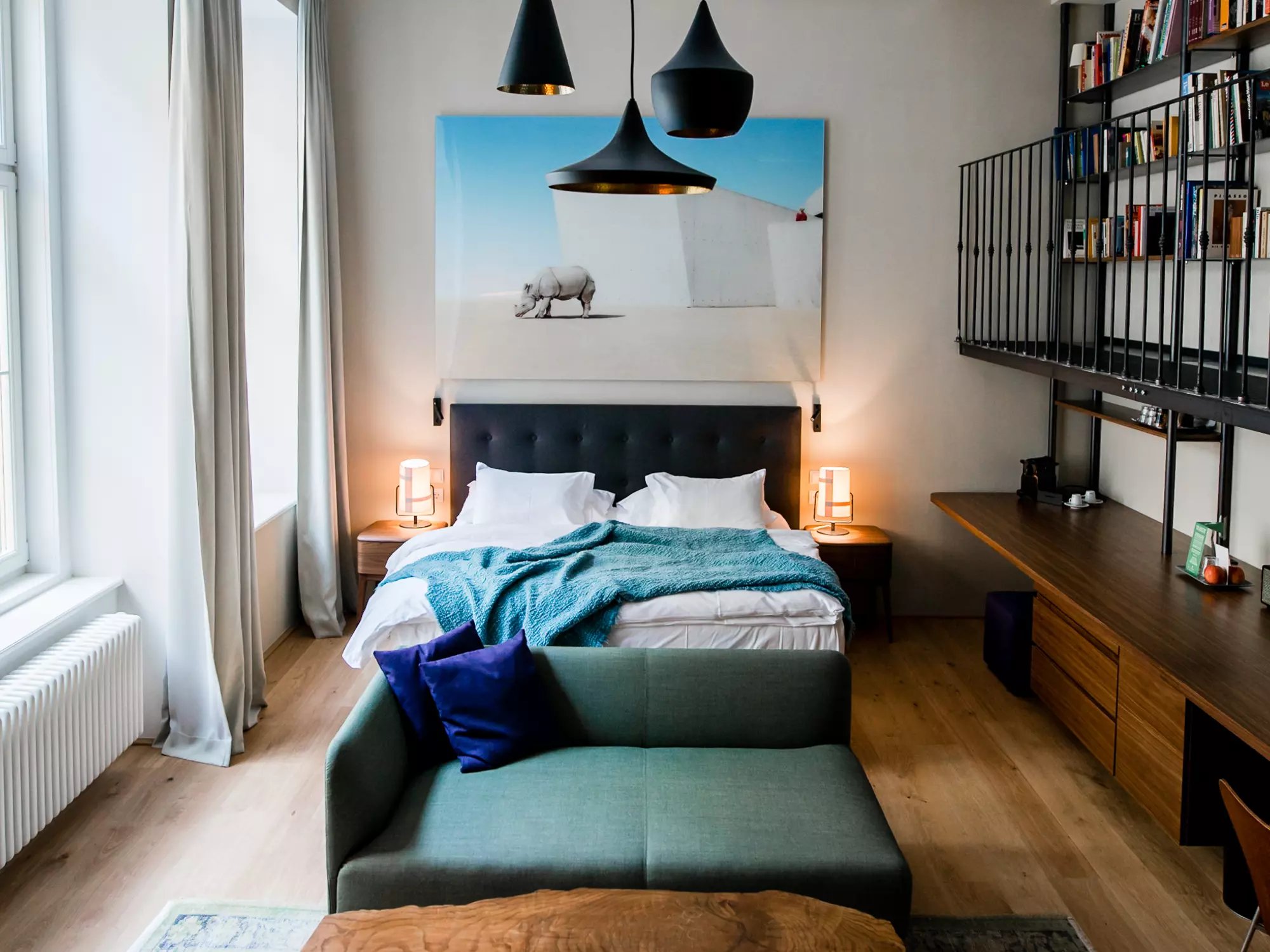
About Altstadt Vienna
A 19th-century aristocratic townhouse in Vienna's Spittelberg district, redesigned with contemporary art and Matteo Thun interiors across 45 rooms. Rates from around $270 per night place it firmly in the mid-premium boutique tier, removed from the grand hotel circuit of the Ringstrasse yet walkable to everything that matters. The art program and boudoir-toned Thun rooms give it a character few properties in this price bracket attempt.
Boutique Hotels and the Spittelberg Question
Vienna's hotel market has long been bifurcated. On one side: the Ringstrasse palaces — Hotel Sacher Wien, Hotel Imperial, Park Hyatt Vienna, Rosewood Vienna — where the architecture does much of the storytelling and the price points follow accordingly. On the other: a quieter category of properties that have chosen neighbourhood character over central address, art program over chandeliers, and a more considered scale. Altstadt Vienna sits squarely in the second camp. Located at Kirchengasse 41 in the 7th district, it occupies a 19th-century townhouse in Spittelberg, an area that moved from neglected to desirable over the past few decades and now reads as one of the city's more authentic residential and cultural pockets.
That location choice carries editorial weight. Spittelberg is close enough to the Museumsquartier and the Ringstrasse to make sense logistically , the walk to the city centre takes around fifteen minutes , but it sits outside the tourist-density zone that surrounds those landmarks. The streets here are used by people who live in Vienna, which is either a selling point or a non-starter depending on what you want from a hotel address. For guests who have already covered the Habsburgs and want to feel the city rather than photograph it, the 7th district delivers that shift in register.
A Townhouse Remade, More Than Once
The evolution of Altstadt Vienna tracks a broader argument about what boutique hotels in European capitals have become. The property began as a family-owned aristocrat's residence, the kind of 19th-century townhouse that Vienna produces in quantity. The structural move that changed its trajectory was commissioning Milan-based architect Matteo Thun , known internationally for projects including the Vigilius mountain resort concept in the Italian Alps , to redesign a portion of the rooms. That decision positioned Altstadt Vienna in a different competitive register from the typical converted-house hotel, which tends to renovate cautiously and end up somewhere between period reproduction and corporate contemporary.
Thun's intervention produced what the property calls its Matteo Thun rooms: boudoir-influenced spaces built around deep crimson and grey palettes, layered textures, and mural-sized photographic nudes on the walls. The effect is deliberately sensual and somewhat confrontational, which is the point. Against the cold minimalism that dominated design hotel aesthetics for much of the 2000s, these rooms make a counter-argument through warmth, density, and a willingness to provoke mild discomfort in guests who prefer their surroundings neutral. Not everyone is the target. But the rooms give the hotel a signature that carries into editorial coverage and word-of-mouth in a way that a competent but unremarkable renovation would not.
The broader art program amplifies this positioning. The property has accumulated a collection of modern works that runs through its common spaces, including lounges with open fireplaces that read more like a collector's residence than a hotel lobby. That distinction matters in a city where the competition for mid-premium stays includes properties like Hotel Sans Souci Wien, The Amauris Vienna, and Almanac Palais Vienna, each of which approaches the boutique category from a different curatorial angle.
What the 45 Rooms Actually Mean
At 45 keys, Altstadt Vienna operates at a scale where service personalisation is achievable but not guaranteed by the room count alone. The property divides its accommodation into Classic rooms , contemporary and restrained, without the theatrical overlay of the Thun spaces , and the Matteo Thun rooms, which carry the hotel's design identity most explicitly. The Classic category functions as a pragmatic baseline: well-executed, not spectacular, useful for guests who want the address and the art-filled communal areas without paying for the signature rooms. The Thun rooms are the reason to stay here rather than at a comparably priced property on or near the Ringstrasse.
Rates from around $270 per night place Altstadt Vienna below the flagship palace tier , Sacher and Imperial both operate at significantly higher price points , and in a bracket where the comparison set includes design-forward properties like 25hours Hotel Vienna at MuseumsQuartier, which is located in the same district and competes for a similar guest profile. The decision between those properties comes down to format: 25hours is louder, more communal, aimed at a younger and more social traveller; Altstadt Vienna is quieter, more residential in feel, and rewards guests who want a hotel that operates closer to a private house with professional backing.
Vienna's Boutique Tier in Context
The trajectory of the independent boutique hotel in European capitals over the past two decades has generally moved toward one of two poles: the design-forward lifestyle property with food and beverage as a revenue driver, or the quieter, art-informed residence model that competes on character rather than programming. Altstadt Vienna chose the second path early and has held it. That positioning has become more crowded as the category matured , properties like Rosewood Vienna arrived with significant capital and international brand recognition , but the 7th district address and the scale of the collection keep Altstadt in a differentiated position. It is not attempting to compete with the palace hotels or with the international luxury flagships. It is doing something more specific: offering a version of Vienna that is residential, art-saturated, and deliberately outside the tourist loop.
For travellers extending across Austria, the country's hotel stock ranges from urban boutiques to alpine properties. Rosewood Schloss Fuschl in Hof bei Salzburg, Schloss Mönchstein in Salzburg, and mountain-focused properties like Grand Tirolia Kitzbühel and Alpen-Wellness Resort Hochfirst in Obergurgl each serve a different register of the Austrian stay. Vienna warrants its own trip, and within that trip, the neighbourhood choice shapes the experience at least as much as the room category.
Planning the Stay
Booking at Altstadt Vienna follows the general pattern for well-reviewed boutique properties in major European cities: the Matteo Thun rooms attract more demand and should be secured with meaningful advance notice, particularly during the spring cultural season and the December market period when Vienna's hotel availability tightens across all categories. The Classic rooms offer more flexibility. The address at Kirchengasse 41 in the 7th district connects easily to public transit, with the Mariahilfer Strasse and the Museumsquartier within walking distance, and the Naschmarkt a short trip south. For broader city orientation, the EP Club Vienna guide covers restaurants and additional hotels across the city's districts. Travellers who want to compare options at the palace end of the market should look at Sacher and Imperial directly; those looking for international luxury at scale should consider Rosewood Vienna or The Amauris Vienna. Altstadt Vienna serves a different brief: smaller, more personal, built around art rather than grandeur, and located in a part of the city that rewards guests willing to walk fifteen minutes to the centre in exchange for a quieter and more locally inflected base.
Frequently Asked Questions
Which room category should I book at Altstadt Vienna?
The Matteo Thun rooms carry the hotel's signature design identity , boudoir-inspired palettes, layered textures, and large-format photographic artworks , and represent the clearest argument for choosing Altstadt Vienna over a comparably priced property elsewhere in the city. The Classic rooms are well-executed and positioned at the lower end of the rate structure (from around $270), making them a reasonable choice for guests primarily interested in the neighbourhood and the communal spaces. If the Thun rooms are available within your budget, they are the version of this hotel that distinguishes it from its peer set.
Why do people go to Altstadt Vienna?
The hotel draws guests who want Vienna at a residential scale rather than the palace-hotel version of the city. The Spittelberg location places you outside the tourist-dense zone around the Ringstrasse while remaining walkable to the Museumsquartier, the Naschmarkt, and the city centre. The art program, the open-fireplace lounges, and the Matteo Thun rooms collectively offer something that grand properties like Hotel Sacher Wien or Hotel Imperial do not: a sense of being in a private house with a serious collection, rather than a historic institution. Rates from around $270 make the comparison with the palace tier a meaningful one.
How far ahead should I plan for Altstadt Vienna?
Matteo Thun rooms book faster than the Classic category, and Vienna's hotel market tightens considerably during the spring concert season and the December period. For the signature rooms during peak months, booking two to three months ahead is prudent. The Classic rooms offer more availability, though the same seasonal pressures apply city-wide. Altstadt Vienna sits at 45 rooms, which limits availability in general compared to larger properties , at that scale, last-minute availability during high season is unreliable. Check rates and availability through the property's own booking channels for current pricing, as the $270 baseline reflects starting rates rather than peak-season positioning. For additional options at different price points and formats, the EP Club Vienna guide and properties including Almanac Palais Vienna and 25hours Hotel Vienna at MuseumsQuartier offer alternatives in the same district.
Recognized By


More hotels in Vienna
- 25hours Hotel Vienna at MuseumsQuartier25hours Hotel Vienna at MuseumsQuartier is a design-conscious mid-tier hotel in Vienna's 7th district, a short walk from the MuseumsQuartier arts complex and the Naschmarkt. Booking is easy and availability is generally reliable. If you're returning for a second stay, upgrading one room category is usually worth the modest price difference.
- Austria Trend Hotel Schloss WilhelminenbergA 19th-century castle hotel on the hills west of Vienna, Schloss Wilhelminenberg suits special occasions where setting and quiet matter more than city-centre proximity. Expect functional Austria Trend service rather than luxury attentiveness. Easy to book, and strongest in spring or early autumn when the hillside gardens justify the out-of-centre location.
Related editorial
- Best Fine Dining Restaurants in ParisFrom three-Michelin-star icons to the next generation of Parisian chefs pushing boundaries, these are the restaurants that define fine dining in the world's culinary capital.
- Best Luxury Hotels in RomeFrom rooftop terraces overlooking ancient ruins to Michelin-starred hotel dining, these are the luxury hotels that make Rome unforgettable.
- Best Cocktail Bars in KyotoFrom sleek lounges to hidden speakeasies, Kyoto's cocktail scene blends Japanese precision with global influence in ways you won't find anywhere else.
Save or rate Altstadt Vienna on Pearl
Keep this venue in your Pearl passport, rate it after you visit, and track it alongside every other place you collect.