
Hotel in Vienna, Austria
Almanac Palais Vienna
150ptsPalais-Scale Adaptive Reuse

About Almanac Palais Vienna
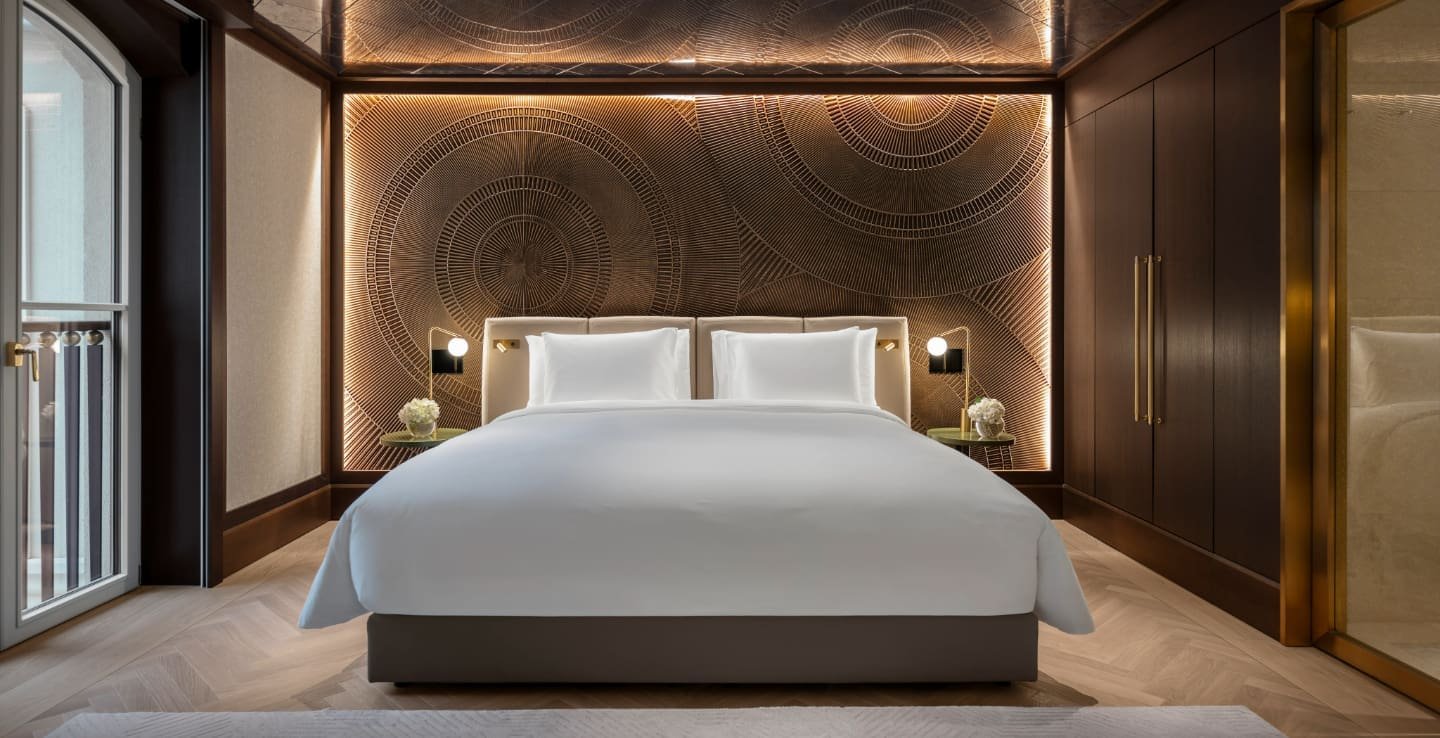
Almanac Palais Vienna occupies two 1871–1872 palais on the Ringstrasse, overlooking the Stadtpark and within walking distance of the Vienna State Opera House and the Belvedere Museum. The 111-room property, restored by award-winning designer Jaime Beriestain, holds original Klimt artwork and a plant-forward restaurant, placing it firmly in Vienna's design-led boutique hotel tier.
A Ringstrasse Address With Considered Credentials
Vienna's premium hotel market has long been anchored by grand institutional properties — the kind with imperial provenance, gilt ceilings, and name recognition stretching back a century. In the past decade, a second tier has emerged alongside them: design-led boutique conversions that trade scale for specificity, using historically significant buildings as raw material rather than branding. Almanac Palais Vienna belongs to this second cohort. The property sits at Parkring 14–16, a Ringstrasse address that places it directly across from the Stadtpark — Vienna's first public green space , and within a short walk of the Vienna State Opera House and the Belvedere Museum. That geography matters: the Ringstrasse corridor carries a particular social and architectural weight in Vienna, and any hotel positioned on it is implicitly in conversation with the city's imperial self-image.
The building itself dates to 1871 and 1872, a pair of former palais that have been converted into 80 suites and 31 guestrooms. The restoration was led by Jaime Beriestain, a Barcelona-based designer whose award-winning work consistently prioritises material integrity and local cultural reference over generic luxury hotel vocabulary. The result is a property that reads as genuinely placed in Vienna rather than dropped into it.
What Responsible Luxury Looks Like Inside a 150-Year-Old Palais
The sustainability conversation in luxury hospitality has often stalled at surface gestures , bamboo key cards, towel-reuse placards, a rooftop herb garden. The more substantive question is whether a property's approach to its building, its food programme, and its relationship to local culture constitutes something more structurally considered. At Almanac Palais Vienna, several decisions point in that direction.
Most significant is the approach to the building stock itself. Adaptive reuse of historic structures is, in carbon terms, considerably more efficient than new construction , embodied carbon in existing masonry, timber, and structural systems is preserved rather than demolished and rebuilt. Retaining two 1871–1872 palais as the property's shell rather than replacing them with a purpose-built hotel is a choice with genuine environmental consequence, even if it is rarely framed that way in hotel communications.
Food programme at Donnersmarkt Restaurant reinforces this reading. The dining room, set beneath a mural depicting Vienna's flora and fauna, anchors its menu in plant-forward cooking , a positioning that reflects broader hospitality industry movement toward lower-impact food systems without requiring the word 'sustainability' to appear on every plate. Plant-forward menus at this level of property typically source from regional producers and operate with a shorter, more legible supply chain than conventional hotel restaurant programmes. The mural itself , a site-specific commission depicting local ecosystems , connects the dining environment to place in a way that generic hotel restaurants rarely attempt. Guests looking to explore Vienna's wider food scene further will find context in our full Vienna restaurants guide.
The Art Holdings: Cultural Stewardship as Hotel Logic
Vienna's relationship with its early twentieth-century art legacy is complex, contested in parts, and deeply woven into civic identity. A hotel that holds original work from that period occupies a different cultural position than one that commissions contemporary reproductions to fill corridors. The Klimt Suite at Almanac Palais Vienna houses Gustav Klimt's original drawing Sitzende Dame von vorne , a piece that places the room in a different category from most hotel accommodation in the city. The Vienna Art Suite extends this logic, showcasing works from local artists rather than international blue-chip names, which suggests a deliberate decision to anchor the property's cultural programme in the city it occupies.
This kind of institutional commitment to original work functions as a form of cultural stewardship. It keeps significant objects in accessible, lived-in contexts rather than sealed behind glass in storage. For travellers whose interest in Vienna runs through its art history , the Secession, the Wiener Werkstätte, the productive tension of fin-de-siècle Vienna , the Klimt Suite represents a genuine addition to the experience of the city, not merely a room category upgrade.
The Wellness Offer in Context
Urban wellness facilities in European boutique hotels have consolidated around a recognisable format: pool, sauna, treatment rooms, and some form of structured programming. Almanac Spa at this property follows that template, with a swimming pool, jacuzzi, sauna, steam room, gym, private treatment rooms, and a series of wellbeing workshops. The workshops are worth noting as a differentiator , structured programming of this kind places the spa closer to a wellbeing practice than a amenity checklist, though the depth of that programming depends on specifics not available here.
For travellers whose primary interest is spa-anchored hotel stays in Austria, the country offers a strong comparative set. Naturhotel Waldklause in Längenfeld operates with explicit sustainability credentials in a mountain setting. Aktiv & Wellnesshotel Bergfried in Tux and Alpen-Wellness Resort Hochfirst in Obergurgl represent the alpine wellness tier. The Almanac Palais offer is urban by comparison , its value proposition is access to Vienna's cultural density alongside spa access, not immersive mountain retreat.
Where This Property Sits in Vienna's Hotel Market
Vienna's upper hotel tier divides roughly into three groups. The grand historic palace hotels , Hotel Sacher Wien and Hotel Imperial , carry institutional name recognition and operate partly as civic landmarks. The international luxury brands , Park Hyatt Vienna and Rosewood Vienna , bring global programme consistency and loyalty infrastructure. The design-led independents and boutique properties , Hotel Sans Souci Wien, Altstadt Vienna, and The Amauris Vienna , compete on specificity of experience and design integrity rather than scale or brand recognition.
Almanac Palais Vienna sits in that third group, with the added weight of a Ringstrasse address and a suite count (80) that gives it more physical presence than most boutique competitors. For comparison, 25hours Hotel Vienna at MuseumsQuartier occupies the design-forward but more accessible price tier, serving a different travel profile. The Almanac property competes more directly with the Amauris and Sans Souci on the design-boutique credentials, while its Ringstrasse location gives it a geographical edge for guests whose itinerary centres on the Opera and the major museums.
Austria's wider hotel network offers useful contrast. Rosewood Schloss Fuschl in Hof bei Salzburg represents the lakeside palace hotel format. Schloss Mönchstein in Salzburg and Falkensteiner Schlosshotel Velden in Velden am Wörthersee serve the lakeside and castle-conversion niche. Alpine options include Grand Tirolia Kitzbühel, Hotel Almhof Schneider in Lech, LEADING Hotel Hochgurgl, DAS EDELWEISS in Grossarl, Hotel Schloss Seefels in Techelsberg, Hotel Schwarzer Adler Innsbruck, and Chalet Untersberg in Grodig. For international comparison within the design-boutique category, Aman Venice represents the palace-conversion model at its most refined. In New York, The Fifth Avenue Hotel and Aman New York occupy broadly comparable positions in their respective markets.
Planning a Stay
The property is at Parkring 14–16, on the Ringstrasse facing the Stadtpark. The Vienna State Opera House and the Belvedere Museum are both within walking distance, which makes this address particularly efficient for visitors whose programme is weighted toward music and visual art. Booking details, current rates, and room category availability should be confirmed directly with the property, as pricing and availability at this tier of Vienna hotel fluctuates with the city's dense calendar of opera, concert, and fair seasons. The Klimt Suite, given its original artwork, should be reserved well in advance and confirmed separately.
Frequently Asked Questions
What is the signature room at Almanac Palais Vienna?
The Klimt Suite is the most discussed room category at the property, housing Gustav Klimt's original drawing Sitzende Dame von vorne. The Vienna Art Suite, which displays works by local Vienna artists, represents a secondary option for guests whose interest in the property's cultural programme extends beyond the Klimt connection. Both rooms sit within the suite tier of the 80-suite, 31-guestroom property.
What is Almanac Palais Vienna known for?
Property is known for its Ringstrasse location overlooking the Stadtpark, its adaptive reuse of two 1871–1872 palais designed by Jaime Beriestain, its holdings of original artwork including a Klimt drawing, and its plant-forward restaurant Donnersmarkt. Within Vienna's hotel market, it positions as a design-led boutique property with cultural depth, operating in a peer set that includes similarly specification-led independents rather than the grand institutional palace hotels.
Is Almanac Palais Vienna reservation-only?
As with most properties at this level in Vienna, advance booking is advisable, particularly for suite categories and during peak cultural seasons when the city's opera, concert, and festival calendar drives significant demand. The Klimt Suite, given its singular contents, warrants early reservation. Specific booking procedures, current availability, and contact details should be confirmed directly with the hotel, as phone and online booking information was not available at time of publication.
Recognized By

More hotels in Vienna
- 25hours Hotel Vienna at MuseumsQuartier25hours Hotel Vienna at MuseumsQuartier is a design-conscious mid-tier hotel in Vienna's 7th district, a short walk from the MuseumsQuartier arts complex and the Naschmarkt. Booking is easy and availability is generally reliable. If you're returning for a second stay, upgrading one room category is usually worth the modest price difference.
- Austria Trend Hotel Schloss WilhelminenbergA 19th-century castle hotel on the hills west of Vienna, Schloss Wilhelminenberg suits special occasions where setting and quiet matter more than city-centre proximity. Expect functional Austria Trend service rather than luxury attentiveness. Easy to book, and strongest in spring or early autumn when the hillside gardens justify the out-of-centre location.
Related editorial
- Best Fine Dining Restaurants in ParisFrom three-Michelin-star icons to the next generation of Parisian chefs pushing boundaries, these are the restaurants that define fine dining in the world's culinary capital.
- Best Luxury Hotels in RomeFrom rooftop terraces overlooking ancient ruins to Michelin-starred hotel dining, these are the luxury hotels that make Rome unforgettable.
- Best Cocktail Bars in KyotoFrom sleek lounges to hidden speakeasies, Kyoto's cocktail scene blends Japanese precision with global influence in ways you won't find anywhere else.
Save or rate Almanac Palais Vienna on Pearl
Keep this venue in your Pearl passport, rate it after you visit, and track it alongside every other place you collect.