
Hotel in Verona, Italy
Due Torri Hotel
525ptsPeriod-Furnished Palazzo Hospitality


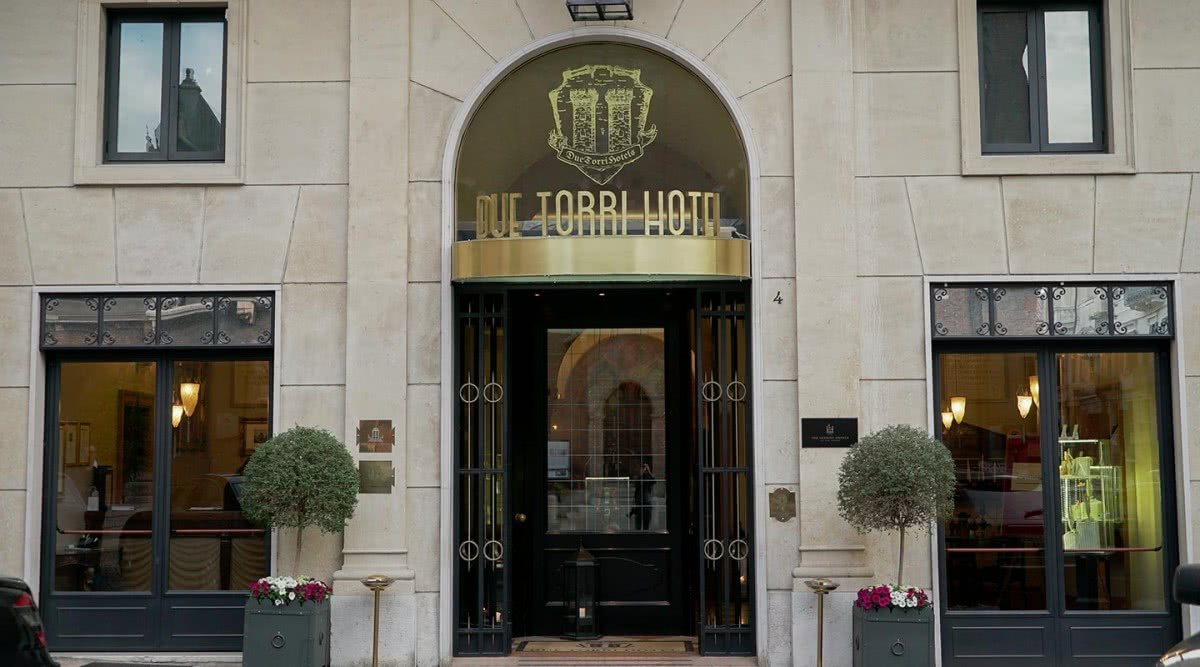
About Due Torri Hotel
A thirteenth-century palazzo on Piazza Sant'Anastasia, Due Torri Hotel places guests at the centre of Verona's historic core, within steps of the Church of Sant'Anastasia and the famous Romeo and Juliet balcony. Its 89 period-furnished rooms, Leading Hotels of the World membership, and the Gualtiero Marchesi-designed Bistrot al 2 position it firmly in Italy's heritage luxury tier.
A Palazzo in the Old City, Not Just a Hotel Address
In Verona's centro storico, where medieval towers and Roman ruins share streets with gelato counters, accommodation choices split sharply between modern boutique conversions and genuine historic fabric. Due Torri occupies the latter category without qualification. The building dates to the thirteenth century, and its location on Piazza Sant'Anastasia — directly beside the Gothic Church of Sant'Anastasia and a short walk from the Adige river bend — means guests step into the density of Veronese civic history before they reach the lobby. The Arena di Verona, the Scaligeri tombs, and the so-called Juliet's balcony on Via Cappello are all walkable. This is not a peripheral business hotel repositioned as a heritage property; the address is the argument.
Among Verona's premium options, Due Torri competes in a peer set defined by historic credentials rather than contemporary design. Properties like Escalus Luxury Suites and Vista Verona occupy the city's upper tier, each with a different relationship to the built environment. Due Torri's position is reinforced by its Leading Hotels of the World membership , a consortium whose admissions process requires properties to meet defined standards across service, physical condition, and guest experience, providing a verifiable credential that places this hotel in a specific international peer set. For Italian heritage luxury more broadly, the benchmark conversation includes properties such as Aman Venice and Four Seasons Hotel Firenze , both of which occupy historic palazzi in comparable UNESCO-listed city centres. Due Torri is smaller in profile but operates with a similar logic: the building's age and position do most of the atmospheric work.
Rooms Furnished Like a Private Collection
Heritage hotel furnishing in Italy tends toward one of two approaches: sympathetic restoration that nods to period style, or authentic period pieces installed as functional objects. Due Torri takes the second route. The 89 guestrooms are furnished with antique pieces, presenting interiors that read more like the private apartments of a well-appointed Veneto palazzo than a hotel decorated to evoke one. All rooms are soundproofed and air-conditioned, resolving the most common friction point of staying in genuinely old buildings in a city that draws summer crowds for the Arena opera season. Standard room amenities include satellite television, minibar, in-room safe, and bathrobe , the operational infrastructure of a full-service property layered beneath period surfaces.
Across Italy's heritage luxury sector, the question of which room to request matters considerably. At Due Torri, the 89-room count means no two rooms carry identical proportions, and a property of this age will have a meaningful hierarchy between courtyard-facing and piazza-facing allocations, between higher floors and ground-level rooms, between larger suites and compact singles. The Leading Hotels of the World standard implies rooms have been assessed for physical condition, but specific room preferences are worth communicating directly at booking , a consistent marker of anticipatory service at properties in this consortium. Guests at comparably positioned Italian properties, from Passalacqua on Lake Como to Il Pellicano in Porto Ercole, tend to find that the most distinctive rooms are not automatically assigned at check-in and respond to advance communication.
The Eagle Room, Bistrot al 2, and the Marchesi Legacy
Italian restaurant design has a complicated relationship with culinary authority. Gualtiero Marchesi , who died in 2019 and is documented as the figure who redefined Italian haute cuisine in the late twentieth century, earning three Michelin stars at his Milan restaurant , personally designed the Eagle Room that now houses Bistrot al 2. That association carries weight beyond decor credit. Marchesi's involvement signals that the room was conceived with a specific gastronomic intelligence rather than assembled for atmosphere alone, and it positions Bistrot al 2 inside a larger story about how Italian fine dining culture has developed and dispersed since the 1980s.
The bistrot operates with a dedicated street entrance, which means it functions as a standalone dining space open to the public rather than an exclusively hotel-facing restaurant. That format is increasingly relevant in European luxury hospitality: properties that keep their restaurants open to non-guests tend to develop sharper culinary programs, because the audience is competitive rather than captive. The all-day format runs from lunch through dinner, placing it in the register of flexible European brasseries rather than a formal tasting-menu operation. For context on how different Italian properties handle the hotel-restaurant relationship, see how Casa Maria Luigia in Modena and Borgo Santandrea on the Amalfi Coast each build food programs around distinct regional identities. Our full Verona restaurants guide covers the broader dining scene if you plan to eat beyond the hotel.
The Panoramic Terrace and Seasonal Logic
From April through late September, Due Torri opens a rooftop terrace with a Gourmet Grill Restaurant. In Verona, that seasonal window aligns with the Arena di Verona opera season, which runs from late June through August and draws a specific audience willing to spend more on accommodation, dining, and experience. The combination of a rooftop position and proximity to the Arena makes the terrace operationally relevant during the city's highest-demand period. Guests who plan around the opera program should factor in that this is also when the piazza below the hotel is at its most animated, and room availability across the city tightens considerably. The hotel's 89 rooms and its central location mean it books against the Arena calendar in ways that peripheral properties do not.
Rooftop dining in Italian city-centre hotels is unevenly distributed by building type: properties with genuine medieval or Renaissance fabric often cannot structurally accommodate rooftop additions. That Due Torri has managed a panoramic terrace is a function of its specific structural situation and worth noting for guests prioritising al fresco dining without leaving the property.
Service Infrastructure and Event Capacity
The fourteenth-century foyer at Due Torri accommodates exhibitions and banquets for up to 250 people. That capacity points to the property's dual function as both a luxury hotel and an event venue , a combination that shapes staffing, operational rhythm, and service culture. Properties that host private events at scale tend to maintain a larger service team than their room count alone would require, and that overhead often benefits regular hotel guests through faster response times and more granular attention to requests. The same structural logic applies at Castello di Reschio in Umbria and Rosewood Castiglion Del Bosco in Montalcino, where event infrastructure supports a service model that exceeds what the room count implies.
Standard services include valet parking, a nearby garage at preferential rates, babysitting on request, laundry and pressing, and complimentary Wi-Fi throughout the property. The service list is consistent with a Leading Hotels of the World property operating in a high-footfall historic centre where logistical friction , parking in particular , is a genuine consideration rather than a formality. For guests arriving by car, the garage arrangement is the operationally relevant detail; Verona's centro storico has limited access zones, and self-parking within the ZTL without pre-arranged accommodation access is not direct.
Planning a Stay
Due Torri's position inside the ZTL means arriving by taxi or private transfer is direct from Verona Porta Nuova station, approximately two kilometres south. The Arena opera season from June through August represents the property's most competitive booking window; guests prioritising the panoramic terrace experience should plan for this period, accepting that rates and availability across the city reflect seasonal demand. Outside opera season, the spring and autumn shoulder months offer cooler temperatures for walking the centro storico. The hotel's all-day Bistrot al 2 means dining flexibility without leaving the building, which matters when Verona's most popular restaurants fill quickly on summer evenings.
For context on the wider Italian heritage luxury market, the EP Club portfolio covers properties across a range of scales and settings , from Bulgari Hotel Roma and Portrait Milano in major urban centres to Borgo Egnazia in Puglia, JK Place Capri, Il San Pietro di Positano, Bellevue Syrene 1820 in Sorrento, Borgo San Felice in Castelnuovo Berardenga, Castel Fragsburg in Merano, Castelfalfi in Montaione, EALA My Lakeside Dream on Lake Garda, and Corte della Maestà in Civita di Bagnoregio. Further afield, The Fifth Avenue Hotel in New York City, Aman New York, and Amangiri in Canyon Point illustrate the same heritage-meets-contemporary-service model operating in different continental contexts.
Frequently Asked Questions
- What should I expect atmosphere-wise at Due Torri Hotel?
- The atmosphere is determined primarily by the building's age and location. Guests arrive into a thirteenth-century palazzo on one of Verona's most significant medieval squares, beside the Church of Sant'Anastasia. The interiors reinforce that register: period furniture throughout, a fourteenth-century foyer used for events, and the Marchesi-designed Eagle Room housing the bistrot. If the Arena di Verona opera season is running during your stay, the piazza and surrounding streets will be noticeably more animated in the evenings. Outside of summer, the atmosphere is quieter and the city's historic fabric is easier to read without crowd competition.
- What room should I choose at Due Torri Hotel?
- The hotel holds 89 rooms across a medieval building, which means proportions, orientation, and floor position vary considerably. As a Leading Hotels of the World member, the property's physical standards have been independently assessed, but that credential covers the category floor rather than specific room hierarchy. Rooms facing the piazza will carry the most historic context; higher floors will reduce street noise. Given that all rooms are soundproofed and air-conditioned, the primary differentiation is likely size and view. Communicating your preference at time of booking rather than at check-in is the standard approach at properties of this type, where the leading allocations are not automatically assigned.
Recognized By


Related editorial
- Best Fine Dining Restaurants in ParisFrom three-Michelin-star icons to the next generation of Parisian chefs pushing boundaries, these are the restaurants that define fine dining in the world's culinary capital.
- Best Luxury Hotels in RomeFrom rooftop terraces overlooking ancient ruins to Michelin-starred hotel dining, these are the luxury hotels that make Rome unforgettable.
- Best Cocktail Bars in KyotoFrom sleek lounges to hidden speakeasies, Kyoto's cocktail scene blends Japanese precision with global influence in ways you won't find anywhere else.
Save or rate Due Torri Hotel on Pearl
Keep this venue in your Pearl passport, rate it after you visit, and track it alongside every other place you collect.