
Walaker Hotel
Solvorn
Hotel in Solvorn, Norway
 Book with Pearl
The Read
Four-Century Fjordside Continuity
Why go
Walaker Hotel is the Solvorn pick for travelers who want a quiet fjord-village stay with serious recognition: Michelin 2 Keys in 2025. Book it for atmosphere and a slower Norway route, not for resort-scale facilities or business-hotel convenience. If the trip needs bigger infrastructure, compare it with Vestlia Resort or Storfjord Hotel before committing.
About Walaker Hotel
For a Solvorn stay, the decision should rest on the facts rather than assumptions about services or facilities. Walaker Hotel has Michelin 2 Keys recognition for 2025, and the dress code is smart casual. Beyond that, travelers should confirm current arrangements directly with the hotel before booking.
A Solvorn stay for travelers focused on the location
Walaker Hotel is best considered when Solvorn itself is central to the itinerary. The location is Solvorn, so the practical appeal is direct: choose it if you want your stay to be based there and you are comfortable checking current operational details before booking.
Details are not available here for spa facilities, conference facilities, scheduled activities, cuisine, menu format, pricing, or service extras. If those details are decisive, compare confirmed information carefully before committing. For other Norwegian hotel ideas, travelers may also look at Vestlia Resort, Hotel Union Øye, Juvet Landscape Hotel, Storfjord Hotel, or Elva Hotel depending on the wider route and the kind of stay they want.
Check-in to check-out: plan around confirmed details
The arrival experience should be treated as part of the booking rather than a logistical afterthought. Solvorn is the setting, and the best fit is a traveler who wants that location to shape the stay. If you need late services, transfers, or specific business-style amenities, confirm those details directly before booking.
Couples, solo travelers, families, and business travelers can all consider Walaker Hotel if Solvorn is the draw, but the right fit depends on current hotel arrangements. Details are not available here for family facilities, meeting infrastructure, transfer logistics, or scheduled programming, so those should be checked with the hotel if they matter to the trip.
Dining should be approached with the same practical lens. With no cuisine, menu format, chef, price, lunch service, take-out, delivery, or dietary policy available here, book this for the Solvorn stay rather than for an assumed restaurant experience. If dining is the deciding factor, check current arrangements before committing.
Quick reference: choose it for a Solvorn base with Michelin 2 Keys recognition and a smart casual dress code; verify any facility, dining, service, or timing details that are important to your trip.
For wider planning, compare only details that each hotel or local venue currently confirms.
Planning details
- Location
- Solvornvegen 324, Fv338 5, 6879 Solvorn
- Website
- walaker.com
- Phone
- +47 57 68 20 80
The take
The Take
The Vibe
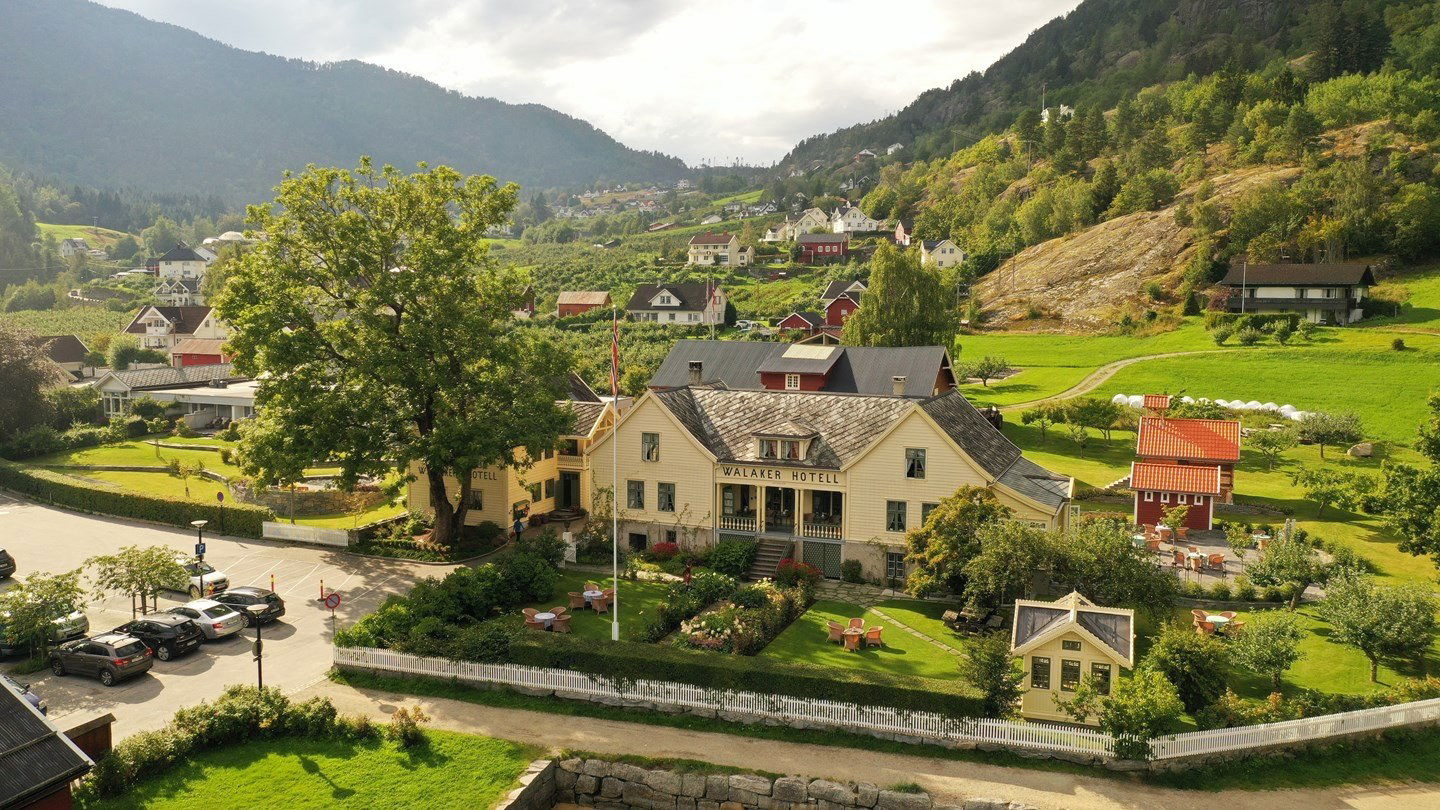
Walaker Hotel reads as a living timeline of Norwegian hospitality: timber buildings from the 17th century sit alongside 20th-century additions, and the property’s unbroken family lineage is central to its identity. The experience is quietly authoritative rather than flashy, driven by architecture and setting—fjord water on one side and steep rock on the other—so the place feels like a curated domestic landscape rather than a branded resort. Attention is rewarded: interiors and circulation stitch together different eras, which gives the hotel a sense of continuity and heritage that shapes every stay.
Best For
This is a stay for travelers who prize history, architecture and dramatic nature. Couples seeking a romantic getaway and celebrants looking for an intimate, memorable anniversary find the setting particularly apt, because the hotel’s centuries-deep family story and fjordside situation create a focused, singular experience. It also suits weekend escapes for those wanting to disconnect from urban life and center their visit on the surrounding Sognefjord and the sequential character of the buildings themselves; the property is more about place and provenance than nightlife or contemporary design theatrics.
Stay Tips
Arrive by road to appreciate the approach—the description emphasizes the gradual reveal of the village and the hotel’s threshold where mountains meet the fjord. Treat movement between the buildings as part of the visit: the property is presented as an assemblage of structures from different periods, so allow time to explore corridors and exterior links that read like architectural chapters. Because the site’s setting (water at the edge, steep rock opposite) is integral, plan for daylight arrival to take in the fjord-and-mountain framing.
Venue details
Ambiance
Cozy and elegant with nostalgic furniture, fireplaces, and serene fjordside atmosphere praised for quiet relaxation.
Tags
Vibe
Best For
Experience
Amenities
View
Accessibility
About the Stay
- Rooms
- 26
- Check-in
- 15:00
- Check-out
- 11:00
- Property Style
- Historic Family Owned Property Blending Traditional Norwegian Coziness with Modern Comforts Across Multiple Eras' Buildings.
- Design Style
- Mix of Antique, Mid Century Modern, and Individually Decorated Rooms with Nostalgic Charm.
Know before you go
Know Before You Go
- Getting there
- Solvornvegen 324, Fv338 5, 6879 Solvorn
Planning details
Location
Recognition and awards
Also consider
Also Consider
- Elva Hotel, Notable alternative
- Vestlia Resort, Notable alternative
- Hotel Union Øye, Notable alternative
- Juvet Landscape Hotel, Notable alternative
- Storfjord Hotel, Notable alternative
Hotel context
How it compares with Norway's quieter destination hotels
Choose Walaker Hotel over Elva Hotel if Solvorn and a slower fjord-village mood are central to the trip. Elva is the easier cross-shop for travelers who want a contemporary nature-hotel feel, while Walaker is the stronger fit for guests who want the stay to feel rooted in a small historic place. With Michelin 2 Keys in 2025, Walaker also carries the clearer recognition signal.
Against Vestlia Resort, the choice is mainly about facilities versus atmosphere. Vestlia is the safer bet for travelers who want a resort framework, family flexibility, and a broader activity base. Walaker is better for couples or first-time Solvorn visitors who would rather trade scale for quiet and a more intimate sense of place.
Hotel Union Øye, Juvet Landscape Hotel, and Storfjord Hotel are the more natural splurge comparisons. Pick Hotel Union Øye if grand heritage is the priority, Juvet if architecture is the reason for the trip, and Storfjord if a polished countryside-hotel feel matters more. Pick Walaker when Solvorn itself is the draw and the goal is a quieter, less resort-like stay.
Explore Solvorn
Around this place
Discover more on Pearl
Unlock the full Walaker Hotel guide in Pearl, including awards, comparisons, FAQs, planning details, and nearby places.
Compare Walaker Hotel
| Venue | Location | Awards |
|---|---|---|
| Walaker Hotel | Solvorn | Michelin 2 Keys 20252025 Michelin 2 Keys |
| Elva Hotel | Skulestadmo | 2025 Michelin 1 Key |
| Vestlia Resort | Geilo | No published awards |
| Hotel Union Øye | Norangsfjorden | No published awards |
| Juvet Landscape Hotel | Valldal | 2025 Michelin 1 Key |
| Storfjord Hotel | Glomset | 2026 Mr & Mrs Smith Luxury Hotels2026 Relais Chateaux Hotels2025 Michelin 2 Keys2025 Relais Chateaux Award |


How Walaker Hotel Solvorn compares with similar nearby venues.
FAQ
Frequently Asked Questions
Do loyalty programs work at Walaker Hotel?
Loyalty-program details are not available here for Walaker Hotel. The recognition available here is Michelin 2 Keys in 2025, so if points, elite perks, or rewards earning matter, check directly before booking.
How does Walaker Hotel compare to other hotels?
Walaker Hotel makes sense to consider if you want a stay in Solvorn with Michelin 2 Keys recognition. For a broader Norway comparison, you might also look at Vestlia Resort, Storfjord Hotel, Hotel Union Øye, Juvet Landscape Hotel, or Elva Hotel, then compare only the facilities and services each property currently confirms.
Is Walaker Hotel family-friendly?
Walaker Hotel may suit families who specifically want a Solvorn base, but details are not available here for kid-focused facilities, room setups, or family programming. Confirm current arrangements directly if those details are important.
Is Walaker Hotel good for business travel?
It depends on what the trip needs. Walaker Hotel is in Solvorn and has Michelin 2 Keys recognition, but meeting, transfer, workspace, or corporate-service details are not available here. For a working trip, compare confirmed infrastructure with options such as Vestlia Resort or Elva Hotel.
What is check-in like at Walaker Hotel?
Check-in details are not available here for Walaker Hotel. Plan around the Solvorn location and confirm arrival timing, late-arrival procedures, and any transfer needs directly with the hotel.
How is the dining at Walaker Hotel?
Details are not available here for cuisine, menu format, chef, pricing, lunch service, take-out, delivery, or dietary policies at Walaker Hotel. Treat dining as something to confirm directly rather than as the main assumption behind the booking.
How is the location of Walaker Hotel?
Walaker Hotel is in Solvorn. If Solvorn is where you want to be, it is a natural hotel to consider; if your itinerary depends on specific transfers, nearby services, or facilities, confirm those practical details before booking.