


Suján Sher Bagh
Ranthambhore Tiger Reserve, Ranthambhore
Hotel in Ranthambhore, India
 Book with Pearl
The Read
Safari-Camp Immersion
Why go
Suján Sher Bagh is worth booking for a high-touch Ranthambhore stay where privacy, safari-country atmosphere, and serious hotel recognition matter more than city convenience. It is strongest for couples, families, or executive retreats with fixed dates; business travelers needing fast logistics or loyalty-program certainty should compare carefully before committing.
About Suján Sher Bagh
Plan Suján Sher Bagh as a Ranthambhore stay. The venue is in Ranthambhore, the dress code is smart casual, and its recognition includes Michelin 1 Key (2025), Conde Nast Gold List (2026), and a Relais Chateaux Award (2026).
For a returning guest, the reason to consider it again should be the Ranthambhore setting and the level of recognition attached to the property, not an assumed restaurant, nightlife, meeting, or activity program. If the trip depends on detailed service guarantees, confirm those directly before booking.
Choose it when Ranthambhore is central to the trip
The tradeoff is direct. Suján Sher Bagh is a destination choice in Ranthambhore, so the decision should start with whether Ranthambhore itself fits the trip. The dress code is smart casual, which points to a polished but not overly formal expectation for guests.
The external recognition is part of the value: Michelin 1 Key (2025), Conde Nast Gold List (2026), and a Relais Chateaux Award (2026) give the property a stronger credential base than a generic hotel search result. What should not be assumed from those accolades is any specific room count, dining format, beverage program, price level, or activity schedule unless confirmed separately.
Better when the setting matters more than city convenience
Business-travel fit is selective because Ranthambhore is a destination decision rather than a standard city base. Suján Sher Bagh makes more sense when the venue and setting are central to the plan. It is less obviously suited to a schedule that depends on fast urban movement or multiple external meetings.
For any trip that includes companions or several travelers, the practical question is whether everyone wants to be in Ranthambhore. If yes, its recognition makes Suján Sher Bagh a serious option to consider. If no, compare it with a city-based stay instead and reserve Ranthambhore for a trip where the location is the point.
Where it sits among Ranthambhore stays
Relevant comparisons include The Oberoi Vanyavilas and Aman-i-Khas. Suján Sher Bagh is the pick when you want the combination of Ranthambhore location, smart casual dress code, and recognition from Michelin, Conde Nast, and Relais Chateaux. Use the other properties as cross-shops when their own facilities, availability, or pricing better match the trip.
If the stay is part of a wider route, compare the Ranthambhore choice with options such as The Oberoi Rajvilas, Anantara Jewel Bagh Jaipur, and Six Senses Fort Barwara without treating them as interchangeable local alternatives. Dining, bar, and experience planning should be checked separately through current Ranthambhore guides and direct confirmations.
Planning details
- Location
- Sherpur, Khiljipur, Kutalpura Maliyan, Jamool Khera, Rajasthan 322001
- Website
- thesujanlife.com/sher-bagh
- Phone
- +91 11 4617 2700
The take
The Take
The Vibe
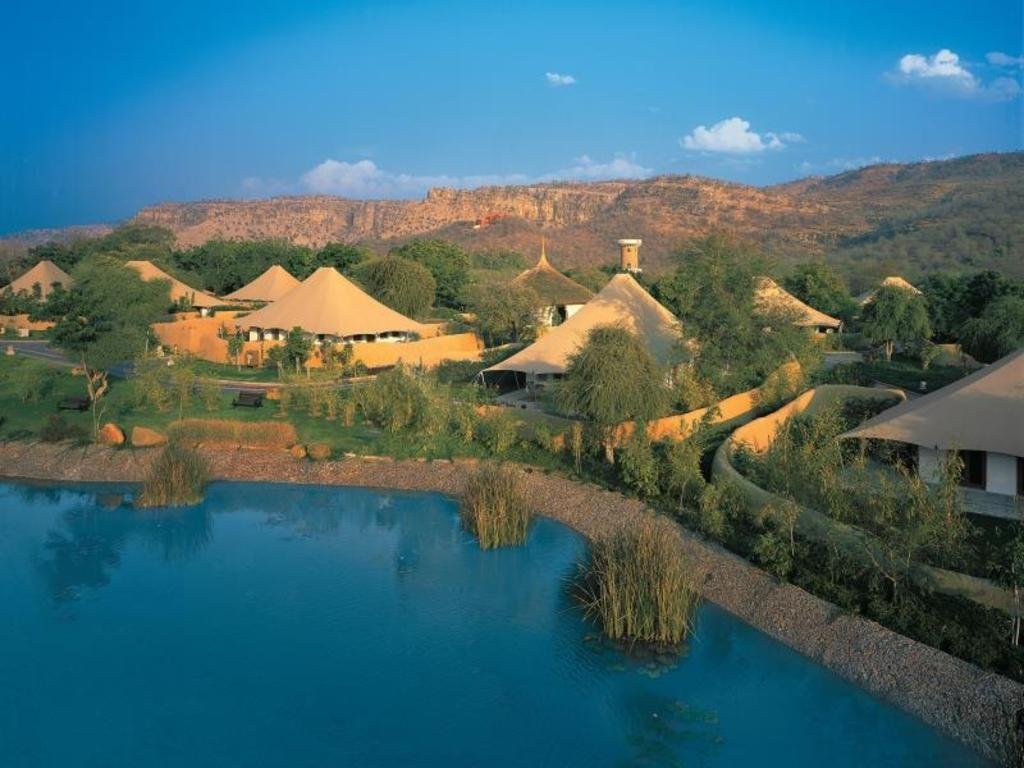
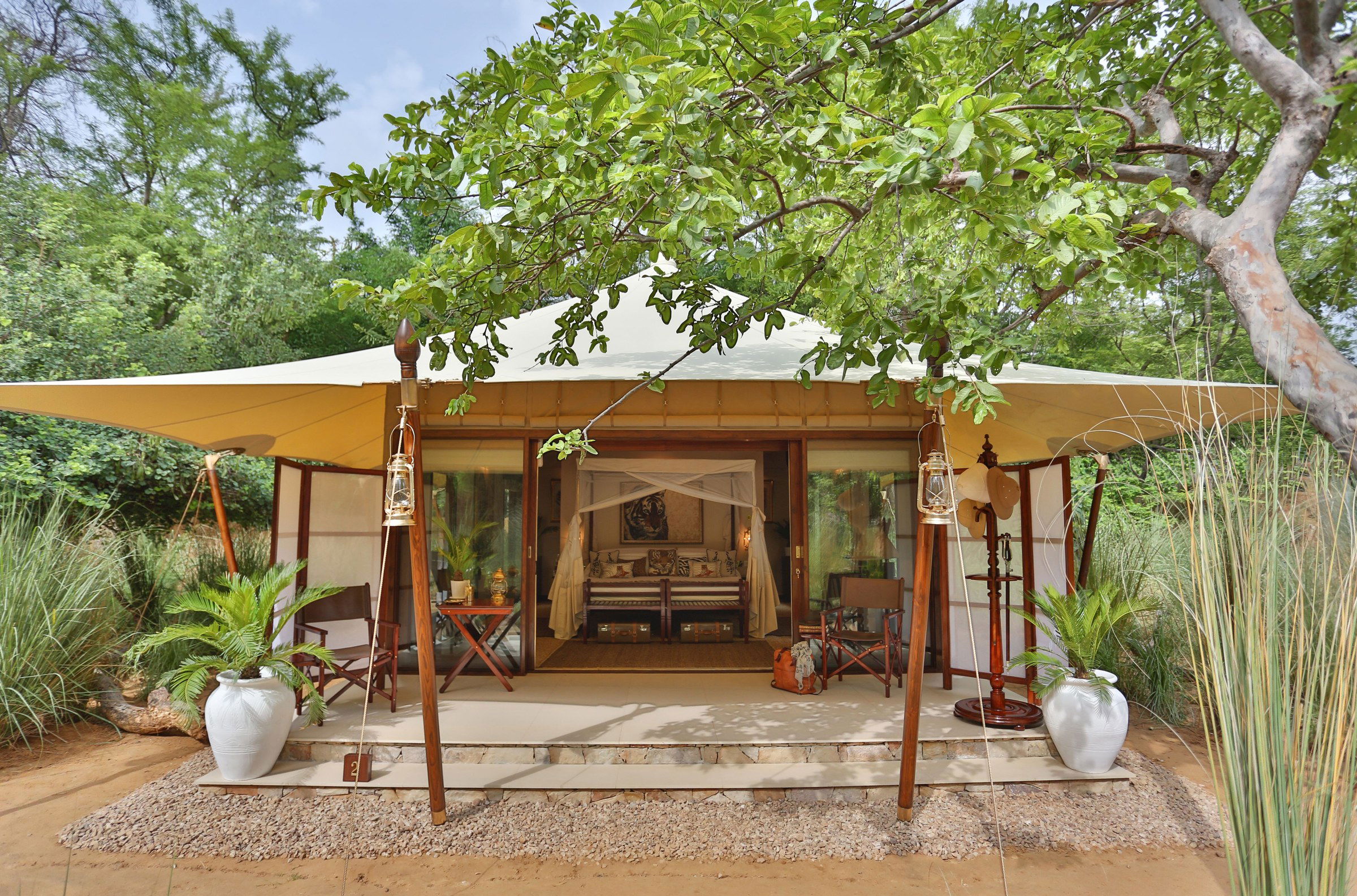
Suján Sher Bagh reads like a calibrated exercise in restraint: the approach through dry deciduous forest prepares you for a camp that intentionally bows to the wilderness rather than competing with it. The dozen canvas tents, wooden platforms and covered verandahs reference 1920s safari styling, while the semicircular layout orients each unit outward to the treeline, preserving privacy without heavy separation. The overall effect is a refined, low-impact luxury — design choices that subtly direct attention to sightings, sound and light of the surrounding forest rather than to the camp itself.
Best For
Sher Bagh is best for travelers seeking high-end wildlife immersion with privacy and thoughtful design. The intimate scale — just twelve tents arranged around a central lodge — suits couples on romantic getaways, honeymooners and anniversary trips, as well as small groups looking for a focused wildlife experience. Its premium positioning and comparison to other luxury Ranthambhore camps make it appropriate for guests who expect attentive service and are comfortable with a remote, nature-first rhythm rather than a large-resort footprint.
Stay Tips
Inventory is limited — only twelve tents — and the camp positions itself at the luxury end of the market, so book well in advance to secure dates. The road from Sawai Madhopur is 12 kilometres, so coordinate transfers and timings with the property. Expect outward-facing tents with covered verandahs that frame the treeline; if privacy or adjacency for a group matters, confirm tent placement when reserving. Given the premium pricing and small size, ask about included experiences and any communal timings at the central lodge when you reserve.
Venue details
Ambiance
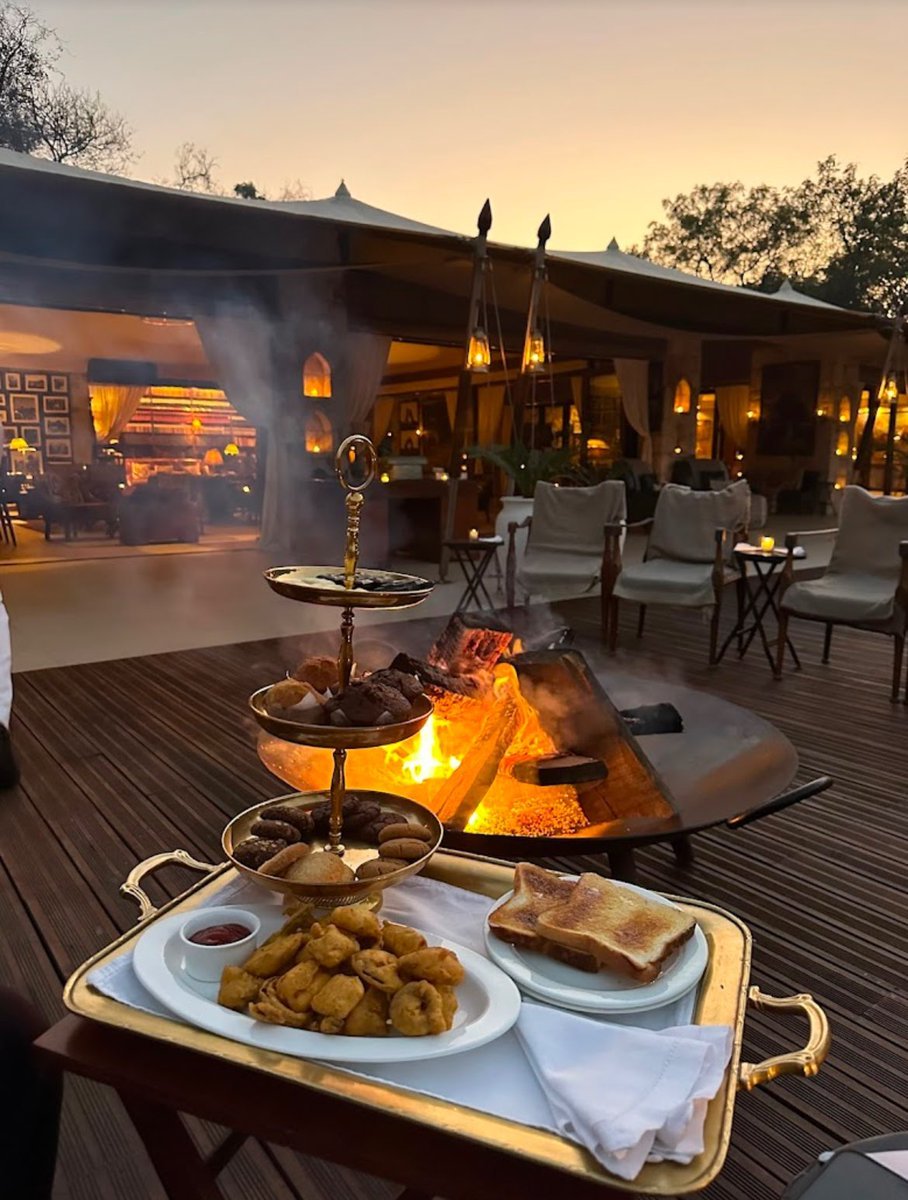
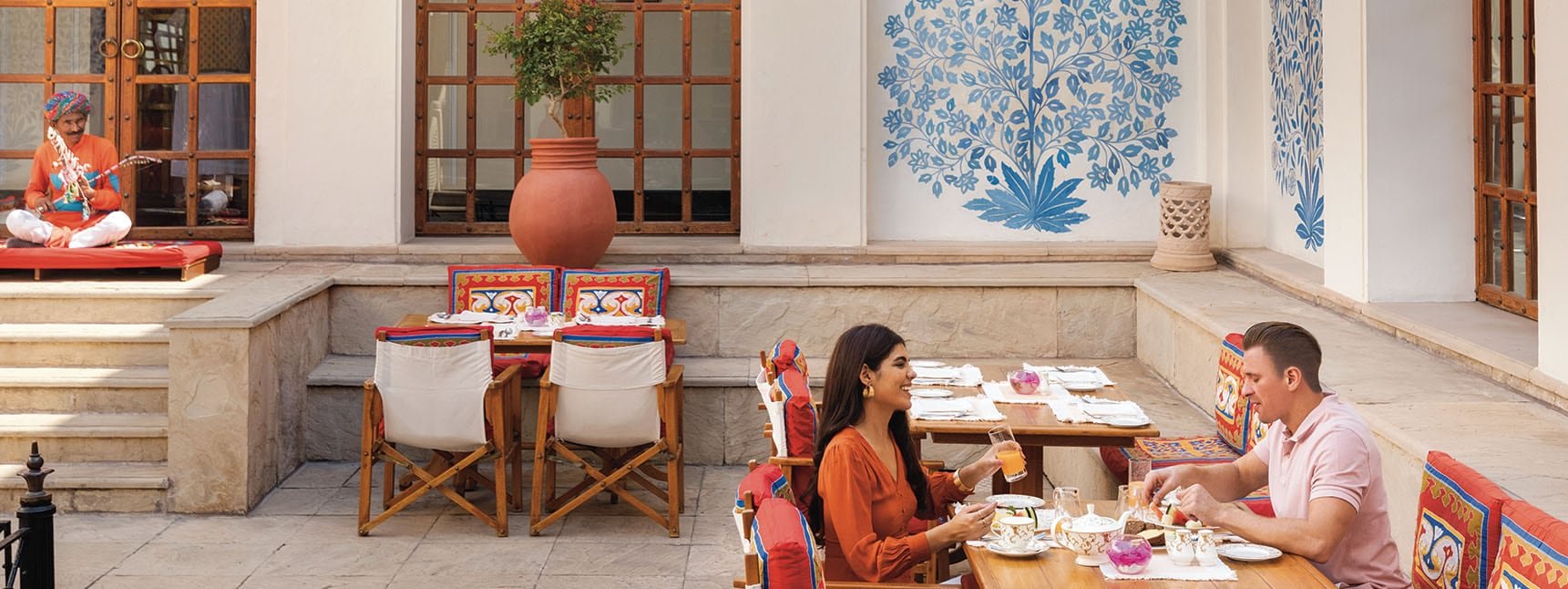
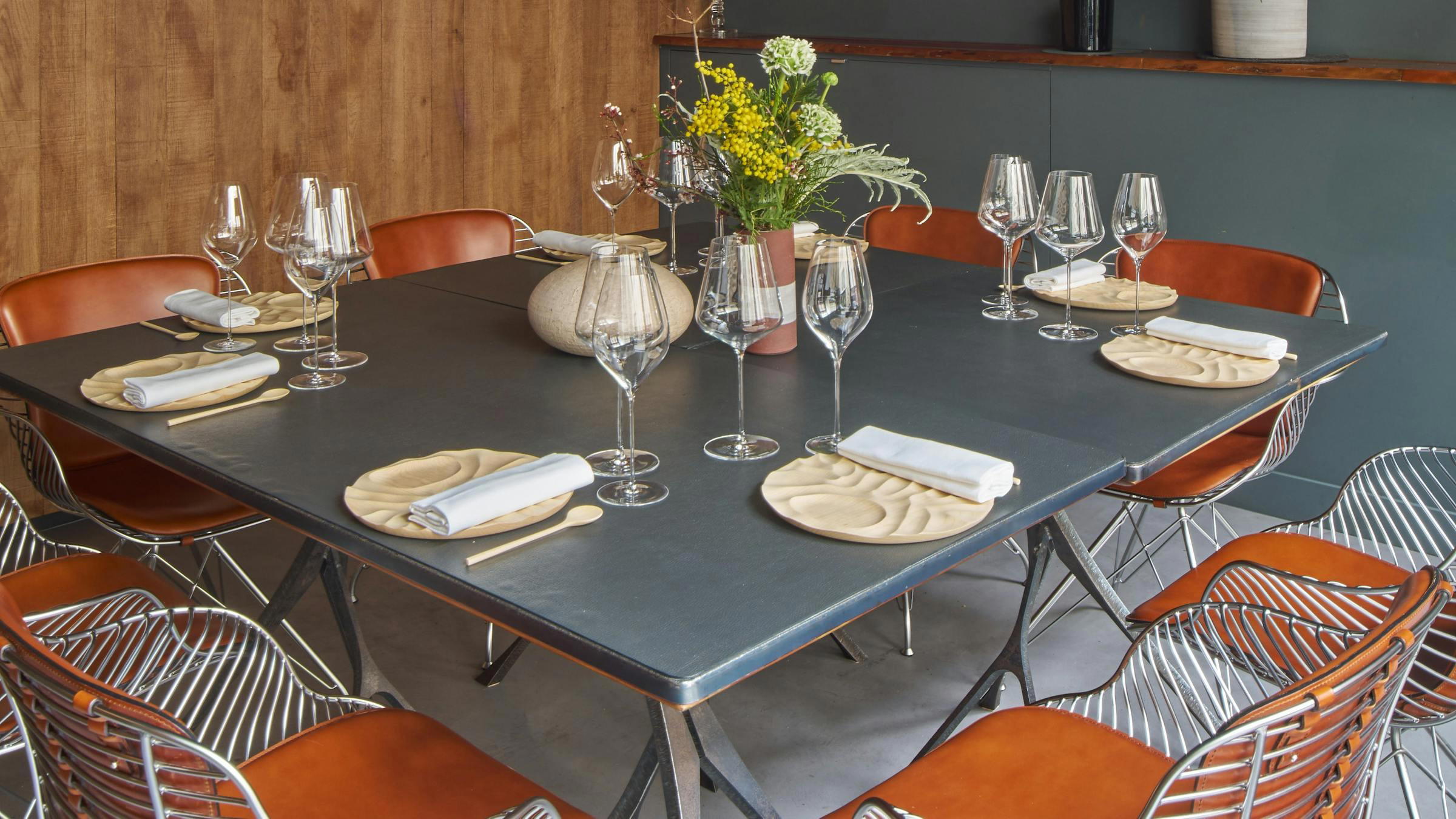
Warm, nostalgic 1920s safari atmosphere with old-world hospitality, soft lighting from vintage details, cozy fire pits, and a sense of refined wilderness tranquility.
Tags
Vibe
Best For
Experience
Amenities
View
About the Stay
- Rooms
- 12
- Check-in
- 13:00
- Check-out
- 11:00
- Property Style
- 1920s Style Luxury Tented Safari Camp Blending Conservation, Heritage, and Opulent Wilderness Comfort
- Design Style
- Hand Stitched Canvas Tents with Campaign Furniture, Teak and Rosewood Accents, Four Poster Beds, and Vintage Safari Charm
Know before you go
Know Before You Go
- Getting there
- Sherpur, Khiljipur, Kutalpura Maliyan, Jamool Khera, Rajasthan 322001
Planning details
Location
Sherpur, Khiljipur, Kutalpura Maliyan, Jamool Khera, Rajasthan 322001 · Directions
Recognition and awards


Also consider
Also Consider
- Aman-i-Khas, Notable alternative
- The Oberoi Vanyavilas, Notable alternative
- Six Senses Fort Barwara, Notable alternative
- Anantara Jewel Bagh Jaipur, Notable alternative
- The Oberoi Rajvilas, Notable alternative
Hotel context
How It Compares
Suján Sher Bagh is the more intimate Ranthambhore choice for travelers who want safari-camp character with luxury-hotel credibility. The Oberoi Vanyavilas is the safer cross-shop if the priority is a more conventional resort structure, polished service rhythm, and broader on-property infrastructure. Aman-i-Khas is the closer mood match: choose it if the brief leans more minimalist and tented-camp focused, while Suján Sher Bagh is easier to justify when recognition and a warmer safari-house feel matter.
For value, the question is not cheap versus expensive; all of these sit in a luxury set. The better test is whether the hotel format matches the trip. Suján Sher Bagh is worth the spend for fixed-date wildlife travel, small celebrations, and executive retreats where privacy is part of the point. The Oberoi Vanyavilas is a stronger fallback for guests who want less booking risk and a more resort-like safety net.
Six Senses Fort Barwara, Anantara Jewel Bagh Jaipur, and The Oberoi Rajvilas are better for travelers building a Rajasthan itinerary around wellness, Jaipur access, or palace-resort atmosphere rather than Ranthambhore park time. If the main reason for the trip is safari access, stay in the Ranthambhore set. If the main reason is a broader leisure route with easier city logistics, Jaipur-area options make more sense.
Explore Ranthambhore
Around this place
Discover more on Pearl
Unlock the full Suján Sher Bagh guide in Pearl, including awards, comparisons, FAQs, planning details, and nearby places.
Compare Suján Sher Bagh
| Venue | Location | Awards |
|---|---|---|
| Suján Sher Bagh | Ranthambhore | 2026 Relais Chateaux HotelsConde Nast Gold List 2026Michelin 1 Key 20252025 Michelin 1 Key2025 Relais Chateaux Award |
| Aman-i-Khas | Ranthambore | 2026 Virtuoso Luxury Hotel Collection2025 Michelin 2 Keys |
| The Oberoi Vanyavilas | Ranthambhore | 2026 La Liste Top Hotels2025 Travel + Leisure 100 Favorite Hotels in the World · #682025 Michelin 1 Key |
| Six Senses Fort Barwara | Sawāi Mādhopur | 2026 Forbes RecommendedStar Wine Lists 20262026 Mr & Mrs Smith Luxury Hotels2026 La Liste Top Hotels2025 Michelin 2 Keys |
| Anantara Jewel Bagh Jaipur | Jaipur | No published awards |
| The Oberoi Rajvilas | Jaipur | 2026 Virtuoso Luxury Hotel Collection2026 La Liste Top Hotels2025 Travel + Leisure 100 Favorite Hotels in the World · #462025 Michelin 1 Key |






How Suján Sher Bagh Ranthambhore compares with similar nearby venues.
FAQ
Frequently Asked Questions
Which room category is best at Suján Sher Bagh?
Choose a room category only after confirming the current options directly with the property. Suján Sher Bagh is in Ranthambhore, has a smart casual dress code, and holds Michelin 1 Key status for 2025.
Is Suján Sher Bagh family-friendly?
Family suitability should be confirmed directly with the property, as specific children's amenities, age rules, and activity details may vary. The Ranthambhore location and the property's recognition include Conde Nast Gold List (2026) and a Relais Chateaux Award (2026).
How does Suján Sher Bagh compare to other hotels?
Choose Suján Sher Bagh when you want a Ranthambhore stay with recognition: Michelin 1 Key (2025), Conde Nast Gold List (2026), and a Relais Chateaux Award (2026). The Oberoi Vanyavilas and Aman-i-Khas are natural cross-shops for a Ranthambhore stay, but compare current facilities, rates, and availability directly before deciding.
Is Suján Sher Bagh good for business travel?
It can work for a business trip only if Ranthambhore itself suits the agenda. Meeting facilities, work amenities, or transport details are not specified, so confirm those directly. For a more city-oriented comparison, The Oberoi Rajvilas may be worth checking separately.
Do loyalty programs work at Suján Sher Bagh?
Do not assume a loyalty-program benefit unless it is confirmed directly with the property or booking channel. Reasons to consider Suján Sher Bagh are its Ranthambhore location, smart casual dress code, and recognition, not any stated points or redemption structure.
How is the location of Suján Sher Bagh?
Suján Sher Bagh is in Ranthambhore. Specific street-address details are not needed and any transfer or access planning should be confirmed directly before travel. Compared with Six Senses Fort Barwara or Anantara Jewel Bagh Jaipur, treat it as a separate destination choice rather than a like-for-like local substitute.