
Hotel in Pune, India
Hotel Irada\u002c Pune Wine Country
150ptsWine Belt Rural Retreat

About Hotel Irada\u002c Pune Wine Country
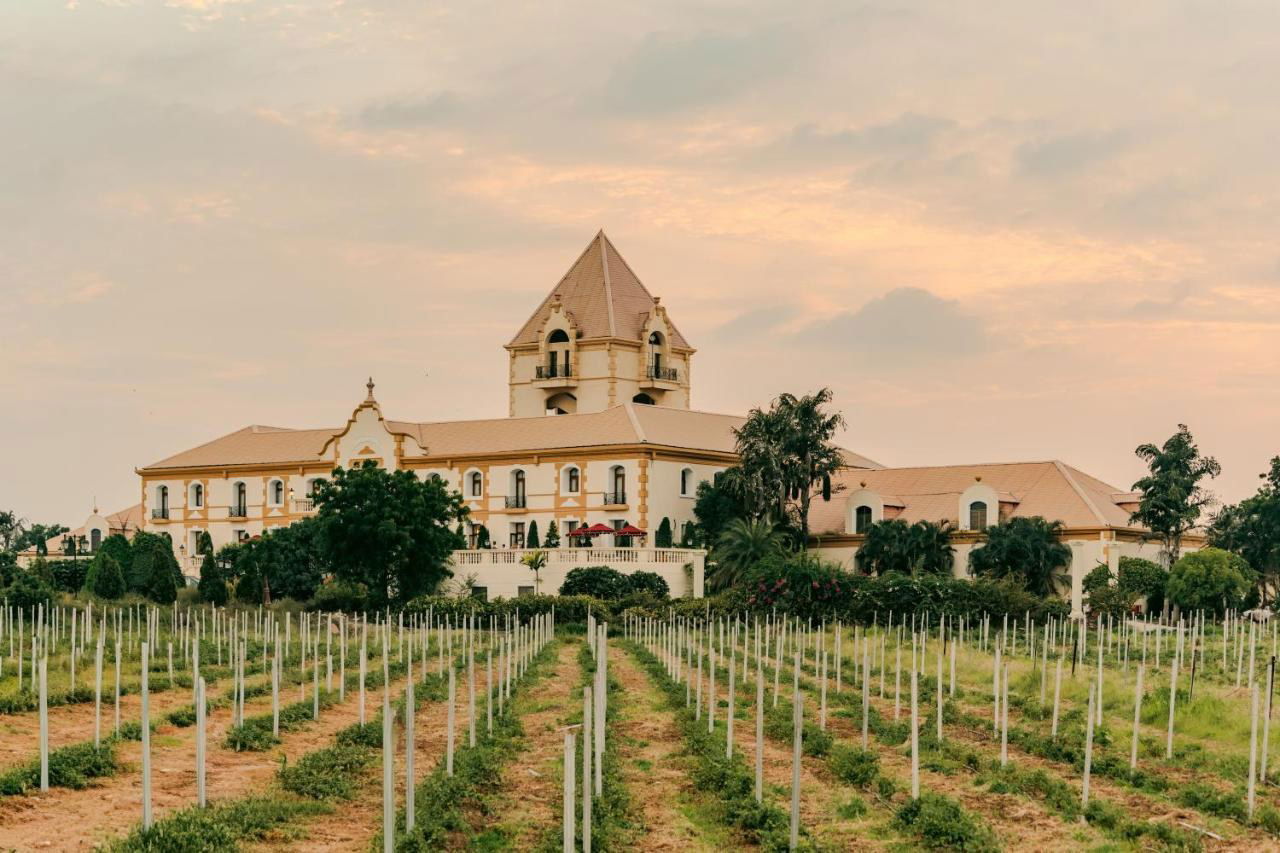
A Michelin Selected property set within Pune's emerging wine country, Hotel Irada occupies a distinct position among Indian rural retreats: a designed escape roughly 70 kilometres southeast of central Pune, near the vineyards of the Daund-Baramati corridor. For travellers who want proximity to Maharashtra's wine belt without the resort-chain formula, it sits in a small, specialist category.
Where Pune's Wine Belt Meets Considered Design
India's wine country rarely announces itself the way Napa or Marlborough does. The Maharashtra plateau southeast of Pune is a quieter proposition: rolling basalt terrain, low scrub, and vineyards that benefit from altitude and the dry continental climate between monsoon seasons. Hotel Irada sits within this corridor, on agricultural land near Roti Baramati in the Daund taluka, roughly 70 kilometres from central Pune. The address alone signals what kind of property this is: not an urban business hotel with a spa bolted on, but a retreat calibrated to its setting.
Michelin's 2025 hotel selection for India, which placed the property among its curated list of recommended stays, reflects a broader pattern in how international hospitality critics are starting to map India beyond the traditional palace-hotel circuit. Properties like [The Ritz-Carlton, Pune](https://www.enprimeurclub.com/hotels/the-ritz-carlton-pune-pune-hotel) represent the city's urban luxury tier, while Hotel Irada occupies a different category entirely, one defined by rural positioning, landscape integration, and an audience willing to travel for context rather than convenience.
The Architecture of Arrival
The design approach at rural Indian retreats increasingly divides between two schools: one that imports a generic luxury vocabulary regardless of site, and one that reads the local geology, vernacular building tradition, and agrarian rhythms and translates them into structure and space. The leading properties in the second school, from [Suján Jawai in Pali](https://www.enprimeurclub.com/hotels/sujn-jawai-rajasthan-hotel) in Rajasthan's Aravalli foothills to [Anantya By The Lake in Kaliyal](https://www.enprimeurclub.com/hotels/anantya-by-the-lake-kaliyal-hotel) in Tamil Nadu, earn their distinction precisely because the architecture would make no sense transposed to another geography. The editorial angle here matters: Michelin's selection criteria for hotels weight the relationship between property and place, not just thread counts and amenity checklists.
At Hotel Irada, the physical environment of the Deccan plateau is the primary design reference. The surrounding land near Hinganigada is part of Maharashtra's inland agricultural belt, where basalt stone has historically governed local construction and where the low horizontal silhouette of farm buildings follows the flatness of the plateau rather than competing with it. A property designed to earn MICHELIN Selected recognition in this context must respond to those conditions rather than override them. The result, in properties of this type, is typically a compound-style organisation of spaces rather than a tower or monolithic block, with outdoor areas treated as extensions of the interior rather than afterthoughts.
The Wine Country Frame
Maharashtra produces a significant share of India's commercially bottled wine, with the Nashik valley holding the largest acreage and the Sahyadri foothills generating some of the more discussed labels. The Pune-Baramati corridor is a quieter producing zone, less visited than Nashik and less documented by international wine media, but relevant to anyone travelling specifically to understand the regional wine economy at a smaller scale. A hotel positioned within this corridor, and named in a way that foregrounds the wine country identity, is making an editorial statement about its intended audience: travellers for whom the vineyard context is itself part of the experience.
This positions Hotel Irada within a niche that has few direct competitors in the Pune district. Properties of comparable rural intentionality in Maharashtra tend to cluster closer to Nashik or operate further south toward the Konkan coast. The Baramati zone, by contrast, remains relatively underdeveloped as a hospitality destination, which is precisely what gives a Michelin-flagged property here its signal value. For context on how India's landscape-rooted hospitality performs at the higher end of the market, [Ananda in the Himalayas in Narendra Nagar](https://www.enprimeurclub.com/hotels/ananda-in-the-himalayas-narendra-nagar-hotel) and [Woods at Sasan in Sasan Gir](https://www.enprimeurclub.com/hotels/woods-at-sasan-sasan-gir-hotel) both demonstrate how deep integration with a specific natural setting can command serious critical attention independent of chain affiliation.
How It Fits the Broader India Stay Market
India's premium accommodation market has spent a decade separating into clearer tiers. At one end, large heritage palace conversions and international chain flagships, including [The Taj Mahal Palace, Mumbai in Mumbai](https://www.enprimeurclub.com/hotels/the-taj-mahal-palace-mumbai-mumbai-hotel), [The Leela Palace Jaipur in Jaipur](https://www.enprimeurclub.com/hotels/the-leela-palace-jaipur-jaipur-hotel), and [The Leela Palace New Delhi in New Delhi](https://www.enprimeurclub.com/hotels/the-leela-palace-new-delhi-new-delhi-hotel), anchor a well-documented luxury segment. At the other end, a growing cohort of smaller, independently conceived properties is attracting Michelin's attention precisely because they sit outside that chain formula: places like [Suján Sher Bagh in Ranthambhore](https://www.enprimeurclub.com/hotels/sujn-sher-bagh-ranthambhore-hotel), [Amanbagh in Ajabgarh](https://www.enprimeurclub.com/hotels/amanbagh-ajabgarh-hotel), [Shakti Prana in Kasar Devi](https://www.enprimeurclub.com/hotels/shakti-prana), and [Taj Lake Palace in Udaipur](https://www.enprimeurclub.com/hotels/taj-lake-palace-udaipur-hotel) each occupy specific niches defined by geography, scale, or design language.
Hotel Irada's Michelin Selected status in 2025 places it on the map for an audience that actively uses Michelin's hotel guide as a filter for independent quality signals rather than brand recognition. That audience tends to book directly, to research location with care, and to treat the surrounding terroir, in this case the wine country and plateau landscape, as central to the value proposition rather than incidental to it.
Planning a Stay
The property sits in the Daund taluka of Pune district, approximately 70 kilometres southeast of Pune city. The most practical approach from Pune is by road, with the drive manageable in under two hours depending on traffic through the city's eastern corridors. Baramati, the nearest substantial town, is accessible from both Pune and from Solapur to the southeast. The region's wine-growing calendar peaks in the cooler dry months between November and February, which is also when the plateau landscape is at its most hospitable for travel. Those visiting outside that window should account for the pre-monsoon heat of March to May and the heavy monsoon from June onward, both of which significantly change the character of the surrounding countryside.
Rates and booking channels were not available in EP Club's database at the time of writing. Given the Michelin recognition, advance planning is advisable, particularly for the November to February peak window. For a broader overview of where Hotel Irada sits within Pune's hospitality offer across all price points and formats, see [our full Pune restaurants guide](https://www.enprimeurclub.com/cities/pune). For comparison with other Michelin-acknowledged properties across India's wine and nature-retreat spectrum, [Kumarakom Lake Resort in Kumarakom](https://www.enprimeurclub.com/hotels/kumarakom-lake-resort-kumarakom-hotel) and [Alila Diwa Goa in Goa](https://www.enprimeurclub.com/hotels/alila-diwa-goa-goa-hotel) offer instructive reference points in terms of how regional setting and design specificity translate into experience.
Frequently Asked Questions
What kind of setting is Hotel Irada, Pune Wine Country?
Hotel Irada sits on agricultural land in the Daund taluka, roughly 70 kilometres southeast of Pune city, within Maharashtra's wine-growing belt near Baramati. The setting is rural plateau terrain, positioned for travellers interested in the wine country context and landscape rather than urban amenity. It carries Michelin Selected status in the 2025 hotel guide for India, which confirms its standing as a quality-acknowledged property within a region that remains relatively underdeveloped as a hospitality destination.
What room category do guests prefer at Hotel Irada, Pune Wine Country?
Room-category detail and specific accommodation breakdowns were not available in EP Club's verified data at the time of writing. The Michelin Selected designation, the wine country framing, and the rural compound setting suggest a property where the relationship between accommodation and landscape is a primary design consideration, making outdoor-facing or land-connected room types the likely focal point. Direct enquiry with the property is the most reliable way to confirm current options.
What's the defining thing about Hotel Irada, Pune Wine Country?
Its position within Pune's wine belt, combined with Michelin's 2025 recognition, gives it a clear identity in a market where rural Maharashtra hospitality is largely underdocumented by international guides. It is not a palace hotel, not a chain resort, and not positioned for the business traveller transiting Pune. It is a specialist retreat for an audience that treats vineyard country and plateau landscape as the point of the trip, not its backdrop.
Recognized By

Similar venues by awards
Related editorial
- How travel will be redefined by 2040By 2040, Travel Will Stop Being a Place You Go and Become a State You Inhabit Thesis: The defining shift in travel by 2040 will not be faster planes or smarter hotels — it will be the collapse of the
- How travel will be redefined by 2040By 2040, Travel Won't Be an Industry — It Will Be Infrastructure My thesis is simple and, I suspect, unfashionable: by 2040 travel will stop behaving like a discretionary consumer category and start
- How travel will be redefined by 2040By 2040, Travel Won't Be a Trip — It Will Be a Stack My thesis is simple and, I think, uncomfortable: by 2040, "travel" will no longer describe a discrete journey from point A to point B.
Save or rate Hotel Irada\u002c Pune Wine Country on Pearl
Keep this venue in your Pearl passport, rate it after you visit, and track it alongside every other place you collect.