

I Borghi dell'Eremo
Piegaro
Hotel in Piegaro, Italy
 Book with Pearl
The Read
Three-Village Rural Estate
Why go
Book I Borghi dell'Eremo for a quiet Umbrian countryside stay where the hotel itself is part of the reason to go. Michelin 2 Keys in 2024 and Small Luxury Hotels of the World membership in 2025 give it real quality signals, but it suits retreat-style leisure or work trips better than fast, logistics-heavy travel.
About I Borghi dell'Eremo
I Borghi dell'Eremo is a Piegaro venue with a smart casual dress code and two recognition highlights: Michelin 2 Keys in 2024 and Small Luxury Hotels of the World membership in 2025. For practical planning, confirm current room categories, dining format, facilities, pricing, hours, and service offerings directly with the venue before booking.
A Piegaro stay with confirmed recognition, but limited detail
The clearest reason to shortlist I Borghi dell'Eremo is its recognition. Michelin 2 Keys in 2024 and Small Luxury Hotels of the World membership in 2025 place it within curated hotel contexts, which can be useful when comparing stays in and around Piegaro. Those signals do not cover every operational detail, but they do provide a useful marker for travelers who want more than an unvetted listing.
Because details are limited, avoid assuming specifics about restaurants, wellness facilities, room layouts, service format, or pricing. Instead, use the recognition and Piegaro location as the starting point, then check the venue's official channels for the latest details that matter to your trip.
Who should choose it, and who should cross-shop
Choose I Borghi dell'Eremo if the Piegaro location and recognized hotel status fit your brief. The smart casual dress code is also worth noting for guests planning the tone of the stay. If dining is central to the itinerary, also check Piegaro restaurants guide and confirm current options directly with the venue.
Do not treat the property as the automatic choice for every trip. Treat it as a Piegaro venue with recognized status but limited operational detail in this profile. If you need a specific facility, room type, dining setup, or service, compare carefully before committing and verify the details directly.
Planning details
- Location
- Vocabolo Crocicchia, 06066 Piegaro PG
- Website
- borghidelleremo.it
- Phone
- +39 366 907 2048
The take
The Take
The Vibe
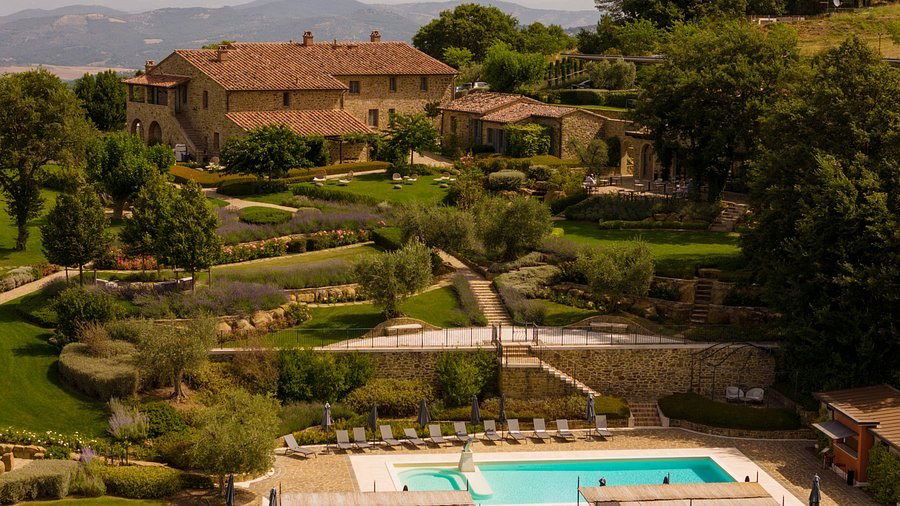
I Borghi dell'Eremo reads like a quietly elegant discovery: a cluster of sensitively restored medieval buildings that reveal themselves along a cypress-lined approach and scented gardens. The architecture preserves evidence of former agricultural and ecclesiastical lives, delivering a historic, sophisticated atmosphere rather than polished resort scale. With just 15 rooms concentrated in the San Giovanni cluster, the property feels intimate and residential; guests move between buildings on old pathways and through planted outdoor rooms. The Michelin Two Keys recognition reinforces the careful restoration and considered design that shape the estate’s understated charm.
Best For
The estate is well suited to small, intentional stays and hosted events. Two of the three village clusters function primarily as event venues, accommodating weddings and conferences in interior halls and outdoor garden settings, so it works particularly well for destination ceremonies and corporate retreats that want a rural, curated backdrop. Meanwhile, the compact San Giovanni cluster offers an intimate base for couples or travelers seeking a quiet, design-forward rural escape. The scale and layout make it less appropriate for travelers seeking big-resort amenities and better for guests who value privacy and place.
Stay Tips
Book early and be specific about what you want: the guest experience is concentrated in the San Giovanni village, so request accommodations there if you want the residential atmosphere described. If you’re planning an event, coordinate directly with the hotel about which of the two event-focused clusters is available—the estate separates guest housing from event venues on purpose. With only 15 rooms across the property, reservations can fill for peak wedding and conference dates; confirm room blocks and site access well in advance and ask for details about garden and hall layouts to match your event needs.
Venue details
Ambiance
Intimate and serene with soft lighting in the restaurant, twinkling garden lights, and panoramic views creating a magical, relaxing atmosphere.
Tags
Vibe
Best For
Experience
Amenities
View
Accessibility
About the Stay
- Rooms
- 15
- Check-in
- 15:00
- Check-out
- 10:30
- Property Style
- Restored Historic Hamlet in a Vast Estate
- Design Style
- Rustic Elegance with Stone Walls, Canopy Beds, and Luxury Finishes
Know before you go
Know Before You Go
- Getting there
- Vocabolo Crocicchia, 06066 Piegaro PG
Planning details
Location
Recognition and awards

Also consider
Also Consider
- Rastrello, Notable alternative
- Borgo dei Conti Resort, Notable alternative
- Eremito, Notable alternative
- Fonteverde Lifestyle & Thermal Retreat, Notable alternative
- Precise Tale Poggio Alla Sala, Notable alternative
Hotel context
How it compares in the Umbrian countryside set
I Borghi dell'Eremo is the choice for travelers who want a quieter, more retreat-led stay near Piegaro and are willing to plan around the property rather than use it as a simple base. Compared with Rastrello and Borgo dei Conti Resort, it reads as more destination-driven: better for switching off, less convenient if the itinerary is built around constant movement.
If value means thermal facilities and a broader wellness focus, Fonteverde Lifestyle & Thermal Retreat is the more obvious cross-shop. If the priority is a stripped-back, contemplative atmosphere, Eremito is the sharper alternative. For travelers comparing polished countryside resorts with easier all-purpose appeal, Precise Tale Poggio Alla Sala deserves a look.
The practical call: choose I Borghi dell'Eremo when privacy, quiet, and a stay-with-purpose matter more than flexibility. Choose Fonteverde for spa-led value, Eremito for a more ascetic mood, and Borgo dei Conti Resort or Precise Tale Poggio Alla Sala when the group needs a broader resort feel.
Explore Piegaro
Around this place
Discover more on Pearl
Unlock the full I Borghi dell'Eremo guide in Pearl, including awards, comparisons, FAQs, planning details, and nearby places.
Compare I Borghi dell'Eremo
| Venue | Location | Awards |
|---|---|---|
| I Borghi dell'Eremo | Piegaro | Michelin 2 Keys 20252025 Michelin 2 KeysSmall Luxury Hotels Member 20252024 Michelin 2 Keys |
| Rastrello | Panicale | No published awards |
| Borgo dei Conti Resort | Perugia | 2026 Virtuoso Luxury Hotel Collection2026 Relais Chateaux Hotels2025 Michelin 1 Key2025 Relais Chateaux Award |
| Eremito | Parrano | No published awards |
| Fonteverde Lifestyle & Thermal Retreat | San Casciano dei Bagni | 2026 Virtuoso Luxury Hotel CollectionLeading Hotels of the World 20262025 Michelin Selected Hotels |
| Precise Tale Poggio Alla Sala | Montepulciano | 2026 Mr & Mrs Smith Luxury Hotels2025 Michelin 1 Key2024 Michelin 1 Key |





How I Borghi dell'Eremo Piegaro compares with similar nearby venues.
FAQ
Frequently Asked Questions
When is the best time to book I Borghi dell'Eremo?
If your trip is tied to a fixed date, confirm availability and booking terms directly with I Borghi dell'Eremo. The confirmed facts are that it is in Piegaro, has Michelin 2 Keys from 2024, and is a Small Luxury Hotels of the World member from 2025.
How is the dining at I Borghi dell'Eremo?
Which room category is best at I Borghi dell'Eremo?
Choose only after checking the venue's official channels for current room descriptions, availability, and booking terms. For another comparison point, Rastrello may be worth reviewing as part of a broader stay search.
How is the pool and spa at I Borghi dell'Eremo?
Do not use those features as deciding factors without confirming them directly with the venue. Fonteverde Lifestyle & Thermal Retreat is another comparison to review separately.
Do loyalty programs work at I Borghi dell'Eremo?
The recognized membership is Small Luxury Hotels of the World in 2025. Specific loyalty benefits, points rules, and status treatment should be checked in the relevant program rules and the venue's booking terms before you commit. Precise Tale Poggio Alla Sala may also be worth comparing.
Is I Borghi dell'Eremo family-friendly?
Confirm directly with the venue before booking if you need child policies, room configurations, activities, or practical family services. Borgo dei Conti Resort is another option to compare for a broader stay search.