
The Happy House
Phaplu
Hotel in Phaplu, Nepal
 Book with Pearl
The Read
Hillary-Era Himalayan Hospitality
Why go
The Happy House is worth considering if the goal is a remote Phaplu stay with Himalayan setting and serious recognition, including Conde Nast Gold List 2026. It is a weaker match for travelers who need clear loyalty-program value, city-hotel logistics, or a dining-led stay with named menus and published pricing.
About The Happy House
The Happy House is a venue in Phaplu with Conde Nast Gold List (2026) recognition. Beyond that, the most prudent way to evaluate it is by the venue name, its Phaplu location, and that recognition rather than by assuming specific services, dining, amenities, prices, or operating details.
Choose it for the Phaplu setting, not a restaurant-led trip
Do not book The Happy House on the assumption of a specific cuisine, signature dish, chef-led menu, or dining format. Compare other dining in Phaplu generically if food is a major part of the trip, and confirm meal planning directly with the property.
Good fit for slow travel, weaker fit for tightly scheduled trips
The most grounded reason to consider The Happy House is its Phaplu location plus its Conde Nast Gold List (2026) recognition. If your plans depend on exact arrival procedures, business facilities, loyalty benefits, prices, dining hours, or other specific services, confirm those details directly before booking. The venue is easier to recommend when the Phaplu stay itself is the priority and less easy to recommend when every operational detail needs to be known in advance.
Planning details
- Location
- GH7P+47M Eastern Himalaya, Dudhakunda 00000
- Website
- happyhousenepal.com
- Phone
- +977 1-4003022
The take
The Take
The Vibe
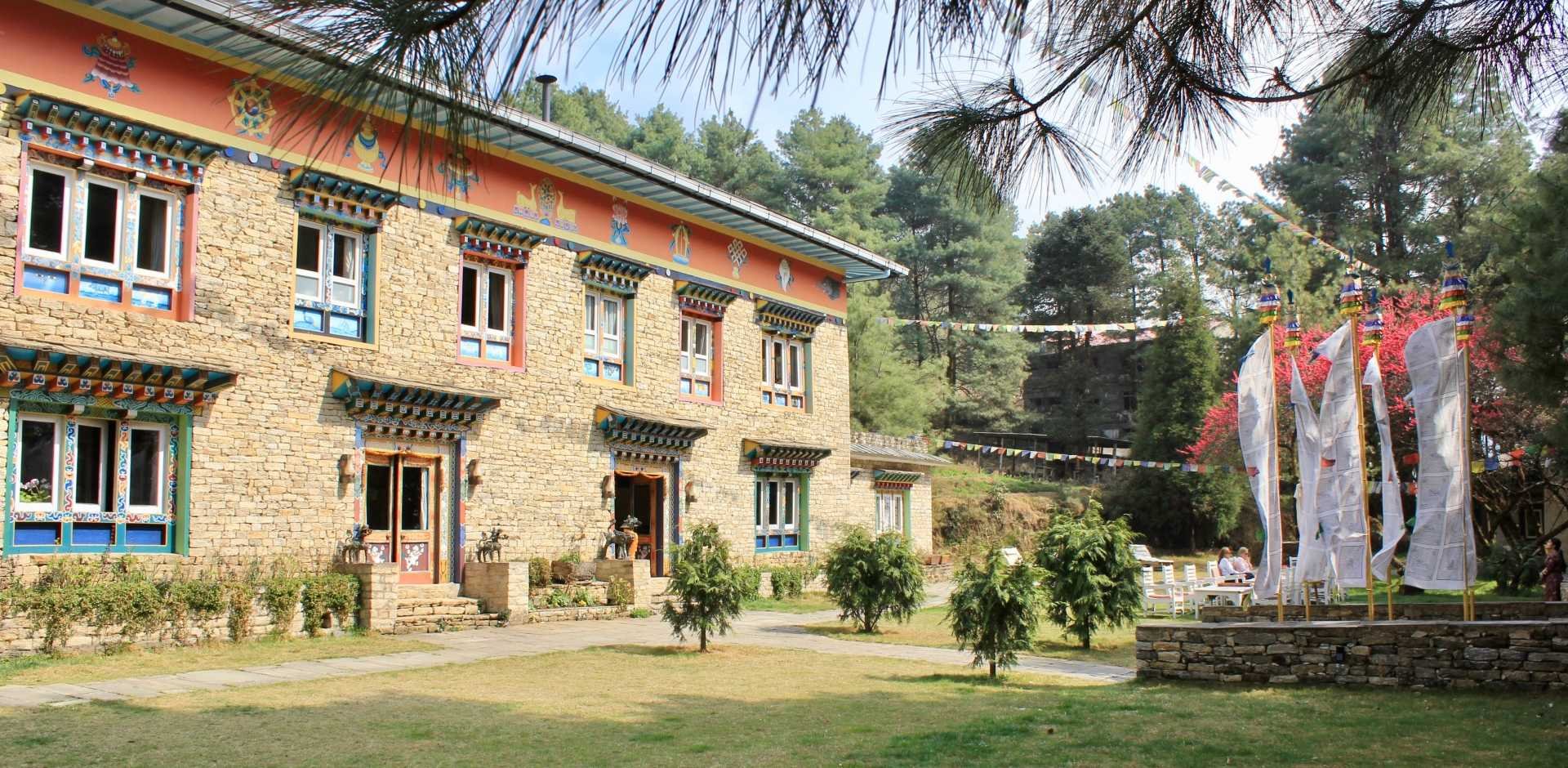
The Happy House presents as an unassuming, historically charged mountain lodge. Its architecture reads as an accretion of practical choices — thickened walls, carefully placed windows and hearths — rather than a single, formal design. That tangible connection to the region’s past is amplified by a documented relationship to Sir Edmund Hillary, which gives the property an institutional weight uncommon in newer guesthouses. The resulting atmosphere feels quietly preserved and welcoming: a modestly maintained refuge where the building’s story and the landscape beyond are the principal attractions, and modern frills take a respectful back seat.
Best For
This lodge suits travelers who prize context as much as comfort. It is a natural fit for trekkers beginning or ending itineraries in Solu-Khumbu, solo explorers seeking straightforward, well-located lodging, and readers of local history who want to stay in a place tied to the region’s postwar development. Because the property is grounded in purpose-built, functional construction rather than luxury, visitors who value authenticity, quiet evenings by a hearth and easy access to nearby trails will find it especially rewarding.
Venue details
Ambiance
Warm, cozy interiors with wooden accents, painted murals, roaring fireplaces, and plush furnishings creating a relaxing, family-like atmosphere.
Tags
Vibe
Best For
Experience
Amenities
View
About the Stay
- Rooms
- 12
- Property Style
- Traditional Nepali/tibetan Style Luxury Home with Modern Comforts
- Design Style
- Rustic Charm Fused with Elegant Simplicity Using Local Materials and Handcrafted Furnishings
Know before you go
Know Before You Go
- Getting there
- GH7P+47M Eastern Himalaya, Dudhakunda 00000
Planning details
Location
Recognition and awards

Also consider
Also Consider
- Dwarika's Sanctuary, Notable alternative
- The Terraces Resort and Spa, Notable alternative
- The Dwarika's Hotel, Notable alternative
- Varnabas Museum Hotel, Notable alternative
- Aloft Kathmandu Thamel, Notable alternative
Hotel context
The Happy House is the Phaplu pick for travelers who want the stay to feel remote and setting-led. Against Dwarika's Sanctuary and The Terraces Resort and Spa, it reads less like a conventional wellness-resort decision and more like a mountain-base decision. Choose it if location and atmosphere matter more than a broad facilities list.
The Dwarika's Hotel and Aloft Kathmandu Thamel make more sense for Kathmandu access, tighter schedules, and travelers who want urban convenience. The Happy House is better for a slower itinerary where the route and setting are part of the value, but less suitable if predictable city-hotel logistics are the priority.
Varnabas Museum Hotel is the stronger cross-shop if the brief is character and atmosphere rather than a standard chain stay. For the easiest, least risky booking profile, Aloft Kathmandu Thamel is the safer alternative; for a more distinctive Nepal trip, The Happy House has the clearer reason to choose it.
Explore Phaplu
Around this place
Discover more on Pearl
Unlock the full The Happy House guide in Pearl, including awards, comparisons, FAQs, planning details, and nearby places.
Compare The Happy House
| Venue | Location | Awards |
|---|---|---|
| The Happy House | Phaplu | Conde Nast Gold List 2026 |
| Dwarika’s Sanctuary | Dhulikhel | 2026 Virtuoso Luxury Hotel Collection2025 Michelin 1 Key |
| The Terraces Resort and Spa | Kathmandu | No published awards |
| The Dwarika's Hotel | Kathmandu | 100 Most Incredible Hotels in the World · 20262026 La Liste Top HotelsMichelin 1 Key 20252025 Michelin 1 Key2025 Conde Nast Hotels Gold List |
| Varnabas Museum Hotel | Kathmandu | Small Luxury Hotels Member 2025 |
| Aloft Kathmandu Thamel | Kathmandu | World Luxury Hotel Awards 2025 |






How The Happy House Phaplu compares with similar nearby venues.
FAQ
Frequently Asked Questions
How is the dining at The Happy House?
The Happy House is in Phaplu and has Conde Nast Gold List (2026) recognition. Check the venue directly for the latest dining details.
Do loyalty programs work at The Happy House?
Do not plan around loyalty perks unless The Happy House confirms them directly. Compared with other hotel options such as Aloft Kathmandu Thamel, The Happy House should be evaluated first as a Phaplu stay rather than as a points-and-status choice. Check the venue directly for the latest details.
What is check-in like at The Happy House?
The confirmed location is Phaplu, so travelers should confirm arrival timing, access, and any required coordination directly with the venue before relying on a fixed plan. For broader Nepal hotel comparisons, The Dwarika's Hotel or Aloft Kathmandu Thamel may be useful reference points.
How does The Happy House compare to other hotels?
Choose The Happy House if you specifically want a stay in Phaplu with Conde Nast Gold List (2026) recognition. Dwarika's Sanctuary, The Terraces Resort and Spa, The Dwarika's Hotel, Varnabas Museum Hotel, and Aloft Kathmandu Thamel are useful broader Nepal hotel comparisons, but they should not be treated as interchangeable Phaplu options. Confirm services and location details directly before booking any of them.
How is the location of The Happy House?
When is the best time to book The Happy House?
If your trip depends on specific dates, arrival timing, or services, contact the venue before making plans. If flexibility or last-minute logistics matter more than staying in Phaplu, Aloft Kathmandu Thamel may be a useful comparison point.
Is The Happy House good for business travel?
If you need meeting facilities, reliable work setup, loyalty benefits, or specific transport arrangements, confirm those details directly with The Happy House. The Dwarika's Hotel or Aloft Kathmandu Thamel may be relevant comparisons for travelers prioritizing a different type of hotel stay.