
Can Mascort Eco Hotel
historic center, Palafrugell
Hotel in Palafrugell, Spain
 Book with Pearl
The Read
Inland Sustainability Retreat
Why go
Can Mascort Eco Hotel is the better choice for a quiet, recognition-backed Palafrugell stay than for a resort-style spa escape. The Michelin 1 Key and Mr & Mrs Smith approval make it credible for couples and occasion trips, especially if town access matters more than a large amenity package.
About Can Mascort Eco Hotel
Can Mascort Eco Hotel is in Palafrugell and has confirmed recognition from Michelin and Mr & Mrs Smith. Specific claims about room categories, amenities, dining, service style, or exact location details should be confirmed directly before booking.
Its recognition is clear. Can Mascort Eco Hotel received a Michelin 1 Key in 2024 and a Mr & Mrs Smith Seal of Approval in 2026. These make it a credible hotel to consider in Palafrugell, but they should not be stretched into assumptions about facilities, format, or guest experience details.
Choose this for Palafrugell access, not amenity assumptions
Choose Can Mascort Eco Hotel if you want a recognized hotel in Palafrugell and are comfortable checking the operational details that matter to your trip before booking. Do not make the decision on assumptions about specific amenities, dining format, or service details.
It may suit travelers whose priority is staying in Palafrugell at a hotel with confirmed recognition. For more specific needs, family facilities, business services, dining, room type, or accessibility, confirm directly with the hotel before treating it as the right fit.
Where it sits in the Palafrugell hotel decision
Think of Can Mascort Eco Hotel as a recognized Palafrugell option. For a wider hotel search, use our full Palafrugell hotels guide; for meals around the stay, cross-check our full Palafrugell restaurants guide. The right call is to choose it for the confirmed recognition and Palafrugell setting, while confirming any trip-specific requirements before you book.
Planning details
- Location
- Carrer Raval Inferior, 23, 17200 Palafrugell, Girona
- Website
- canmascortecohotel.com/es
- Phone
- +34 623 18 88 28
The take
The Take
The Vibe
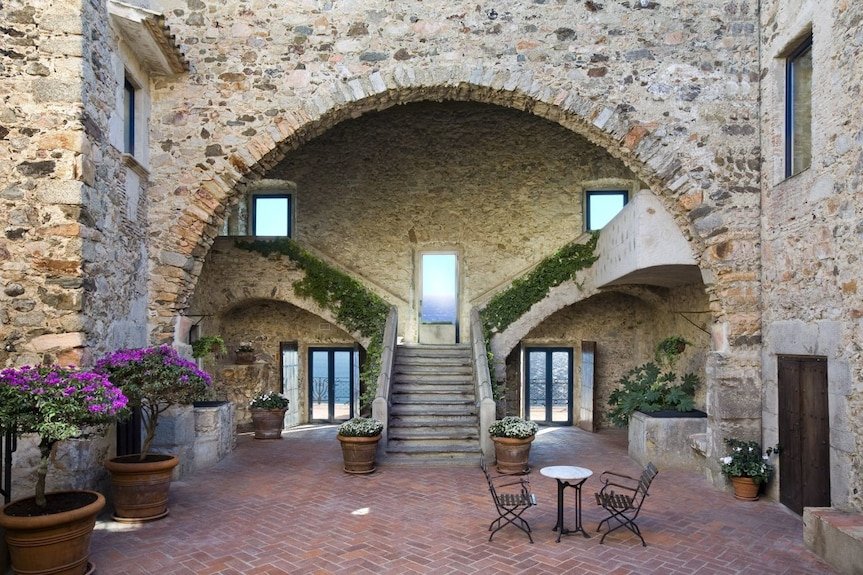
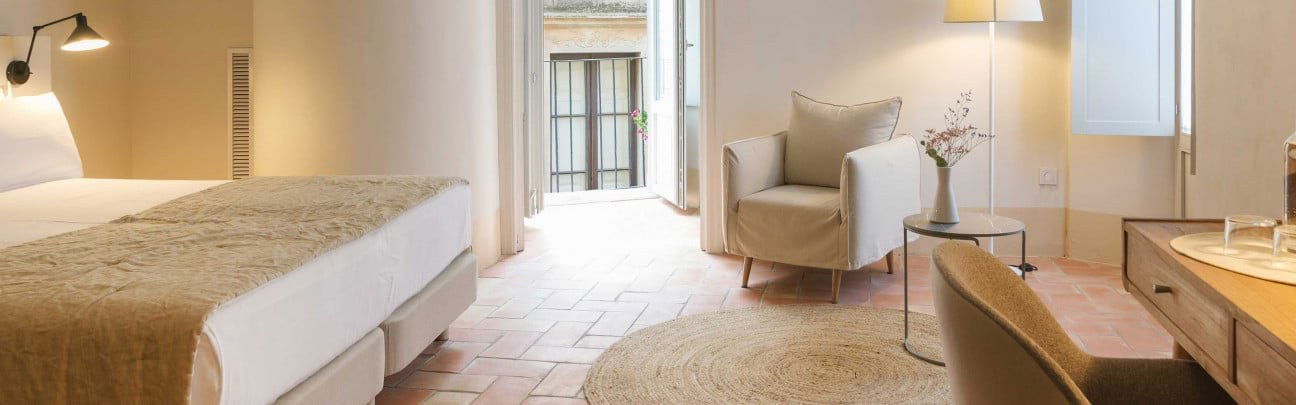
Can Mascort reads like a compact, concept-driven hideaway rooted in place. Housed in a restored 17th-century building in Palafrugell’s medieval centre, the hotel foregrounds stone walls, narrow streets and a civic square rather than beachfront spectacle. Its 15 rooms and the 2024 Michelin 1 Key recognition signal a stay oriented around thoughtful execution and a strong sense of context. The effect is quietly refined and intimate: visitors encounter layered historic fabric and a hospitality philosophy that prizes authenticity and sustainability over scale and conventional resort trappings.
Best For
This is a hotel for travelers who prize character and a sense of place over sea views and resort amenities. Its small size and setting in Palafrugell’s historic centre make it especially well suited to romantic getaways, mindful weekend escapes and wellness-focused stays that favor calm, local rhythms. The Michelin 1 Key nod suggests that the experience itself — from the restored architecture to the hotel’s concept-driven approach — is the main draw, so guests looking for a narrative-rich, low-key stay will find the property most rewarding.
Stay Tips
Book early and expect a compact, concept-led stay: with just 15 rooms, availability can be limited, particularly during peak travel windows. Rates are noted from $136 per night, so the hotel can offer good value relative to its Michelin recognition, but the inland location means you should not expect beachfront rooms — the hotel deliberately trades sea views for historic-town atmosphere. If a sea-facing stay is essential, plan additional nights on the coast; otherwise reserve well in advance to secure one of the small number of rooms that embody the property’s place-rooted design.
Venue details
Ambiance
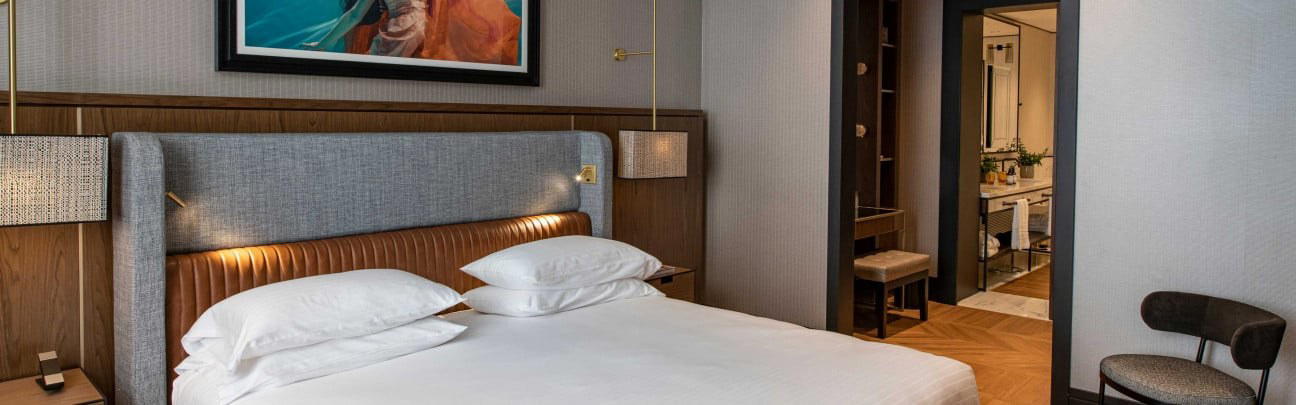
Calming and relaxing with natural materials, soundproof rooms, and a peaceful atmosphere blending history and modernity.
Tags
Vibe
Best For
Experience
Amenities
View
Accessibility
About the Stay
- Rooms
- 15
- Check-in
- 15:00
- Check-out
- 12:00
- Property Style
- Eco Friendly Historic Boutique
- Design Style
- Classic Natural Minimalist
Know before you go
Know Before You Go
- Getting there
- Carrer Raval Inferior, 23, 17200 Palafrugell, Girona
Planning details
Location
Carrer Raval Inferior, 23, 17200 Palafrugell, Girona · Directions
Recognition and awards
Also consider
Also Consider
- El Far Hotel Restaurant, Notable alternative
- Hotel Mas Del Sol, Notable alternative
- Mas de Torrent Hotel & Spa, Notable alternative
- Talaia Plaza EcoResort, Notable alternative
- Finca Victoria, Notable alternative
Hotel context
How It Compares
Can Mascort Eco Hotel is the town-base choice in this Palafrugell set: choose it when the priority is a smaller, recognition-backed stay close to the city's daily rhythm. El Far Hotel Restaurant is the stronger call if the meal-and-view setting matters more than being in town, while Hotel Mas Del Sol reads as the better fit for travelers who want more remove from Palafrugell itself.
For a spa-leaning celebration, Mas de Torrent Hotel & Spa is the clearer cross-shop because the wellness proposition is explicit. Can Mascort Eco Hotel is likely to suit couples who value scale, centrality, and hotel recognition over a broader resort program.
Talaia Plaza EcoResort is the more outdoors-led alternative, while Finca Victoria is worth considering if the brief is a more private-feeling countryside stay. If booking here is tight, start with Mas de Torrent Hotel & Spa for wellness or El Far Hotel Restaurant for a more setting-led occasion.
Explore Palafrugell
Around this place
Discover more on Pearl
Unlock the full Can Mascort Eco Hotel guide in Pearl, including awards, comparisons, FAQs, planning details, and nearby places.
Compare Can Mascort Eco Hotel
| Venue | Location | Awards |
|---|---|---|
| Can Mascort Eco Hotel | Palafrugell | 2026 Mr & Mrs Smith Luxury Hotels2026 Michelin 1 Key2025 Michelin 1 KeyMichelin 1 Key 20252024 Michelin 1 Key |
| El Far Hotel Restaurant | Palafrugell | No published awards |
| Hotel Mas Del Sol | Vall Llobrega | No published awards |
| Mas de Torrent Hotel & Spa | Torrent | 2026 Virtuoso Luxury Hotel Collection2026 Mr & Mrs Smith Luxury Hotels2026 Relais Chateaux Hotels2026 Michelin 2 Keys2025 Michelin 2 Keys2025 Relais Chateaux Award2024 Michelin 2 Keys |
| Talaia Plaza EcoResort | Begur | Preferred Hotels Member 2025 |
| Finca Victoria | Sa Riera | 100 Most Incredible Hotels in the World · 2026 |






How Can Mascort Eco Hotel Palafrugell compares with similar nearby venues.
FAQ
Frequently Asked Questions
Do loyalty programs work at Can Mascort Eco Hotel?
Do not choose Can Mascort Eco Hotel on points or chain-benefit assumptions. Reasons to consider it are its Palafrugell location and confirmed recognition, including a Michelin 1 Key.
Which room category is best at Can Mascort Eco Hotel?
If room size, view, accessibility, or upgrade logic matters, confirm those details directly with the hotel before booking. Mas de Torrent Hotel & Spa is another hotel to compare during a broader search.
Is Can Mascort Eco Hotel family-friendly?
Families considering Can Mascort Eco Hotel should confirm room setup and relevant services directly with the hotel. Talaia Plaza EcoResort and Mas de Torrent Hotel & Spa are other options to compare depending on the type of stay you want.
How is the dining at Can Mascort Eco Hotel?
If food is a central part of the trip, confirm the hotel's current dining arrangements directly and compare with other dining in Palafrugell or with a venue such as El Far Hotel Restaurant.
How is the location of Can Mascort Eco Hotel?
Can Mascort Eco Hotel is in Palafrugell. Location-sensitive travelers should confirm the exact logistics directly before booking. Finca Victoria and Talaia Plaza EcoResort are other options to compare.
Is Can Mascort Eco Hotel good for business travel?
It can be considered if your trip is centered on Palafrugell and you want a hotel with confirmed recognition. Confirm meeting-room, workspace, or corporate-service details directly. Mas de Torrent Hotel & Spa is another hotel to compare for a broader search.