

Dar Ahlam
Douar Oulad Cheik Ali, Ouarzazate
Hotel in Ouarzazate, Morocco
 Book with Pearl
The Read
Saharan Kasbah Seclusion
Why go
Dar Ahlam is worth considering for a private, special-occasion stay near Ouarzazate, especially if the hotel itself is meant to be the focus. Its strongest case is retreat value: quiet setting, luxury-travel recognition, and a format better suited to couples or celebrations than quick stopovers. Compare the final rate carefully if excursions will keep guests off property most of the day.
About Dar Ahlam
Dar Ahlam is a premium venue in Ouarzazate with luxury-travel recognition. The safest way to assess it is not by assuming a particular dining format, facility list, room style, or service model, but by matching its positioning to the needs of the trip.
Its memberships and recognition include: Dar Ahlam is a Small Luxury Hotels of the World member for 2025, has a Mr & Mrs Smith Seal of Approval for 2026, and is a Virtuoso Luxury Hotel Partner for 2026. The dress code is smart casual.
A premium Ouarzazate choice with luxury credentials
Dar Ahlam is easiest to frame as a luxury-oriented Ouarzazate option rather than a venue to judge by specifics. A cuisine, menu format, price level, seat count, chef, facilities, or operating hours are not specified, so those details should be checked directly before booking.
The outside validation helps explain the positioning: Small Luxury Hotels of the World membership, Mr & Mrs Smith Seal of Approval, and Virtuoso Luxury Hotel Partner status all point to a venue that appears in established luxury-travel channels. Always confirm the current offering, availability, and terms before committing.
Choose it with details in mind
Dar Ahlam should be considered on the basis of its Ouarzazate location, smart-casual dress code, and luxury affiliations. Travelers should avoid assuming lunch service, a particular cuisine, a set menu, wellness facilities, or other operational details unless confirmed directly by the venue.
The practical move is to contact Dar Ahlam or review its current official booking information before making plans. If the offering matches the occasion, the venue's luxury-travel recognition gives it a stronger basis for consideration than a local listing alone.
Who should choose it over other Moroccan luxury peers
Pick Dar Ahlam when Ouarzazate is central to the itinerary. If the trip is built around a different Moroccan base, compare it with options such as Kasbah Tamadot, Palais Namaskar, Park Hyatt Marrakech, The Oberoi Marrakech, or Palais Hassoun according to location, availability, and the current offering confirmed by each property.
Planning details
- Location
- Douar Oulad Cheik Ali, Koucheït 00000
- Website
- darahlam.com
- Phone
- +212 5 24 85 22 39
The take
The Take
The Vibe
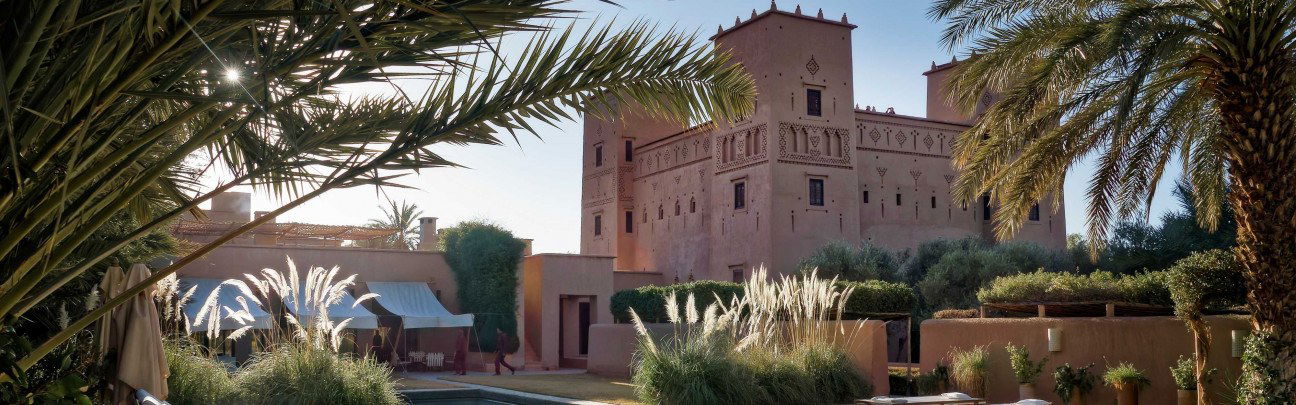
Dar Ahlam presents architecture as the principal experience: a genuine two-hundred-year-old kasbah whose rammed-earth walls, wrought-iron screens and winding staircases are functional systems rather than decorative gestures. The hotel reads like an argument in built form—pre-industrial climate control, filtered light and paced circulation produce an atmosphere that feels both timeless and intentional. The property’s small-scale, character-led presentation and its setting in the Skoura palm grove give it an intimate, quietly storied presence that emphasizes authenticity over resort theatrics.
Best For
This is a place for travelers who deliberately seek out place-specific hotels rather than city hubs or resort clusters. Its remoteness—about 40 km from Ouarzazate and roughly 250 km southeast of Marrakech, across the High Atlas—acts as a filter: guests arrive with purpose, often on multi-stop Moroccan itineraries that prioritize regionally rooted stays. With only a small number of suites and an emphasis on original architecture, Dar Ahlam suits couples and adults looking for thoughtful, design-forward seclusion and a setting that rewards slow exploration of the surrounding palm grove and pre‑Saharan landscape.
Stay Tips
Plan logistics carefully: the property is significantly off the main city circuits, a roughly four-and-a-half-hour drive from Marrakech that crosses the High Atlas before dropping into the pre‑Saharan plateau. Treat arrival as part of the experience and allow time for the journey; the distance is described as a deliberate filter for guests. Given the small-count nature of the hotel and its remote setting, confirm travel arrangements ahead of time and build in flexibility for the road crossing between mountain and plateau landscapes.
Venue details
Ambiance
Tranquil and spiritual with candlelit private dining spots, open fireplaces, and a home-like aura free of modern distractions like TVs and phones.
Tags
Vibe
Best For
Experience
Amenities
View
About the Stay
- Rooms
- 14
- Check-in
- 15:00
- Check-out
- 12:00
- Property Type
- Boutique hotel
- Property Style
- Kasbah Estate Blending Historic Moroccan Architecture with Modern Luxury.
- Design Style
- Modern Moroccan with Traditional Elements, Handicrafts, Antiques, and Seasonal Decor.
- Breakfast
- Included
- Airport Transfer
- Available
- Pool
- Yes
- Spa
- Yes
- Cancellation
- Strict
Know before you go
Know Before You Go
- Getting there
- Douar Oulad Cheik Ali, Koucheït 00000
Planning details
Location


Also consider
Where to look if this is not the right fit
If Ouarzazate convenience matters more than a retreat-style stay, start with Palais Hassoun. If the trip can shift toward the High Atlas and the brief is a luxury occasion with a mountain setting, compare availability at Kasbah Tamadot.
Hotel context
How it compares
Against Palais Hassoun, Dar Ahlam is the more occasion-led choice for travelers who want a retreat outside the busier center of Ouarzazate. Palais Hassoun is the easier cross-shop if the trip needs a simpler city base, while Dar Ahlam makes more sense when privacy and atmosphere are the reason for spending more.
Kasbah Tamadot is the stronger mountain-resort comparison: choose it when the High Atlas setting is the draw. Dar Ahlam is better aligned with an Ouarzazate or desert-route itinerary. The Oberoi Marrakech, Palais Namaskar, and Park Hyatt Marrakech suit travelers who want Marrakech access with a luxury-hotel frame; Dar Ahlam suits travelers willing to trade that access for a quieter stay near Ouarzazate.
For value, the deciding factor is time on property. If guests will spend most daylight hours touring, a Marrakech or city-adjacent option may be easier to justify. If the stay is built around pool, spa, privacy, and a celebration rhythm, Dar Ahlam has the clearer purpose.
Explore Ouarzazate
Around this place
Discover more on Pearl
Unlock the full Dar Ahlam guide in Pearl, including awards, comparisons, FAQs, planning details, and nearby places.
Compare Dar Ahlam
| Venue | Location | Awards |
|---|---|---|
| Dar Ahlam | Ouarzazate | 2026 Virtuoso Luxury Hotel Collection2026 Mr & Mrs Smith Luxury HotelsSmall Luxury Hotels Member 2025 |
| Palais Hassoun | Marrakech | No published awards |
| Kasbah Tamadot | Asni | 2026 Virtuoso Luxury Hotel Collection2026 La Liste Top Hotels2026 Michelin 3 KeysPreferred Hotels Member 20252025 Michelin 3 Keys2025 Conde Nast Hotels Gold List |
| The Oberoi Marrakech | Marrakech | 2026 Virtuoso Luxury Hotel Collection2026 La Liste Top Hotels2026 Michelin 2 KeysWorld Travel Awards 20252025 Michelin 2 Keys |
| Palais Namaskar | Marrakech | No published awards |
| Park Hyatt Marrakech | Marrakech | No published awards |







How Dar Ahlam Ouarzazate compares with similar nearby venues.
FAQ
Frequently Asked Questions
Which room category is best at Dar Ahlam?
Specific room categories are not described. Before booking, ask Dar Ahlam directly which category best fits your stay and confirm the current terms, inclusions, and availability.
How does Dar Ahlam compare to other luxury hotels?
Choose Dar Ahlam if Ouarzazate is the right base for your trip and its luxury credentials matter to you. For other Moroccan luxury options, compare it with Kasbah Tamadot, The Oberoi Marrakech, Palais Namaskar, Park Hyatt Marrakech, or Palais Hassoun based on location, availability, and current offering.
How is the location of Dar Ahlam?
Dar Ahlam is in Ouarzazate. A more specific public location description is not available, so plan using the city-level location and confirm directions directly with the venue before arrival.
What is check-in like at Dar Ahlam?
A specific check-in process is not described. Dar Ahlam does have luxury-travel recognition, including Small Luxury Hotels of the World membership and Virtuoso Luxury Hotel Partner status, but arrival details should be confirmed directly before travel.
How is the pool and spa at Dar Ahlam?
Pool or spa details are not described. If those amenities are important to the stay, ask Dar Ahlam directly for the current facility information before booking.
Do loyalty programs work at Dar Ahlam?
Dar Ahlam is a Small Luxury Hotels of the World member for 2025 and a Virtuoso Luxury Hotel Partner for 2026. Benefits can vary by booking channel and rate, so confirm any program perks directly before reserving.