

Hotel Palafitte
Lake Neuchâtel, Neuchâtel
Hotel in Neuchâtel, Switzerland
 Book with Pearl
The Read
Alpine Overwater Architecture
Why go
Book Hotel Palafitte when the lake setting is the main reason for the trip, especially for a quiet celebration or date weekend in Neuchâtel. It is easier to justify when seasonal rates stay close to city alternatives; if prices climb, compare Beau-Rivage Hotel for a more central Neuchâtel stay or Bern's larger luxury hotels for deeper service infrastructure.
About Hotel Palafitte
Is Hotel Palafitte worth booking in Neuchâtel? It is best judged as a premium hotel choice with recognized quality signals. Hotel Palafitte is in Neuchâtel, has a smart casual dress code, holds Michelin 1 Key recognition for 2025, and is a Preferred Hotels Member for 2025.
That makes the booking decision mainly about whether those quality signals match your trip. If you are choosing between Hotel Palafitte and another Swiss hotel, compare the current rate, your itinerary, and the official details shown by the hotel at the time of booking.
Book for the hotel profile, not assumptions
The profile is concise: Hotel Palafitte is a Neuchâtel hotel with Michelin 1 Key recognition and Preferred Hotels membership in 2025. Those are meaningful quality indicators, but they do not by themselves establish a particular room category, restaurant concept, wellness program, business setup, or transport convenience.
If you are comparing options, Beau-Rivage Hotel is another Neuchâtel name to consider. For a stay in Bern, Hotel Bellevue Palace Bern and Hotel Schweizerhof Bern are natural Swiss hotel comparisons. The right choice depends on your route, preferred booking channel, and what the hotel confirms for your dates.
Seasonal value matters more than the headline rate
Because prices, packages, and room-category details are not listed here, value should be checked against live rates rather than assumed from a generic description. Hotel Palafitte's Michelin 1 Key and Preferred Hotels Member status support a premium positioning, but they are not a reason to book without comparing current terms.
Use the official booking information to confirm what is included, what Preferred Hotels-related terms may be available, and whether the property's current offer suits your plans in Neuchâtel. If the rate feels high for the current inclusions, compare it with Beau-Rivage Hotel, or with Bern options such as Hotel Bellevue Palace Bern and Hotel Schweizerhof Bern if your itinerary can shift cities.
Quick read: book Hotel Palafitte for a premium stay in Neuchâtel with Michelin 1 Key and Preferred Hotels recognition; cross-shop if you need confirmed details on amenities, dining, room type, or exact value for your dates.
Inside Hotel Palafitte
Planning details
- Location
- Rte des Gouttes-d'Or 2, 2000 Neuchâtel
- Website
- palafitte.ch
- Phone
- +41 32 723 02 02
The take
The Take
The Vibe
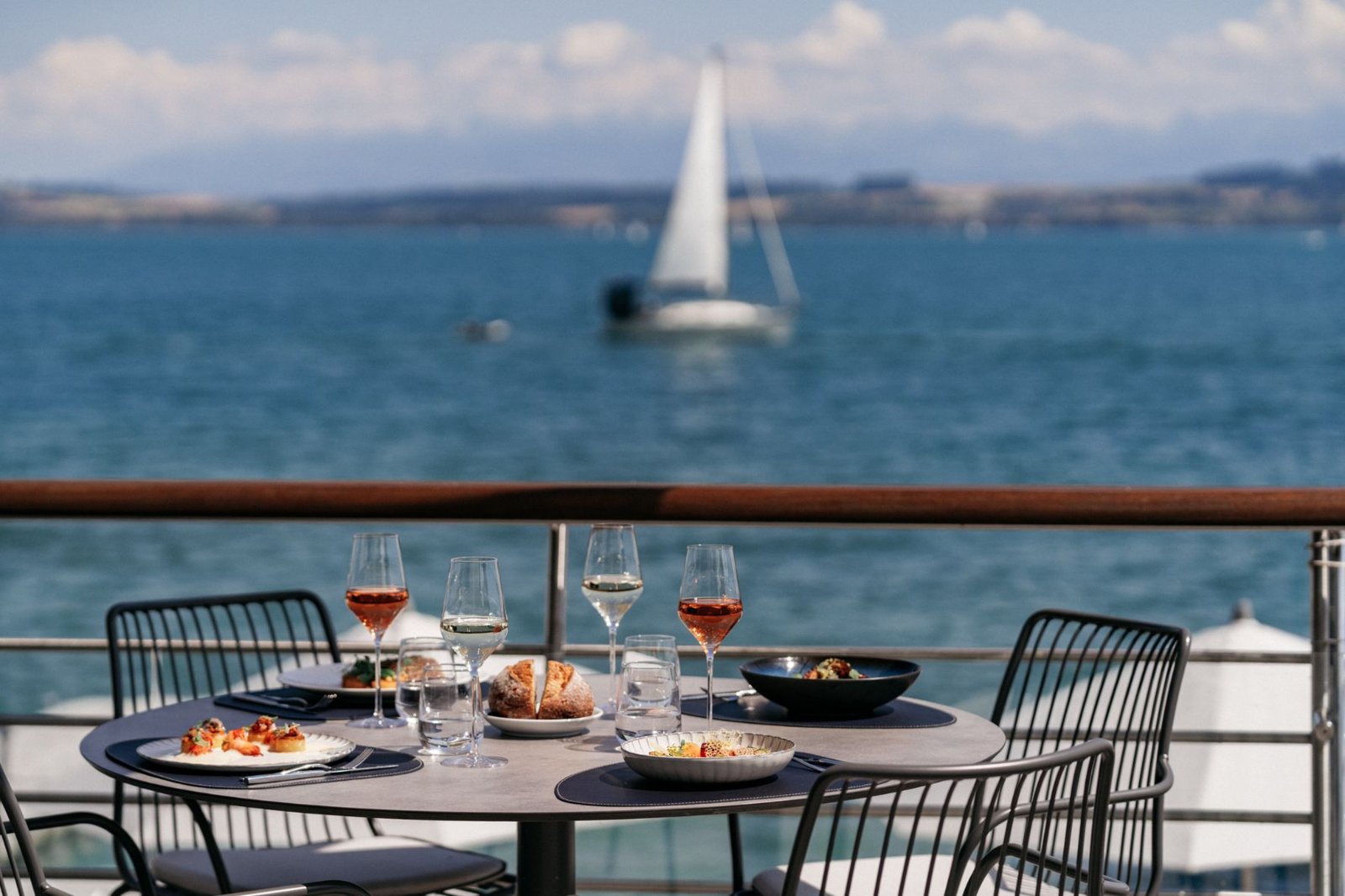
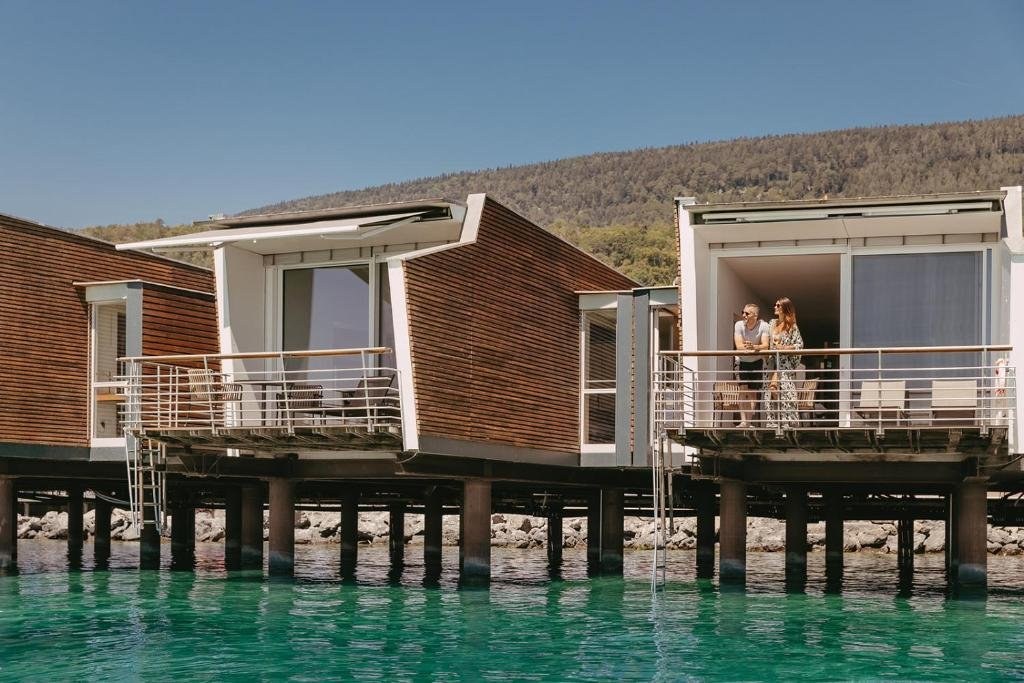
Hotel Palafitte presents a quietly confrontational kind of modern luxury: overwater rooms sit directly on Lake Neuchâtel under northern European light, with glass-floor panels and private balconies that drop to the water. The architecture foregrounds the surrounding landscape — the nearby Jura and the distant Swiss Alps — and the effect is more contemplative than tropical, trading spectacle for precise design choices. At forty rooms the property feels deliberately small and calibrated; its personality hinges on the taut relationship between built form and natural setting, producing a serene, design-forward retreat rather than a sprawling lakeside resort.
Best For
Palafitte is best for short, immersive escapes that center on place and intimacy: think romantic getaways, honeymoons and weekend escapes where the room itself is a principal attraction. The overwater configuration and private balconies that access the lake turn accommodation into an experience, so guests come to linger in one spot rather than to chase resort programming. Its small size and design-led focus make it suited to couples or travelers who prioritize architectural clarity, quiet views of the Jura and Alps, and the unusual pleasure of staying literally above the water.
Venue details
Ambiance
Cozy and enchanting waterfront atmosphere with spectacular lake and mountain views, modern sleek interiors, and a relaxed, intimate feel.
Tags
Vibe
Best For
Experience
Amenities
View
Accessibility
About the Stay
- Rooms
- 38
- Check-in
- 15:00
- Check-out
- 11:00
- Property Style
- Overwater Bungalows on Stilts with Modern Pavilions.
- Design Style
- Sleek Modern with Hardwood Floors and Contemporary Furnishings.
Know before you go
Know Before You Go
- Getting there
- Rte des Gouttes-d'Or 2, 2000 Neuchâtel
Planning details
Location
Recognition and awards
Also consider
Where to look if it is full or overpriced
Try Beau-Rivage Hotel first if the goal is to stay in Neuchâtel with easier city access. For a more formal business or capital-city trip, compare Hotel Bellevue Palace Bern or Hotel Schweizerhof Bern before paying a peak leisure rate here.
Hotel context
How Hotel Palafitte compares
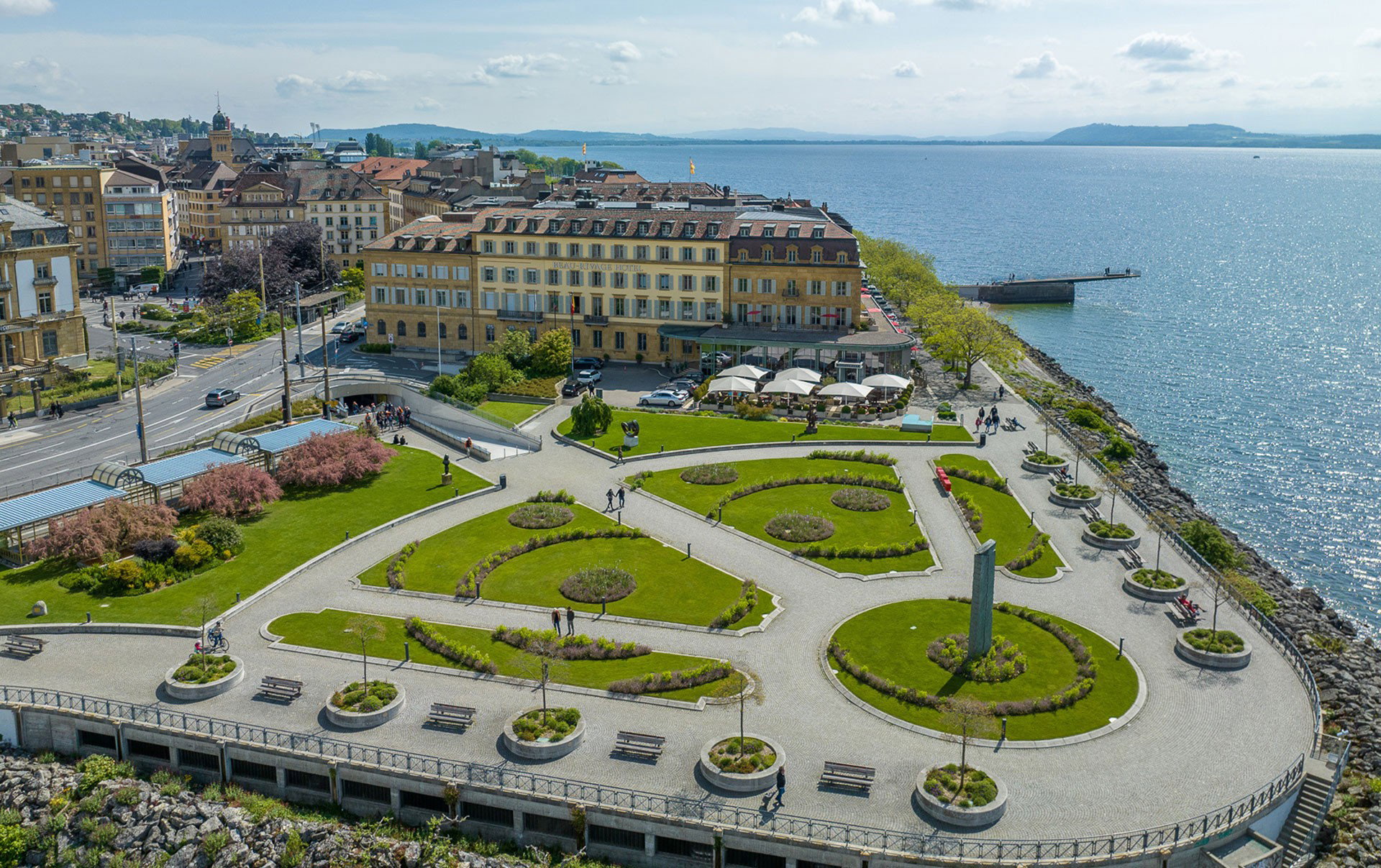
Choose Hotel Palafitte over Beau-Rivage Hotel when the stay is built around the lake itself rather than a central Neuchâtel base. Beau-Rivage Hotel is the more practical city cross-shop; Hotel Palafitte is the stronger special-occasion choice when privacy, water views, and a more contained atmosphere matter more than immediate urban convenience.
Against Hotel Schweizerhof Bern and Hotel Bellevue Palace Bern, the decision is about purpose. The Bern hotels make more sense for business travel, formal service expectations, and a capital-city schedule. Hotel Palafitte is the better fit when Neuchâtel is the destination and the room setting is doing a lot of the work.
La Maison d'à Côté and Hotel Spedition Thun are better cross-shops for travelers who care less about a lakeside luxury signal and more about a smaller-scale or different-town stay. If the Hotel Palafitte rate feels high for your dates, compare those options before committing; if this is an anniversary or low-key celebration, the lakefront proposition is harder to replace.
Explore Neuchâtel
Around this place
Discover more on Pearl
Unlock the full Hotel Palafitte guide in Pearl, including awards, comparisons, FAQs, planning details, and nearby places.
Compare Hotel Palafitte
| Venue | Location | Awards |
|---|---|---|
| Hotel Palafitte | Neuchâtel | Michelin 1 Key 20252025 Michelin 1 KeyPreferred Hotels Member 2025 |
| Beau-Rivage Hotel | Neuchâtel | 2026 Relais Chateaux Hotels2025 Relais Chateaux Award |
| Hotel Schweizerhof Bern | Bern | 2026 Virtuoso Luxury Hotel Collection2026 La Liste Top HotelsLeading Hotels of the World 2026Michelin 1 Key 20252025 Michelin 1 Key |
| Hotel Bellevue Palace Bern | Bern | 2026 Virtuoso Luxury Hotel CollectionLeading Hotels of the World 20262025 Michelin 2 Keys2024 Michelin 2 Keys |
| La Maison d'à Côté | Pontarlier | No published awards |
| Hotel Spedition Thun | Thun | No published awards |





How Hotel Palafitte Neuchâtel compares with similar nearby venues.
FAQ
Frequently Asked Questions
Which room category is best at Hotel Palafitte?
Choose only after checking Hotel Palafitte's official booking channels for the room details available on your dates. Compared with Beau-Rivage Hotel, this is a decision to make from current room information rather than assumptions.
How is the pool and spa at Hotel Palafitte?
Hotel Palafitte does have Michelin 1 Key recognition for 2025, but that should not be read as proof of any specific wellness feature. If spa or pool access is important, confirm directly with the hotel before comparing it with Hotel Bellevue Palace Bern or Hotel Schweizerhof Bern.
How is the location of Hotel Palafitte?
Hotel Palafitte is in Neuchâtel. For another Neuchâtel comparison, Beau-Rivage Hotel is worth checking against your itinerary.
How does Hotel Palafitte compare to other hotels?
Hotel Palafitte's confirmed points are its Neuchâtel location, smart casual dress code, Michelin 1 Key recognition for 2025, and Preferred Hotels Member status for 2025. Beau-Rivage Hotel is another Neuchâtel comparison, while Hotel Bellevue Palace Bern and Hotel Schweizerhof Bern are relevant if you are considering Bern. Hotel Spedition Thun is another Swiss hotel name to compare if your route includes Thun.
How is the dining at Hotel Palafitte?
The hotel's Michelin 1 Key and Preferred Hotels membership are hotel-level signals, not specific restaurant claims. If meals are central to the trip, check Hotel Palafitte's official channels and compare with other dining in Neuchâtel or with a hotel such as Beau-Rivage Hotel.
Is Hotel Palafitte good for business travel?
It may be suitable if its Neuchâtel location and current hotel offer match your schedule. For a comparison in Bern, check Hotel Schweizerhof Bern or Hotel Bellevue Palace Bern against your actual itinerary.
Do loyalty programs work at Hotel Palafitte?
Hotel Palafitte is a Preferred Hotels Member for 2025. That makes it worth checking current participation details through your booking channel before comparing rates with alternatives such as Beau-Rivage Hotel. Confirm any current terms through the official booking channel before reserving.