
Hotel in Napa, United States
Alila Napa Valley
550ptsVineyard-Edge Boutique Lodging



About Alila Napa Valley
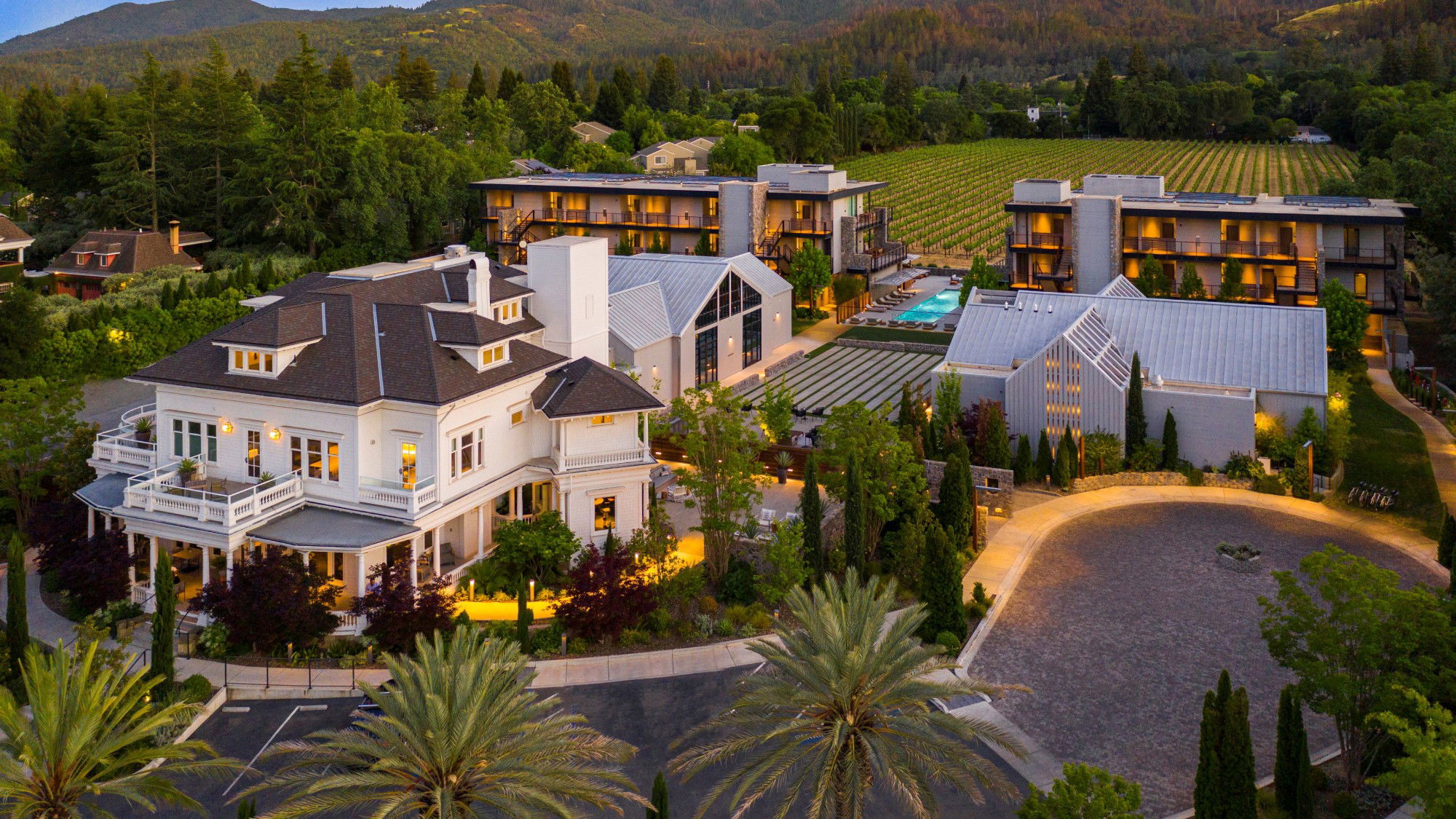
Alila Napa Valley occupies a farmhouse-style property at 1915 Main Street in St. Helena, steps from downtown and connected by footbridge to Beringer Vineyards. Rated among the top three resorts in Northern California by Condé Nast Traveler and carrying a 2026 Star Wine List award, the hotel pairs Yabu Pushelberg-designed rooms with Violetto's Italian-French dining programme and a spa rooted in Napa's botanical heritage.
Vineyards at the Doorstep, Downtown Within Footsteps
St. Helena sits near the centre of the Napa Valley appellation, and the address matters. Properties at the valley's southern end trade proximity to the city of Napa for broader acreage; those further north, near Calistoga, gain drama but lose walkability. Alila Napa Valley's position on Main Street in St. Helena threads the needle: a footbridge connects the property directly to Beringer Vineyards, one of the valley's oldest continuously operating estates, while The Model Bakery, Gott's Roadside, and the tasting rooms lining the main drag are within a short walk. For travellers who want wine country immersion without relying on a car for every movement, this location carries real practical weight.
The hotel operates under Hyatt's Alila brand, which positions its properties between large resort complexes and boutique independents. Condé Nast Traveler has ranked Alila Napa Valley among the leading three resorts in Northern California, a signal that places it in a competitive peer set that includes Auberge du Soleil, Meadowood Napa Valley, and Bardessono Hotel and Spa. Google reviewers give it 4.5 from 476 ratings, which is consistent with that tier but suggests the property hasn't yet pulled away from the field on guest satisfaction scores.
The Rooms: Scale and Detail
Napa luxury accommodation has largely moved away from the cottagey wine-country aesthetic that defined the valley's hospitality in the 1990s and early 2000s. Alila Napa Valley reflects that shift. All rooms are designed by Yabu Pushelberg, the Toronto and New York-based studio known for applying rigorous material discipline to hotel interiors, and carry a minimum footprint of approximately 500 square feet. Floor-to-ceiling windows are standard across categories. Custom Italian furnishings define the visual register, and deep soaking tubs alongside rain showers appear in every bathroom, a specification that has become table stakes at this price tier but is executed here with enough material quality to register as intentional rather than contractual.
The higher room categories face the vineyards and the historic Beringer estate, with wraparound balconies and outdoor soaking tubs extending the usable space. Most rooms include a private patio with a gas-lit fire pit, a feature that distinguishes Alila Napa Valley from urban luxury competitors such as Andaz Napa, by Hyatt where outdoor private space is limited. For comparison, Milliken Creek Inn and North Block both offer more intimate scales, while Stanly Ranch, Auberge Resorts Collection and Rancho Caymus Inn operate on different acreage configurations that suit different travel profiles. Alila's adults-only policy creates a consistent guest composition that many Napa travellers actively seek.
Violetto and the Italian-French Frame for Napa Cuisine
The valley's culinary identity has always carried European influence. Italian and French immigrants shaped Napa's early viticulture in the nineteenth century, and that lineage runs through the region's cooking as much as its winemaking. Violetto, Alila Napa Valley's recently opened flagship restaurant, takes that history as its explicit programme. The kitchen draws on the Italian-French culinary tradition that shaped the valley's agricultural and wine culture, using local farms and the hotel's own kitchen garden as primary sourcing points.
Format gives diners genuine flexibility. An à la carte option sits alongside a four-course prix fixe and a seven-course tasting menu, a structure that lets the restaurant serve both casual drop-ins and guests committed to a full evening. That range is harder to execute well than it sounds: kitchens organised around tasting menus often produce flat à la carte experiences, and vice versa. The Star Wine List recognition the property received in 2026 signals that the beverage programme supporting Violetto is taken seriously, and in Napa, where the wine list is often the most scrutinised element of any restaurant offering, that credential carries operational implications about depth of selection and staff training.
Hotel's previous restaurant, Acacia House, had built a reputation for farm-to-table cooking with specific dishes that earned editorial attention, including preparations involving labneh, salmon roe, and Iberico pork. Violetto represents a deliberate repositioning of that culinary identity around a more historically grounded Italian-French frame, rather than the generic farm-to-table vocabulary that has become ubiquitous in California wine country dining. For guests comparing the dining offer here against properties like SingleThread Farm Inn in Healdsburg, the format and sourcing philosophy are adjacent, though SingleThread operates with a more tightly controlled inn-and-restaurant integration.
Spa Alila and the Botanical Logic
Spa programming in Napa has increasingly drawn on the valley's agricultural identity rather than defaulting to generic luxury spa vocabulary. Spa Alila follows that pattern, anchoring its treatments in botanicals and essential oils sourced from or associated with Napa's culinary heritage: cinnamon, bergamot, basil, and rosemary appear across massages, facials, and body treatments. The approach connects the spa to the hotel's broader culinary and agricultural narrative rather than treating wellness as a separate amenity. Outdoor pool access, fitness classes, and gym facilities round out the physical amenity set. For guests whose primary reason for visiting Napa is restorative rather than purely gastronomic, the spa offer is substantive enough to anchor a stay rather than merely supplement one. Properties like Canyon Ranch Tucson in Tucson position wellness as the primary proposition; Alila Napa Valley keeps it as a strong secondary programme behind the wine and dining core.
Experiences and the Question of Access
One of the more persistent challenges in Napa travel is that the valley's most interesting producers, artisans, and guides are often inaccessible to walk-in visitors. Alila addresses this through its Alila Experiences and Alila Journeys programmes, which include garden mixology courses, al fresco painting classes, perfume workshops, sound baths, and curated access to local wineries. The footbridge connection to Beringer Vineyards provides an immediate, low-friction wine engagement that doesn't require advance logistics. For guests who want to extend further into the valley, the hotel's curated access to estates like Dana Estates, Cakebread Cellars, and Stags' Leap Winery is worth factoring into planning. Walk-ins at Beringer are accepted, but weekend and holiday visits benefit from advance reservations. This model of hotel-mediated wine access has become standard at properties competing in this tier; what distinguishes execution is the specificity and exclusivity of what the concierge can actually deliver.
For travellers calibrating Alila Napa Valley against properties in different geographies, the closest conceptual peers in terms of hotel-as-wine-country-anchor format include Post Ranch Inn in Big Sur for the Northern California luxury lodge category, and Troutbeck in Amenia for the agricultural-estate hotel format on the East Coast. Those looking at internationally scaled luxury properties in the Aman or Raffles tier should weigh Aman New York in New York City or Raffles Boston in Boston as comparison points for what that investment level delivers in an urban context versus a wine country one.
Planning Your Stay
The hotel sits at 1915 Main Street, St. Helena, CA 94574, within walking distance of downtown St. Helena's boutiques, tasting rooms, and restaurants. It operates as an adults-only property, and amenities include an outdoor pool, spa, gym, fitness classes, bar, and meeting rooms, making it suitable for both leisure stays and smaller corporate retreats. Booking is managed through Hyatt's World of Hyatt programme, which means points redemptions and elite status benefits apply. Napa's peak season runs from late summer through harvest in October, when both pricing and demand increase substantially; spring visits offer more availability and cooler vineyard conditions. Guests arriving by car from San Francisco should plan for approximately 90 minutes depending on Bay Bridge traffic. For further context on dining and hotels across the valley, see our full Napa restaurants guide.
Frequently Asked Questions
Which room category should I book at Alila Napa Valley?
The suite categories facing the vineyards and Beringer estate carry the clearest value argument: wraparound balconies, outdoor soaking tubs, and direct vineyard sight lines distinguish them from the base rooms in ways that are specific to this property rather than generic upgrades. The gas-lit fire pit on private patios is available across most categories, so that feature alone shouldn't drive the upgrade decision. If vineyard views and outdoor bathing are priorities, the higher-facing suites deliver on both. The Condé Nast Traveler top-three-in-Northern-California ranking and the Yabu Pushelberg design programme apply across all room types, so the entry-level rooms are not significantly compromised on design quality.
What is Alila Napa Valley leading at?
Property's clearest strengths are location, design quality, and the combined wine-and-dining programme. Sitting steps from downtown St. Helena while maintaining a direct footbridge connection to Beringer positions the hotel for both urban engagement and vineyard immersion simultaneously, a combination that most Napa properties trade off against each other. The 2026 Star Wine List recognition and Violetto's Italian-French culinary framing give the food and beverage offer more editorial coherence than the generic farm-to-table positioning that defines many valley competitors. For guests who want a substantive spa alongside that, Spa Alila covers that ground without turning the property into a wellness retreat.
How hard is it to get into Alila Napa Valley?
As a Hyatt Alila property, rooms are bookable through the World of Hyatt platform, which provides more transparent availability than independent boutique properties. The Condé Nast Traveler recognition and the adults-only format do create sustained demand, and Napa's harvest season (September through October) and summer weekends compress availability significantly. Booking two to three months ahead for peak-season weekends is advisable. Mid-week stays in spring or early winter tend to offer both better availability and lower pricing. Walk-in access is not a realistic option for accommodation, though Beringer's adjacent tasting rooms do accept walk-ins for guests already staying at the property.
Recognized By


Related editorial
- Best Fine Dining Restaurants in ParisFrom three-Michelin-star icons to the next generation of Parisian chefs pushing boundaries, these are the restaurants that define fine dining in the world's culinary capital.
- Best Luxury Hotels in RomeFrom rooftop terraces overlooking ancient ruins to Michelin-starred hotel dining, these are the luxury hotels that make Rome unforgettable.
- Best Cocktail Bars in KyotoFrom sleek lounges to hidden speakeasies, Kyoto's cocktail scene blends Japanese precision with global influence in ways you won't find anywhere else.
Save or rate Alila Napa Valley on Pearl
Keep this venue in your Pearl passport, rate it after you visit, and track it alongside every other place you collect.