


Euphoria Retreat
Mystras
Hotel in Mystras, Greece
 Book with Pearl
The Read
Byzantine-Framed Wellness
Why go
Euphoria Retreat is the Mystras pick for a wellness-led stay rather than a conventional luxury hotel stop. Book it if spa time, quiet, and a slower Peloponnese base matter; choose a simpler hotel elsewhere if the trip is mainly business, beach, or dining-driven.
About Euphoria Retreat
Euphoria Retreat is a luxury hotel in Mystras with recognition from the MICHELIN Guide Hotels selection, which awarded it 1 Key in 2025. It is also listed as a Small Luxury Hotels of the World member for 2025 and a Virtuoso Luxury Hotel Partner for 2026.
Euphoria Retreat is a recognized luxury stay in Mystras, and any specifics about services, amenities, rates, or schedules should be confirmed directly before booking. That distinction matters for travelers who are comparing hotels on concrete details, because recognition and affiliation can help establish confidence, but they are not the same thing as a current inventory of what is included, available, or bookable for a particular stay.
What to confirm before booking
Room-category advice should depend on how you plan to use the stay. If the room itself matters to the trip, confirm the current categories and inclusions with the hotel before committing. Ask the property to clarify what each booked category includes at the time of travel, especially if view, space, bedding setup, or any other room-specific factor would materially affect the trip.
The grounded trust signals are the MICHELIN Guide Hotels 1 Key recognition, Small Luxury Hotels of the World membership, and Virtuoso Luxury Hotel Partner status. Those credentials place Euphoria Retreat in a luxury-hotel context, but they do not by themselves verify specific dining, wellness, pool, room, or service details. Use them as a starting point for confidence, then pair that confidence with direct confirmation from the hotel or booking channel so expectations match the actual reservation.
Planning details
- Location
- 399F+6G, Mystras 231 00
- Website
- euphoriaretreat.com
- Phone
- +30 2731 306111
The take
The Take
The Vibe
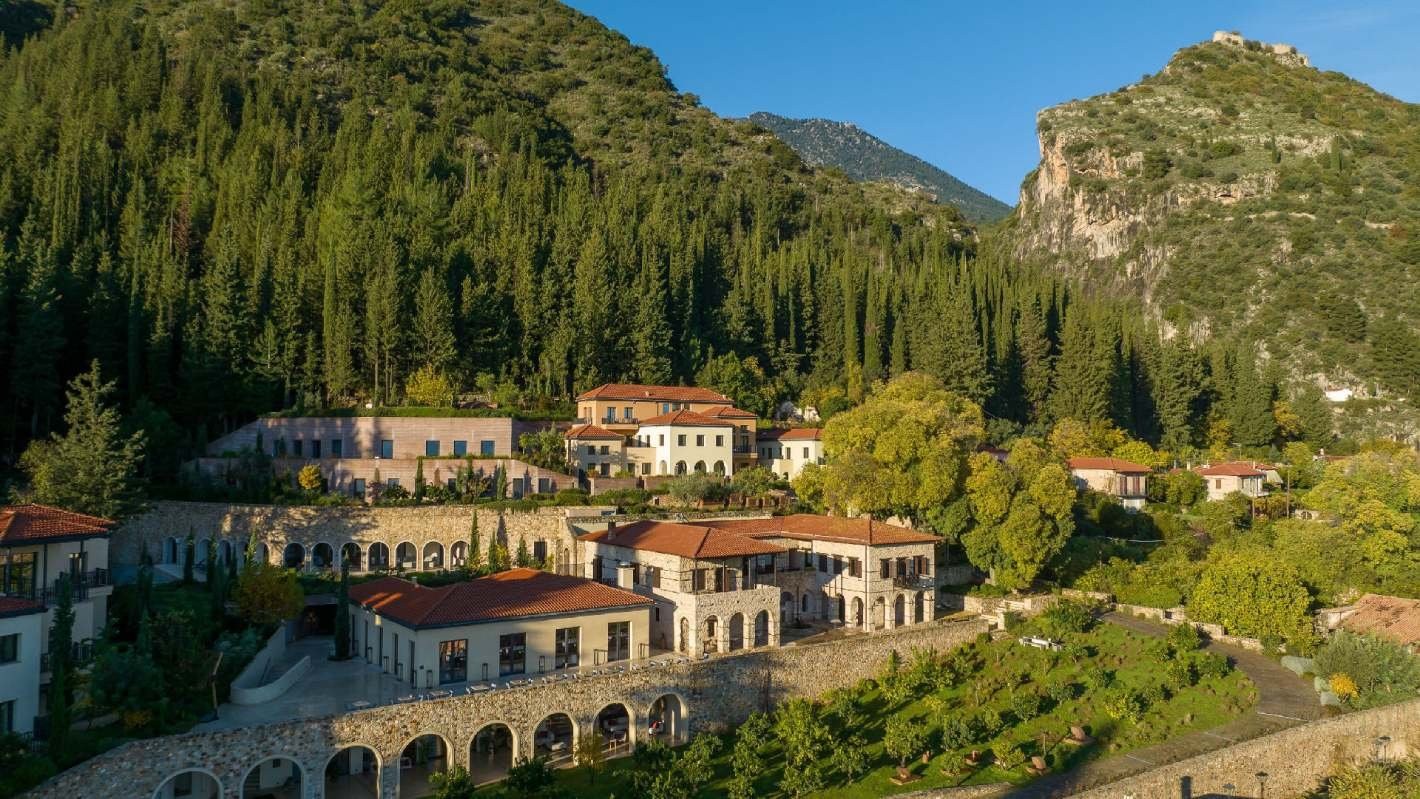
Euphoria Retreat feels measured and quietly monumental, marrying historic reference with modern therapeutic intent. The architecture intentionally echoes ancient Greek temple forms—terracotta rooflines, hewn stone volumes and considered spatial ratios—so the buildings themselves encourage a slower pace. Set on 90 acres of private pine forest below the Byzantine ruins of Mystras, the site uses the canopy as a genuine acoustic and psychological buffer. The result is a serene, inward-facing environment where history and landscape are part of the restorative program, attracting guests who value contemplative design and a composed, low-key atmosphere.
Best For
This is a destination for travelers focused on integrative wellness and restorative solitude. The property is explicitly positioned as a purpose-built wellness retreat, making it ideal for those booking multi-day health programs, intensive spa regimens or simply seeking extended downtime in a quiet, forested setting. Its proximity to the historic site of Mystras also appeals to visitors who want cultural context alongside their wellbeing work—couples planning intimate getaways or honeymooners who prefer a secluded, restorative base will find the scale and privacy of the estate especially fitting.
Stay Tips
Plan stays around the retreat’s integrative program rather than a single-night stopover: the property is described as a purpose-built wellness destination, so allow several days to experience its therapeutic offerings and to benefit from the deliberate architecture and landscape. Reserve any structured programs or treatments in advance when possible, and leave gaps in your schedule for unstructured solitude—walking the pine estate and time for quiet are framed as central to the experience. Factor in a visit to nearby Mystras if you want to combine cultural sightseeing with your wellness itinerary.
Venue details
Ambiance
Serene, contemplative, and deeply calming, with a minimalist Byzantine-inspired atmosphere that blends monastic tranquility, natural light, and restorative spa spaces.
Tags
Vibe
Best For
Experience
Amenities
View
Accessibility
About the Stay
- Rooms
- 45
- Check-in
- 15:00
- Check-out
- 12:00
- Property Style
- Luxury Wellness Retreat with Holistic and Medical Spa Positioning.
- Design Style
- Minimalist Byzantine Inspired Design with Domes, Arches, Monastic References, and Contemporary Luxury.
Know before you go
Know Before You Go
- Getting there
- 399F+6G, Mystras 231 00
Planning details
Location
Recognition and awards


Also consider
Also Consider
- Filoxenia Kalamata, Notable alternative
- La Villa de Madeleine, Notable alternative
- 100 Rizes Seaside Resort, Notable alternative
- Mandarin Oriental, Costa Navarino, Notable alternative
- W Costa Navarino, Notable alternative
Hotel context
How it compares in the Peloponnese set
Choose Euphoria Retreat if the priority is a wellness-focused stay near Mystras with a calmer atmosphere and stronger retreat logic. Filoxenia Kalamata is a more practical coastal-city alternative, better for travellers who want Kalamata access and less of a destination-spa feel.
La Villa de Madeleine and 100 Rizes Seaside Resort make more sense for guests who want a smaller or seaside stay. Euphoria Retreat is the stronger choice when the hotel itself is the point of the trip; 100 Rizes is easier to justify when the setting and sea matter more than spa programming.
For a bigger luxury-resort mood, compare it with Mandarin Oriental, Costa Navarino and W Costa Navarino. Those are better for travellers wanting a broader resort ecosystem; Euphoria Retreat is better for a quieter, wellness-first stay where a suite upgrade can be part of the experience rather than a vanity spend.
Explore Mystras
Around this place
Discover more on Pearl
Unlock the full Euphoria Retreat guide in Pearl, including awards, comparisons, FAQs, planning details, and nearby places.
Compare Euphoria Retreat
| Venue | Location | Awards |
|---|---|---|
| Euphoria Retreat | Mystras | 2026 Virtuoso Luxury Hotel CollectionMichelin 1 Key 20252025 Michelin 1 KeySmall Luxury Hotels Member 2025 |
| Filoxenia Kalamata | Peloponnese | No published awards |
| La Villa de Madeleine | Arcadia | No published awards |
| 100 Rizes Seaside Resort | Gytheio | Small Luxury Hotels Member 2025 |
| Mandarin Oriental, Costa Navarino | Pylos | 2026 Virtuoso Luxury Hotel CollectionStar Wine Lists 20262026 Forbes 5-Star2026 La Liste Top Hotels2025 Michelin Selected Hotels2025 Forbes 5-Star |
| W Costa Navarino | Pylos | No published awards |




How Euphoria Retreat Mystras compares with similar nearby venues.
FAQ
Frequently Asked Questions
How is the dining at Euphoria Retreat?
The confirmed trust signals are the MICHELIN Guide Hotels 1 Key award and Small Luxury Hotels of the World membership, which support its luxury-hotel profile in Mystras.
Do loyalty programs work at Euphoria Retreat?
The affiliations are Small Luxury Hotels of the World membership and Virtuoso Luxury Hotel Partner status. Any points, benefits, or booking perks should be confirmed through the relevant program or booking channel before reserving.
Which room category is best at Euphoria Retreat?
Choose based on the current room descriptions provided by the hotel and confirm any important details before booking.
What is check-in like at Euphoria Retreat?
What facilities are confirmed at Euphoria Retreat?
How is the location of Euphoria Retreat?
Euphoria Retreat is in Mystras. If you are comparing different regional bases, Filoxenia Kalamata and Mandarin Oriental, Costa Navarino are separate options outside Mystras with different travel contexts.