
Hotel in Madrid, Spain
The Principal Madrid
1,050ptsGran Vía Rooftop Authority


About The Principal Madrid
A Spanish Renaissance building from 1917 on Madrid's Gran Vía, The Principal holds a Michelin Key (2024) and 76 rooms dressed in slate, camel, and chocolate brown by Barcelona design firm Luzio. The rooftop bar draws a local after-work crowd, and the address puts the Prado, Malasaña, and Chueca within easy walking distance. Rates from around $342 per night.
Gran Vía's Boutique Counter-Argument
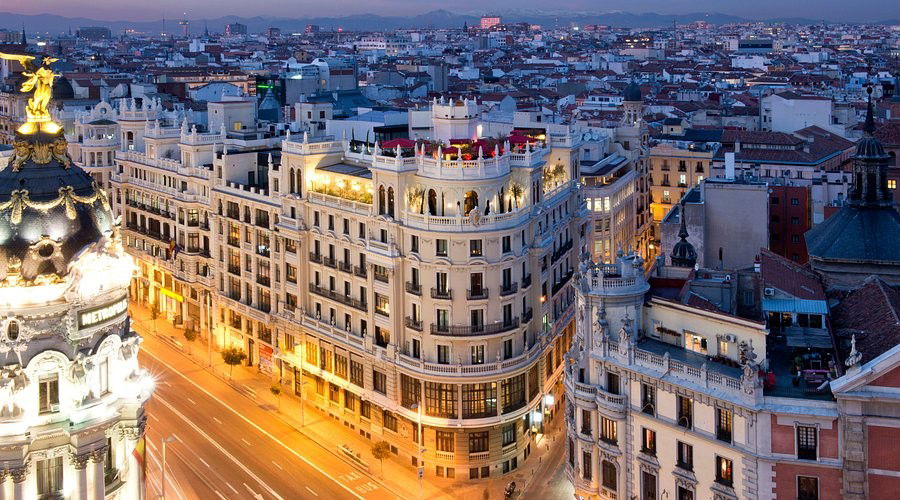
Madrid's five-star hotel market divides sharply between two modes: the palatial grand hotel, represented by names like the Mandarin Oriental Ritz, Madrid and the Four Seasons Hotel Madrid, where scale and ceremony are the product, and the design-led boutique, where editorial curation does the work that square footage cannot. The Principal Madrid belongs firmly to the second category. Its 76 rooms occupy a Spanish Renaissance building completed in 1917, positioned at the corner of Calle del Marqués de Valdeiglesias and Gran Vía, one of central Madrid's most charged addresses. The building has survived long enough to accumulate genuine architectural character: soaring ceilings, arched doorways, iron railings, and decorative stonework that no contemporary fit-out could convincingly replicate.
That heritage framework matters in a city where the competition for the design-literate traveller has intensified. Properties like the Rosewood Villa Magna and the Gran Meliá Palacio de los Duques work at larger scale with international brand infrastructure behind them. The Principal competes on a different axis: intimacy, neighbourhood integration, and the considered hand of a local operator rather than a global group.
The Building as Design Argument
The interior conversion was handled by Pilar Garcia-Nieto working alongside Barcelona-based design firm Luzio, and the result sits in a register that some guests find surprising for a hotel in the Spanish capital. The colour palette of slate grey, camel, white, and chocolate brown reads cooler and more restrained than the warm terracottas typical of Madrid hospitality. A recurring motif throughout the public spaces is the BKF butterfly chair, placed in deliberate counterpoint to the original gilded oil portrait frames on the walls. The juxtaposition signals something about the hotel's editorial sensibility: it respects the bones of the 1917 building without treating them as a period-room museum.
This approach aligns with a broader pattern in European boutique hospitality, where properties in landmark buildings increasingly treat heritage details as texture rather than theme. For comparison, properties like Gran Hotel Inglés and CoolRooms Palacio de Atocha apply similar logic to their own historic Madrid addresses. What distinguishes The Principal is the consistency of the neutral palette, which disciplines the space rather than allowing it to drift into the eclecticism that can undermine boutique conversions.
Rooms and What They Offer
The 76 guest rooms are, by the hotel's own framing, less theatrically compelling than the lobby. That is an honest assessment. Standard amenities include walk-in showers, Bluetooth sound systems, Wi-Fi, and complimentary tea. The more meaningful differentiator in room selection is aspect: Deluxe rooms face the boulevard, placing Gran Vía's theatre marquees, pedestrian flow, and architectural parade directly in view. Suites extend the offer with reading nooks and private butlers, which positions them in the same tier of personal service as the suite programmes at Hotel Unico Madrid.
For most guests, the room is a base rather than a destination. Madrid's social grammar encourages this: the city's residential rhythm runs late, its dining and bar culture extends well past midnight, and the surrounding streets offer more stimulation than any hotel corridor. The Principal's location accelerates that dynamic. The Prado is reachable on foot. Malasaña and Chueca, two of Madrid's most characterful neighbourhoods for independent restaurants and bars, sit immediately north. For a deeper map of the city's dining options, our full Madrid restaurants guide covers the breadth of the scene.
The Rooftop and the Question of Energy
The hotel's most discussed asset is the rooftop terrace bar, planted with olive trees and positioned to frame Madrid's skyline at dusk. What makes it worth noting beyond the view is its social composition: the rooftop draws local madrileños who treat it as an after-work destination, not merely hotel guests circling a pool. That mix changes the atmosphere materially. Hotel rooftops in Madrid that attract only guests tend to feel like waiting rooms with cocktails. One populated by residents of the neighbourhood operates differently, carrying the rhythms of the city rather than the particular quietude of transient occupancy.
This quality connects directly to the philosophy of the hotel's operator, Spanish hotelier Pau Guardans, whose stated intention across his properties is that hotels should function as engines of local communities. The Principal represents his third project in that lineage, following the Único in Madrid and the 1920s-style Grand Hotel Central in Barcelona. The rooftop is the most visible expression of that operating principle in action: a space that belongs to the neighbourhood as much as it does to the room booking.
Service Architecture and the Front-of-House Proposition
In a property of 76 rooms, the service dynamic necessarily operates at closer range than in a 300-key grand hotel. The team-to-guest ratio in a boutique of this size allows for a degree of continuity between the bar, the rooms, and the restaurant floor that larger operations struggle to replicate. A guest arriving for an early check-in, collecting a dinner recommendation at the bar that evening, and settling a late checkout the following morning encounters something closer to a consistent cast than the shift-rotation anonymity of a large hotel machine.
The 2024 Michelin Key award is the clearest external validation of this operating standard. Michelin Keys, introduced in 2024 as a dedicated hotel recognition programme, assess overall hospitality quality rather than food alone, meaning the award reflects the coherence of the full guest experience: the welcome, the room, the food and beverage operation, and the service across all touchpoints. For The Principal, the Key places it in a credentialed tier within Madrid's boutique hotel segment, ahead of properties that have not yet achieved external hospitality recognition.
Travellers comparing the property against peers in the broader Spanish hotel market will find different propositions at properties like Hotel Rector or, further afield, at destination-led addresses such as Akelarre in San Sebastián or Abadía Retuerta LeDomaine in Teruel. Those properties prioritise landscape immersion or gastronomy as the primary draw. The Principal's argument is urban: it sells proximity, neighbourhood character, and the specific texture of a Madrid street corner that has been inhabited continuously since 1917.
For guests extending their Spain itinerary, the EP Club catalogue covers a range of reference points: Cap Rocat in Cala Blava, Hotel Can Cera in Palma, La Residencia, A Belmond Hotel, Mallorca, Terra Dominicata in Escaladei, Atrio Restaurante Hotel in Cáceres, Pepe Vieira Restaurant & Hotel in Poio, Torre del Marqués Hotel Spa & Winery in Sardoncillo, Mas de Torrent Hotel & Spa in Torrent, Marbella Club Hotel in Marbella, Casa Beatnik Hotel in A Coruña, and the Mandarin Oriental Barcelona. For international reference, the same design-led boutique logic appears in properties like The Fifth Avenue Hotel in New York City, Aman New York, and Aman Venice.
Planning a Stay
Rates start at approximately $342 per night, positioning The Principal in the upper-mid tier of Madrid's boutique market rather than at the ceiling occupied by the grand palace hotels. The address on Calle del Marqués de Valdeiglesias places guests one block from Gran Vía metro station, which connects directly to Atocha and most major interchange points. The hotel's 76-room scale means availability windows narrow during Madrid's high-demand periods, particularly around major trade events, the autumn art and culture season, and Semana Santa. Booking three to four weeks ahead is advisable for prime Gran Vía room categories during those windows. The hotel holds a Google rating of 4.5 from 1,747 reviews, a volume of responses that reflects genuine throughput and consistent guest satisfaction rather than a curated handful of early-adopter opinions.
Frequently Asked Questions
- Is The Principal Madrid more low-key or high-energy?
- The energy level depends on which part of the hotel you're in. The rooms and lobby operate at a calm, design-led register, cooler in palette and quieter in atmosphere than the animated streets below. The rooftop bar is a different proposition: it draws local residents alongside guests, particularly at dusk and into early evening, which gives it the social density of a neighbourhood bar rather than a hotel amenity. At around $342 per night and with a 2024 Michelin Key recognising the overall hospitality standard, the hotel pitches itself as a considered urban base rather than a high-energy entertainment complex. Gran Vía itself supplies the energy; the hotel provides a composed counterpoint to it.
- What room category do guests prefer at The Principal Madrid?
- Based on the hotel's own positioning and the Michelin Key recognition in 2024, the Deluxe rooms with boulevard views attract the most specific demand. Facing Gran Vía, they place the street's architectural and social theatre directly in frame, which is a meaningful differentiator in a city where urban atmosphere is part of what guests are paying for. Suites add reading nooks and private butlers for those whose travel style requires it. Given the relatively compact total of 76 rooms and rates from approximately $342, most guests appear to treat the room as a comfortable base rather than a primary experience in itself, with the rooftop and neighbourhood carrying more weight in their overall impression of the stay.
Recognized By


Related editorial
- Best Fine Dining Restaurants in ParisFrom three-Michelin-star icons to the next generation of Parisian chefs pushing boundaries, these are the restaurants that define fine dining in the world's culinary capital.
- Best Luxury Hotels in RomeFrom rooftop terraces overlooking ancient ruins to Michelin-starred hotel dining, these are the luxury hotels that make Rome unforgettable.
- Best Cocktail Bars in KyotoFrom sleek lounges to hidden speakeasies, Kyoto's cocktail scene blends Japanese precision with global influence in ways you won't find anywhere else.
Save or rate The Principal Madrid on Pearl
Keep this venue in your Pearl passport, rate it after you visit, and track it alongside every other place you collect.