
Hotel in Lezzeno, Italy
Filario Hotel \u0026 Residences
150ptsEastern Shore Seclusion

About Filario Hotel \u0026 Residences
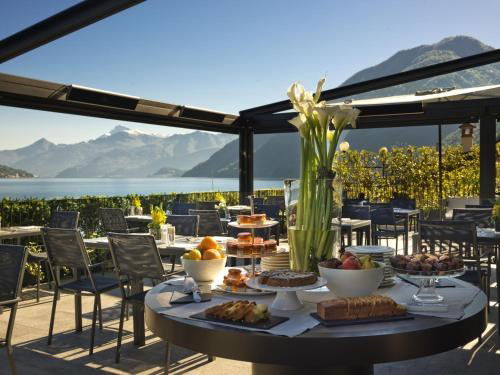
Filario Hotel & Residences sits on the quieter eastern shore of Lake Como in Lezzeno, holding a Michelin Selected distinction for 2025. The property occupies a position between the lake's grand Belle Époque institutions and the newer wave of design-led boutique hotels, offering direct water access and residential-scale accommodations away from the more crowded western villages.
The Quieter Shore: Lezzeno and the Eastern Rim of Lake Como
Most visitors approach Lake Como from the west or the north, clustering around Bellagio, Varenna, and the grand hotel facades of Tremezzo and Cernobbio. The eastern shore, where the Strada Provinciale Lariana hugs the cliff face between Como town and the tip of the lake's central promontory, draws a smaller, more deliberate crowd. Lezzeno sits along this corridor, a village with little tourist infrastructure by design rather than by accident. Properties here compete on seclusion and direct lake access, not on proximity to ferry connections or aperitivo strips. Il Sereno in Torno operates on comparable logic a few kilometres to the south, targeting guests who prefer the water itself over the social circuit around it.
Filario Hotel & Residences at Strada Provinciale Lariana 583 occupies this quieter register. Its Michelin Selected distinction in the 2025 guide places it within a curated tier of Italian properties that meet defined criteria for hospitality quality, character, and comfort, without the expectation of a restaurant operation driving the recognition. That distinction matters here because Como's hotel market includes everything from converted Liberty-era grand hotels to agriturismo conversions, and the Michelin signal functions as a quality floor rather than a ceiling.
Architecture and the Logic of Water-Level Design
Lake Como's most resonant properties are defined less by their room counts than by their relationship to the water. The Belle Époque tradition on the western shore produced lakefront palaces designed to be seen from the water: wide terraces, colonnaded facades, boat landings scaled to private steam launches. That visual grammar remains dominant at properties like Grand Hotel Tremezzo in Tremezzo, where the architecture is itself part of the spectacle.
The more recent design-led wave has worked differently. Properties like Filario orient their spatial logic inward and downward, toward the water's edge rather than across the road from it. On the eastern shore, where the cliff drops more sharply and road widths limit the footprint available, the architectural response tends to prioritize vertical layering: reception and public spaces above, accommodations stepping down toward the waterline, with pool terraces and dock access at the lowest level. This arrangement gives lake-facing rooms an unobstructed sightline across to the western headlands without the noise exposure that a main-road ground-floor position would carry.
The residential component built into the property's name is architecturally relevant. The addition of residence units alongside hotel rooms is a format that has spread through the Italian Lakes and Tuscany as developers seek to spread capital costs while maintaining hospitality operations. At Castello di Reschio in Lisciano Niccone, a similar hybrid structure underpins an estate that blends private ownership with hotel amenity access. The model allows a property to hold design standards associated with a boutique hotel while funding longer-term structural investment through private residence sales or rentals.
Where Filario Sits in the Como Peer Set
Lake Como's upper accommodation tier has widened considerably over the past decade. Passalacqua in Moltrasio, which holds a strong position among small luxury hotels on the lake, represents one end of the market: a historic villa conversion with a tightly controlled room count and a reputation built around personal service at scale. The grand hotel category anchors the other end, with properties exceeding a hundred rooms and facilities that include multiple restaurants, spas, and conference infrastructure.
Filario occupies a middle position, offering hotel amenities alongside residential accommodation in a setting that emphasizes quiet over programming. For travellers who compare the Como offer to properties like Aman Venice or Four Seasons Hotel Firenze in Florence, the relevant difference is format rather than quality tier. Those city properties deliver luxury through institution-scale operations in historic palazzo settings. Filario delivers it through reduction: fewer rooms, a lakeside location that discourages casual walk-in traffic, and a residential register that suits guests staying for several days rather than a single night.
The Michelin Selected status aligns it with a cohort of Italian properties that includes Borgo San Felice Resort in Castelnuovo Berardenga and Castel Fragsburg in Merano, all of which carry the designation based on hospitality character and setting rather than restaurant prestige. Within that grouping, location specificity is the key differentiator: Filario's eastern Como shore position is a distinct product, not an approximation of what the more publicised western-shore properties offer.
Planning a Stay: Access, Timing, and Context
The eastern shore road from Como to Bellagio runs as a single-lane corridor in places, and driving times from Milan Malpensa or Linate airports vary significantly depending on traffic. Como town is reachable by regional train from Milan Centrale in roughly an hour, with the drive north along the eastern shore adding another twenty to thirty minutes depending on seasonal congestion. Summer weekends, particularly July and August, compress that timeline in both directions. Guests arriving by water taxi from Como's main landing or from Bellagio's ferry dock avoid road congestion entirely, and for a lakeside property at this address, arrival by water has practical advantages beyond the aesthetic ones.
Shoulder season, specifically May through early June and September through October, tends to deliver the most settled conditions on the lake: cooler mornings, fewer leisure boats on the water, and clearer sightlines to the Alps to the north. The lake's microclimate moderates temperatures relative to Milan, but the northern Alpine backdrop means autumn cooling arrives noticeably earlier than in Tuscany, where properties like Rosewood Castiglion Del Bosco in Montalcino extend their outdoor season later into October. Guests interested in what the lake looks like in full summer operation should expect to book Filario well in advance, as Lezzeno's limited lodging supply means that availability tightens faster than in the more hotel-dense villages to the north.
For Italian lake comparisons beyond Como, the Bellevue Hotel & Spa in Cogne and Therasia Resort in Lipari offer instructive reference points on how Italian water-adjacent properties handle the tension between natural setting and hospitality programming. Those who prefer to stay within the Lake Como frame should read our full Lezzeno restaurants guide for context on what dining options exist within reach of the eastern shore.
FAQ
- What's the vibe at Filario Hotel & Residences?
- The eastern shore of Lake Como runs quieter than the western villages, and Filario's position in Lezzeno reflects that. The property holds a Michelin Selected distinction for 2025, which signals a deliberate hospitality standard, but the setting prioritises seclusion over programming. Guests who book here are typically choosing lake access and calm over proximity to ferry routes, restaurants, and the organised social activity that concentrates around Bellagio and Varenna. It reads as a retreat format rather than a base-camp format.
- Which room category should I book at Filario Hotel & Residences?
- The venue's name includes residences alongside hotel rooms, and that structural distinction is worth considering when booking. Residence-format units typically carry more floor space and kitchen facilities, which suits stays of three nights or longer. For shorter visits or those who plan to eat out consistently, a hotel room with a lake-facing orientation makes more practical sense than a self-catering unit. Without current pricing data available, it's worth contacting the property directly to understand how the room and residence categories are currently configured and priced, as that split can change seasonally.
For additional reference points on the premium Italian hotel market, see Portrait Milano in Milan, Bulgari Hotel Roma in Rome, Borgo Egnazia in Savelletri di Fasano, Il Pellicano in Porto Ercole, Casa Maria Luigia in Modena, JK Place Capri in Capri, Borgo Santandrea on the Amalfi Coast, Il San Pietro di Positano in Positano, Corte della Maestà in Civita di Bagnoregio, Savoia Excelsior Palace Trieste, Badrutt's Palace Hotel in St. Moritz, and Hôtel de Paris Monte-Carlo. For a New York reference outside the Italian circuit, The Fifth Avenue Hotel in New York City illustrates how the boutique-with-residences model operates in a different market context.
Recognized By

Similar venues by awards
Related editorial
- How travel will be redefined by 2040By 2040, Travel Will Stop Being a Place You Go and Become a State You Inhabit Thesis: The defining shift in travel by 2040 will not be faster planes or smarter hotels — it will be the collapse of the
- How travel will be redefined by 2040By 2040, Travel Won't Be an Industry — It Will Be Infrastructure My thesis is simple and, I suspect, unfashionable: by 2040 travel will stop behaving like a discretionary consumer category and start
- How travel will be redefined by 2040By 2040, Travel Won't Be a Trip — It Will Be a Stack My thesis is simple and, I think, uncomfortable: by 2040, "travel" will no longer describe a discrete journey from point A to point B.
Save or rate Filario Hotel \u0026 Residences on Pearl
Keep this venue in your Pearl passport, rate it after you visit, and track it alongside every other place you collect.