
Delfin Amazon Cruises
Iquitos
Hotel in Iquitos, Peru
 Book with Pearl
The Read
Jungle-Immersive River Expedition
Why go
Book Delfin Amazon Cruises if the Amazon is the center of the trip, not if Iquitos is just a stopover. The value is in the river-based format and changing setting, so choose a cabin tier for view and downtime rather than size alone. Better for repeat Peru travelers than first-timers trying to cover the classic circuit.
About Delfin Amazon Cruises
Delfin Amazon Cruises is a venue in Iquitos with a smart casual dress code and a Relais Chateaux Award (2026). Travelers should check trip format, scheduling, inclusions, and booking terms directly before committing.
Before comparing it with other Peru options, ask about room types, dining details, transfer arrangements, prices, and service features. Approach Delfin Amazon Cruises as an Iquitos option to research carefully, especially if those amenities affect your decision.
Shortlist it for Iquitos, then check the details
The key signals are the Iquitos location, the smart casual dress code, and the Relais Chateaux Award (2026). Those facts may be enough to justify shortlisting Delfin Amazon Cruises for travelers already focused on Iquitos, but they are not a substitute for confirming the exact experience, itinerary, and policies before booking.
If your trip depends on specific logistics, ask directly about timing, access, what is included, and any requirements before you make nonrefundable plans. If you need comparison points elsewhere in Peru, options such as Hyatt Centric San Isidro Lima, Pullman Lima San Isidro, Manto Lima - MGallery, Hotel Kuelap, or Inkaterra Cabo Blanco may be useful references depending on the route.
Who should choose it on a second Peru trip
Delfin Amazon Cruises may make sense for travelers who have already decided that Iquitos is part of the trip and who are comfortable confirming the remaining details directly. The smart casual dress code is the main guest-facing policy to note, so do not infer additional amenities, dining formats, or activity arrangements without asking first.
For travelers still deciding between Iquitos and other Peru destinations, compare the broader route first. Lima options such as Hyatt Centric San Isidro Lima, Pullman Lima San Isidro, or Manto Lima - MGallery serve a different city context, while Hotel Kuelap and Inkaterra Cabo Blanco are separate Peru options to evaluate on their own terms.
Use Delfin Amazon Cruises as an Iquitos shortlist candidate when the city fits your itinerary and the recognition and dress code align with your expectations. For everything else, confirm directly before booking.
Inside Delfin Amazon Cruises
Planning details
- Location
- N° 5115, Av. José Abelardo Quiñones Km. 5, Iquitos 16000
- Website
- delfinamazoncruises.com
- Phone
- +51 1 7190999
The take
The Take
The Vibe
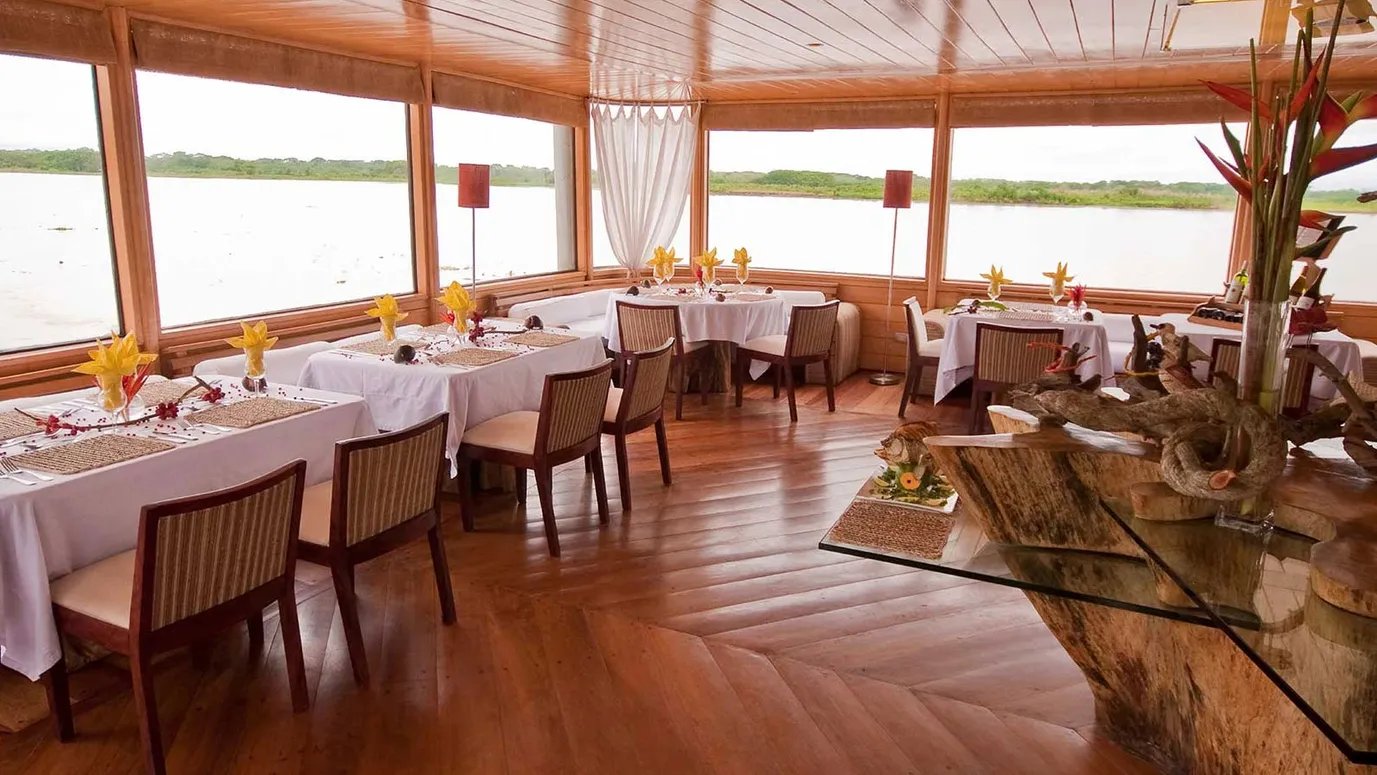
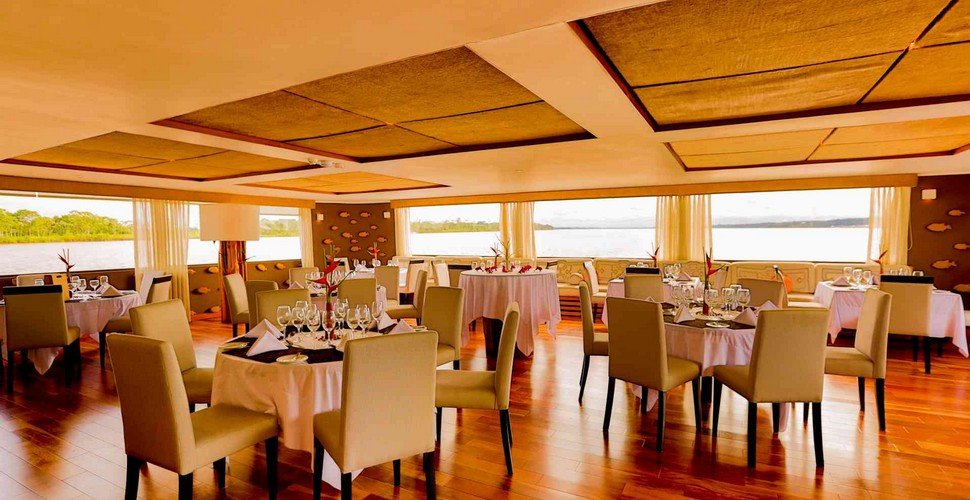
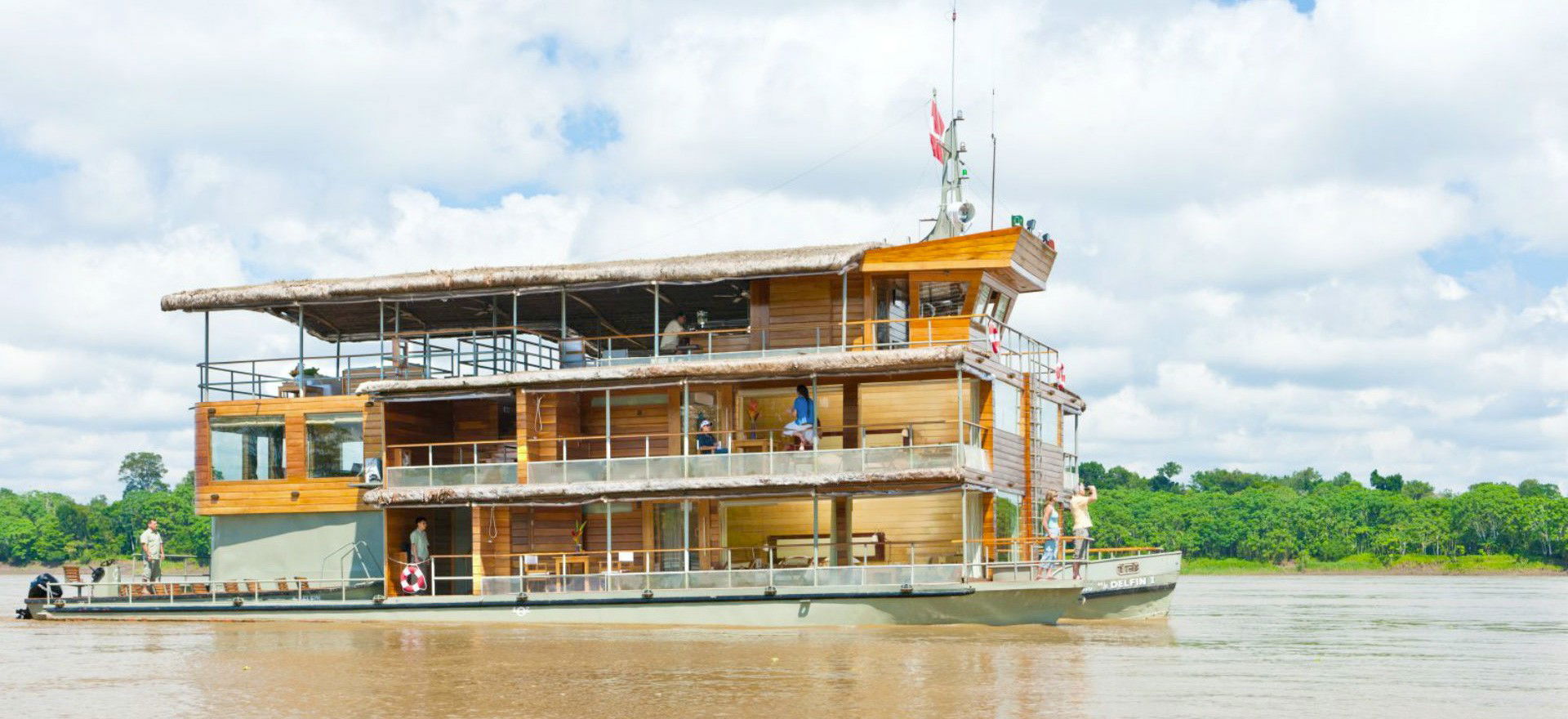
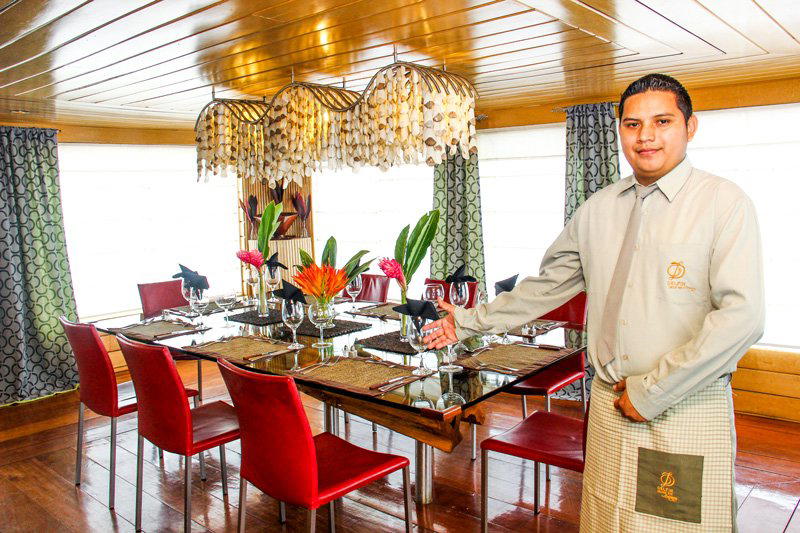
Delfin Amazon Cruises reads as a design-focused river hotel that treats the surrounding forest and river as the primary amenity. The vessel’s architecture emphasizes long, uninterrupted sightlines—floor-to-ceiling windows run along main living areas and cabins—collapsing the barrier between interior comfort and the jungle outside. The result is a calm, sophisticated environment where the panorama continuously shifts as the boat moves, and interiors are arranged specifically to frame wildlife, light, and weather. Overall the tone is premium and contemplative, privileging observation and comfort over spectacle.
Best For
This cruise is best for travelers who prioritize wildlife-rich river landscapes and want to experience the Amazon from the comfort of a moving vessel. Because itineraries run three to four nights and the design makes viewing effortless from inside, it suits nature-focused couples and small groups seeking an immersive, intimate experience without repeated land transfers. It also works for guests who value architecture and refined on-board comfort while exploring a highly biodiverse stretch of the upper Amazon.
Stay Tips
Book one of the three- or four-night all-inclusive itineraries to fully experience the vessel’s constantly changing panorama; the description stresses that those durations are the operational norm. Plan travel through Iquitos (the text notes it is the primary gateway and arrival point), and when reserving request a cabin or living-area placement that emphasizes the floor-to-ceiling river-facing windows so you can track wildlife and light from inside. Expect an experience centered on viewing and comfort rather than a land‑based lodge routine.
Venue details
Ambiance
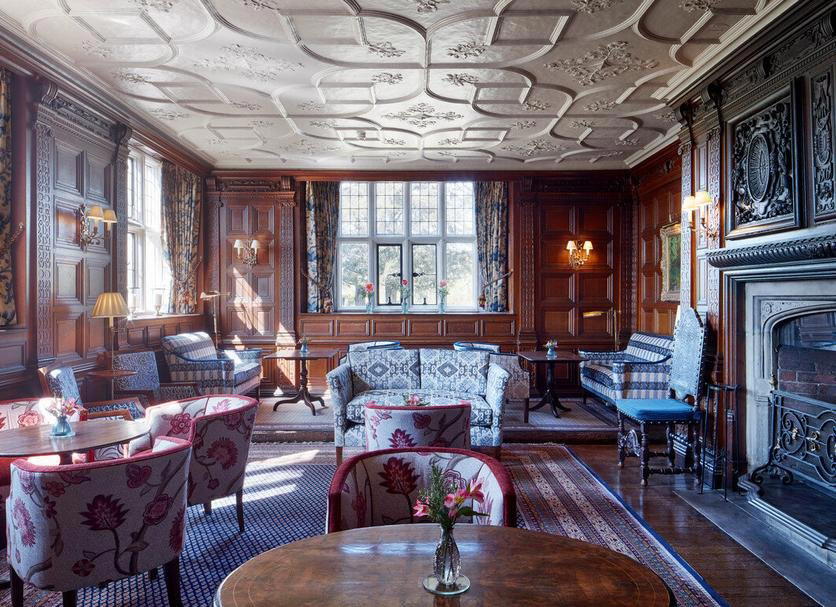
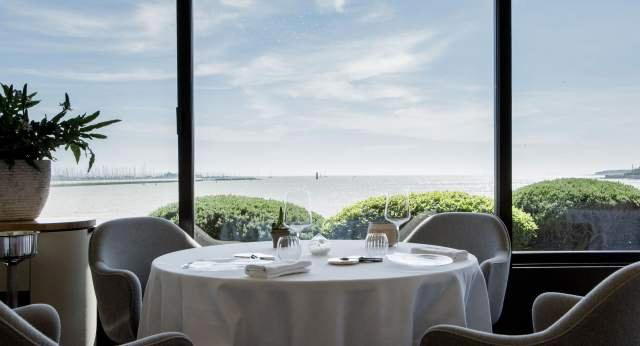
Casually elegant with peaceful observation decks for stargazing, sophisticated candlelit dining, and immersive rainforest views through floor-to-ceiling windows.
Tags
Vibe
Best For
Experience
Amenities
View
About the Stay
- Rooms
- 4
- Property Style
- Family Owned Luxury Riverboat Blending Amazonian Hospitality with High End Amenities
- Design Style
- Native Handicrafts and Artisanal Elements with Floor to Ceiling Panoramic Windows
Know before you go
Know Before You Go
- Getting there
- N° 5115, Av. José Abelardo Quiñones Km. 5, Iquitos 16000
Planning details
Location
N° 5115, Av. José Abelardo Quiñones Km. 5, Iquitos 16000 · Directions
Recognition and awards

Also consider
Also Consider
- Hotel Kuelap, Notable alternative
- Inkaterra Cabo Blanco, Peruvian / coastal, Peruvian / coastal
- Hyatt Centric San Isidro Lima, Notable alternative
- Pullman Lima San Isidro, Notable alternative
- Manto Lima - MGallery, Notable alternative
Hotel context
How Delfin Amazon Cruises compares in Peru
Delfin Amazon Cruises is the more itinerary-defining choice: it makes sense when the river experience is the reason to travel to Iquitos. Hotel Kuelap is a better fit for travelers who want a simpler land-based stay and more control over daily plans, while Delfin is stronger for guests who want lodging and setting to drive the trip.
Compared with Inkaterra Cabo Blanco, the choice is Amazon versus coast. Inkaterra Cabo Blanco suits travelers who want a Peruvian coastal base; Delfin suits travelers who want the visual rhythm of river travel and less emphasis on independent town access. Neither is a quick substitute for the other, so decide by trip purpose rather than brand feel.
For business travel or a Lima stop, Hyatt Centric San Isidro Lima, Pullman Lima San Isidro, and Manto Lima - MGallery are more practical. They are city-hotel decisions: easier for meetings, dining flexibility, and short stays. Delfin is the better call only when the schedule can be built around the Amazon rather than around Lima logistics.
Explore Iquitos
Around this place
Discover more on Pearl
Unlock the full Delfin Amazon Cruises guide in Pearl, including awards, comparisons, FAQs, planning details, and nearby places.
Compare Delfin Amazon Cruises
| Venue | Location | Cuisine | Awards |
|---|---|---|---|
| Delfin Amazon Cruises | Iquitos | , | 2026 Relais Chateaux Hotels2025 Relais Chateaux Award |
| Hotel Kuelap | Utcubamba | No published awards | , |
| Inkaterra Cabo Blanco | Cabo Blanco | Peruvian / coastal | No published awards |
| Hyatt Centric San Isidro Lima | Lima | No published awards | , |
| Pullman Lima San Isidro | Lima | No published awards | , |
| Manto Lima - MGallery | Lima | No published awards | , |
How Delfin Amazon Cruises Iquitos compares with similar nearby venues.
FAQ
Frequently Asked Questions
When is the best time to book Delfin Amazon Cruises?
If your Iquitos plans are fixed, confirm dates, terms, availability, and any requirements directly before arranging the rest of the trip. The Relais Chateaux Award (2026) is a recognition signal, but booking demand should be checked directly.
What is check-in like at Delfin Amazon Cruises?
Do loyalty programs work at Delfin Amazon Cruises?
If points, earning, redemption, or elite benefits matter, ask the property or booking channel directly. For a comparison point in Lima, Hyatt Centric San Isidro Lima or Pullman Lima San Isidro may be worth checking separately.
Is Delfin Amazon Cruises good for business travel?
If the trip has work requirements, ask directly about business-travel facilities, meeting amenities, workspace, and transfer logistics. A Lima option such as Manto Lima - MGallery may be a more relevant comparison for city-based business needs.
How does Delfin Amazon Cruises compare to other Peru options?
Delfin Amazon Cruises is an Iquitos venue. For broader Peru planning, compare it with other options on their own terms, including Hotel Kuelap, Hyatt Centric San Isidro Lima, Pullman Lima San Isidro, Manto Lima - MGallery, and Inkaterra Cabo Blanco.