
    Hotel in Grand Est, France

    Domaine de Barive

    150pts

    Estate-Scale Château Retreat

    Domaine de Barive, Hotel in Grand Est

    About Domaine de Barive

    A Michelin Selected château property in the Grand Est region, Domaine de Barive places guests inside the French tradition of domain-scale rural hospitality — where the estate itself, its grounds, and its architectural presence carry as much weight as the rooms. For travellers moving through Champagne and the northern Ardennes, it offers a genuinely slow counterpoint to the region's more transit-focused itineraries.

    Stone, Grounds, and the Architecture of Slowness

    Grand Est has always maintained a distinct strand of château hospitality — properties where the logic of the stay is organised around the estate rather than the bedroom count. This is not the polished urban luxury of [Le Bristol Paris](https://www.enprimeurclub.com/hotels/le-bristol-paris-paris-hotel) or the cliff-edge theatre of [The Maybourne Riviera](https://www.enprimeurclub.com/hotels/the-maybourne-riviera-roquebrune-cap-martin-hotel). It is something older and more grounded: a hospitality format in which the physical fabric of the building — its proportions, its relationship to the land around it, the rhythm of its corridors and courtyards , sets the terms of how time passes. Domaine de Barive belongs to that tradition. The estate format, the château address, and the domain name signal a property where the architecture is the primary experience, not the backdrop to it.

    In the broader northern France context, this matters. The Grand Est region stretches from the Champagne vineyards south of Reims to the forested Ardennes along the Belgian border, taking in Alsatian wine towns and the Cathedral plains of the Marne. The hospitality properties that work leading here tend to draw their identity from rootedness rather than spectacle. [Domaine Les Crayères in Reims](https://www.enprimeurclub.com/hotels/domaine-les-crayres-reims-hotel) and [Royal Champagne Hotel and Spa in Champillon](https://www.enprimeurclub.com/hotels/royal-champagne-hotel-spa-champillon-hotel) represent the Champagne-adjacent tier, where vineyard proximity and regional wine culture anchor the offer. Domaine de Barive, by its position and its château structure, sits in a quieter sub-category: the domain estate with a self-contained character that does not depend on proximity to a single appellation or tourist circuit.

    What Michelin Selection Signals About the Property Tier

    Michelin's hotel selection programme operates on different criteria from its restaurant stars. Inclusion in the 2025 Michelin Selected Hotels list is a credential that reflects consistent quality assessment , it places a property inside a curated peer set, not at the apex of it. For a château property in a non-capital region of France, Michelin Selected status is nonetheless a meaningful signal. It suggests the property clears a threshold of reliability and quality that many rural domain estates in the same price geography do not. This is the tier below Michelin's Passions and Clés distinctions but above the unvetted rurally positioned château rental market, and it represents a useful filter for travellers who want editorial assurance without necessarily committing to the more intensively programmed luxury of properties like [Hotel du Cap-Eden-Roc](https://www.enprimeurclub.com/hotels/hotel-du-cap-eden-roc-antibes-hotel) or [La Réserve Ramatuelle](https://www.enprimeurclub.com/hotels/la-rserve-ramatuelle-htel-spa-and-villas-ramatuelle-hotel).

    The comparison is instructive. France's Michelin Selected hotel list covers properties from Corsica , see [Casadelmar in Porto-Vecchio](https://www.enprimeurclub.com/hotels/casadelmar-porto-vecchio-hotel) , to the northern plains, and the selection process rewards properties that demonstrate a coherent identity and operational consistency regardless of region. In the Grand Est specifically, that means properties that understand how to translate the architectural and agricultural heritage of the area into a legible guest experience. Barive's château designation and domain structure position it within that logic.

    The Physical Argument: Château Architecture as Hospitality Format

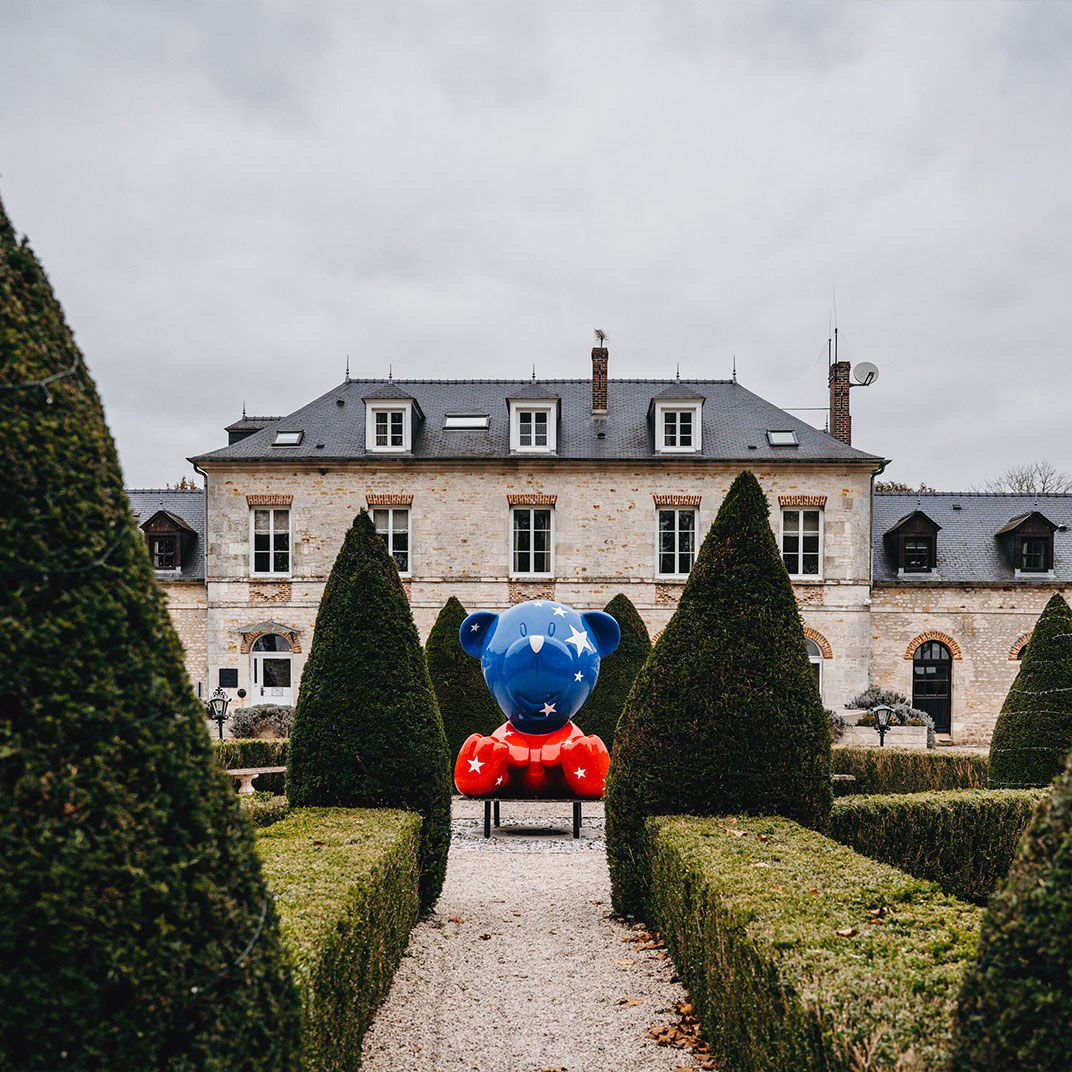
    The French château as a hospitality typology carries particular architectural expectations. These are not boutique hotels that happen to occupy historic buildings. The château model typically presents a central corps de logis , the main residential block , often flanked by service wings, set within grounds that carry their own spatial logic: kitchen gardens, tree allées, water features, outbuildings converted or preserved. The guest experience is inseparable from the estate's spatial organisation. This is a fundamentally different proposition from the urban palace hotels or the design-led properties that have defined much of the last decade's luxury hotel conversation in France.

    Properties like [Château du Grand-Lucé](https://www.enprimeurclub.com/hotels/chteau-du-grand-luc-le-grand-luc-hotel) and [Château de la Gaude in Aix-en-Provence](https://www.enprimeurclub.com/hotels/chteau-de-la-gaude-aix-en-provence-hotel) demonstrate how this format plays out at different scales and in different regional contexts. At Barive, the Grand Est setting adds its own layer: the region's architecture draws from both French classical and Germanic traditions, and château properties here often carry the slightly more austere exterior grammar of northern France, stone-heavy and grounded, distinct from the honey-coloured Provençal estates or the Loire Valley confections further west.

    For a traveller who has spent time at more managed luxury experiences , the spa-resort format of [Hôtel and Spa du Castellet](https://www.enprimeurclub.com/hotels/htel-spa-du-castellet-le-castellet-hotel) or the wine-estate integration of [Les Sources de Caudalie](https://www.enprimeurclub.com/hotels/les-sources-de-caudalie-bordeaux-hotel) , the château domain model offers something deliberately less curated. The space does more of the work. The architecture and grounds absorb the guest rather than programming them.

    Placing Barive in the Grand Est Travel Pattern

    Grand Est is underused as a destination by travellers who route through France with Champagne tastings and Alsatian wine routes as the primary draw. Those itineraries tend to compress into two or three nights, moving fast between Reims, Épernay, Strasbourg, and Colmar. Domaine de Barive's estate format argues for a different pace. Domain properties in this part of France function leading as a base from which the wider region is explored slowly , the Ardennes forests, the Marne battlefield landscapes, the small market towns along the Aisne. This is the kind of stay that rewards a three-night minimum rather than a single-night transit stop.

    The regional comparison set includes [Villa La Coste](https://www.enprimeurclub.com/hotels/villa-la-coste-le-puy-sainte-rparade-hotel) in Provence, which has built its identity around an art-and-architecture programme within an estate format, and [La Bastide de Gordes](https://www.enprimeurclub.com/hotels/la-bastide-de-gordes-gordes-hotel), which uses a hill-village position. Barive's northern latitude and château typology place it in a cooler, more introverted sub-category , less about outdoor living and sensory warmth, more about interior gravity and landscape depth. For those seeking a fuller picture of France's château hotel options, our [Grand Est restaurants and hotels guide](https://www.enprimeurclub.com/cities/grand-est) maps the region's wider hospitality offer.

    Planning a Stay

    Grand Est is accessible from Paris via the TGV Est line, which connects Gare de l'Est to Reims in under 50 minutes and continues east toward Strasbourg. Driving from Paris is a practical option for guests wanting flexibility across the estate and surrounding area; the autoroute network from Île-de-France reaches the northern Grand Est without significant complexity. Given the domain format, direct contact with the property , or booking through a channel that confirms current rates and availability , is advisable before finalising dates, as the estate model often involves variable seasonal programming. The Michelin Selected credential confirms the property clears an independently assessed quality threshold, which is the most reliable pre-booking signal available at this tier. Guests comparing this type of property against Champagne-positioned alternatives would do well to cross-reference [Royal Champagne Hotel and Spa](https://www.enprimeurclub.com/hotels/royal-champagne-hotel-spa-champillon-hotel) and [Domaine Les Crayères](https://www.enprimeurclub.com/hotels/domaine-les-crayres-reims-hotel) for a clear picture of how different Grand Est properties weight wine access against estate seclusion.

    Frequently Asked Questions

    Is Domaine de Barive more low-key or high-energy?

    Given its château domain format and Michelin Selected status, Domaine de Barive is positioned toward the low-key end of the spectrum. The estate model prioritises space, architecture, and grounds over programmed activity. This is a property suited to guests who want quiet immersion in a historically structured environment rather than a curated resort schedule. For high-energy formats at a comparable price tier, properties like [Le K2 Palace in Courchevel](https://www.enprimeurclub.com/hotels/le-k2-palace-courchevel-hotel) or [Four Seasons Megève](https://www.enprimeurclub.com/hotels/four-seasons-megeve-megve-hotel) serve a different travelling disposition.

    What is the signature room at Domaine de Barive?

    Specific room-level data is not available in current sources. In château properties of this type, the principal rooms in the main corps de logis , typically those occupying the upper floors of the central block with views across the formal grounds , tend to carry the strongest architectural character. Confirming the room configuration directly with the property before booking is the most reliable approach.

    What is the main draw of Domaine de Barive?

    The primary draw is the estate itself: a domain-scale château property in the Grand Est, carrying Michelin Selected status, in a region where the dominant hospitality format either skews toward Champagne-vineyard adjacency or urban Alsatian character. Barive offers a quieter, more self-contained alternative , where the architecture and grounds are the experience, and the surrounding range of northern France provides the wider context. Travellers comparing French château options across multiple regions can also consider [Château de la Chèvre d'Or in Èze](https://www.enprimeurclub.com/hotels/chteau-de-la-chvre-dor-ze-hotel), [Baumanière Les Baux-de-Provence](https://www.enprimeurclub.com/hotels/baumanire-les-baux-de-provence-les-baux-hotel), or [Hôtel Chais Monnet and Spa in Cognac](https://www.enprimeurclub.com/hotels/htel-chais-monnet-spa-cognac-hotel) to understand how different French regions handle the heritage hospitality format.

    Recognized By

    Keep this place

    Save or rate Domaine de Barive on Pearl

    Keep this venue in your Pearl passport, rate it after you visit, and track it alongside every other place you collect.