
Su Shien Valley
Suxian Community, Qingcheng Mountain Town, Dujiangyan
Hotel in Dujiangyan, China
 Book with Pearl
The Read
Sacred Mountain Concealment
Price
$500–750per night
Why go
Su Shien Valley is worth considering for a Qingcheng Shan-based Dujiangyan stay, especially if the trip is leisure-led and the hotel setting matters. The 2026 Relais & Châteaux Award gives it a real trust signal, but city-focused business travelers should compare it with Chengdu options before committing.
About Su Shien Valley
Is Su Shien Valley worth considering in Dujiangyan? Yes, if you are specifically looking at Su Shien Valley and want to weigh it against other premium venues in the wider Chengdu-area market. The honest case for choosing it should stay focused on its confirmed facts rather than invented claims about location, dining, service, or facilities.
Those details give the venue a clearer identity than a generic listing, but it lacks specifics such as cuisine, pricing, hours, transport convenience, family facilities, or a beverage program.
Book it for Dujiangyan, not for assumptions
The strongest reason to keep Su Shien Valley on a shortlist is that it is a Dujiangyan option with a premium signal: the Relais Chateaux Award (2026). That is useful context, but it should not be treated as a substitute for practical checks. Before booking, confirm the current operating details, inclusions, cancellation terms, and any dining arrangements directly with the venue or booking channel.
Information on a precise address, opening hours, price level, cuisine, facility details, or service format is not available, so travelers should avoid assuming details from other listings. Travelers should verify details about Su Shien Valley carefully, as not every travel-planning question can be answered from public information alone.
Who should choose this over a larger Chengdu hotel
Choose Su Shien Valley if Dujiangyan is the right base for your trip and if its profile fits what you need. If city-center convenience in Chengdu is the priority, compare it with Chengdu options such as The Ritz-Carlton, Chengdu or Dorsett Chengdu. If you are considering other premium venues, compare the practical details with Six Senses Qing Cheng Mountain, Guanyin Yiyuntai Hotel, and The Dawn Luxury Hotel before committing.
Inside Su Shien Valley
Planning details
- Location
- Qingcheng Shan, Dujiangyan City, Chengdu, 623001
- Website
- cn.sixsenses.com/resorts/qing-cheng-mountain/destination
- Phone
- +86 28 8728 9871
The take
The Take
The Vibe
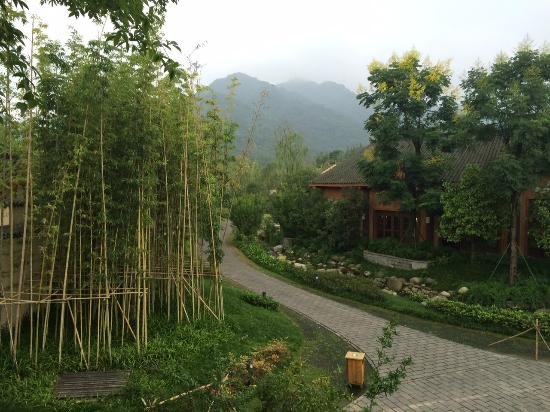
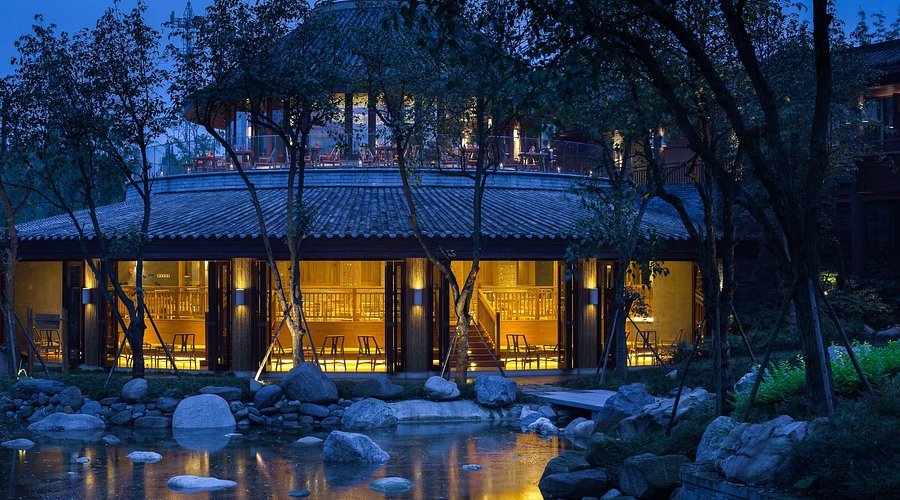
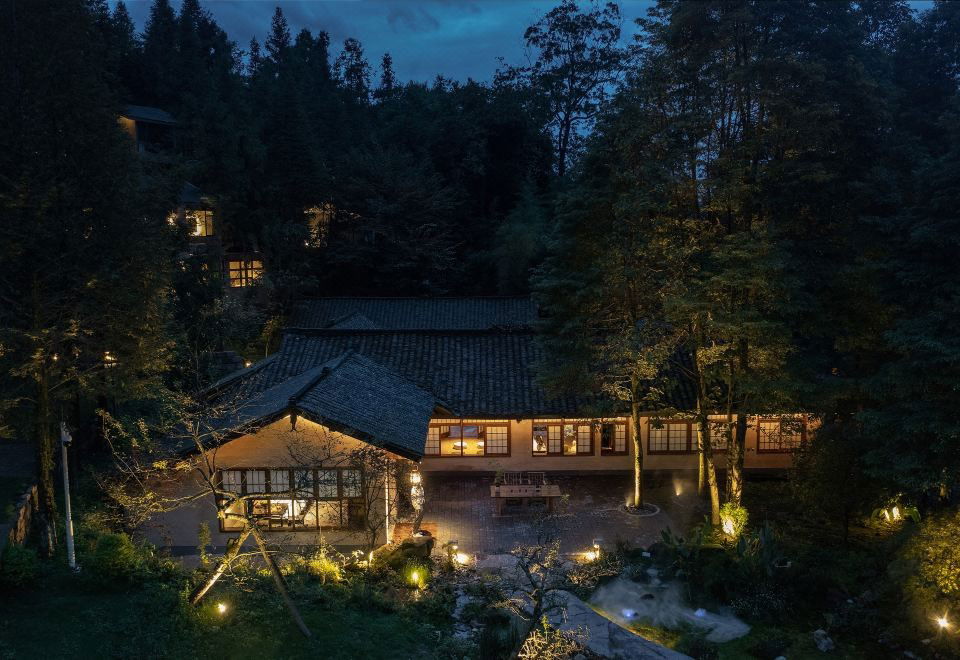
Su Shien Valley frames its identity around immersion rather than spectacle. The architecture intentionally subordinates built form to the surrounding forest — low profiles, natural materials and an arrangement that channels views through the tree canopy so the landscape feels like the primary host. Set on Qingcheng Mountain, a site charged with Taoist significance, the property cultivates a contemplative, serene tone: the experience is quietly refined rather than ostentatious, inviting slow movement and reflection amid bamboo-scented air and evergreen surrounds.
Best For
This is a place for travelers who plan to slow down. Visitors who are making a deliberate detour from the Chengdu basin—whether seeking a wellness-minded pause, a romantic getaway or a restorative weekend escape—find the setting conducive to reflection. The retreat’s forested lower reaches and restrained design particularly suit solo explorers and couples who want privacy and a contemplative atmosphere rather than busy resort programming. Expect stays oriented around quiet, nature-focused downtime rather than nightlife or high-energy group activity.
Stay Tips
The approach from Dujiangyan is part of the arrival: the road narrows as it climbs and bamboo presses close on both sides, and the air shifts to a cooler, resinous quality. Navigation is literal — the property sits deep in the mountain’s lower forested reaches (GPS 30.9182, 103.3957) rather than on a commercial fringe — so plan travel time accordingly and anticipate a quieter, more secluded setting. The design emphasizes low profiles and canopy views, so choose accommodations with immediate forest access if immersion is your goal.
Venue details
Ambiance
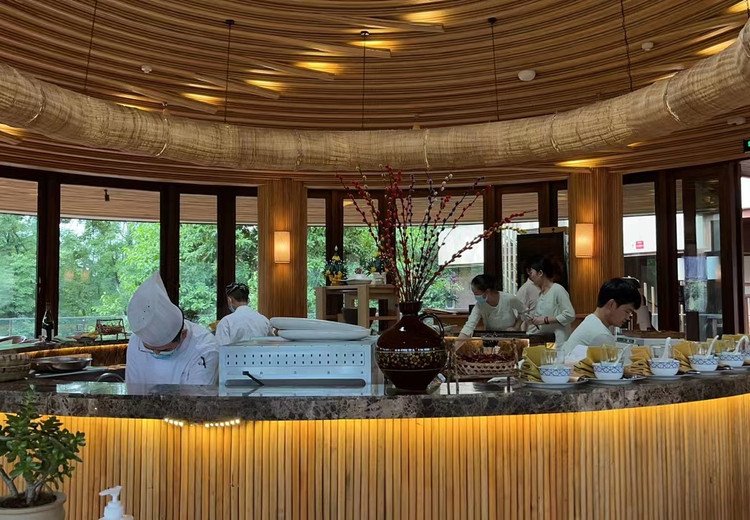
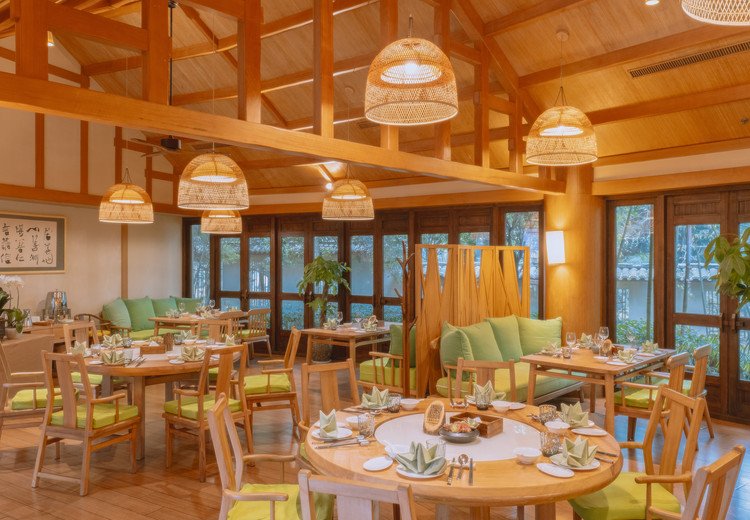
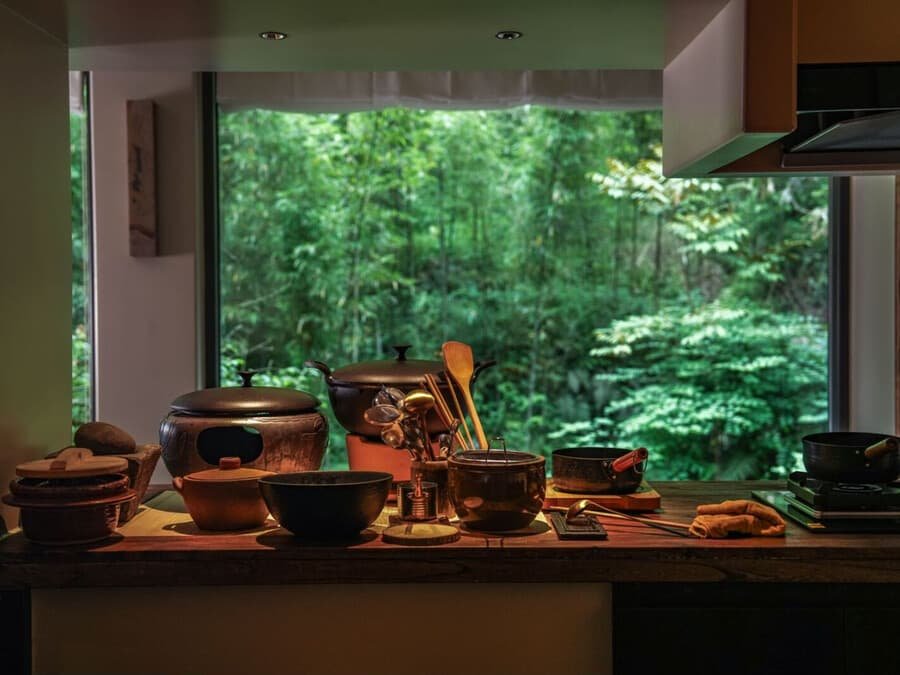
Serene Zen-like atmosphere with natural light, earthy palettes, and profound tranquility amid misty peaks and lush forests, creating restorative environments.
Tags
Vibe
Best For
Experience
Amenities
View
About the Stay
- Rooms
- 0
- Property Type
- Boutique hotel
- Property Style
- Chinese Courtyard Style Mountain Retreat Harmonizing Traditional Architecture with Modern Luxury
- Design Style
- Natural Materials, Earthy Palettes, Village Like Intimacy with Serene Color Schemes and Expansive Windows
- Airport Transfer
- Available
- Spa
- Yes
Know before you go
Know Before You Go
- Getting there
- Qingcheng Shan, Dujiangyan City, Chengdu, 623001
Planning details
Location
Qingcheng Shan, Dujiangyan City, Chengdu, 623001 · Directions
Recognition and awards

Also consider
Where to look if this is not the right fit
If the Qingcheng Shan setting is the priority but a more familiar resort brand feels safer, cross-shop Six Senses Qing Cheng Mountain. If the itinerary is Chengdu-heavy, look at The Ritz-Carlton, Chengdu for a more urban luxury base or Dorsett Chengdu for practical city positioning.
Hotel context
How it compares in Dujiangyan and Chengdu
Against Six Senses Qing Cheng Mountain, Su Shien Valley is the closer call for travelers who want a Qingcheng Shan-focused resort stay with an independent-hospitality signal. Six Senses is the safer choice for guests who prefer a globally recognizable wellness-resort format; Su Shien Valley is better for travelers who value a Relais & Châteaux-style identity and a quieter destination feel.
The Dawn Luxury Hotel and Guanyin Yiyuntai Hotel are the alternatives to check if value or local positioning matters more than recognition. They are better comparison points for travelers who want to keep spend controlled or who are still deciding how much of the trip should be hotel-led. Su Shien Valley makes more sense when the stay itself is part of the reason for going.
For Chengdu access, Dorsett Chengdu and The Ritz-Carlton, Chengdu are cleaner choices. Dorsett Chengdu is the practical pick for city logistics, while The Ritz-Carlton, Chengdu is the stronger fit for a polished urban stay. Choose Su Shien Valley when Qingcheng Shan is the center of gravity, not when Chengdu convenience is the priority.
Explore Dujiangyan
Around this place
Discover more on Pearl
Unlock the full Su Shien Valley guide in Pearl, including awards, comparisons, FAQs, planning details, and nearby places.
Compare Su Shien Valley
| Venue | Location | Awards |
|---|---|---|
| Su Shien Valley | Dujiangyan | 2026 Relais Chateaux Hotels2025 Relais Chateaux Award |
| Six Senses Qing Cheng Mountain | Chengdu | 2026 Mr & Mrs Smith Luxury Hotels2026 Michelin 1 Key2025 Michelin 1 Key |
| The Dawn Luxury Hotel | Nanzhao Town | Small Luxury Hotels Member 2025 |
| Dorsett Chengdu | Chengdu | No published awards |
| The Ritz-Carlton, Chengdu | Chengdu | 2026 Forbes 5-Star2026 La Liste Top Hotels2025 Forbes 5-Star |
| Guanyin Yiyuntai Hotel | Chengdu | Leading Hotels of the World 2026 |






How Su Shien Valley Dujiangyan compares with similar nearby venues.
FAQ
Frequently Asked Questions
When is the best time to book Su Shien Valley?
Information on booking windows, peak periods, or availability patterns is not available. If Su Shien Valley fits your Dujiangyan plans, confirm current availability and terms directly with the venue or booking channel.
Is Su Shien Valley good for business travel?
The venue's suitability for business travel is not specified. If city access in Chengdu is important, compare the practical details with Chengdu options such as The Ritz-Carlton, Chengdu or Dorsett Chengdu.
How does Su Shien Valley compare to other premium venues?
For alternatives, compare practical details with Six Senses Qing Cheng Mountain, Guanyin Yiyuntai Hotel, The Dawn Luxury Hotel, Dorsett Chengdu, and The Ritz-Carlton, Chengdu.
Do loyalty programs work at Su Shien Valley?
Loyalty-program information is not available. Do not assume points, benefits, or elite recognition apply unless confirmed by the venue or booking channel.
How is the location of Su Shien Valley?
Su Shien Valley is in Dujiangyan. A street address or more specific location detail is not provided.