

Three Camel Lodge
Gobi Gurvansaikhan National Park, Dalanzadgad
Hotel in Dalanzadgad, Mongolia
 Book with Pearl
The Read
Mongolian Steppe Immersion
Price
$500–750per night
Why go
Three Camel Lodge is worth shortlisting for a Gobi-focused family trip when comfort, planning confidence, and a quieter lodge atmosphere matter more than the lowest nightly rate. Recognition through Preferred Hotels Member (2025) and Fodor's Most Incredible Hotels in the World (2026) gives it a stronger trust signal than a standard ger-camp search. Less ideal for business travelers or families needing urban convenience.
About Three Camel Lodge
For a Gobi Desert family trip, the obvious alternative is not another polished city stay; it is a looser circuit of ger camps where comfort, dining rhythm, and planning friction can change from stop to stop. Three Camel Lodge is the stronger call when the trip needs a calm base rather than a scavenger hunt, especially for families trying to keep children, grandparents, and transfers moving in the same direction.
The value case is not about chasing the lowest room rate. It is about paying for fewer variables in a destination where the setting does much of the work but logistics can decide whether the trip feels satisfying or tiring. Value-seekers should read this as a quality-control choice: choose it if the budget allows for a more curated lodge experience; skip it if the priority is maximum itinerary mileage at the lowest possible spend.
A better fit for families who want structure, not resort entertainment
For children, the main appeal is space, pace, and a destination with a clear sense of place. This is a better fit for families who can enjoy guided days, early nights, and a quieter atmosphere than for families looking for a resort-style roster of pools, kids' clubs, or late-night dining. That distinction matters: a desert lodge can feel generous when the group wants immersion, but restrictive if the trip needs constant built-in entertainment.
Multi-generation groups should think carefully about energy levels. The lodge makes the most sense as a base for travelers who want the Gobi to be the point of the trip, not a side outing from town. If one part of the group wants full-service city convenience and another wants remoteness, split the itinerary rather than forcing every night into the desert. Use our full Dalanzadgad hotels guide to sanity-check how much isolation the group actually wants.
Dining and downtime matter more here than checklist amenities
Dining is part of the decision because families in remote settings do not have the same fallback options they would in a city. Without relying on named dishes or menus, the practical lens is simple: book this kind of lodge when the group is comfortable eating mostly on-property and prefers predictable meal timing over restaurant-hopping. If food variety is a major part of the trip, cross-check our full Dalanzadgad restaurants guide before committing the whole stay to a remote format.
Season matters more here than at an urban hotel. Warm-weather family travel will put more pressure on day planning, transport comfort, and recovery time between excursions, while colder months make the lodge choice more about tolerance for the elements. That is another reason not to treat it as a generic hotel search: the right stay length and pace should follow the season, not just the room category.
For couples or solo travelers, the atmosphere may be the draw; for families, the same quiet can either be a relief or a challenge. It works well when adults want downtime after long days and children can handle a slower evening rhythm. It is less compelling for business travelers unless the agenda is destination-specific; a city hotel will usually make more sense for meetings, quick errands, and predictable urban access.
Quick reference: choose it for a Gobi-focused family stay with higher comfort expectations; look elsewhere if the trip needs city convenience, heavy amenity programming, or the lowest nightly cost.
Planning details
- Location
- Havsgait Bag, Ömnögovi
- Website
- threecamellodge.com
The take
The Take
The Vibe
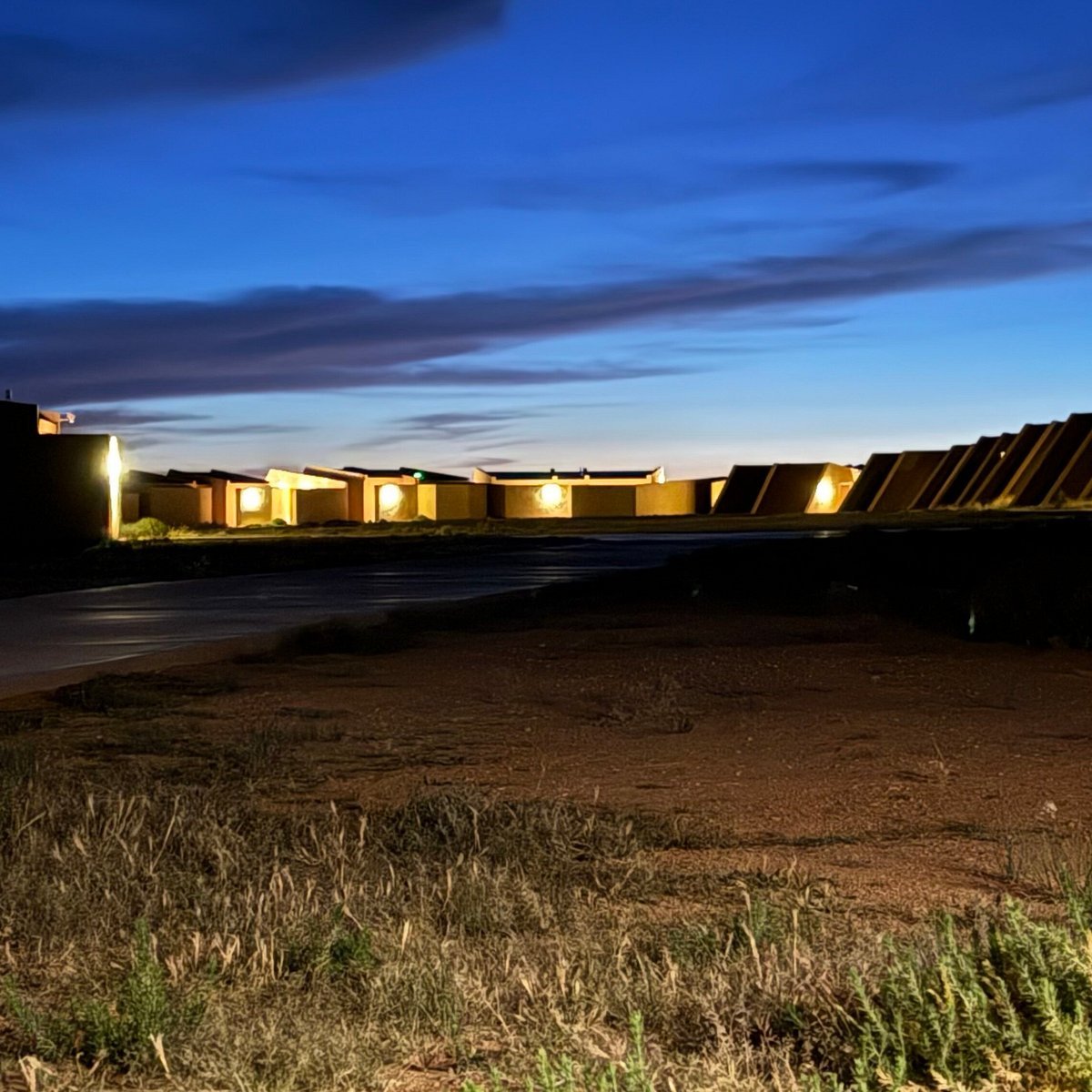
Three Camel Lodge reads as a deliberately spare, quietly refined desert retreat. Set on a mountainside above Dalanzadgad, the property leans into the vastness of the Gobi—flat-bottomed valleys, reddish escarpments and saxaul forests—so the prevailing feel is one of calm and restraint rather than bells and whistles. The lodge positions itself on the higher end of remote hospitality, where sustainability commitments and local integration are structural concerns. That measured approach results in an atmosphere that feels both rustic and polished: you notice the landscape first and the considered hospitality second, which is very much the point.
Best For
This is a stay for travelers who are seeking an intentional, nature-forward experience rather than convenience. The logistical route—flight into Dalanzadgad followed by a transfer across the steppe—means guests generally arrive by choice, which suits people who appreciate solitude, low population density and authentic regional context. Membership in Beyond Green signals that the property appeals to eco-conscious visitors and those who want a sustainable base for exploring the Gobi's unique terrain. It also fits couples and small groups who value privacy and a quiet setting framed by stark desert scenery.
Stay Tips
Plan logistics in advance: the lodge requires a flight to Dalanzadgad from Ulaanbaatar and a subsequent transfer across open steppe, so confirm inter-site transfers and arrival times before travel. Treat the journey as part of the experience—the description calls the travel friction a form of curation—and allow buffer time for connections. Because the property emphasizes sustainability and operates within a fragile desert ecosystem, guests should expect services and programming to reflect resource-conscious practices; clarify dietary needs or special requests with the lodge ahead of arrival.
Venue details
Ambiance
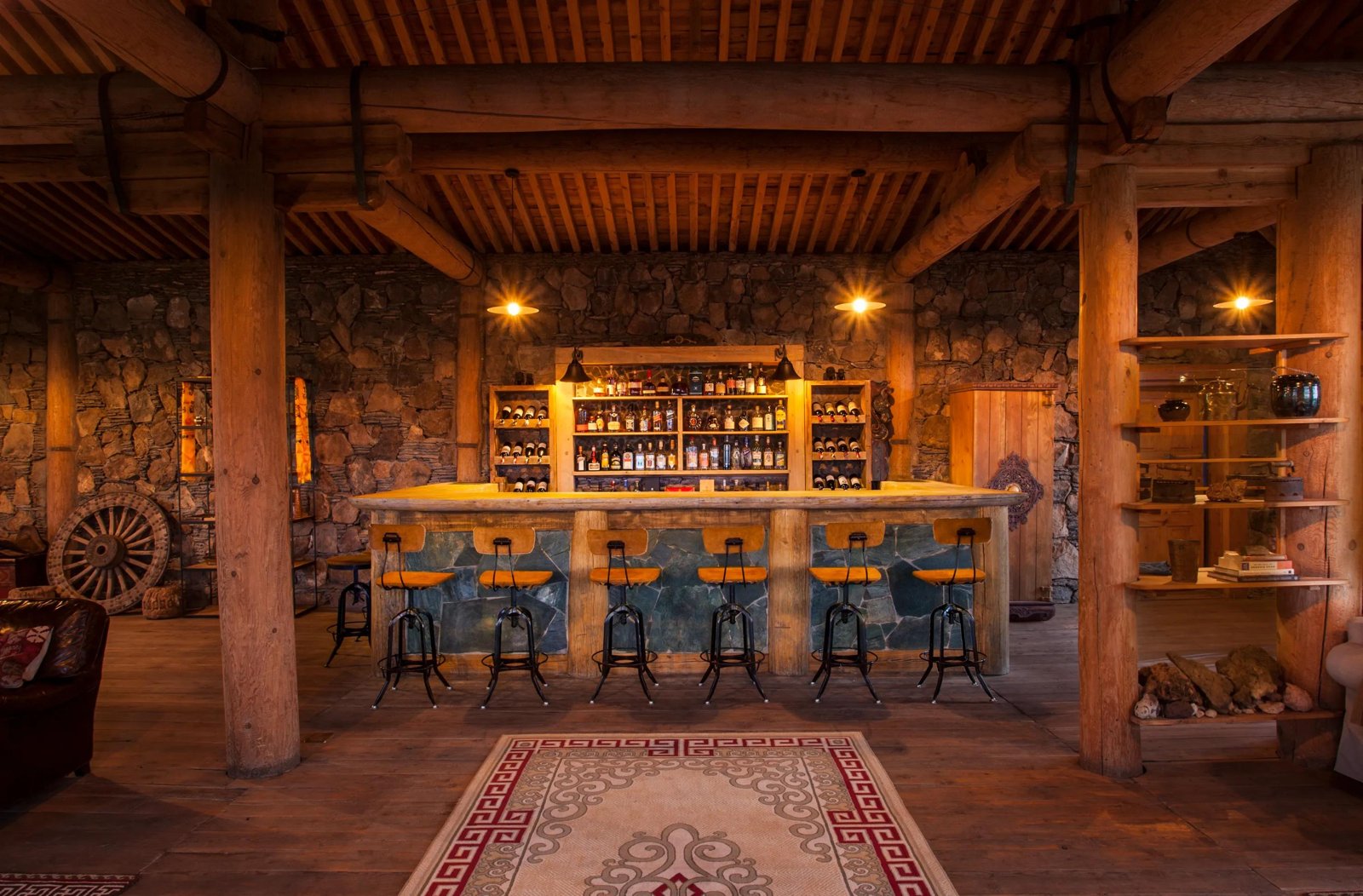
Serene and contemplative with warm, intimate lighting from wood stoves and solar-powered LED fixtures; guests describe it as a peaceful oasis with cinematic desert vistas, particularly stunning at sunset with golden and red hues across sculpted dunes.
Tags
Vibe
Best For
Experience
Amenities
View
About the Stay
- Rooms
- 40
- Property Type
- Eco-lodge
- Property Style
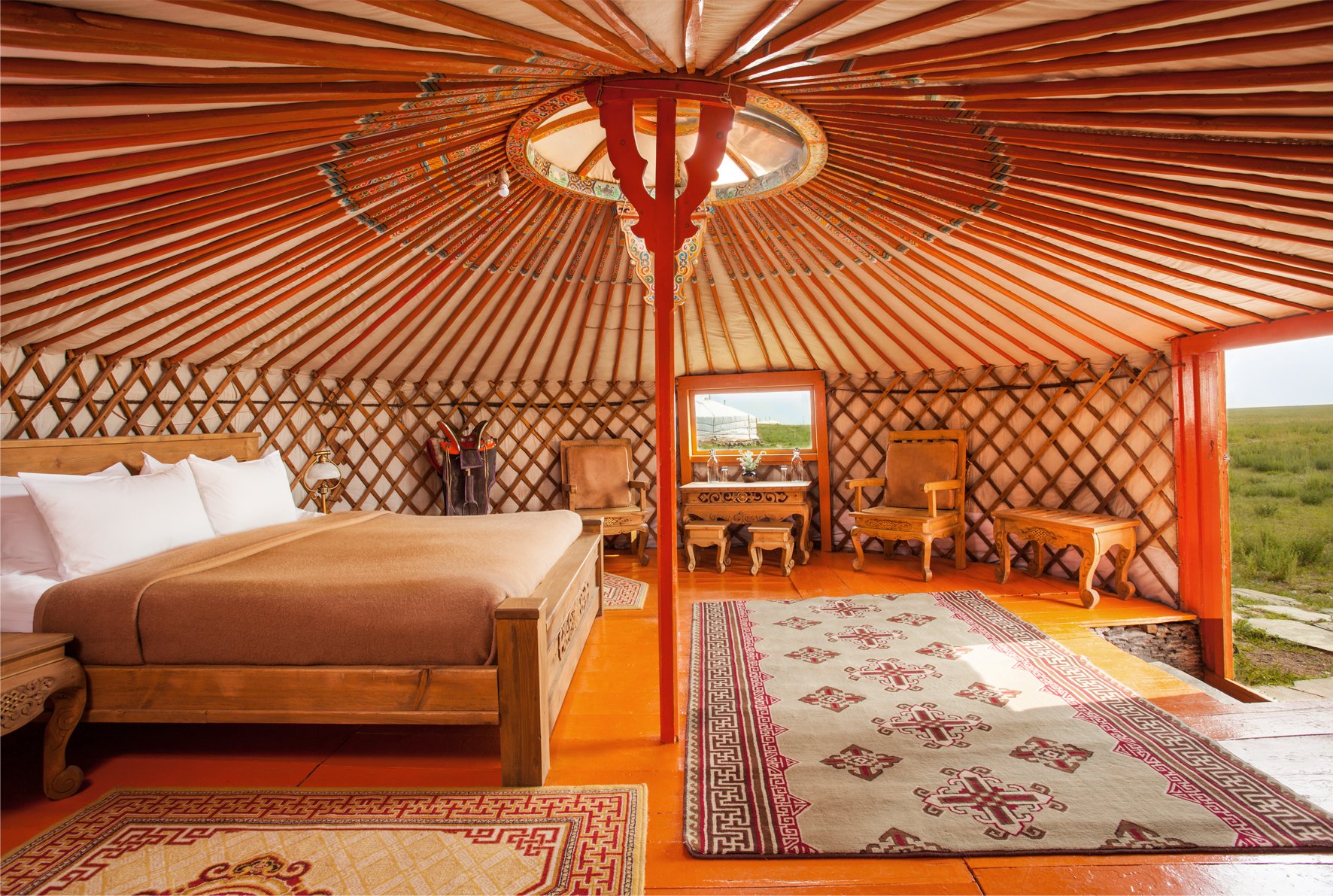
- Luxury Eco Lodge Featuring 40 Handcrafted Gers Designed by Local Artisans Using Traditional Mongolian Construction Methods with Natural Stone and Local Materials, Positioned as a Sustainable Alternative to Conventional Hotels.
- Design Style
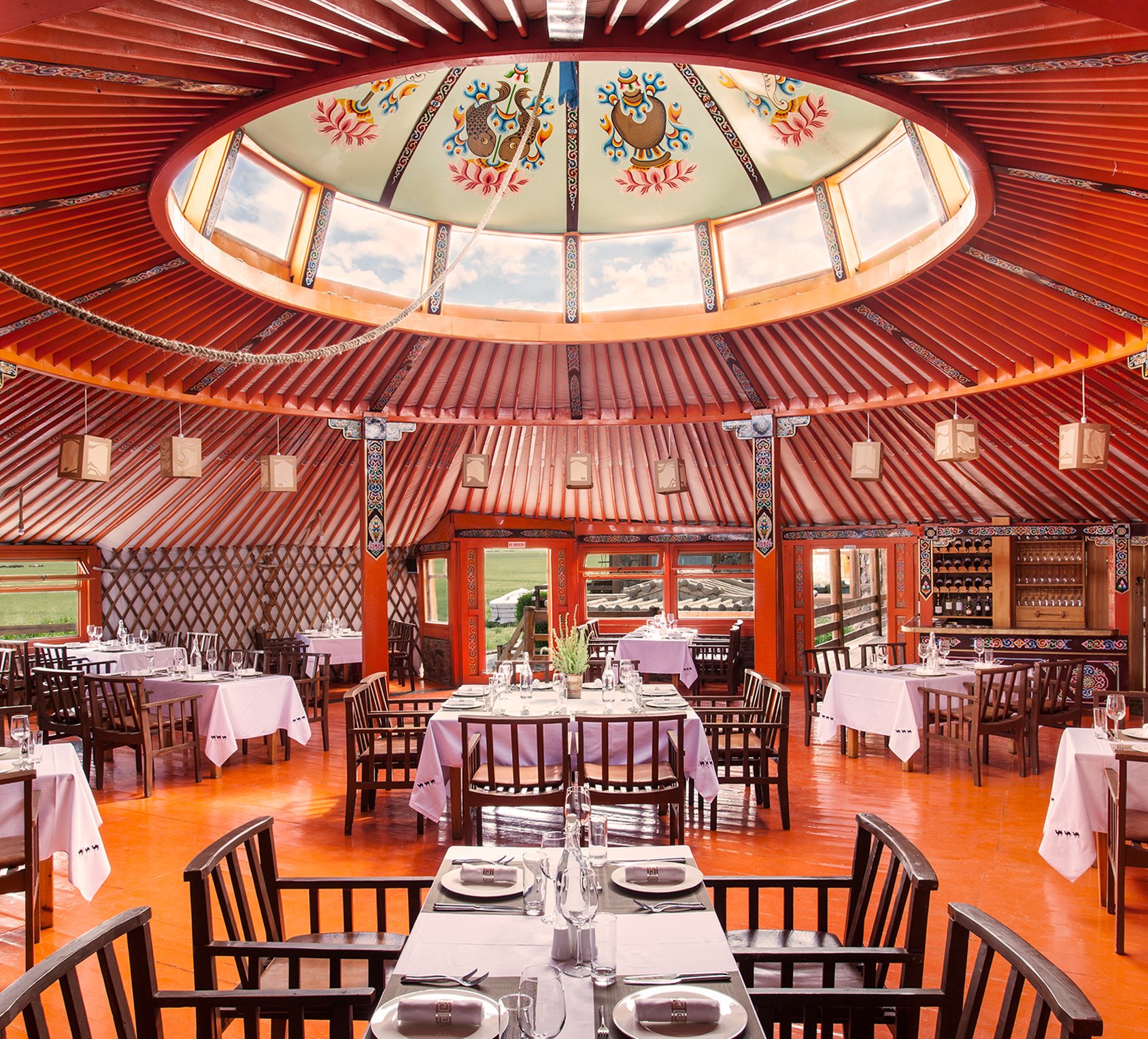
- Authentic Mongolian Nomadic Aesthetic with Hand Painted Custom Furnishings, Wool Carpets, Camel Hair Blankets, and Traditional Textiles; Central Gathering Space (dino Hall) Designed to Echo a Mongolian Temple with Wide Verandas and Desert Views.
- Breakfast
- Included
- Airport Transfer
- Available
- Spa
- Yes
- Families
- Welcome
- Cancellation
- Moderate
Know before you go
Know Before You Go
- Getting there
- Havsgait Bag, Ömnögovi
Planning details
Location
Havsgait Bag, Ömnögovi · Directions
Recognition and awards

Explore Dalanzadgad
Around this place
Discover more on Pearl
Unlock the full Three Camel Lodge guide in Pearl, including awards, comparisons, FAQs, planning details, and nearby places.
FAQ
Frequently Asked Questions
Is Three Camel Lodge good for business travel?
Only if the trip is destination-led, not meeting-heavy. In Dalanzadgad, at Havsgait Bag, Ömnögovi, this reads more like an offsite base than a practical business hotel for back-to-back appointments.
How is the pool and spa at Three Camel Lodge?
Do not choose it mainly for pool-or-spa use. The stronger signals are the location in Dalanzadgad and the awards, including Fodor's Most Incredible Hotels in the World (2026), which point to a destination stay rather than a wellness-first resort.
What is check-in like at Three Camel Lodge?
Expect a lodge-style arrival that is more about getting settled than speeding through a city-hotel process. The address in Havsgait Bag, Ömnögovi tells you this is a remote setup, so plan extra time and arrive ready for a slower handoff.
How does Three Camel Lodge compare to nearby hotels?
It makes more sense than a standard Dalanzadgad hotel if you want the stay itself to feel like part of the trip. If you need a simple overnight base for logistics, a conventional city hotel is easier; Three Camel Lodge is the pick when setting and recognition matter more than convenience.
Which room category is best at Three Camel Lodge?
Choose the quietest, most private room category available, since the property’s real value comes from the location in Dalanzadgad rather than room theatrics. If an upgraded category buys more space or a better layout, that is worth paying for; if it only changes labels, skip it.