
Missing Hotel
Marble Falls, Bertram
Hotel in Bertram, United States
 Book with Pearl
Why go
Book Missing Hotel if the goal is a quiet, design-led Hill Country stay near Bertram rather than a high-service city hotel. Its MICHELIN Guide Hotels Selected recognition for 2025 is the main confidence signal; the tradeoff is limited public detail on rooms, pricing, dining, and amenities, so it suits flexible travelers better than checklist planners.
About Missing Hotel
Missing Hotel is a Bertram hotel with MICHELIN Guide Hotels Selected recognition for 2025. Beyond that, public details are limited, so it is best considered by travelers who are comfortable confirming practical needs directly before booking rather than relying on a long list of published amenities, room details, dining specifics, or prices.
A Bertram stay for travelers who can verify the details that matter
Missing Hotel is in Bertram, so the decision starts with whether Bertram fits your trip. Use broader Bertram travel resources for planning, and confirm any practical stay details directly with the venue before booking.
The strongest reason to consider Missing Hotel is its hotel recognition. With no confirmed room-category hierarchy, amenity list, dining format, or price range available here, the safest approach is to treat the property as a hotel to research directly before committing. That can still work well for travelers who like the idea of a recognized Bertram stay and are flexible about the details. It is less useful for anyone who needs a fully specified service menu before booking.
What the MICHELIN hotel selection actually helps you decide
MICHELIN's 2025 hotel selection is the clearest trust signal here. It does not tell you which room to book, the nightly rate, or whether any dining format is available, but it does identify Missing Hotel as a hotel selected by the guide. Treat the recognition as a useful cue, and verify the rest directly before locking plans, especially if the trip depends on specific bedding, accessibility needs, dining availability, or arrival timing.
Missing Hotel is in Bertram, has a casual dress code, and is listed in the MICHELIN Guide Hotels Selected recognition for 2025. There is no price range, cuisine type, hours, booking difficulty, or room-category guidance available here to support a more granular recommendation.
Know Before You Go
- Best for: travelers considering a recognized Bertram hotel and willing to confirm practical details directly.
- Recognition: MICHELIN Guide Hotels Selected, 2025.
- Dress code: Casual.
- Location: Bertram.
- Dining: No cuisine or restaurant format is available here, so plan meals separately unless details are confirmed before the stay.
- Room choice: No room-category hierarchy is available, so prioritize the room type that matches party size, privacy needs, and cancellation flexibility when confirming directly.
Planning details
- Location
- 11980 S. FM 1174, Hill Country, TX, USA
- Phone
- 512 200 3124
The take
The Take
The Vibe
Missing Hotel reads like a design‑led response to the Hill Country landscape: editors single it out for architecture, material specificity and a physical sensibility that privileges site. The property sits on a quieter stretch of FM 1174 and leans into the region’s exposed limestone, cedar and live oak rather than generic resort tropes. That attention to geology, light and crafted materiality creates a calm, sophisticated atmosphere where the built environment and surrounding ranchland are the main attractions. The Michelin Selected designation underlines the editorial case for a stay that feels considered and quietly elevated.
Best For
This is a pick for travelers who prize the interplay between architecture and landscape over town‑center convenience. Weekend drivers from Austin and San Antonio who want a quieter Hill Country base—one oriented to land, stillness and photographic light—will find Missing Hotel especially appealing. It suits couples and design‑minded visitors seeking a contemplative escape rather than guests prioritizing immediate access to busy retail corridors. The Michelin Selected nod signals rigorous editorial recommendation for those who make property experience the reason for their visit.
Stay Tips
Understand the property’s setting before booking: Missing Hotel sits along the quieter FM 1174 corridor and is calibrated to site and stillness rather than proximity to town retail. Plan on traveling by car and factor in extra time if you intend to visit wineries, river activities or nearby towns. Lean on the Michelin Selected designation as a shorthand for design and quality, and read regional guides to match the stay with local outings. If you value a landscape‑forward, architecture‑centred experience, prioritize room categories or times that maximize daylight and views of the surrounding ranchland.
Venue details
Ambiance
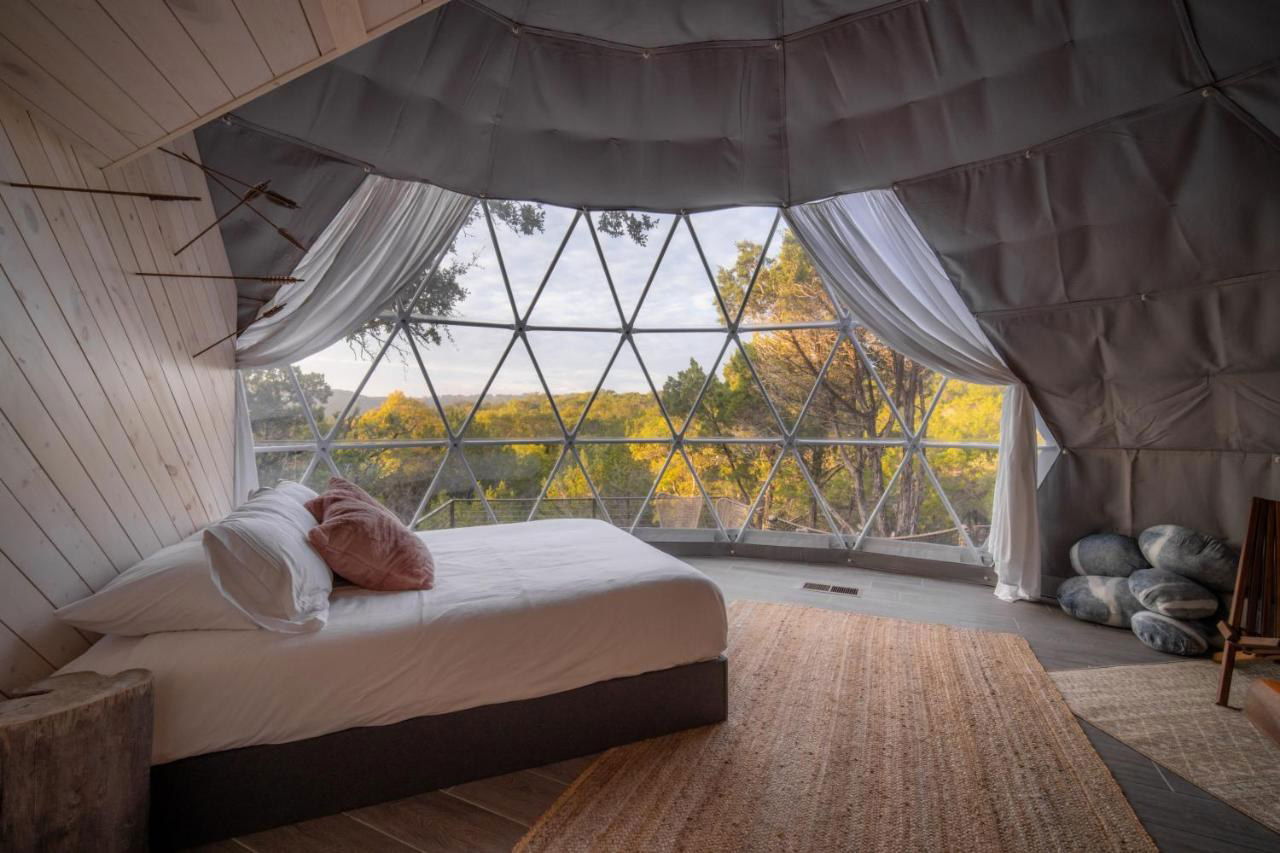
Minimalistic and bohemian interiors with floor-to-ceiling windows offering immersive natural light and serene Texas Hill Country vistas.
Tags
Vibe
Best For
Experience
Amenities
View
About the Stay
- Rooms
- 5
- Check-in
- 15:00
- Check-out
- 11:00
- Property Style
- Glamping Resort with Unique Domes and Casitas
- Design Style
- Bohemian, Minimalist, Wes Anderson Inspired with Mexican and Japanese Influences
Know before you go
Know Before You Go
- Getting there
- 11980 S. FM 1174, Hill Country, TX, USA
Planning details
Location
11980 S. FM 1174, Hill Country, TX, USA · Directions
Recognition and awards
Explore Bertram
Around this place
Discover more on Pearl
Unlock the full Missing Hotel guide in Pearl, including awards, comparisons, FAQs, planning details, and nearby places.
FAQ
Frequently Asked Questions
Which room category is best at Missing Hotel?
Choose based on the layout, party size, privacy needs, and cancellation terms shown through the venue's official booking channels. The confirmed trust signal is MICHELIN Guide Hotels Selected (2025), so the room decision should still be directly before booking.
How does Missing Hotel compare to nearby hotels?
Missing Hotel stands out in Bertram because it has confirmed MICHELIN Guide Hotels Selected recognition for 2025. For any comparison beyond that, confirm current room details, amenities, prices, and policies directly.
How is the location of Missing Hotel?
Missing Hotel is in Bertram. Use the venue's official channels for directions and arrival instructions.