
Château de Bagnols
Bagnols
Hotel in Bagnols, France
 Book with Pearl
The Read
Medieval Restoration Hospitality
Why go
Château de Bagnols is worth booking when the hotel itself is the occasion: a recognized château stay in Bagnols with a Michelin 1 Key and a slower countryside setting. It is less convincing for travelers who need Lyon convenience, dense dining options, or a practical overnight base.
About Château de Bagnols
The common mistake is treating Château de Bagnols as a generic stopover. For a celebration trip, it makes sense when the point is the property itself: a Bagnols stay with Michelin 1 Key recognition, rather than a fallback hotel after plans elsewhere.
This is the pick for guests who want the hotel choice to carry the occasion. The safest booking logic is simple: choose it when a recognized stay in Bagnols is the priority, and compare elsewhere if convenience or a more specific set of details matters more. The dress code is smart casual.
Book it for a Bagnols occasion
The decision is less about amenities and more about what kind of stay will feel worth the effort. Château de Bagnols is the stronger choice when guests want to plan around a hotel in Bagnols itself. It is not the obvious practical answer for travelers whose trip depends mainly on a different destination, a dense schedule, or a low-friction overnight stay.
For a special occasion, avoid treating it as a same-day afterthought. Build the night around the hotel, arrive with time to settle in, and keep the schedule realistic. If a particular facility, room feature, restaurant plan, or service detail is essential, confirm it directly before booking.
The value is in recognition
The hotel has a Michelin 1 Key, which is the clearest trust signal here. That does not automatically make it the right booking for every traveler, but it does place the property in a more serious hotel conversation than an unrecognized stay alone. Readers deciding between Château de Bagnols and other options should be honest about priorities: choose Bagnols for a recognized hotel stay in Bagnols; choose elsewhere if logistics or a sharper value calculation matters more.
For most readers, this is a yes for a milestone stay when the property itself is the reason to book, and a no for a purely functional stop. The booking case is strongest when the hotel is part of the plan, not just where the luggage goes after dinner.
Inside Château de Bagnols
Planning details
- Location
- 118 Pl. de la Mairie, 69620 Bagnols
- Website
- chateaudebagnols.com
- Phone
- +33 4 74 71 40 00
The take
The Take
The Vibe
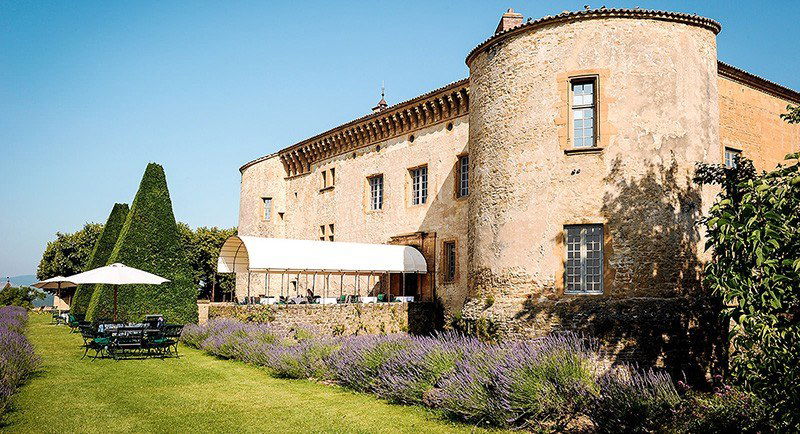
Château de Bagnols presents as an architectural artifact first and a hotel second. Approaching along the D19, the moat, crenellated walls and fortified towers assert a medieval presence, and interiors preserve that lineage: Renaissance wall paintings remain in the courtyard and the Salle des Gardes still reads as a functioning medieval hall. The modern restoration is deliberately restrained, revealing 18th-century interventions alongside older fabric so the building’s history is legible in the walls. The property’s Michelin Key accolade underscores that staying here is an immersive encounter with layered historical architecture rather than a themed reproduction.
Best For
The château suits couples and travelers seeking an immersive historic escape—it is already valued for honeymoons, romantic getaways, anniversaries and weekend escapes. Its fortified silhouette, intimate medieval halls and carefully calibrated restoration create a contemplative, ceremonial setting that favors slow discovery over flashy programming. The Michelin Key recognition signals that the hotel itself is the attraction, making it a natural pick for travelers who want to center their trip on architecture, provenance and period atmosphere rather than nightlife or contemporary design-driven experiences.
Venue details
Ambiance
Elegant historic charm with grand European style, peaceful and pampering atmosphere amid French gardens and vines, featuring soundproofed rooms and relaxing spa lighting.
Tags
Vibe
Best For
Experience
Amenities
View
Accessibility
About the Stay
- Rooms
- 27
- Check-in
- 16:00
- Check-out
- 12:00
- Property Style
- Restored 12th Century Castle with Formal Gardens in Beaujolais Wine Country
- Design Style
- Antique Furnishings, Four Poster Beds, Original 12th 18th Century Murals, and Contemporary Accents in Silks and Cool Tones
Know before you go
Know Before You Go
- Getting there
- 118 Pl. de la Mairie, 69620 Bagnols
Planning details
Location
Recognition and awards
Also consider
Also Consider
- Le Pavillon, Notable alternative
- Maison d'Anthouard, Notable alternative
- TRIBE Lyon Croix Rousse, Notable alternative
- Fourvière Hôtel, Notable alternative
- Collège Hôtel, Notable alternative
Hotel context
How it compares with nearby hotel options
Choose Château de Bagnols over Le Pavillon or Maison d'Anthouard when the stay needs to feel like a countryside occasion rather than a Lyon-adjacent hotel night. Its Michelin 1 Key gives it the clearest recognition signal in this set, and the Bagnols setting is the reason to pay the location premium.
Pick TRIBE Lyon Croix Rousse if the trip is about easier city movement, shorter stays, or sharper value. It is the more practical cross-shop for travelers who care less about château atmosphere and more about being in Lyon. Fourvière Hôtel is the better compromise if a characterful stay near the city matters, while Collège Hôtel suits guests who want a lighter, more urban base.
Booking difficulty is the main caution for Château de Bagnols: treat it as a planned special-occasion stay, not a casual backup. If dates are tight or the trip needs flexibility, start with Fourvière Hôtel or TRIBE Lyon Croix Rousse instead.
Explore Bagnols
Around this place
Discover more on Pearl
Unlock the full Château de Bagnols guide in Pearl, including awards, comparisons, FAQs, planning details, and nearby places.
Compare Château de Bagnols
| Venue | Location | Awards |
|---|---|---|
| Château de Bagnols | Bagnols | 2025 Michelin 1 KeyMichelin 1 Key 20252024 Michelin 1 Key |
| Le Pavillon | Charbonnieres Les Bains | No published awards |
| Maison d'Anthouard | Écully | No published awards |
| TRIBE Lyon Croix Rousse | Lyon | No published awards |
| Fourvière Hôtel | Lyon | No published awards |
| Collège Hôtel | Lyon | No published awards |
How Château de Bagnols compares with similar nearby venues.
FAQ
Frequently Asked Questions
What is check-in like at Château de Bagnols?
Château de Bagnols is in Bagnols. Confirm check-in details directly with the hotel before you travel. The clearest quality signal is its Michelin 1 Key recognition.
Do loyalty programs work at Château de Bagnols?
Do not make assumptions about loyalty redemptions or status benefits without confirming directly with the hotel or your booking channel. The booking case here is Château de Bagnols in Bagnols with Michelin 1 Key recognition. If loyalty strategy is central to the trip, compare the terms at other options such as TRIBE Lyon Croix Rousse or Fourvière Hôtel before deciding.
How is the pool and spa at Château de Bagnols?
Pool and spa details are not included here. If those facilities are the main reason for the trip, confirm the current offering directly with the hotel before booking. The fixed quality signal available here is the Michelin 1 Key.
How is the location of Château de Bagnols?
Château de Bagnols is in Bagnols. The location works if you want Bagnols itself; it is a weaker fit if your priority is another destination. The value is in booking a Michelin 1 Key hotel in Bagnols.
How does Château de Bagnols compare to other hotels?
Choose Château de Bagnols when the decision is specifically about a recognized hotel stay in Bagnols. Le Pavillon, Maison d'Anthouard, TRIBE Lyon Croix Rousse, Fourvière Hôtel, and Collège Hôtel are useful comparisons if you are also considering other hotel options.
Which room category is best at Château de Bagnols?
No specific room categories are listed here. Pick based on the room details that matter to your trip, and confirm the current descriptions, inclusions, and policies through the hotel or your booking channel before committing.