
For most people, attending The Masters in 2026 is effectively impossible through the public lottery. Augusta National closed its patron badge waiting list decades ago, and the current system allocates a small number of weekly badges and practice-round tickets through an annual public drawing with odds the club does not publish. Your realistic routes are three: win the lottery, inherit or borrow a badge from someone already in the system, or pay for a hospitality package through an authorized third party. The third route is the only one you can actually plan around, and it costs significantly more than the face value of a badge.
Why Augusta National Books Out Before Most People Start Looking
Augusta National Golf Club controls every ticket to The Masters with a precision that no other major sporting event matches. There are no public box offices, no StubHub listings from the club itself, and no walk-up sales at the gate. The club issues "patron badges" rather than tickets, and the language is deliberate: badge holders are guests of the club, not customers of a transaction.
The waiting list for weekly patron badges, which cover all four competitive rounds, was closed to new applicants and has never reopened. Badges pass through families and corporate relationships, and the club reserves the right to revoke any badge it believes has been resold. Secondary market prices for weekly badges are widely reported to reach five figures, though the club explicitly prohibits resale and has been known to cancel badges when it detects scalping.
Practice round tickets covering Monday, Tuesday, and Wednesday before the tournament are available through a separate public lottery, which is the only direct route most people will ever have. The lottery is genuinely random, and the club does not publish acceptance rates. Demand vastly exceeds supply.
When the Masters Lottery Opens and How the Timing Works
Augusta National runs the practice round ticket lottery through its official site at masters.com. The application window typically opens in the summer preceding the tournament and closes within a few weeks. The club announces the window each year without publishing a fixed calendar date in advance. To apply for 2027 practice round tickets, monitor masters.com directly starting around June or July 2026, as the club does not maintain a public mailing list for lottery notifications.
The club does not publish a release schedule for weekly patron badges through any public channel, because those badges are not distributed by lottery; they move through the existing holder network. There is no application process for weekly badges that a member of the public can enter. Confirm any claims about badge availability directly with Augusta National; third-party services claiming to offer "lottery entries" for weekly badges are not authorized by the club.
The Three Real Channels: Lottery, Hospitality, and the Secondary Market
Ranked by reliability for a first-time attendee:
1. Official hospitality packages. Augusta National authorizes a small number of corporate hospitality programs that include tournament access bundled with on-site amenities. These are the only legal route to guaranteed tournament-week attendance for someone outside the badge-holder network. Prices are not published by the club, but packages through authorized hospitality providers are widely reported to start in the range of several thousand dollars per person for a single round day, with multi-day packages running considerably higher. These packages sell out quickly and are often allocated to corporate clients on a recurring basis. For the 2027 tournament, begin inquiring with authorized hospitality operators well in advance, the club does not publish a list of authorized operators, so research through golf travel specialists is the starting point.
2. The practice round lottery. Free to enter, genuinely random, and the only direct public route. Practice round tickets carry face values that are a fraction of secondary market prices. The experience on practice days is legitimately good: the course is accessible, players are visible during warm-ups and par-3 practice, and the crowds, while large, are more manageable than tournament rounds. Apply every year; each application is an independent draw.
3. The secondary market. Resale of Masters badges and tickets is prohibited by Augusta National, and the club enforces this. Buyers on the secondary market risk badge cancellation at the gate. A secondary market exists regardless, and prices for weekly badges on resale platforms are widely reported to reach well into five figures. This is the expensive-but-faster route, and it carries real risk of non-entry. If you pursue it, buy as close to the event as possible and have a contingency plan.
Masters Access Routes: Difficulty, Cost, and Realistic Odds
| Route | Difficulty | Estimated Cost | Lead Time | How to Access |
|---|---|---|---|---|
| Practice Round Lottery | High (low odds, random) | Face value (low) | Apply ~6 to 9 months out | masters.com (official) |
| Authorized Hospitality Package | Medium (budget-dependent) | Widely reported: several thousand dollars per person and up | Inquire 12+ months out | Authorized hospitality operators |
| Weekly Badge (Secondary Market) | Very high (legal risk, cost) | Five figures widely reported | Available closer to event | Resale platforms (club-prohibited) |
| Badge Holder Network (inherited/borrowed) | Effectively closed to most | N/A | N/A | Personal relationship only |
Inside Augusta National on Tournament Week: What You Actually Encounter
Augusta National is a private club that operates as a public spectacle for one week a year, and the tension between those two identities shapes everything about the on-site experience. The grounds are immaculate in a way that no other major sporting venue matches: no visible corporate signage on the course itself, no alcohol advertising, no vendors hawking merchandise outside the gates. The club controls the aesthetic completely.
On practice days, the atmosphere is closer to a golf exhibition than a sporting event. Patrons spread out across the course, and it is genuinely possible to stand within a few feet of the world's best players during warm-up sessions. The par-3 contest on Wednesday draws a festive crowd and is one of the more accessible spectator experiences in professional golf, players bring family members as caddies, the format is relaxed, and the short course allows close viewing from multiple angles.
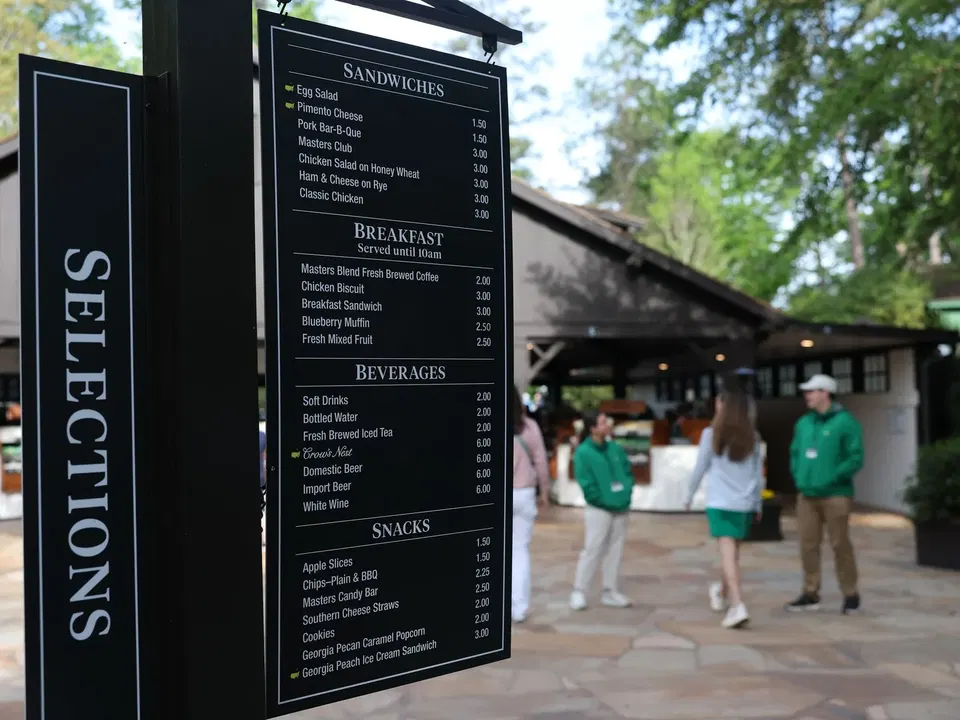
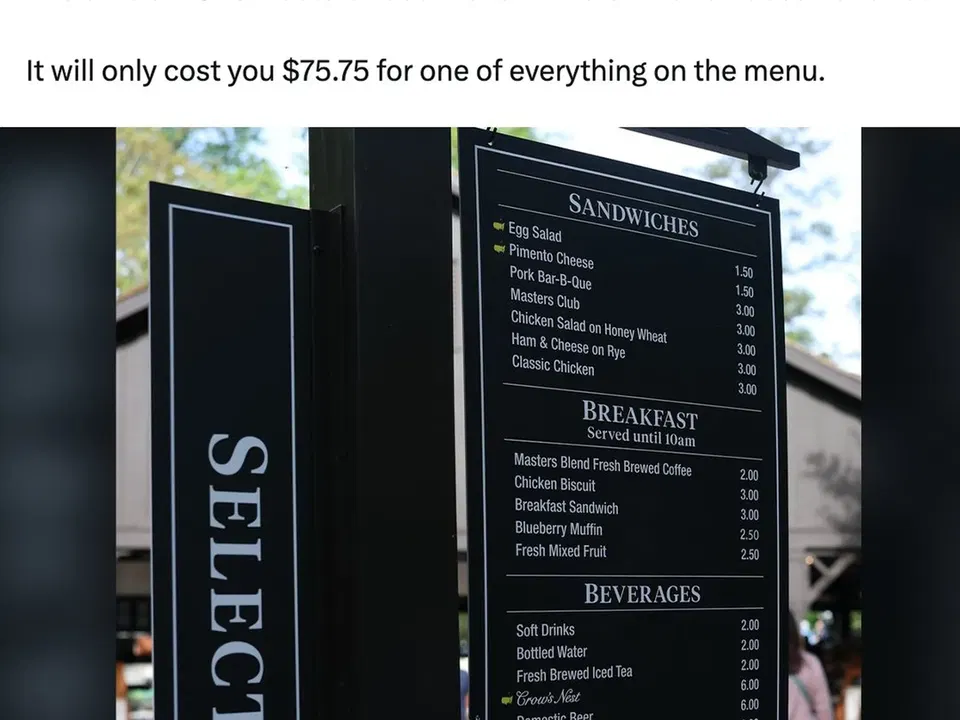
Tournament rounds are a different proposition. The crowds are larger, movement between holes requires planning, and the most famous vantage points, Amen Corner, the 16th green, the 18th, fill early. Experienced patrons arrive at a single location and stay, rather than trying to follow a group. The club's food and merchandise prices are famously low relative to comparable events, a deliberate policy that has become part of the Masters identity.
Who you'll sit next to: The badge-holder base skews heavily toward long-term corporate relationships, golf industry insiders, and families who have held badges for decades. On practice days, lottery winners bring a broader demographic, serious golf fans from across the country who applied for years before getting in. Hospitality areas draw a corporate crowd. The overall atmosphere is quieter and more reverential than a typical PGA Tour event; Augusta National's code of conduct (no running, no phones on the course during play, no signs) is enforced and shapes the crowd's behavior noticeably.
Money vs. time tradeoffs: The patient route is the lottery, free to enter, potentially years of applications before success, with the payoff being a practice round ticket at face value. Authorized hospitality delivers guaranteed tournament-week access at a price that reflects the scarcity. The secondary market sits between them on timing but adds legal and logistical risk that the hospitality route does not carry.
How to Improve Your Odds Without Paying Five Figures
Apply to the practice round lottery every single year. The club does not publish odds, but consistent annual applications are the only cost-free strategy available. Monitor masters.com in summer 2026 for the 2027 application window; the club announces it on the site without advance notice on a fixed date.
If you are pursuing hospitality, start the conversation with authorized operators well before the tournament year. Corporate allocations are renewed on a recurring basis, and the available inventory for individual buyers is what remains after corporate clients have taken their share. Waiting until January of tournament year for an April event leaves you competing for the thinnest slice of availability.
Consider targeting a practice day over a tournament round as your first visit. The experience is legitimately good, the access is more open, and the face-value cost is a fraction of any other route. Many regular attendees prefer Wednesday's par-3 contest to any competitive round for the atmosphere and accessibility it offers.
If someone in your network holds a weekly badge, the conversation is worth having. Badge holders can bring guests in some configurations, and the club's rules around guest access are worth understanding directly from the holder.
Alternatives That Scratch a Similar Itch
The US Open public ballot. The USGA runs a public ticket ballot for the US Open with better-published odds and a more accessible process than Augusta's lottery. Tournament-round tickets are available, and the experience at a major on a public course (Pinehurst, Oakmont, Pebble Beach) is a legitimate substitute for someone whose primary goal is watching elite golf at a major.
The Open Championship. The R&A sells tickets through a public ballot and a general sale, with a more transparent process than Augusta. Attendance at St Andrews or Royal Liverpool is a different experience, more open, more weather-dependent, more accessible, but the golf carries equivalent prestige.
The Players Championship at TPC Sawgrass. Not a major, but the field quality is comparable and tickets are available through standard channels without a lottery. The island green 17th is one of the most watchable holes in professional golf, and the event is genuinely accessible for a first-time spectator.
Augusta National Women's Amateur. Played at Augusta National in the days before The Masters, this event offers access to the course itself with a significantly less competitive ticket process. It is not The Masters, but it is Augusta National, and for someone whose goal is the course rather than the specific tournament, it is worth considering.
Who Should Chase This and When It Makes Sense
If you are a serious golf fan who has followed the tour for years and considers Augusta National the sport's defining venue, the lottery is worth entering annually as a baseline. Add hospitality to your consideration if you have a corporate budget or are planning a significant occasion where guaranteed access justifies the cost.
If your interest in The Masters is more casual, you watch the final round on television and like the idea of attending, the effort-to-reward ratio of the lottery is poor and the cost of hospitality is hard to justify. The US Open or The Open Championship will deliver a comparable live major experience with far less friction.
The Masters is specifically worth the chase if the course itself is the draw. Augusta National is unlike any other venue in professional golf, and the gap between watching it on television and standing on it is real. That gap is what sustains the demand that makes access this difficult.
The Bottom Line on Getting Into The Masters
The practice round lottery is the only free, legal, and repeatable route available to most people, and it should be your annual baseline: apply every year through masters.com and treat any success as a windfall rather than a plan.
For guaranteed tournament-week access, authorized hospitality is the only route that reliably works, and it requires both a significant budget and early action. Begin inquiring with operators well ahead of the tournament year, as corporate allocations fill before individual inventory opens up.
The secondary market exists but carries real risk of badge cancellation at the gate, and the prices reflect a scarcity the club deliberately maintains.
The experience, if you get in, justifies the effort for anyone who cares about golf at its highest level. The course, the atmosphere, and the club's deliberate control of the environment produce something that no other major replicates. For most people, The Masters is a once-in-a-decade attendance event at best, and planning around that reality, entering the lottery every year, considering alternatives for the years in between, is more useful than treating it as an annual target. The patient approach, applied consistently, is the one that eventually works.
Frequently Asked Questions
How do I enter the Masters practice round ticket lottery?
Applications are submitted through masters.com during a window that typically opens in summer (often June or July) before the following April's tournament. The club announces the window on the site without advance notice, so monitor it directly. There is no fee to apply, and the draw is random. The club does not publish acceptance rates or a fixed annual calendar for the lottery opening.
Can you buy Masters weekly patron badges through the official Augusta National website?
No. Weekly patron badges are not sold through any public channel. The waiting list for new badge holders was closed and has never reopened. Badges circulate through existing holder networks, families, corporate relationships, and long-term club associations. There is no application process a member of the public can enter for weekly badges.
Is it legal to buy Masters tickets on the secondary market?
Augusta National explicitly prohibits the resale of patron badges and tickets, and the club enforces this policy. Buyers on the secondary market risk having their badge cancelled at the gate. The secondary market exists and prices for weekly badges are widely reported to reach five figures, but the legal and logistical risk is real. The club's terms are clear: badges are non-transferable and the club reserves the right to revoke them.
What do Masters hospitality packages include, and how much do they cost?
Authorized hospitality packages bundle tournament access with on-site amenities, typically premium viewing areas, catering, and dedicated facilities. Prices are not published by Augusta National, but packages through authorized operators are widely reported to start at several thousand dollars per person for a single round day, with multi-day options running considerably higher. Availability is limited and often allocated to corporate clients on a recurring basis. Inquire with authorized hospitality operators well before the tournament year for the best chance at remaining inventory.
Is attending a Masters practice round at Augusta National worth it compared to a tournament round?
For a first-time visitor, a practice round is arguably the better experience. Access to the course is more open, players are visible during warm-ups and informal sessions, and the Wednesday par-3 contest is one of the most accessible and enjoyable spectator formats in professional golf. Tournament rounds offer competitive stakes but require more strategic positioning and draw larger, less mobile crowds. Many regular attendees prefer practice days for the freedom of movement they allow.