
Bar in Washington DC, United States
The Dabney
100ptsMid-Atlantic Hearth Cooking
About The Dabney
Set along a cobblestoned Washington alley, The Dabney anchors itself firmly in Mid-Atlantic culinary tradition, drawing on regional ingredients and wood-fire technique to make the case that D.C. has a distinct food identity worth defending. It occupies a peer tier alongside the city's most serious restaurant programs, earning sustained critical attention for its commitment to place-specific cooking.
A Alley, a Hearth, and a Culinary Argument
Blagden Alley is one of Washington's more persuasive architectural arguments for preservation. The brick-paved corridor off 9th Street NW sits in Shaw, a neighbourhood that moved from jazz-era significance through decades of disinvestment to its current status as one of the city's densest concentrations of serious independent restaurants and bars. Arriving at The Dabney means passing through that alley on foot, which has the effect of slowing the city down before you reach the door. The approach is not incidental. It sets a tone that the interior continues: warm light through industrial-framed windows, the low smell of wood smoke drifting from the open hearth that anchors the room.
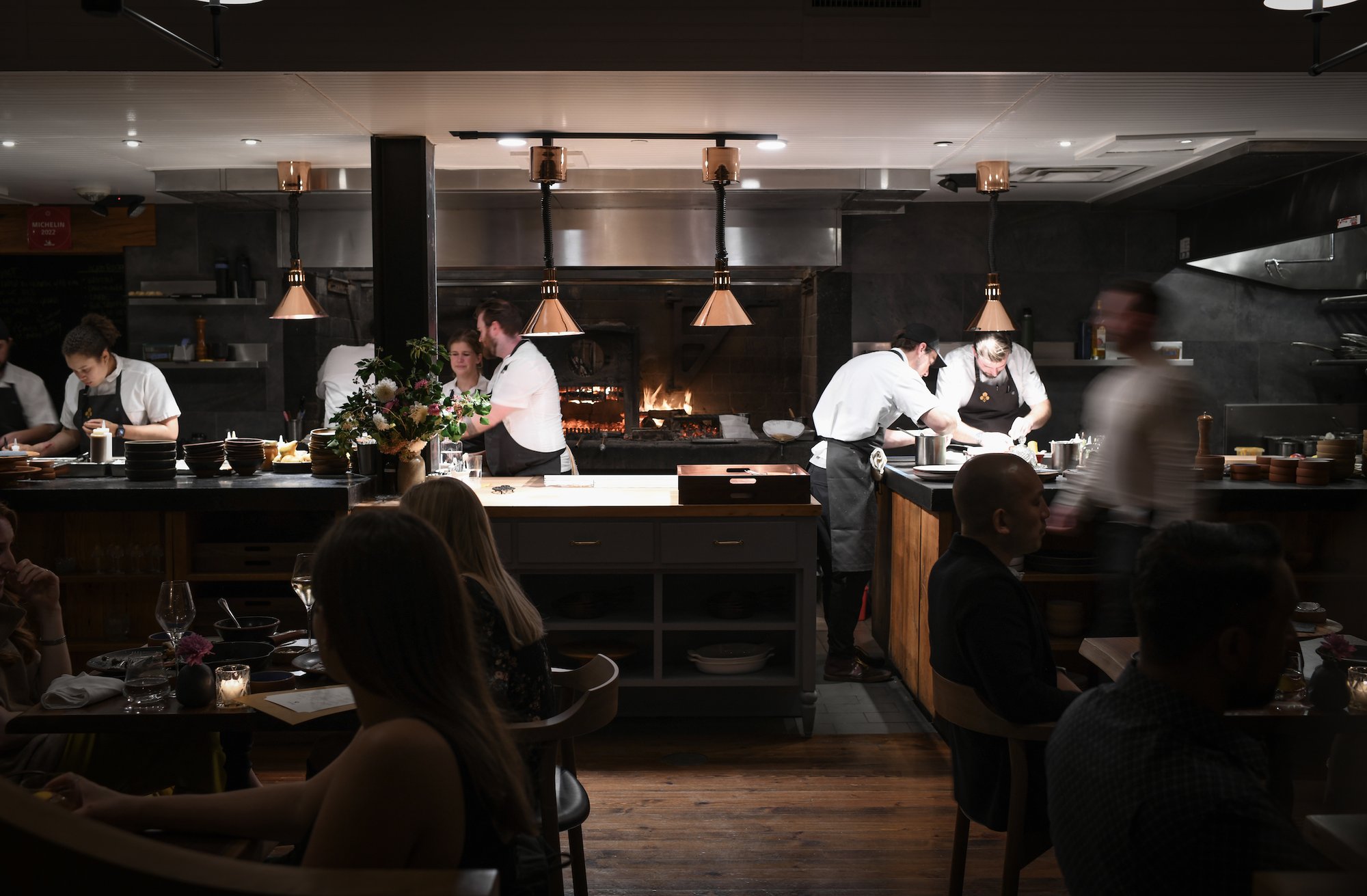
The hearth is the visual and conceptual centre of the dining room. Wood-fire cooking, as a technique, carries a specific sensory grammar: the crackle and pop audible at the bar seats nearest the kitchen, the way heat radiates outward and gives the room a temperature a few degrees above the street, the particular char-edged smoke that distinguishes live-fire cooking from its gas-assisted cousins. At The Dabney, that grammar is not decorative. The kitchen operates as a genuine wood-fire program, which requires a different discipline from conventional stove work and imposes real constraints on consistency and timing. That discipline is part of what draws serious eaters.
The Mid-Atlantic Case
Washington's dining scene has, for much of its history, operated in the shadow of New York. The city has had exceptional French cooking, strong steakhouses, and a fast-growing roster of international cuisines tracking its diplomatic and immigrant communities, but a clearly articulated local food identity has been harder to locate. The Dabney makes a pointed claim in that direction. The kitchen programs around the Mid-Atlantic as a region: the Chesapeake watershed, the Shenandoah Valley, the Virginia and Maryland coastal plain. These are not generic American ingredients. They carry specific seasonal rhythms, documented agricultural traditions, and a produce-and-protein vocabulary that separates them from what a restaurant with similar technique might source on the West Coast or in the South.
This positioning places The Dabney in a small cohort of American restaurants that have used hyper-regional sourcing as a genuine editorial stance rather than a marketing note. The peer comparison is instructive. In New Orleans, Jewel of the South anchors itself in the city's cocktail and hospitality lineage; in Houston, Julep treats Southern spirits with documentary seriousness; in Chicago, Kumiko builds its program around Japanese precision applied to American ingredients. Each represents a city making a specific argument about its own culinary identity. The Dabney occupies that same niche for D.C., which is a harder argument to make in a city whose identity has historically been federal rather than agricultural.
Inside the Room
The dining room occupies a converted carriage house, a format common to the alley buildings of Shaw, where former light-industrial and residential structures have been reconfigured for hospitality use. Exposed brick, timber beams, and the open kitchen create a layered visual field without reaching for the kind of studied rusticity that can feel performative. The room reads as genuinely old rather than designed to look old, and that difference registers physically. Sound stays in the mid-range: not hushed, not loud, conversation-friendly at most table configurations.
The bar counter, positioned within sight of the hearth, is where the sensory experience concentrates most fully. Heat, light, smell, and sound converge at that vantage point in a way that dining rooms with closed kitchens cannot replicate. It functions as a specific argument for counter seating as a category, not merely a fallback for solo diners.
Where The Dabney Sits in the D.C. Field
Washington's restaurant scene in 2024 operates across a more stratified set of price tiers and formats than it did a decade ago. The post-pandemic period saw closures at the mid-casual level and a simultaneous hardening of the upper tier, where tasting-menu and prix-fixe formats consolidated around a smaller number of operators. The Dabney sits in that upper-mid to serious-destination band, drawing both local repeat visitors and out-of-town diners for whom the restaurant functions as a primary reason to visit Shaw rather than a secondary stop after a different anchor.
The city's bar program has developed on a separate but adjacent track. Allegory and Silver Lyan represent the hotel-bar tier of D.C. cocktail culture, both operating with significant investment behind their beverage programs. Service Bar and 12 Stories anchor a different register, neighbourhood-oriented and format-flexible. The Dabney's drinks program operates in service of the food rather than as an independent draw, which is the appropriate calibration for a kitchen this focused. Comparable beverage-forward independent programs in other cities, including ABV in San Francisco, Superbueno in New York City, and Bar Leather Apron in Honolulu, demonstrate how a strong regional identity can anchor a drinks list; at The Dabney, that role defaults to the food.
For a broader read on where The Dabney fits within Washington's restaurant and bar ecosystem, see our full Washington, D.C. restaurants guide. For international comparison, The Parlour in Frankfurt on the Main demonstrates how a single-room hospitality program with strong editorial identity can anchor a neighbourhood's dining reputation across a different cultural context.
Know Before You Go
- Location: 122 Blagden Alley NW, Shaw, Washington, D.C. 20001. Accessible on foot from the Mount Vernon Square or Shaw-Howard University Metro stations.
- Format: Dinner service. The open-hearth kitchen is the operational centre; counter and table seating are both available.
- Booking: Reservations are advisable. Weekend seatings at the counter fill ahead of table availability.
- Neighbourhood: Shaw. The surrounding blocks contain a high concentration of independent restaurants, wine bars, and cocktail programs, making the area suitable for a full evening itinerary.
- Dress: Smart casual. The brick-and-timber room sets an informal tone without inviting beach attire.
Frequently Asked Questions
What's the signature drink at The Dabney?
The drinks program at The Dabney is calibrated to support the kitchen's Mid-Atlantic sourcing focus rather than to function as an independent draw. The list tends toward American spirits and regional producers, fitting the restaurant's broader argument about place-specific cooking. For dedicated cocktail programs in D.C., Allegory and Service Bar operate with more standalone beverage ambition.
Why do people go to The Dabney?
The Dabney draws diners who want a restaurant that makes a specific, defensible argument about Washington and its surrounding region. The wood-fire hearth, the Mid-Atlantic sourcing, and the Shaw alley address all contribute to a dining experience that couldn't be relocated to another city and remain coherent. For D.C. visitors with one serious dinner in the budget, it occupies a strong position in the field. Sustained critical recognition over multiple years confirms it as a reference point in the city's dining conversation rather than a transient destination.
What makes The Dabney a reference point for Mid-Atlantic cooking specifically?
Few American restaurants have committed as consistently to a single geographic foodshed as The Dabney has to the Mid-Atlantic, treating the Chesapeake watershed and surrounding agricultural zones as a culinary identity rather than a sourcing footnote. The wood-fire technique reinforces that regionalism by foregrounding ingredients rather than masking them with elaborate sauce work. That combination, regional specificity plus disciplined technique, has earned the restaurant a place in the national conversation about American regional cooking and positioned it as a useful reference point for understanding what D.C. dining can claim as distinctly its own.
More bars in Washington DC
- 12 Stories12 Stories sits on the 12th floor of 75 District Square SW in Washington, D.C.'s Southwest Waterfront, making it a strong pick for atmosphere and city views. Book it for dates or casual group outings where setting drives the decision. Wine and cocktail enthusiasts after program depth should pair it with a stop at Press Club or Service Bar.
- 301 Water St SE301 Water St SE earns its place on the Anacostia Waterfront as an easy-to-book, setting-driven bar in D.C.'s Navy Yard corridor. The waterfront position makes it a solid date-night or group drinks stop, especially at dusk on weekends. If a serious cocktail program is your priority, look elsewhere — but for atmosphere without the planning overhead, it delivers.
- 9:30 Club9:30 Club is Washington D.C.'s most reliable live music room, where a $25–$45 ticket plus a few drinks makes for a complete night out. Tickets sell fast on popular shows, so move quickly when a booking drops. If you've been once and liked it, the format holds: get there early, pick your spot, and let the room do the rest.
Related editorial
- Best Fine Dining Restaurants in ParisFrom three-Michelin-star icons to the next generation of Parisian chefs pushing boundaries, these are the restaurants that define fine dining in the world's culinary capital.
- Best Luxury Hotels in RomeFrom rooftop terraces overlooking ancient ruins to Michelin-starred hotel dining, these are the luxury hotels that make Rome unforgettable.
- Best Cocktail Bars in KyotoFrom sleek lounges to hidden speakeasies, Kyoto's cocktail scene blends Japanese precision with global influence in ways you won't find anywhere else.
Save or rate The Dabney on Pearl
Keep this venue in your Pearl passport, rate it after you visit, and track it alongside every other place you collect.