
Bar in Washington DC, United States
Etto
100ptsWood-Fired Restraint
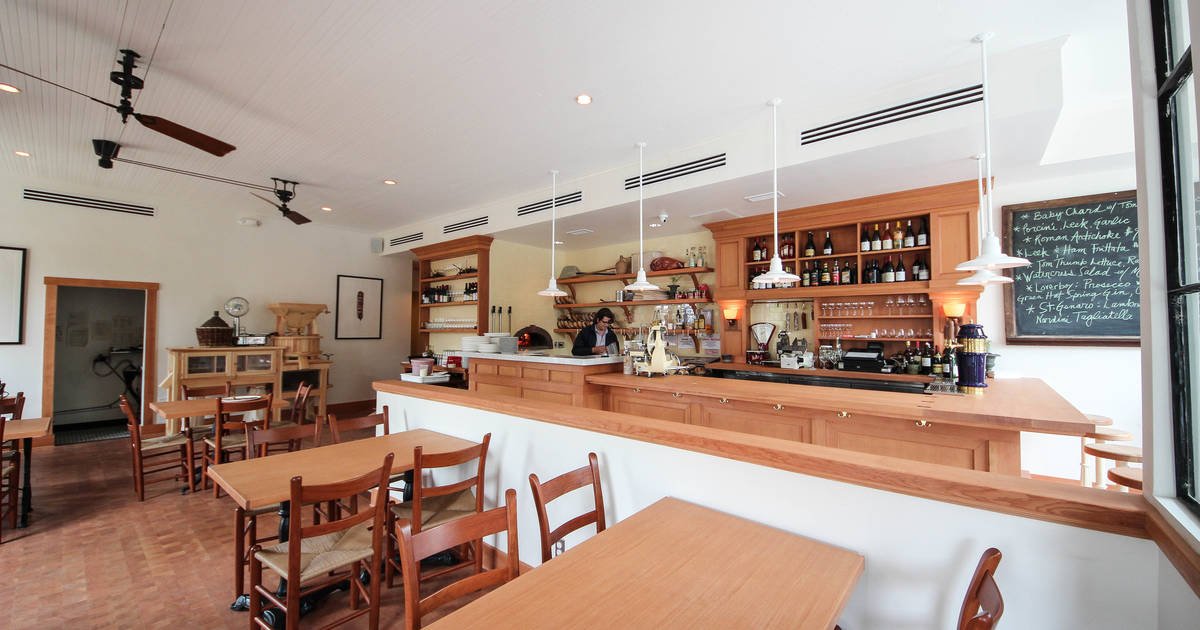
About Etto
On 14th Street NW, one of Washington D.C.'s most competitive dining corridors, Etto has carved a position in the neighbourhood's Italian-leaning, wood-fired segment. The format centres on simplicity executed with care: thin-crust pizza, house-made pasta, and a focused wine list that reads as a considered edit rather than an exhaustive catalogue.
14th Street and the Case for Restraint
Washington D.C.'s 14th Street NW corridor has spent the better part of a decade cycling through formats: the loud chef-driven concept, the rooftop bar, the farm-to-table hold-over. What has survived longest are the rooms that resisted the temptation to over-explain themselves. Etto, at 1541 14th St NW, belongs to that cohort. The space reads spare rather than sparse: exposed brick, wood surfaces, the kind of interior that signals confidence in what's coming out of the kitchen rather than what's going on the walls. The noise level sits at convivial rather than performative, which on a corridor that has housed some of the city's louder openings is a meaningful distinction.
The neighbourhood context matters here. 14th Street runs through Logan Circle, a stretch that now operates as one of D.C.'s most consistent dining concentrations. The competition is real: wine bars, Italian-adjacent concepts, and casual-fine hybrids all compete for the same mid-week reservation. In that environment, a place that keeps its format narrow and its execution consistent tends to outlast the more elaborate productions around it.
The Cultural Weight Behind the Wood-Fired Format
Italian-American wood-fired cooking in the United States carries a complicated lineage. At one end, the red-sauce institutions of the mid-20th century; at the other, the post-Chez Panisse wave that reframed pizza and pasta as vehicles for ingredient quality and regional specificity. The better rooms in D.C.'s current Italian segment sit closer to the latter tradition, drawing on the Roman and Neapolitan distinction between thin-crust styles, treating the wine list as an extension of the food philosophy, and resisting the American instinct to scale up portion size as a substitute for depth of flavour.
Etto operates in that more considered register. Thin-crust pizza here is not a concession to dietary preference but a formal choice with Italian precedent: the cracker-thin Roman style, where the char at the edge and the quality of the topping carry equal weight. House-made pasta, when it appears, belongs to the same logic — simplicity of form that puts pressure on the quality of the ingredient and the precision of the cook. This is a culinary tradition where restraint is the discipline, not the limitation.
That approach has particular resonance in Washington D.C., a city that has historically under-indexed on the kind of everyday Italian that European capitals take for granted: the neighbourhood trattoria where the wine is inexpensive and good, the pasta is made that morning, and nobody is trying to impress you. The city's dining culture has matured considerably over the past decade, but the gap between the ambitious tasting-menu room and the genuinely casual Italian still exists. Etto occupies a middle position that is harder to execute than it looks.
The Wine List as Editorial Statement
In Italian-leaning restaurants, the wine list is often where the kitchen's actual philosophy becomes legible. A list heavy on Super Tuscans and international varieties signals one kind of operation; a list that prioritises central and southern Italian producers, natural or low-intervention wines, and obscure regional grapes signals another. The latter approach has gained ground across D.C.'s independent wine bars and Italian concepts over the past several years, reflecting a broader shift in how younger American wine drinkers engage with Italian viticulture.
Etto's wine program sits within that shift. The list functions as a focused edit rather than a catalogue, with a preference for approachable price points and producers that reward curiosity. For a room at this price tier on 14th Street, that orientation is consistent with what the format promises: the wine should work with the food without requiring a separate education to order it.
D.C.'s cocktail and beverage scene more broadly has developed considerable depth in recent years. Bars like Allegory, Silver Lyan, and Service Bar have each built programs with distinct technical identities, while 12 Stories extends the conversation into the rooftop format. The broader American bar scene, from Kumiko in Chicago to Jewel of the South in New Orleans and Julep in Houston, has raised expectations for what a thoughtful beverage program looks like at any price point. Superbueno in New York City, ABV in San Francisco, Bar Leather Apron in Honolulu, and The Parlour in Frankfurt round out a peer set that illustrates how seriously the category now takes its own craft. Against that backdrop, a restaurant wine program that takes a clear position rather than trying to cover all bases reads as a confident choice.
Where Etto Sits in the D.C. Italian Conversation
D.C.'s Italian dining has fragmented into several distinct tiers. At the upper end, pasta-focused fine dining rooms with tasting menus and wine pairings priced at formal-occasion levels. Below that, a crowded mid-market of casual-Italian concepts where the format is familiar but execution varies sharply. Etto operates in a narrow band between those two positions: more serious than the casual mid-market in its ingredient focus and format discipline, but without the ceremony or the price point of the fine-dining tier. That positioning is harder to maintain than it sounds. The commercial pressure on a 14th Street room is real, and the temptation to add complexity to justify pricing is constant.
The comparison set for a room like Etto is not the Michelin-starred Italian address across town but the other neighbourhood-anchored concepts on the same corridor and the broader class of American restaurants that have made the Italian-casual format their own. In that company, consistent execution and a clear identity are the metrics that matter most.
Planning Your Visit
Etto sits on 14th Street NW in Logan Circle, a walkable stretch from the U Street and McPherson Square Metro stops. The format suits a mid-week dinner or a relaxed weekend evening when the room fills but doesn't overwhelm. Given the neighbourhood's concentration of options, arriving with a reservation rather than hoping for a walk-in is the practical approach for groups. The room works equally well for two or a small group; larger parties should confirm capacity in advance. For a full orientation to what D.C.'s dining scene offers across neighbourhoods and price tiers, the EP Club Washington, D.C. restaurants guide maps the current landscape with the same editorial specificity applied here.
Frequently Asked Questions
- What's the atmosphere like at Etto?
- The room runs on the quieter, more considered end of 14th Street's dining spectrum. Exposed brick and wood surfaces give it a spare quality that suits the food format. It is convivial without being loud, which distinguishes it from several of the corridor's more theatrical concepts. The atmosphere is consistent with what the format delivers: focused, unfussy, and consistent.
- What's the signature drink at Etto?
- Etto's beverage identity is built around wine rather than a cocktail program, which aligns with its Italian-leaning food format. The list prioritises Italian producers at approachable price points, consistent with the room's overall approach. If cocktails are the priority for an evening out in D.C., the city's dedicated cocktail bars, including Allegory and Silver Lyan, operate in a different register entirely.
- What's the main draw of Etto?
- The format discipline is what sets Etto apart on a corridor where concept drift is common. Thin-crust pizza and house-made pasta executed with consistency in a room that doesn't over-engineer the experience represents a specific and relatively rare offer in D.C.'s mid-market Italian segment. For a neighbourhood dinner that doesn't require a special-occasion budget or advance planning weeks out, it delivers on the promise of its format reliably.
- How does Etto compare to other Italian-casual restaurants in Washington D.C.?
- Etto sits in a narrow band between the formal Italian dining rooms that anchor the city's upper end and the broader casual-Italian market where format consistency is less reliable. Its position on 14th Street NW places it within one of D.C.'s most competitive dining concentrations, where it competes primarily on format clarity and ingredient focus rather than on price or spectacle. For diners familiar with the city's Italian options, it reads as one of the more coherent executions of the Roman-style thin-crust format in the neighbourhood.
More bars in Washington DC
- 12 Stories12 Stories sits on the 12th floor of 75 District Square SW in Washington, D.C.'s Southwest Waterfront, making it a strong pick for atmosphere and city views. Book it for dates or casual group outings where setting drives the decision. Wine and cocktail enthusiasts after program depth should pair it with a stop at Press Club or Service Bar.
- 301 Water St SE301 Water St SE earns its place on the Anacostia Waterfront as an easy-to-book, setting-driven bar in D.C.'s Navy Yard corridor. The waterfront position makes it a solid date-night or group drinks stop, especially at dusk on weekends. If a serious cocktail program is your priority, look elsewhere — but for atmosphere without the planning overhead, it delivers.
- 9:30 Club9:30 Club is Washington D.C.'s most reliable live music room, where a $25–$45 ticket plus a few drinks makes for a complete night out. Tickets sell fast on popular shows, so move quickly when a booking drops. If you've been once and liked it, the format holds: get there early, pick your spot, and let the room do the rest.
Related editorial
- Best Fine Dining Restaurants in ParisFrom three-Michelin-star icons to the next generation of Parisian chefs pushing boundaries, these are the restaurants that define fine dining in the world's culinary capital.
- Best Luxury Hotels in RomeFrom rooftop terraces overlooking ancient ruins to Michelin-starred hotel dining, these are the luxury hotels that make Rome unforgettable.
- Best Cocktail Bars in KyotoFrom sleek lounges to hidden speakeasies, Kyoto's cocktail scene blends Japanese precision with global influence in ways you won't find anywhere else.
Save or rate Etto on Pearl
Keep this venue in your Pearl passport, rate it after you visit, and track it alongside every other place you collect.