
Bar in Washington DC, United States
1226 36th St NW
100ptsResidential-Street Retreat
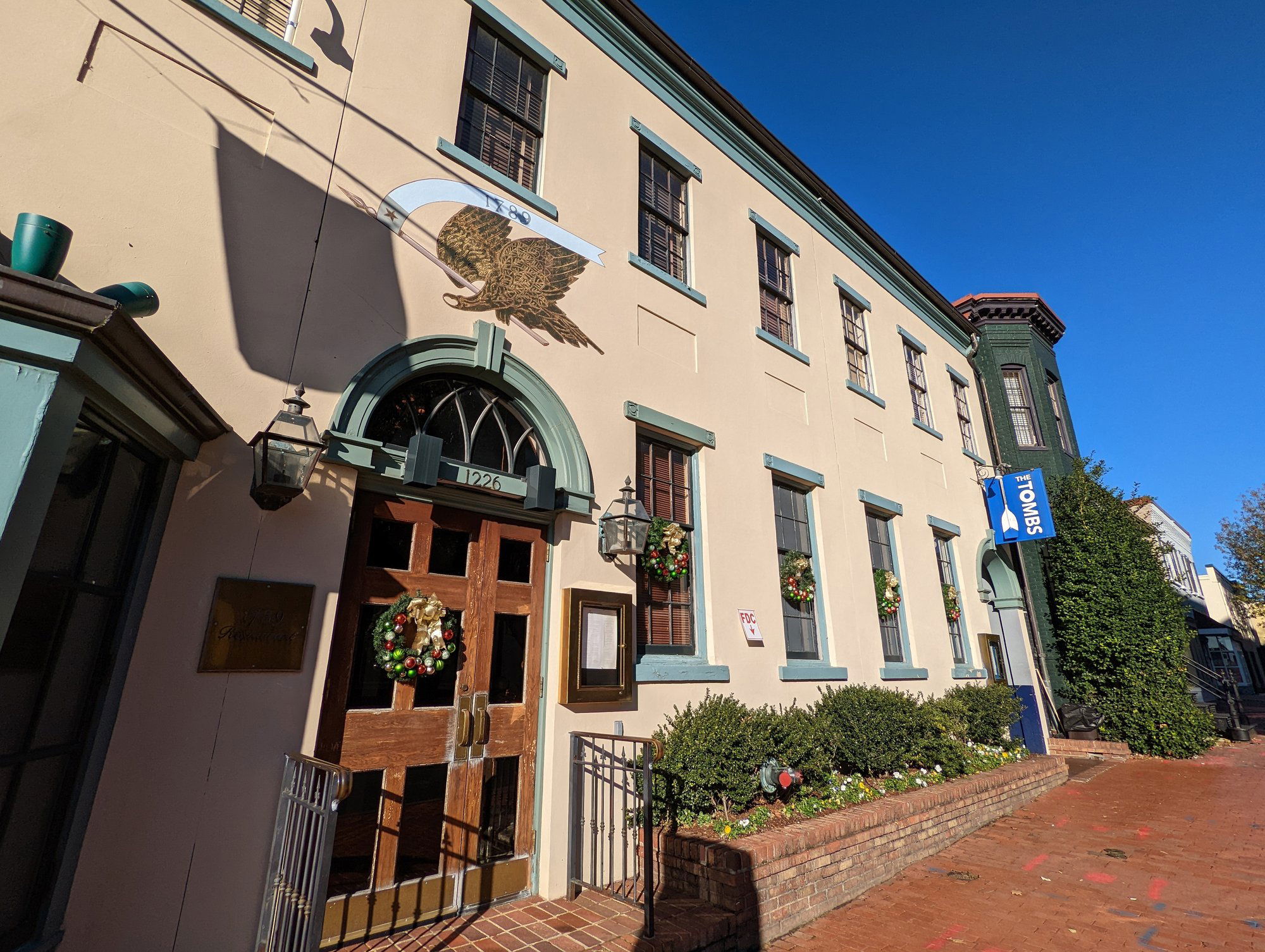
About 1226 36th St NW
Located on a residential stretch of Georgetown's 36th Street NW, this address sits within one of Washington D.C.'s most historically layered neighborhoods, where Federal-era rowhouses and cobblestone side streets frame a dining and drinking scene that rewards those who look beyond the obvious. Georgetown's bar culture has grown increasingly serious, placing this pocket of the capital in conversation with the city's broader craft movement.
Georgetown and the Art of the Neighborhood Bar
Georgetown occupies a particular position in Washington D.C.'s social geography. Long before Penn Quarter acquired its restaurant density or Shaw its cocktail credibility, Georgetown was where the city's political and academic classes gathered after hours. The neighborhood's Federal-style architecture and proximity to the Potomac give it a physical character unlike the rest of D.C., and that character shapes what happens inside its bars and restaurants. Brick rowhouses and narrow lots mean that venues here tend toward intimacy rather than scale, toward regulars over tourists, toward a certain durability that Penn Quarter's more transient dining corridor rarely sustains.
36th Street NW runs through the quieter residential spine of Georgetown, away from the commercial activity of M Street and Wisconsin Avenue. Addresses here sit in a zone where the neighborhood's historical weight is more present than its foot-traffic economy, which shapes the kind of experience that makes sense in this context. Across American cities, the bars and restaurants that endure on residential streets tend to do so because they serve a function that purely commercial venues cannot: they become genuinely local institutions, calibrated to the people who live within walking distance rather than to the passing visitor.
D.C.'s Cocktail Scene in Broader Context
Washington D.C.'s bar culture has undergone a significant structural shift over the past decade. The city moved from a scene dominated by hotel bars and political networking venues toward a more technically ambitious, independently operated tier. That shift is well-documented in the recognition that D.C. bars now receive from national and international award bodies. Venues like Allegory, Service Bar, and Silver Lyan represent different points along that spectrum, from narrative-driven theatrical programming to community-anchored accessibility to the European-influenced technical precision that Silver Lyan imports from its London lineage.
What that evolution has produced is a city with genuine range across price points and formats. 12 Stories occupies a different register again, demonstrating how rooftop venues in D.C. have had to sharpen their beverage programs to compete beyond the view. The cumulative effect is a bar scene that now holds its own against peer cities in the American Northeast and Mid-Atlantic corridor. For anyone mapping D.C.'s drinking culture, our full Washington, D.C. restaurants guide covers the full spectrum from cocktail bars to dining rooms across all neighborhoods.
What Georgetown Represents Culturally
The cultural weight of Georgetown as a neighborhood is not incidental to how its venues operate. The area has housed diplomatic residences, university faculty, and old-money Washington families for generations, and that mix produces a particular kind of hospitality expectation: understated rather than showy, competent rather than performative, consistent over time rather than trend-responsive. It is a neighborhood where the culinary and drinking establishments that last tend to be those that resist the impulse to renovate their identity every three years.
That conservatism can read as stagnation from the outside, but it also means that venues that find their footing here tend to hold it. The neighborhood's demographics support a mid-to-upper price tier without requiring the density of covers that Penn Quarter or Capitol Hill venues need to sustain themselves. Georgetown has always been a place where a well-run, relatively quiet operation can survive on loyalty rather than volume.
The American Bar Tradition on a Residential Scale
Across the United States, the neighborhood bar as a format has been both culturally romanticized and, in practice, difficult to sustain at quality. The bars that have managed it most credibly tend to share certain characteristics: a focused menu rather than an exhaustive one, a staff that knows returning guests, and a physical space that does not overwhelm. Compare the Georgetown context to analogous situations in other American cities and the pattern holds. Bar Leather Apron in Honolulu operates in a similar register of quiet precision in a market where spectacle bars dominate. Jewel of the South in New Orleans anchors itself to culinary and cocktail history rather than novelty. Julep in Houston has built a following around Southern drinking traditions rather than the city's more flashy hospitality culture.
The same principle extends further afield. Kumiko in Chicago and Superbueno in New York City each represent a category of bar that succeeds by being specific about what it is and who it is for, rather than trying to be everything at once. ABV in San Francisco takes a similar approach in a neighborhood that could support something louder. Even internationally, The Parlour in Frankfurt on the Main demonstrates that the format of a well-calibrated, neighborhood-scale bar translates across cultural contexts when the craft is present.
Planning a Visit to This Address
Georgetown is most accessible by rideshare or on foot from the Foggy Bottom-GWU Metro station, which sits roughly a fifteen-minute walk from the 36th Street NW corridor. Street parking in Georgetown follows D.C.'s residential permit system, which restricts non-resident parking during peak hours, so driving independently requires timing awareness. The neighborhood's character shifts perceptibly between warmer months, when the M Street corridor draws significant foot traffic, and the quieter autumn and winter season, when the residential streets like 36th operate more on their own terms. Visitors arriving in the latter period will find Georgetown at its most historically present and least tourist-oriented.
Frequently Asked Questions
What's the leading thing to order at 1226 36th St NW?
Specific menu details for this address are not currently confirmed in our database. Georgetown's bar and dining culture generally rewards venues that source locally and rotate seasonally, so asking staff directly about current offerings is the most reliable approach. Given the neighborhood's demographics and the D.C. craft movement's influence, expect a program that prioritizes quality ingredients over volume.
What should I know about 1226 36th St NW before I go?
Georgetown is a neighborhood where knowing your destination in advance matters more than in denser commercial corridors. Confirmed operational details for this address, including current hours and pricing, are not available in our current records, so verifying directly before visiting is advisable. The broader Georgetown area is well-served by dining and drinking options across a mid-to-upper price tier, and the neighborhood's character favors a more considered, unhurried visit over a quick stop.
Can I walk in to 1226 36th St NW?
Walk-in availability depends on the current operational format, which is not confirmed in our database. In Georgetown generally, residential-street venues with smaller capacities tend to reward advance contact over spontaneous arrival, particularly during weekend evenings when the neighborhood draws additional visitors from across D.C. If confirmed contact details become available, reaching out in advance is the more reliable approach for this type of address.
What makes this Georgetown address distinct from venues on M Street or Wisconsin Avenue?
The 36th Street NW location places this address in Georgetown's quieter residential interior rather than its commercial main arteries, which typically means a different kind of clientele and a different operational tempo. Venues on M Street and Wisconsin Avenue contend with high foot traffic and tourist volume; addresses on residential cross streets like 36th tend to operate at smaller scale and with a more local orientation. That positioning aligns this address with the type of venue that D.C.'s more serious bar and dining community tends to favor for repeat visits rather than one-off occasions.
More bars in Washington DC
- 12 Stories12 Stories sits on the 12th floor of 75 District Square SW in Washington, D.C.'s Southwest Waterfront, making it a strong pick for atmosphere and city views. Book it for dates or casual group outings where setting drives the decision. Wine and cocktail enthusiasts after program depth should pair it with a stop at Press Club or Service Bar.
- 301 Water St SE301 Water St SE earns its place on the Anacostia Waterfront as an easy-to-book, setting-driven bar in D.C.'s Navy Yard corridor. The waterfront position makes it a solid date-night or group drinks stop, especially at dusk on weekends. If a serious cocktail program is your priority, look elsewhere — but for atmosphere without the planning overhead, it delivers.
- 9:30 Club9:30 Club is Washington D.C.'s most reliable live music room, where a $25–$45 ticket plus a few drinks makes for a complete night out. Tickets sell fast on popular shows, so move quickly when a booking drops. If you've been once and liked it, the format holds: get there early, pick your spot, and let the room do the rest.
Related editorial
- Best Fine Dining Restaurants in ParisFrom three-Michelin-star icons to the next generation of Parisian chefs pushing boundaries, these are the restaurants that define fine dining in the world's culinary capital.
- Best Luxury Hotels in RomeFrom rooftop terraces overlooking ancient ruins to Michelin-starred hotel dining, these are the luxury hotels that make Rome unforgettable.
- Best Cocktail Bars in KyotoFrom sleek lounges to hidden speakeasies, Kyoto's cocktail scene blends Japanese precision with global influence in ways you won't find anywhere else.
Save or rate 1226 36th St NW on Pearl
Keep this venue in your Pearl passport, rate it after you visit, and track it alongside every other place you collect.