
Bar in Vienna, Austria
Zum Schwarzen Kameel
100ptsStanding-Counter Vinothek
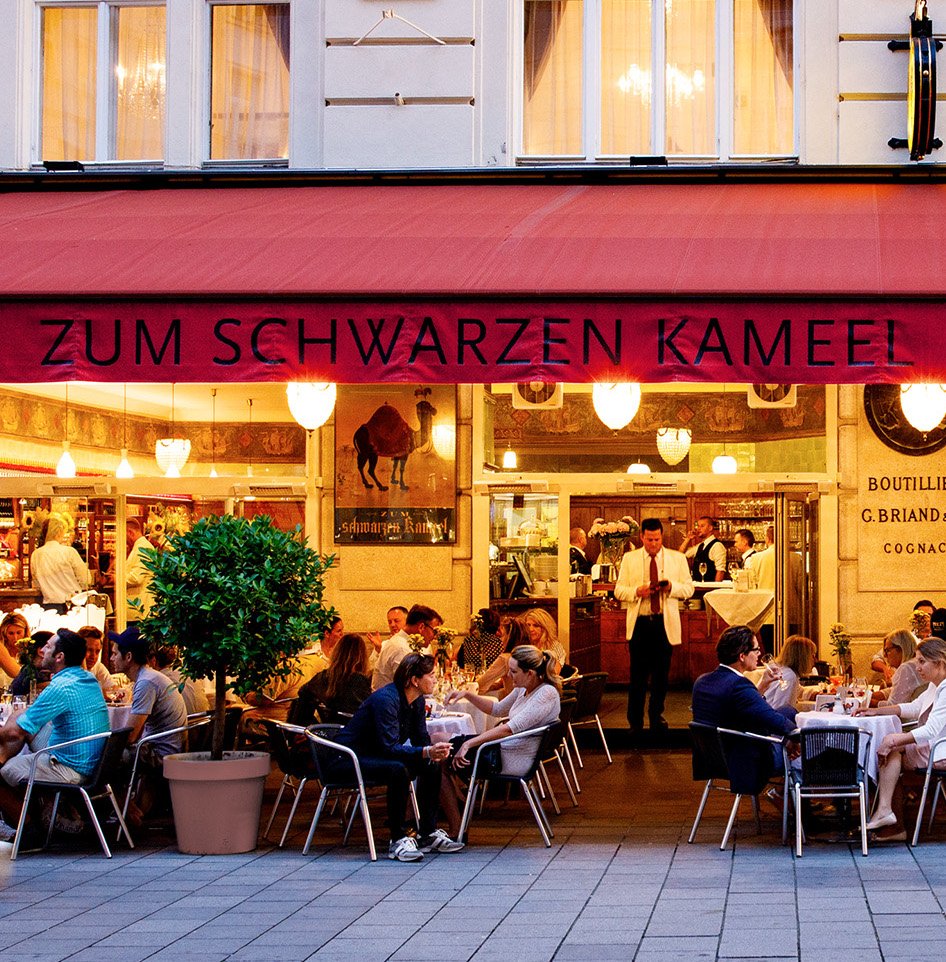
About Zum Schwarzen Kameel
One of Vienna's most storied wine bars and sandwich counters, Zum Schwarzen Kameel has occupied Bognergasse 5 in the first district since 1618. The format is distinctly Viennese: open-faced sandwiches at a stand-up bar, an Austrian wine list that rewards attention, and a room that draws everyone from office workers to opera-goers at the same marble counter.
A Counter That Precedes Most Capitals
There are a handful of places in any city where the format itself becomes the lesson. Zum Schwarzen Kameel, on Bognergasse 5 in Vienna's first district, is one of them. The address has operated as a wine merchant and provisioner since 1618, which means it was already old when most European capitals were still working out their street grids. That longevity matters less as a marketing figure than as an architectural fact: the room has the settled authority of a place that has not needed to reinvent itself, because what it does was correct from the beginning.
Walking into the Kameel during peak hours, the first thing that registers is not the interior design but the spatial logic. The narrow, wood-panelled front room channels foot traffic toward a glass counter loaded with open-faced sandwiches — belegte Brote — arranged in rows. People stand at the counter with a glass of Austrian white in hand. There is no maître d' directing you to a table, no ceremony about how long you plan to stay. The bar format, by design, keeps the entry point democratic and the pacing personal.
The Menu as Argument
The structure of what Zum Schwarzen Kameel offers is itself an editorial statement about Viennese food culture. The open-faced sandwich counter is not a simplified version of something more elaborate; it is the main event. Small portions of cured meats, smoked fish, and composed toppings on thin bread represent a Viennese tradition that operates at the intersection of wine-bar snacking and quality charcuterie. The format assumes that the diner wants to graze, compare, and return for another round rather than commit to a fixed progression of courses.
That architecture has a practical consequence: the menu becomes a wine-pairing instrument before a single glass is poured. The lean, saline flavours of the sandwiches orient the drinker toward Austria's white grape varieties, particularly Grüner Veltliner and Riesling from the Wachau and Kamptal. The wine selection at a place like this is not decorative , it is load-bearing. Vienna's historic wine bars have long operated as informal showcases for domestic producers, and the Kameel sits squarely in that tradition, offering a list that skews local and rewards those who ask for guidance rather than defaulting to familiar international labels.
For a broader survey of where Vienna's wine and bar culture currently sits, the full Vienna restaurants guide maps the current scene across neighbourhoods and formats.
Where the Kameel Sits in Vienna's First District
The first district (Innere Stadt) concentrates a particular kind of Viennese institution: places that have survived long enough to become part of the city's self-image without necessarily being frozen in amber. The Kameel belongs to that cohort. It draws a cross-section that few hospitality formats can sustain simultaneously: shoppers from the nearby Kohlmarkt, journalists from nearby editorial offices, tourists who have done their research, and regulars who stop in on the way home from work for a single glass and a sandwich before the evening commute.
That social breadth is not accidental. The stand-up counter format, a fixture in Viennese food culture going back centuries, removes the social friction of table service. Nobody is occupying a resource; everyone is transient in the leading sense. Compare this to Vienna's sit-down wine bars, where a table implies a minimum duration and a certain deliberateness of occasion. The Kameel makes the mid-afternoon glass of Riesling and a smoked salmon open sandwich feel like a reasonable, unremarkable Tuesday activity rather than a considered dining event.
Vienna's bar scene has diversified considerably. Places like Bar Tabacchi and Amerlingbeisl represent different registers of the city's drinking culture, while 25hours Hotel Vienna at MuseumsQuartier and Alte Donau address different geographies and moods entirely. The Kameel operates at a different frequency from all of them: it is neither cocktail bar nor beer hall, but a wine-and-provisions counter with centuries of practice behind the format.
The Austrian Context
Understanding the Kameel properly requires some sense of how Vienna's food and drink culture relates to the broader Austrian scene. Austria's wine regions have undergone a significant reputation shift over the past three decades, with Grüner Veltliner and Austrian Riesling now well-established in serious wine programs internationally. A historic wine merchant-bar in Vienna's first district is well positioned to reflect that trajectory, because the institutional relationship between the city and domestic viticulture is deeply embedded.
Further afield, the Austrian drinking culture produces very different formats. Augustiner Bräu Mülln in Salzburg represents the beer hall tradition that runs parallel to Vienna's wine culture, while Landhauskeller in Graz anchors Styrian food and wine traditions in a cellar setting. Hotel Schwarzer Adler Innsbruck and Carinthia Weinbar in Velden am Wörthersee show how the country's Alpine and lakeside contexts produce distinct hospitality registers. Achen Lake in Eben Am Achensee and Red Bull Hangar-7 in Himmelreich round out a picture of Austrian hospitality that ranges widely in tone and ambition. The Kameel sits at none of those registers; it is the urban Viennese baseline against which those variations make sense.
For reference on how a specialist format operates in a geographically distant context, Bar Leather Apron in Honolulu offers a useful comparison point for precision-focused bar programs built on a clear editorial identity.
Planning a Visit
Zum Schwarzen Kameel is located at Bognergasse 5 in the first district, a short walk from the Herrengasse U3 station. The stand-up counter format means there is rarely a formal wait for entry, but the room fills quickly during the midday window and in the early evening. Visiting outside peak hours , mid-morning or mid-afternoon on a weekday , gives more space to work through the sandwich counter without the press of a full room. The format does not require a reservation for the counter, which is part of its appeal, though the sit-down section at the rear operates differently. Dress follows first-district norms: the room accommodates everything from business attire to weekend casual without comment.
Frequently Asked Questions
- What's the signature drink at Zum Schwarzen Kameel?
- Austrian white wine is the house orientation, with Grüner Veltliner and Riesling from producers across Lower Austria forming the backbone of the list. The wine selection functions as a direct complement to the open-faced sandwich counter, where the lean, saline flavours of cured and smoked toppings anchor well to domestic white varieties.
- Why do people go to Zum Schwarzen Kameel?
- The Kameel delivers a specific Viennese experience that combines a historic address, a format with genuine cultural depth, and a price point that remains accessible relative to the first district's restaurant scene. The open-faced sandwich counter with a glass of Austrian wine represents one of the city's most recognisable mid-day or early-evening rituals, and the Kameel is among the oldest continuous practitioners of it.
- What's the leading way to book Zum Schwarzen Kameel?
- The stand-up counter requires no reservation and operates on a walk-in basis, which is structurally central to the format. If you plan to use the sit-down section, arriving early or contacting the venue directly is advisable, particularly during peak tourist season in Vienna (late spring through early autumn) and around major cultural events at the Staatsoper and Burgtheater nearby.
- Who tends to like Zum Schwarzen Kameel most?
- The Kameel draws people who want genuine local context alongside their glass of wine rather than a tourist-facing approximation of Viennese culture. Wine-focused travellers, those already familiar with Austrian producers, and visitors who prefer a standing counter to a formal table tend to find the format particularly well-suited to their habits. The price point is accessible enough that it does not function as an exclusive destination.
- How does Zum Schwarzen Kameel compare to other historic Viennese food institutions?
- The Kameel's 1618 founding date places it in a very small cohort of Viennese food and drink institutions with documented multi-century continuity. What distinguishes it from the city's historic coffee houses is format: where the Kaffeehaus tradition centres on sitting, reading, and extended occupation of a table, the Kameel's counter model is built for shorter, standing visits anchored to wine rather than coffee. That difference in tempo and orientation gives the two traditions distinct social functions within the same first-district geography.
Related editorial
- Best Fine Dining Restaurants in ParisFrom three-Michelin-star icons to the next generation of Parisian chefs pushing boundaries, these are the restaurants that define fine dining in the world's culinary capital.
- Best Luxury Hotels in RomeFrom rooftop terraces overlooking ancient ruins to Michelin-starred hotel dining, these are the luxury hotels that make Rome unforgettable.
- Best Cocktail Bars in KyotoFrom sleek lounges to hidden speakeasies, Kyoto's cocktail scene blends Japanese precision with global influence in ways you won't find anywhere else.
Save or rate Zum Schwarzen Kameel on Pearl
Keep this venue in your Pearl passport, rate it after you visit, and track it alongside every other place you collect.