
Bar in Vienna, Austria
Weinstube Josefstadt
100ptsNeighbourhood Weinstube Tradition
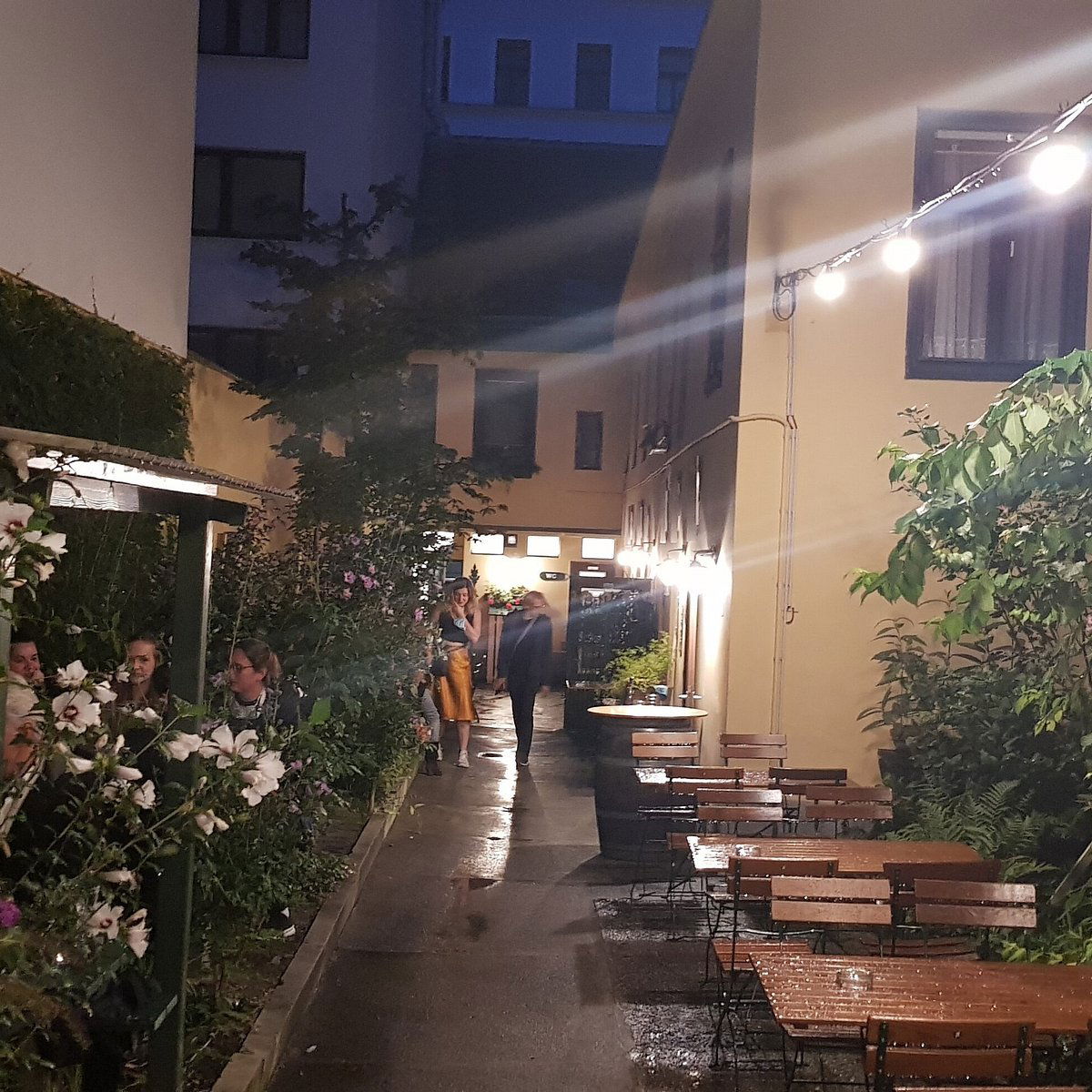
About Weinstube Josefstadt
Weinstube Josefstadt on Piaristengasse 27 sits inside the 8th district's quieter residential fabric, a neighbourhood that trades Innere Stadt formality for a more settled, local cadence. As a Viennese Weinstube, it occupies the category of wine-centred hospitality that the city has sustained for generations: modest in scale, deliberate in atmosphere, and oriented toward the glass rather than the occasion.
The Eighth District and the Weinstube Tradition
Vienna's 8th district, Josefstadt, operates at a different register from the Ringstrasse-adjacent venues that dominate most visitors' itineraries. The neighbourhood is compact and largely residential, built around Baroque churches, low-traffic side streets, and the kind of local commerce that persists because residents actually use it. Piaristengasse, where Weinstube Josefstadt sits at number 27, is one of those streets: wide enough for a relaxed pace, quiet enough that the building facades register rather than blur. The address alone situates this place within a tradition of Viennese neighbourhood hospitality that predates the city's current restaurant boom by several decades.
The Weinstube as a format deserves some context before the venue itself. Distinct from a Heuriger (the vineyard-adjacent tavern associated with Vienna's outer wine villages) and from the more theatrical wine bars that have opened across the 1st and 7th districts in recent years, the urban Weinstube is an interior proposition. It is built around the room: low ceilings, close tables, wood surfaces worn to the right degree of patina, and a cellar list that functions as the primary reason to be there. The format is common enough in Vienna that the category has a clear peer set, but rare enough in most other European capitals that visitors from London, Paris, or New York often find themselves without a ready comparison.
Reading the Room on Piaristengasse
The physical container of a traditional Viennese Weinstube does most of the atmospheric work before a single glass is poured. These spaces tend to be narrow and deep, with seating arrangements that favour proximity over separation. Tables are rarely far apart; the assumption is that conversation will carry across them. Lighting runs warm and low. The wall surfaces in older examples accumulate detail over time — framed menus, wine maps, handwritten lists, the visual residue of a place that has operated in one format for long enough to stop performing its own identity.
Weinstube Josefstadt fits within that spatial category. The address on Piaristengasse places it on a pedestrian-scale street in a district that has resisted the aggressive renovation that has transformed parts of the 6th and 7th. The building stock in Josefstadt tends toward late-19th-century residential construction, which means interiors often carry original proportions: higher ceilings than the stripped-down wine bar aesthetic of newer venues, and a sense of accumulation rather than curation. A space like this is not designed so much as it is inhabited over time, and the distinction matters to how it reads when you walk in.
For visitors approaching from the city centre, Josefstadt is most easily reached via the U2 line to Rathaus or the tram network along Josefstädter Strasse. The walk from Rathaus takes under ten minutes and passes through the kind of residential streetscape that contextualises the neighbourhood's character before you arrive at the venue. This is worth noting because the contrast with the 1st district is part of what the Weinstube experience is selling: a slower, more local Vienna than the one on the tourist circuit. Venues like Amerlingbeisl in the 7th operate on a similar register of neighbourhood embeddedness, though with a courtyard format that opens outward rather than drawing inward.
Where the Weinstube Sits in Vienna's Current Wine Scene
Vienna's wine-drinking culture has fractured into distinct tiers over the past decade. At one end, the Heuriger belt in Grinzing, Neustift, and Stammersdorf remains anchored to the seasonal, outdoor, carafe-of-Grüner model that tourists and locals alike treat as a rite. At the other, a cohort of technically focused wine bars has opened across the inner districts, running natural wine lists and small-production Austrian labels alongside European imports. The Weinstube sits between these poles: more curated than the traditional Heuriger, less ideologically freighted than the new-wave wine bar.
The category draws on Austria's genuinely strong domestic wine production. Grüner Veltliner and Riesling from the Wachau and Kamptal anchor most serious lists; Blaufränkisch from Burgenland handles the red side. A neighbourhood Weinstube in Josefstadt is likely to orient its list around these regional anchors rather than pursuing the imported-natural-wine positioning that newer venues in Neubau have adopted. This is not a limitation but a choice, and for drinkers interested in Austrian wine specifically, it is the more informative choice. If your interest runs more toward the contemporary bar scene, venues like Bar Tabacchi or 25hours Hotel Vienna at MuseumsQuartier offer a different kind of programme, and Alte Donau takes a more outdoor, leisure-oriented approach altogether.
For visitors building a broader sense of Austrian drinking culture across the country, the comparison set extends beyond Vienna. Augustiner Bräu Mülln in Salzburg represents the beer-hall tradition that coexists with wine culture in Austria's regional cities, while Landhauskeller in Graz offers a Styrian equivalent of the cellar-format hospitality that defines the Viennese Weinstube. Further afield, Carinthia Weinbar in Velden am Wörthersee and Hotel Schwarzer Adler Innsbruck show how wine-led hospitality adapts to different regional contexts. For a departure from Austria entirely, Bar Leather Apron in Honolulu and Achen Lake in Eben Am Achensee round out a wider picture of how serious beverage programming operates across very different geographies. A broader look at the city's food and drink scene is available through our full Vienna restaurants guide. And for Red Bull Hangar-7 in Himmelreich, the comparison is to a very different register of Austrian hospitality, one built around spectacle rather than intimacy.
Planning a Visit
Josefstadt's evening rhythm differs from the inner districts. The neighbourhood is genuinely local in its pace, which means earlier service and a clientele that is largely residential rather than tourist-driven. For visitors, this is the point: a Weinstube in this district functions as an entry into a version of Viennese life that the Graben-and-Kohlmarkt circuit does not offer. Arriving before 8pm tends to align with the local dinner rhythm; later arrivals may find the room already at capacity. Given the format, capacity in a traditional Weinstube is rarely large, and without confirmed booking data available, walking in without a reservation carries more risk on weekend evenings than weeknights.
The 8th district is well-served by tram and U-Bahn connections, and the street-level approach along Piaristengasse is the kind of arrival that sets up the experience correctly: a quiet street, a plainly signed entrance, a room that announces itself through warmth and sound rather than through design theatrics. That, in the end, is what the Weinstube format has always offered, and why it persists in a city that has no shortage of more ambitious alternatives.
Frequently Asked Questions
- What cocktail do people recommend at Weinstube Josefstadt?
- Weinstube Josefstadt operates within the Austrian Weinstube tradition, which centres on wine rather than cocktails. The drinks programme is built around domestic Austrian varieties, most likely Grüner Veltliner and Blaufränkisch, rather than a cocktail list. If a mixed-drink programme is a priority, venues like Bar Tabacchi or 25hours Hotel Vienna at MuseumsQuartier are better-suited formats in Vienna.
- What should I know about Weinstube Josefstadt before I go?
- The venue sits at Piaristengasse 27 in Vienna's 8th district, a residential neighbourhood that runs at a quieter pace than the inner city. The Weinstube format is wine-centred and intimate by design, so expect a smaller room and a list oriented toward Austrian domestic production. No awards data is currently on record, but the format and location place it in a category of neighbourhood institution rather than high-profile destination venue. Price expectations for a traditional Weinstube are generally modest compared to the 1st district's wine bar tier.
- Do they take walk-ins at Weinstube Josefstadt?
- Confirmed booking policy is not available for this venue. Traditional Weinstuben in Vienna's inner districts tend to run small capacities, which makes walk-in availability variable, particularly on Friday and Saturday evenings. Arriving earlier in the evening generally improves walk-in prospects in this format. Contacting the venue directly via the Piaristengasse 27 address is the safest approach before a dedicated visit.
- When does Weinstube Josefstadt make the most sense to choose?
- If the aim is to spend an evening inside Vienna's neighbourhood wine culture rather than its destination restaurant circuit, a traditional Weinstube in Josefstadt is the appropriate format. It fits leading on evenings when the priority is a glass of Austrian wine in a room that has not been designed for Instagram, rather than a curated tasting experience or a cocktail-led night. The 8th district's quieter character makes it a natural choice for a second or third evening in the city, once the central-district itinerary has been covered.
- What makes a Viennese Weinstube different from a wine bar?
- The Weinstube is a distinctly Central European format that predates the contemporary wine bar by generations. Where a modern wine bar typically builds its identity around list curation, natural wine sourcing, or staff expertise as a point of differentiation, the Weinstube's identity is rooted in the room itself: the accumulated character of a space used regularly by a local clientele over many years. Weinstube Josefstadt, in the 8th district's residential fabric, belongs to this older tradition, which prioritises continuity and neighbourhood function over the programme-driven positioning of Vienna's newer wine venues.
Related editorial
- Best Fine Dining Restaurants in ParisFrom three-Michelin-star icons to the next generation of Parisian chefs pushing boundaries, these are the restaurants that define fine dining in the world's culinary capital.
- Best Luxury Hotels in RomeFrom rooftop terraces overlooking ancient ruins to Michelin-starred hotel dining, these are the luxury hotels that make Rome unforgettable.
- Best Cocktail Bars in KyotoFrom sleek lounges to hidden speakeasies, Kyoto's cocktail scene blends Japanese precision with global influence in ways you won't find anywhere else.
Save or rate Weinstube Josefstadt on Pearl
Keep this venue in your Pearl passport, rate it after you visit, and track it alongside every other place you collect.