
Bar in Verona, Italy
Café Carducci
100ptsOld-Guard Veronese Bar

About Café Carducci
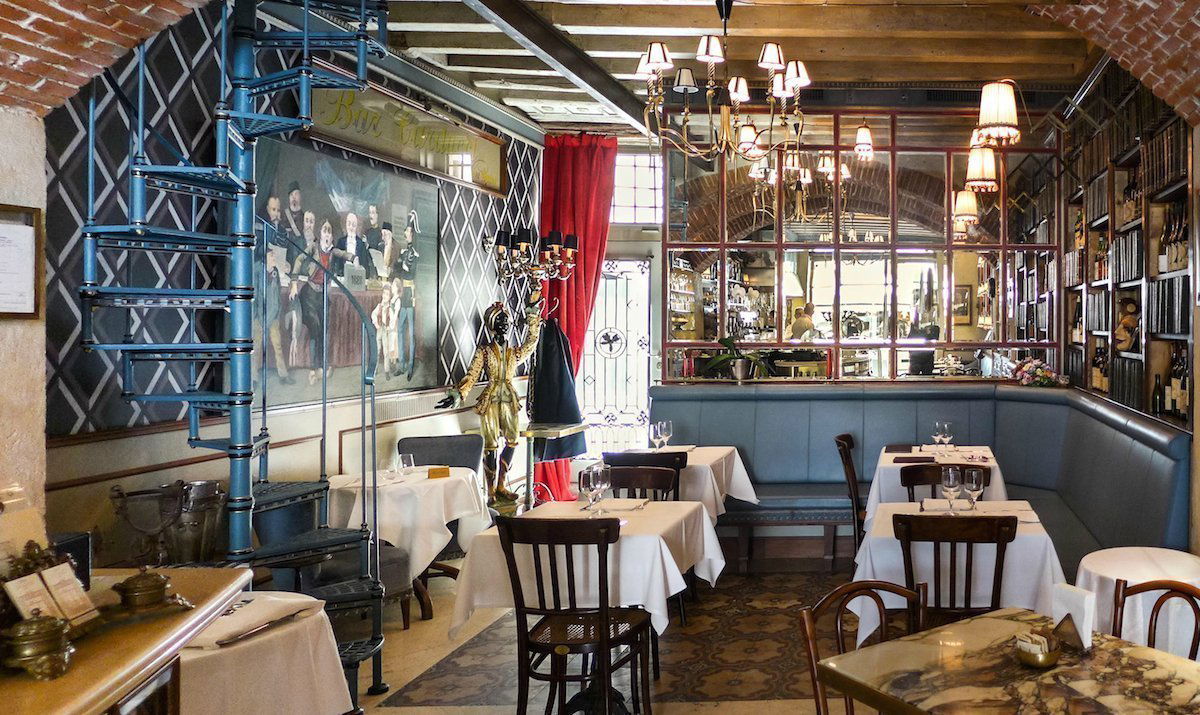
In Verona's Veronetta district, Café Carducci occupies a room that earns its keep on interior alone: white tablecloths, a mosaic tile floor, and ornate red brick details that read more 1920s civic institution than neighbourhood bar. Easy to walk past on Via Giosuè Carducci, it rewards those who step inside with a back bar worth taking seriously and an atmosphere that sits outside the tourist circuit entirely.
A Room That Tells You Where You Are
Verona's drinking culture divides cleanly between the amphitheatre-adjacent terraces built for opera-season visitors and the older, quieter bars that have been serving the city's own residents for decades. Café Carducci belongs to the second category. It sits on Via Giosuè Carducci in the Veronetta district, a neighbourhood on the east bank of the Adige that most short-stay visitors never reach, and its facade offers little to flag its presence. That is, in itself, a useful indicator of what you'll find inside: a place that has never needed to perform for passing trade.
Step through the door and the interior resolves into something with genuine architectural character. White tablecloths cover the tables with a formality that sits comfortably against the exposed mosaic tile floor beneath them, a surface that speaks to the building's age and the generations of use it has absorbed. Ornate red brick features frame the room with a heaviness that keeps the space grounded, and the overall effect is of a bar that arrived at its aesthetic not through a designer's brief but through accumulated time. In a city full of venues that gesture toward heritage, this one has the actual article.
The Back Bar as the Real Argument
Italian bars of a certain type treat their spirits selection as a secondary consideration behind coffee and aperitivo wine. Café Carducci operates differently. The back bar here carries a depth of selection that places it in a distinct peer set from the aperitivo-only stops that dominate Verona's centro storico. For a city whose drinking identity is so thoroughly shaped by Soave and Amarone, a bar that takes its spirits program seriously functions as a point of difference rather than a baseline.
Across northern Italy, the bars that have sustained serious spirits collections tend to be the ones with a local clientele anchored enough to support slow-moving, high-value inventory. The economics of a rare bottle back bar depend on regulars who return to work through a selection over months, not tourists who order a spritz and move on. Veronetta's residential character makes Café Carducci a plausible home for exactly that kind of curation. The neighbourhood sits away from the main visitor corridors, which means the room fills with people who chose to come here specifically rather than defaulting to proximity to the Arena or the market square.
For the visitor who approaches a bar through its spirits rather than its wine list, this is the relevant framing: Café Carducci operates in a part of Verona where a considered selection can be built and maintained because the audience for it exists year-round, not just in the July-to-August opera season. That seasonal dynamic matters more than most visitors account for. Venues near the Arena calibrate their offer to a high-volume, high-turnover summer peak; bars in residential districts like Veronetta are calibrated to a different rhythm entirely.
Veronetta in Context
The neighbourhood itself is worth addressing directly, because it shapes what Café Carducci is. Veronetta is a mixed, walkable district with a student population drawn from the University of Verona, a long-established residential base, and a bar scene that reflects both. The aperitivo hour here is less curated and more lived-in than the equivalent on Piazza delle Erbe. Prices follow accordingly: this is not the area of Verona where a Negroni costs what it might at a design-forward bar in Milan's Navigli or at a celebrated cocktail room like 1930 in Milan.
For the visitor who has already worked through Verona's more obvious drinking options, or who is specifically interested in what the city's non-tourist-facing bar scene looks like, Veronetta delivers a different register. It sits in the same broad tradition as Rome's neighbourhood bars that predate the aperitivo trend as a marketed concept, though its architectural character is more northern and more formally appointed than you would find at a comparable spot in Trastevere. Compared to technically ambitious Italian bars like Boeme in Rome or Gucci Giardino in Florence, Café Carducci operates in a quieter register, where the value proposition is atmosphere and selection rather than cocktail-program innovation.
Within Verona itself, the relevant comparisons include Dal Zovo Wine Bar, which approaches the city's drinking from a wine-first perspective, and Caffè Monte Baldo, another bar with a long institutional presence in the city. Bistro del Borgo occupies a slightly different position in the food-and-drink overlap. Each of these addresses a distinct version of what a Verona bar can be; Café Carducci's version is the one grounded in neighbourhood permanence and architectural integrity.
Planning Your Visit
Café Carducci is located at Via Giosuè Carducci, 10, in the Veronetta district of Verona. The address puts it east of the city centre, walkable from the historic core in fifteen to twenty minutes depending on your starting point, and close enough to the university that the evening crowd shifts earlier and younger than it does in the centro. The exterior offers no prominent signage designed to attract visitors, so approach with the address confirmed rather than relying on spotting it from the street.
No booking information is publicly available, which suggests walk-in access is the working model, as it is at most Italian neighbourhood bars of this type. The timing logic favours the late afternoon into early evening, when the aperitivo hour gives you access to the full room dynamic without the later-night compression. If your broader Verona itinerary runs to wine, the Verona wineries guide covers the regional producers whose bottles appear across the city's bar lists. For the wider picture of where Café Carducci sits among Verona's drinking options, the full Verona bars guide maps the field. Those planning a longer stay can cross-reference the Verona restaurants guide, the Verona hotels guide, and the Verona experiences guide to build out the full picture. For a contrasting international reference point on what a serious spirits-led bar back bar looks like in a different context, Bar Leather Apron in Honolulu illustrates the specialist-format model at its most considered.
Frequently Asked Questions
- What is the standout thing about Café Carducci?
- The interior architecture does most of the work: a mosaic tile floor, white tablecloths, and red brick detailing that reflect genuine age rather than a renovation brief. In Veronetta, away from the main visitor circuit, it also carries a back bar with more depth than the aperitivo-only format that dominates the centro storico. The combination of architectural character and spirits curation is what separates it from the average neighbourhood bar in the city.
- What should I drink at Café Carducci?
- Given the editorial angle here, the spirits selection is the starting point rather than the wine list or the standard spritz. Italian bars with a serious back bar typically organise their offer around aged spirits and Italian digestivi alongside the expected aperitivo range. Asking what the back bar carries in terms of aged whisky, grappa, or amaro will give you a more useful read of what the selection actually contains than defaulting to the obvious Venetian choices.
- Can I walk in to Café Carducci?
- No advance booking information is publicly available for Café Carducci, which is consistent with the walk-in model standard to Italian neighbourhood bars of this type. Veronetta operates at a different pace than the centro storico, so the evening rush is less extreme and tables turn less aggressively. Arriving at aperitivo hour, roughly 17:00 to 20:00, gives you the most predictable access to the room at its most atmospheric.
- When does Café Carducci make the most sense to choose?
- If your Verona visit is concentrated around the Arena opera season, Café Carducci functions as a deliberate step away from the opera-crowd venues, with a different price register and a room that is calibrated to year-round residents rather than July-to-August visitors. It makes particular sense if you are already planning time in Veronetta for the university-area bar scene, or if you want a bar with architectural weight as a backdrop for an extended aperitivo rather than a quick drink before dinner.
- What makes Café Carducci worth visiting specifically in the context of Verona's neighbourhood bar tradition?
- In a city whose bar identity is heavily shaped by the wine regions surrounding it, specifically Valpolicella, Soave, and Bardolino, bars that invest in their spirits program occupy a smaller, more specialist position. Café Carducci's Veronetta address places it in a district with a residential audience capable of sustaining that kind of selection year-round, which is the economic precondition for a serious back bar to exist at all. The mosaic floor and red brick interior also give it a physical character that is specific to its building and its era, rather than the generic vintage-aesthetic fit-out common to newer aperitivo bars across northern Italy.
Recognized By

Similar venues by awards
Related editorial
- Best Fine Dining Restaurants in ParisFrom three-Michelin-star icons to the next generation of Parisian chefs pushing boundaries, these are the restaurants that define fine dining in the world's culinary capital.
- Best Luxury Hotels in RomeFrom rooftop terraces overlooking ancient ruins to Michelin-starred hotel dining, these are the luxury hotels that make Rome unforgettable.
- Best Cocktail Bars in KyotoFrom sleek lounges to hidden speakeasies, Kyoto's cocktail scene blends Japanese precision with global influence in ways you won't find anywhere else.
Save or rate Café Carducci on Pearl
Keep this venue in your Pearl passport, rate it after you visit, and track it alongside every other place you collect.